F1 stands Imola down - what it means for 2026 and '27 calendars
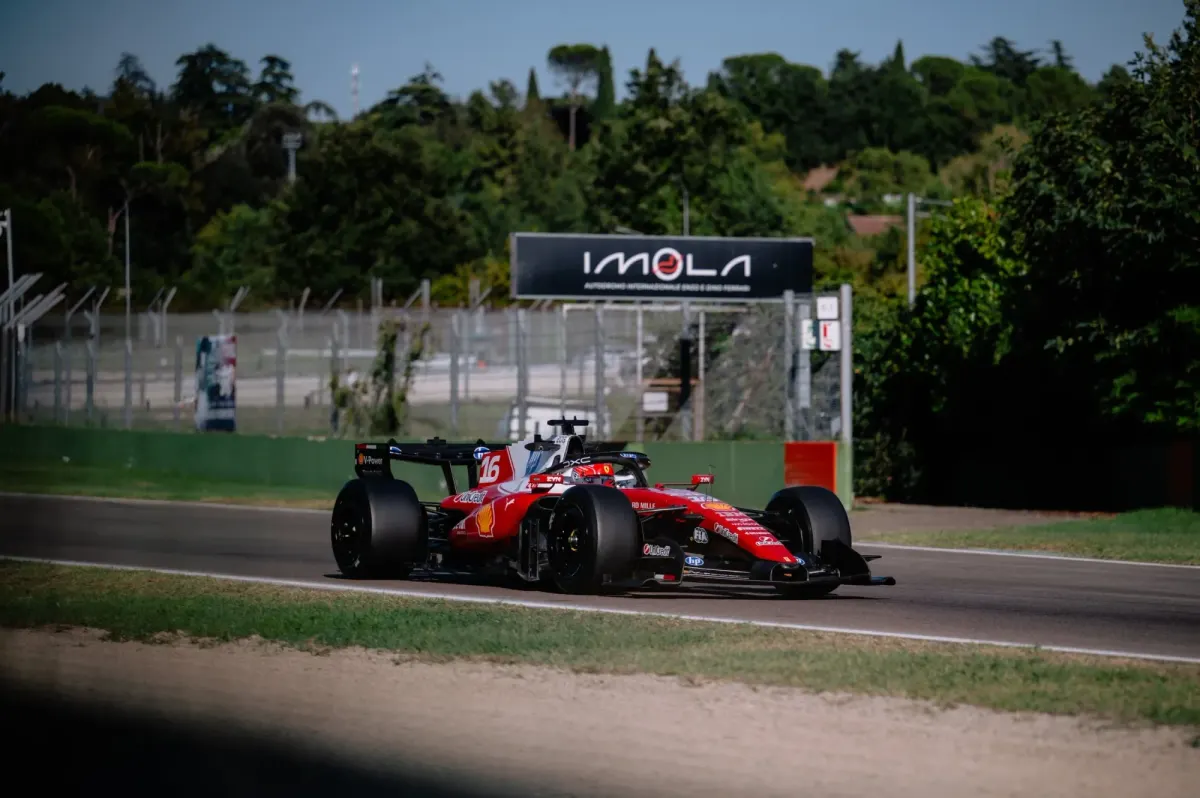
Imola has been formally stood down as a fall-back option for Formula 1's 2026 season finale, with the championship set to finish as originally planned in Qatar and Abu Dhabi.
Amid the ongoing tensions triggered by the US/Israel-Iran war, F1 has faced a headache with its race scheduling.
Safety concerns in the Middle East prompted April's races in Bahrain and Saudi Arabia to be called off.
Options were looked at to try to slot them back in, but doing so at their own venues proved impossible.
The Bahrain Grand Prix was eventually held in Malaysia in September as the result of an unprecedented deal between the kingdom and the Sepang track.
There has been long-running uncertainty though about the end of the year events in Qatar on November 29 and Abu Dhabi on December 6.
And this is what opened the door originally for a fallback end of season event at Imola.
The Imola Plan B
While F1's preference was always to go through with the grands prix in Qatar and Abu Dhabi, as long as risk assessments deemed them safe enough, it was also well aware that the situation was unpredictable.
So F1 found itself in a situation where it needed to give itself time to better understand how the situation in the Middle East was developing, but without that then risking the season facing an early finish if those events had to be called off at the last minute.
To give itself maximum flexibility, F1 came up with a Plan B solution that, in the event of the final races in the Middle East not being able to take place, its finale would take place at Imola on December 6.
F1 was willing to underwrite the costs for this extra race, which were estimated to be around $10-15million, to ensure the season finished on the date it was originally intended.
Well aware of the timeframe required to get a track ready for a grand prix, F1 needed to get preparations underway at Imola before it was ever ready to make a final decision on the matter.
If it left things too late, then the risk was that if the Middle East races could not take place then Imola would not be able to get ready in time either.
So F1 agreed to pay for the costs of early preparations at Imola in case it was needed.
The crunch time came this week, however, when F1 needed to make a call on giving the final green light to spend on major infrastructure work or stand the preparations down because it was happy with things in the Middle East.
On Tuesday, F1 announced that it had informed Imola that it would not be going ahead with hosting the finale there as it was happy to continue with the plans to finish in Qatar and Abu Dhabi.
The Imola decision does not mean that F1 will now push on with the final races irrespective of any changes of the situation in the Middle East.
Instead, it is just another step down the path of sticking to a plan it has had in place for a while: that the events are on until they are not.
What next
With Imola off, it gives F1 another two weeks of breathing space until the Las Vegas GP before personnel and the equipment freight coming from there needs to be moved to the Middle East.
The message being relayed to teams and drivers remains that if any of the threat assessments that F1 and the FIA receive on an hourly basis points to any unnecessary risk in going ahead with the Middle East race then it will not hesitate to pull the plug.
F1 CEO Stefano Domenicali has shown in the past that he is not afraid to act decisively when it comes to the fate of races – having called off the Emilia Romagna Grand Prix in 2023 on the Wednesday before it was due to take place because of the flooding.
Furthermore, he did not hesitate to scrub the Russian Grand Prix and cancel its contract in 2022 following that country's invasion of Ukraine.
F1's decision to stand Imola down comes as it is satisfied that the races in the Middle East can go ahead as things stand right now.
However, this does not mean that its evaluation of the situation stops.
In fact, the same monitoring process that F1 has committed to since the events in the Middle East kicked off in February will continue right the way through until the final personnel have left Abu Dhabi after the final race.
This has been a multi-layered effort involving staff at both F1 and the FIA, as well as Domenicali and FIA president Mohammed Ben Sulayem.
There has been constant dialogue with local authorities on the ground – including the police, the military and security services – to ensure threat assessments are as accurate as possible. FIA member clubs have also been involved in the process.
Plus, conversations have been ongoing with governments and the leaders of countries to better understand the situations at the venues.
This has included feedback from the Foreign Office in the United Kingdom, the State Department in the United States, European foreign offices as well as intelligence services in the Middle East.
As well as getting a better picture of the real situation on the ground, and the likelihood of any issues cropping up, F1 and the FIA have also been guided a lot by the travel advice of individual governments.
F1 has always understood that if travel bans come into play then that would be a barrier to the events happening, because that would impact on insurance policies.
However, despite warnings from many governments about the risks of a rapid escalation and travel disruption in Middle East countries, there have been no outright 'do not travel' enforcements in play for Qatar or Abu Dhabi.
Another key area of monitoring involves potential geopolitical consequences from both the Israeli election and the Midterms in the United States. The fallout from both has not pointed to escalation of the conflict being inevitable.
F1 has also been monitoring the situation around the Qatar MotoGP event last weekend, which passed without drama.
Liberty Media CEO Derek Chang travelled to the event to better understand the situation, and this will help guide F1's decision-making process too.
Chang's presence in Qatar comes with F1 having personnel on the ground in both Doha and Abu Dhabi to get a clearer picture of things.
Against the backdrop of all that work, F1 has been in lengthy discussions with both teams and drivers to keep them updated on the situation and address concerns anyone has.
And while F1 is aware that not everyone in the paddock will necessarily be comfortable attending the Middle East races, it has done everything it can to ensure that any major areas of worries are addressed.
What this all means for 2027
If the races in Qatar and Abu Dhabi go ahead without a hitch, then that still does not mean future grands prix in the Middle East are guaranteed.
With the 2027 campaign beginning in Bahrain and Saudi Arabia, the monitoring of the situation in the region will continue at its current intensity – and contingency plans will likely be put in place in case those events cannot go ahead.
Based on the current situation in the Middle East, while the situation in Bahrain looks stable enough to continue, things are different in Saudi Arabia.
The recent escalation of fighting with Yemen's Iran-backed Houthi movement has put Saudi Arabia on the list of countries many governments have advised against travel to. This makes it impossible to host an F1 race there at present.
If there is not a dramatic improvement in the situation by the start of next year, then that means next March's race will not be able to take place.
The situation regarding the season opening events therefore is up in the air right now, but there are fallback options in play should the situation in the Middle East not change.
If Saudi Arabia falls off the schedule but Bahrain can take place then it is likely that the season will start with pre-season testing at Sakhir in February, and the opening round there on March 14, followed by the Australian GP on April 4.
If Bahrain cannot take place either, then the success of it hosting its 2026 race in Malaysia has opened the door for a repeat scenario at the start of next year to be considered. If that happens, then the Sepang circuit would also likely host pre-season testing in February.
The Malaysia idea works from a logistical point of view too because freight could be shipped on to Australia and then the following races in China and Japan as one trip.
Plus, it also avoids knock-on consequences that would have been triggered had F1 had to move the Chinese and Japanese Grands Prix forward to start the season as had been previously considered.
But any call on how next season starts does not need to be made until the start of next year - especially without any change having knock-on consequences for other events.
And as has happened with Qatar and Abu Dhabi this year, F1 is happy to take its time to make sure its call is based on the best information it can get hold of.