Gary Anderson: The true challenge of F1 2026

With one week to go before the behind-closed-doors Formula 1 test at Barcelona, it’s now that the pressure really starts to build on everyone involved.
To allow time for component manufacturing, the packages teams use in Barcelona will have long since been signed off. That puts the pressure on the organisational side of the companies, which must ensure the tight deadlines are met and measured on at least an hourly basis.
It’s no good discovering that a very important gizmo that will stop the car from running is missing at the last minute. Knowing where everything is in the process at least gives you time to recover if a problem arises.
The longer lead-time items and the components required for in-house and FIA structural testing will have been around for a while. You must have a clear idea of when everything must be ready because it’s no good having the rear-view mirror sitting on the shelf for weeks, when the chassis is still being manufactured.
As Ferrari has said, it and most other teams will be running an initial version of the 2026 car in this first shakedown test just to make sure there are no delays in sorting out any reliability issues. It’s the old saying to finish first, first you’ve got to finish.
This also gives them the maximum design and research update time prior to the final pre-season test in Bahrain or, for the teams that have confidence in their simulation tools, even the Friday of the first race weekend in Melbourne.
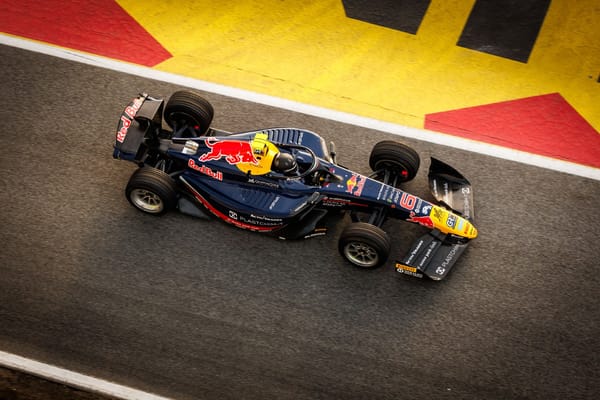
That extra time can be critical to starting the season with your best foot forward. Just look back to the start of 2022 when Red Bull put itself in the position to dominate under the new ground effect rules by making big early-season development strides, while many of its rivals bounced their way along owing to porpoising problems.
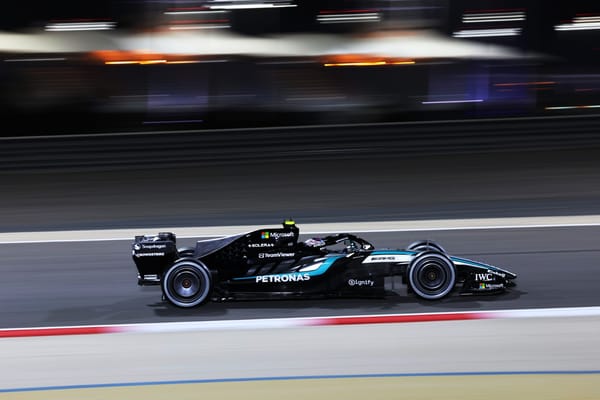
The same happened in 2014 as Mercedes hit the ground running when the hybrid power unit rules were first introduced, leaving the other manufacturers scratching their heads. Then there was 2009, when Brawn shocked the world with its double diffuser and performance advantage.
We keep hearing rumours that Mercedes is going to dominate with its power unit, just as it did in 2014. Although the engine changes are by no means minuscule, they are not as overpowering as they were in 2014.
The changes for 2026 will be more about how to get the best from the intended 50/50 power split (between the internal combustion engine and the battery) and optimising the harvesting and use of the electrical energy over a lap.
Most teams’ simulation tools will have been optimised to cope with that challenge, which unfortunately means the majority of that optimisation will be done behind closed doors.
The new regulations requiring advanced sustainable fuels will require a fair amount of attention, but most of it will be carried out in private on the dynos. With the fuel usage regulations overall and maximum instantaneous fuel flow per lap (which, to make even more complicated, varies from manufacturer to manufacturer, given it’s calculated based on the energy flow), it’s critical that the engine’s combustion makes the most of the allowed fuel and turns it into power. Anything not burnt will be wasted.
What can’t be sorted out completely on the dyno is the turbo lag. For 2026, the MGU-H has been removed, so there is no control over the turbo speed. This means you can’t spin it up or hold it back, so throttle response from turbo lag will be something that the teams need to experiment with to suit the driver’s requirements, and indeed each corner's requirements.
While the MGU-K power can be used to smooth out the power-delivery gap, lag will still cost you power overall and with that, potential acceleration.
As for the overspeed of the turbo, the MGU-H was used to optimise the turbo speed. If it was going to rotate above its maximum of 125,000rpm, or whatever self-determined maximum was in place, the MGU-H could load it up and control any potential of overspeeding.
This turbo speed control was critical to make sure you made the best use of your turbo sizing. It is believed that Ferrari used a smaller compressor than the others, and if that is so, then the boost pressure would increase quicker during acceleration when the gas flow was not at its optimum. However,it would need more speed control when the exhaust gas flow was at its maximum.
By using the MGU-H to maximise the boost pressure, it in turn would control the instantaneous fuel flow requirement. So in effect, the wastegates had very little work to do as far as boost pressure control is concerned. When you have to control the boost pressure with the wastegate, it’s never quite as responsive.
The other, and probably more important problem, could be with the extra electrical power from the MGU-K for 2026 that drives directly onto the crankshaft. That extra electrical power is used to optimise the overall power coming out of a corner including, as I said earlier, to patch in for any turbo lag, so it has the potential to set up an oscillation through the crankshaft.
Also, the extra charging that the battery pack requires to have the energy needed to lap at a decent pace, could very easily play havoc with the balance between the electrical braking and the mechanical hydraulic braking on the rear axle. The front axle is all mechanical, hydraulic braking, so never mind the retardation balance across the rear axle - the front-to-rear axle balance will also become more of a drama.
Over the hybrid years, we have seen on many occasions problems in this area and cars spinning on corner entry. For 2026, F1 has just doubled that problem.
The other thing we have heard over the radio on various occasions during the hybrid era was about clipping at the end of the straight. In reality, it was a small problem as the V6 engine itself was producing 75% of the power at that point of the lap and the electrical side 25%. This meant the clipping cost a quarter of the power and the driver felt that reduction. In 2026, it’s now theoretically 50/50 percentage-wise, so clipping instead of a small inconvenience will be a major problem.
How I'd change 2026 rules
All that said, it is really the chassis that is getting the big hit. Narrower, shorter, and lighter are all good things, but I’m not so sure the reduction in ground effect is a positive.
For me, I would have kept a similar ground effect concept with venturi tunnels and trimmed that around the experiences learned since its introduction in 2022.
Basically, all of this plus the extra power modes, etc forced the FIA and F1 to sit down and come up with a naming convention that the commentators, media personnel and even teams must use, to make sure that everyone is singing from the same hymn sheet. I believe that feeling the need to do that just highlights the complexity we can expect from what, in reality, should be very simple.
I came from a simple background where we called a spade a spade, as opposed to a tool for altering the earth’s periphery. And that’s what most people want. So why not put together a future rules set based on three different downforce configuration settings for different conditions? Such as...
Maximum downforce
This is the downforce level that the car is set up to produce for a given track when it leaves the pits for the first run in qualifying. This level would be used at all times when the laptime of, for the sake of argument, the three fastest cars is outside of 120% of the expected laptime (based on dry track simulation) for the fuel loads being carried at that point of the race.
This is to cover wet tyre running without the risk of allowing lower downforce levels.
Medium downforce
This would be made available to the drivers to use when the track is drying but still damp. The setting can be used when the three fastest cars are within 115% of the expected laptime (based on dry track simulation) for the fuel loads being carried at that point of the race.
This covers the crossover between wets and inters.
Minimum downforce
This would be made available to the drivers when the three fastest cars are within 110% of the anticipated race laptime (based on dry track simulation) for the fuel load being carried at that point in the race. This covers the crossover from Inters to slicks.
These same simulated laptime percentages can be used for qualifying and can be altered easily once there is a system in place and some data to analyse.
Something like this at least reduces the need for someone scratching their head thinking about if it’s safe enough to allow reduced downforce and, in turn, what it’s all about delivering, which is reduced drag levels. After all, if the team or the driver don’t feel it’s safe enough, then they don’t have to go to the reduced levels.
Key 2026 terminology explained
Also new for 2026 is the overtake mode and boost, which gives you some extra grunt at any time you like. I’d propose that the criteria for its usage should be that the driver must be on full torque request (i.e., full throttle and maximum electrical output), so in effect, wanting and needing more power.
They would have a maximum of five seconds per lap, so in a 50-lap race, you would have something like 250 seconds overall available. To make it a bit more exciting, you can save it up and use what you have stockpiled later in the race. It can be used as long as you meet the maximum torque criteria, but you can’t use it prematurely.
This means that if you use it early at five seconds per lap, you don’t build up surplus. Doing it this way means that the strategy becomes a major factor later in the outcome of the race, just imagine a driver saving it up in Spa and then using it all the way up to Les Combes on the last lap.
All of these variables need to be displayed live on screen beside each car position; a simple red dot for maximum downforce, a change to yellow for medium downforce and green for minimum downforce would be adequate. Using the same colours, just make that dot square for when the overtake/defend button is pressed.
I don’t want it to sound like it’s all doom and gloom on these new regulations, but if the response of the FIA and the teams to the problems that crop up in initial testing is anything like the response to the initial problems back in 2022, then brace yourselves for a rough ride. And I don’t mean from porpoising!
It’s only a week until whatever the problems are going to be rearing their ugly heads, and only five-and-a-bit weeks until the first race. There will be plenty of sleepless nights before the lights go out in Melbourne.
But the fact is, ready or not, the lights will go out. I don’t know about you, but I can’t wait to see how it all turns out.