Mercedes rivals plotting F1 engine rule change for Melbourne
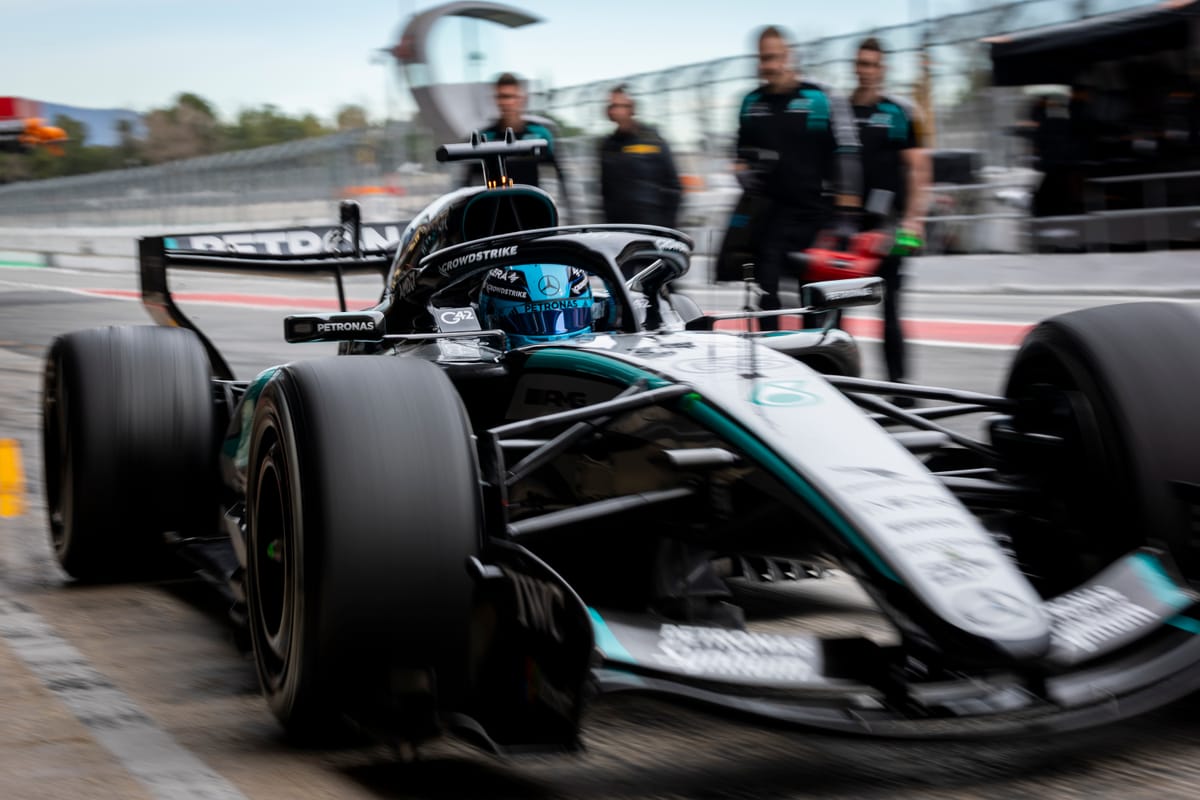
Mercedes’ rivals are hoping to pull together a proposal to change Formula 1’s engine compression ratio rules in time for the start of the season in Australia, The Race has learned.
However, even if they agree on a plan, any chance they have of new regulations being pushed through so quickly would still require support from the FIA and FOM - something that is far from guaranteed.
Amid the ongoing controversy surrounding Mercedes having potentially found a loophole to run its car at a higher compression ratio than the 16:1 limit stated in the rules, efforts have been ramping up among its competitors to stop any advantage it has.
The issue revolves around the current rules making it explicit that checks for compression ratio compliance are done at ambient temperature. It is suspected Mercedes has found a way to run at a higher level when the engines are hot.
Discussions have been ongoing over recent weeks among Mercedes’ rivals to try to agree to a proposal for a different test procedure being implemented – which would involve compliance being measured when the power unit is hot.
Two further meetings have taken place with the FIA to discuss the matter in recent days. One involved technical experts on Monday and another the Power Unit Advisory Committee (PUAC) on Thursday.
There were some reports on Friday that coming out of these meetings new procedures for checking had been agreed for the start of the season. Multiple sources have said that this is not the case at all.
However, while the outcome of both meetings is that the current regulations and checks remain in place as defined in the rule book, this has not stopped efforts accelerating behind the scenes between Mercedes’ rivals to get things changed.
Voting bloc
It is understood that the aim of Mercedes' competitors is to agree amongst themselves a new procedure to measure the compression ratio when engines are running hot.
Their plan would then be to put forward this new idea to the PUAC for a vote so it can be introduced - with sources suggesting it is seeking things to move in time for the Australian GP.
Several options for a different way of checking have been discussed, which include the use of sensors when the car is running out on track, or ensuring measurements are taken in the garages when engines are up to operating temperature.
And critically it has emerged that the trio who had initially been most animated about the matter and wrote a joint letter to the FIA – Ferrari, Audi and Honda – have now potentially won over the support of Red Bull too.
The fact that four manufacturers could be aligned on a proposal to tweak the regulations is significant because it opens the door for the necessary super majority vote that would be needed to make an immediate rule change.
Red Bull’s stance is interesting because it was understood that it had found benefits from interpreting the regulations in the same way as Mercedes. However, it could be that it has found itself unable to produce the gains hoped for – which is why it may be more eager to shut that avenue down.
Under the governance procedures of the PUAC, for a significant immediate modification of the power unit rules to happen, it requires backing from four of the current five manufacturers, plus support from both the FIA and FOM.
Normally, the FIA and FOM vote in a bloc and it is very rare for them to not be aligned over matters.
So key to any hopes of Mercedes’ rivals getting a swift rule change pushed through is whether or not any proposal they agree on would have backing from the governing body.
Up until now, every indication has been that the FIA is aligned with Mercedes’ interpretation of the rules – in that compression ratios are always measured in ambient conditions.
The F1’s 2026 power unit rules were altered on October 16 to emphasise this was the way measurements would be taken, and earlier this week, Mercedes boss Toto Wolff said such a viewpoint had been backed by FIA president Mohammed Ben Sulayem.
Asked about the risk of one of Mercedes’ rivals protesting the matter in Australia, Wolff said: “The power unit is legal.
“The power unit corresponds to how the regulations are written, and the power unit corresponds to how the checks are being done.
“The power unit corresponds to how these things are measured in any other vehicle. Everything else [the chances of a protest] I can't judge upon.
“That's how we see the world today, and that's what the FIA said. That's what the president of the FIA said, and he knows a bit about that. In that respect, let's wait and see. But we feel robust.”
Too late
A sudden U-turn by the FIA in approving a last-minute rule tweak that altered the way that the compression ratio was measured would be a surprise - and could potentially have a huge impact on the competitive picture.
This is especially true because final homologation of power units takes place on March 1 so there is no time for anyone to change designs.
Despite an eagerness from Mercedes’ rivals to get things changed from the start of the season, it is much more likely that if there is support for a new direction this would only be something for the longer term – potentially from the start of 2027.
But Wolff made clear earlier this week that he was frustrated about the way his team’s competitors were spending so much time on this issue.
“I just don't understand that some teams concentrate more on the others and keep arguing a case that is very clear and transparent,” he said.
“Communication with the FIA was very positive all along. And it's not only on compression ratio, but on other things too.
“Specifically in that area, it's very clear what the regulations say. It's very clear what the standard procedures are on any motors, even outside of F1.”