Mercedes reveals new 'four-element' F1 rear wing in Bahrain testing
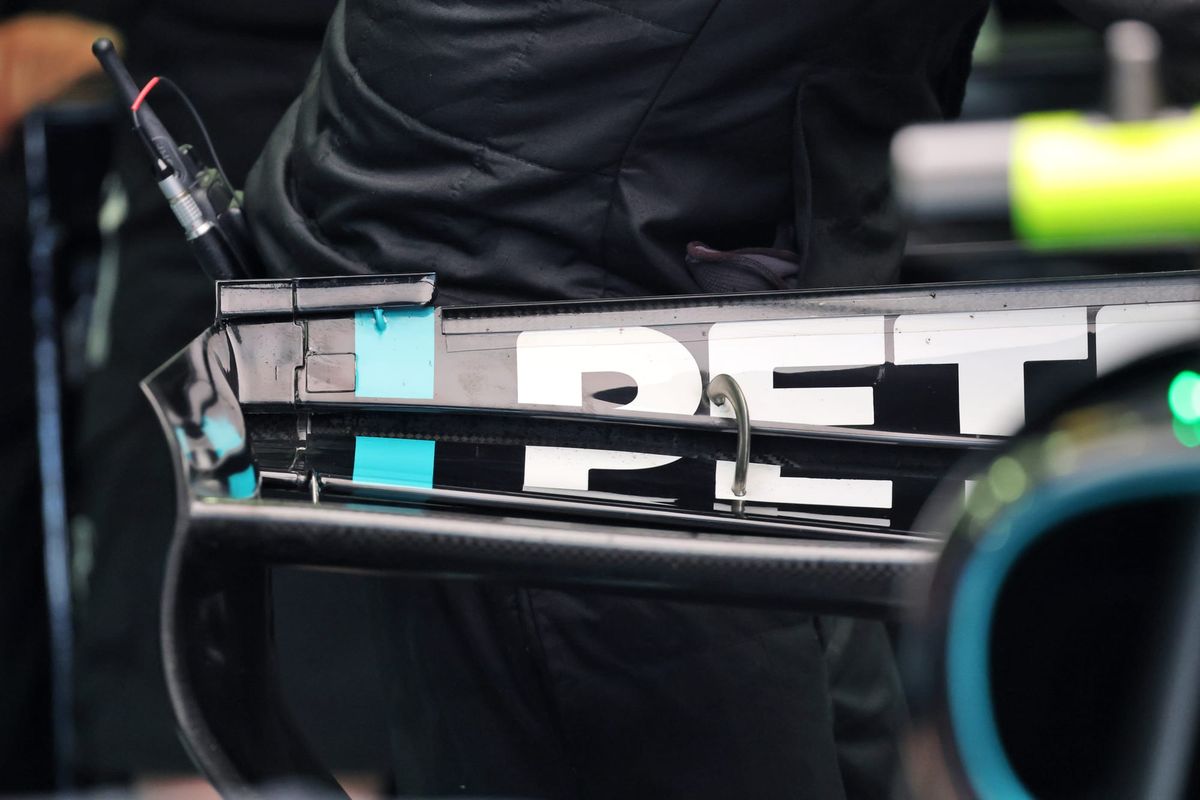
Mercedes has become the latest team to push the boundaries with its F1 rear wing design, with an interesting development appearing on the car on the final day of 2026 pre-season testing in Bahrain.
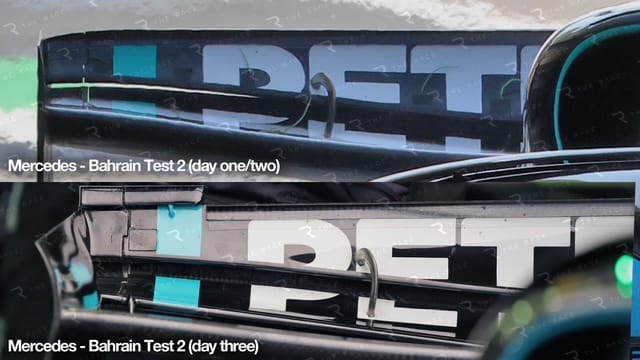
On the first two days of the Bahrain test, the W17 ran with a fairly conventional rear flap assembly.
However, for the final day of action Mercedes has added a small section which you could say acts as a fourth element in that area.
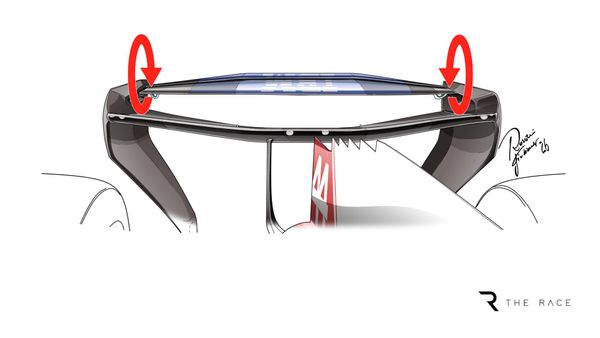
If you look at the wing across its span this outer section generates the most drag, relative to the downforce it produces, and it’s the area that potentially suffers from airflow separation.
This is because the airflow speed on the underside of the wing and on the inside of the endplate are traveling at different speeds. This sets up a vortex which is basically a rotation in that flow.
This is what is commonly called a ‘rooster tail’ when the car is running in damp or very humid conditions - the car is basically pulling that along behind it but it is serving no real purpose other than creating drag.
This small extension will reduce those potential separation problems when in corner mode and you are looking for maximum downforce, but also when in straight mode you will dump that extra drag that it creates, so gain a bigger drag reduction.
I call it a fourth element, although the regulations state three elements maximum with the rear two doing whatever you want to do when in straight mode.
But they also open up an area which is for the rear wing endplates, so I assume this is legal because of that potential endplate area.
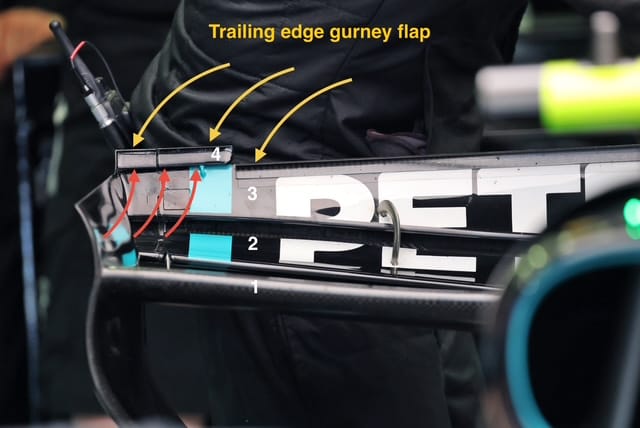
I have highlighted the slot gap (red arrows) that makes it a four element wing (white numbers) through that section and the staggered gurney flap (yellow arrows) along its trailing edge.
Making this section work harder and be less prone to airflow separation will actually increase the performance of the complete wing assembly.
I’m a little surprised that Mercedes has been able to increase the height of the rear wing by that much. Normally a team would design the upper trailing edge of the rear wing to be as high and as far rearward as the regulations allow.