Mercedes' big early weakness explained
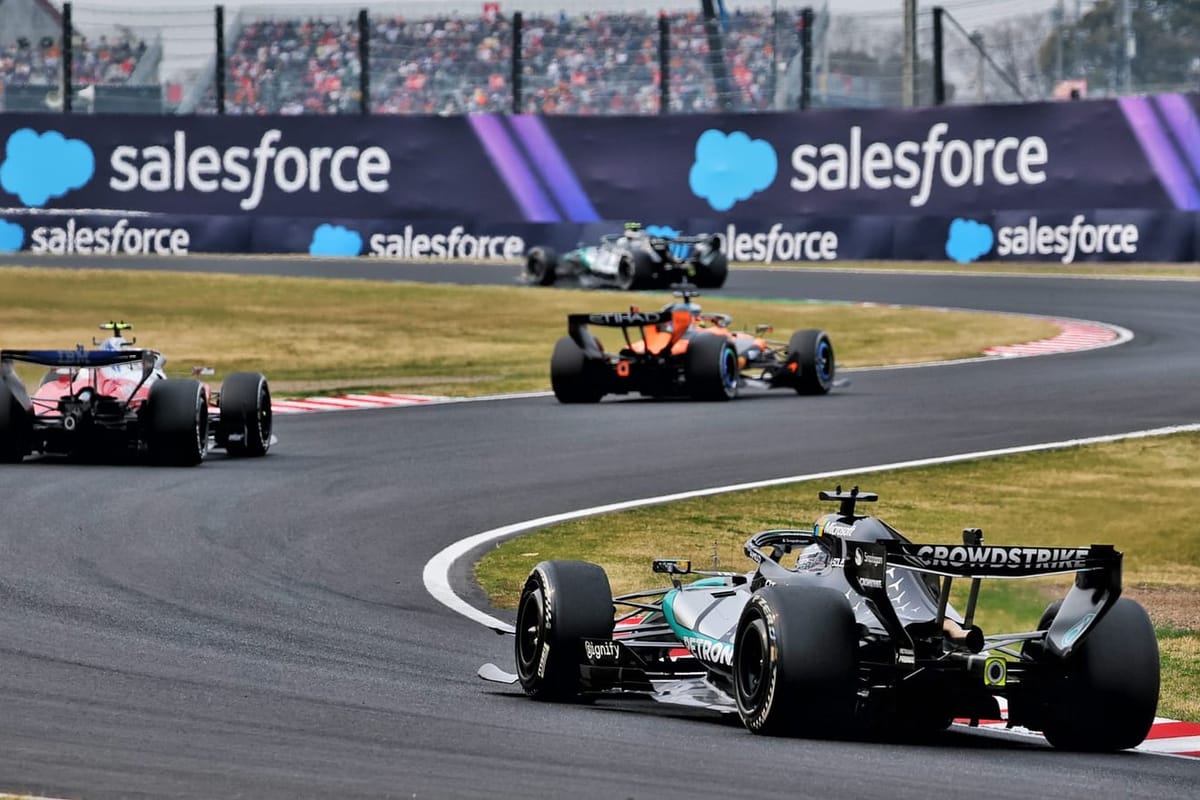
Mercedes has half-joked internally that one of its biggest early-season weaknesses does at least have the upside of making Formula 1 races more exciting.
With little doubt in the paddock that Mercedes has the best power unit and chassis, the fact that it has been so poor at race starts has spiced up the entertainment levels by forcing its drivers to stage fightbacks.
It has locked out the front row at all three grands prix so far, yet not once has it led into the first corner.
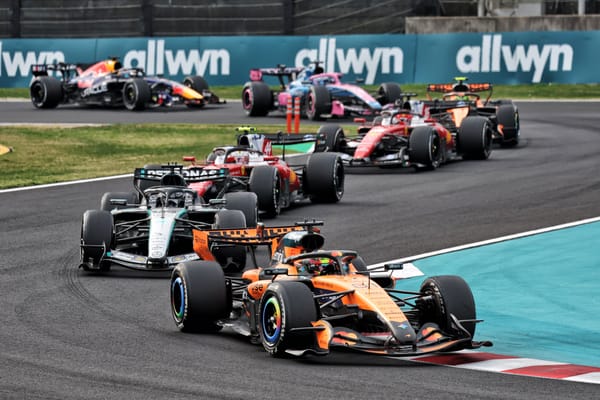
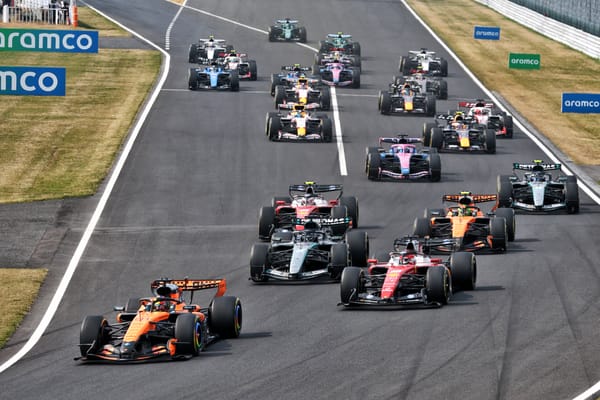
Twice it has been beaten by the fast-starting Ferraris, while in Japan McLaren's Oscar Piastri was able to surge into the lead from third on the grid as Charles Leclerc also leapfrogged the two Mercedes.
But though it is now clearly a trend, and may appear to be a key weakness that needs sorting, the poor starts at Suzuka were more down to circumstance than a sign Mercedes has made no technical progress.
In fact, from Mercedes' own GPS analysis of the post-session practice starts from the grid that are now a common theme of grand prix weekends, it reckons it has now got its procedures and power unit configuration into a place where it can match McLaren and Ferrari off the line.
So what went wrong in Japan?
From the outside, the starts in Japan appeared to have all the hallmarks of being a repeat of what took place in previous rounds - where Kimi Antonelli was hampered by excessive wheelspin and George Russell just did not get a good launch.
But appearances can be deceptive and, while things looked similar from the outside, the causes were actually a world apart.
For polesitter Antonelli, the wheelspin was not a repeat of the cold rear tyres that had been triggered by the inability of the Mercedes cars to do burnouts in Melbourne because they had hit their recharge limit on the formation lap.
Instead, it was simply a result of being a bit too greedy in terms of how aggressively he dumped the clutch when the lights went out.
A combination of that, allied to rear tyres that perhaps were not up to their ideal temperature, left him a sitting duck off the line and has given new championship leader Antonelli a clear area of focus to improve.
He has talked of the need to "practice some clutch drops just to get a better feel with it, because definitely it's been a weak point so far this year".
On Russell's side, the getaway was stymied by one of the quirks of the Suzuka grid in that it slopes quite aggressively downhill.
It means that when the drivers form up at the lights, they need to apply some form of brake pressure to stop the cars rolling forward.
And it was too slow a release of that trail braking force - which is as much a team-influenced factor as it is the driver - that meant Russell's second phase of the launch was not as good as it should have been.
Without that braking problem hampering his acceleration, there may have been a chance for Russell to have held off the cars behind through Turn 1.
The safety car restart issues
It was not just the initial race starts that have proven to be a problem for Mercedes, as safety car restarts have not been perfect so far either.
In China, after the Lance Stroll-triggered safety car, Russell fell behind the Ferraris in the early laps after the restart when racing resumed before later staging his recovery.
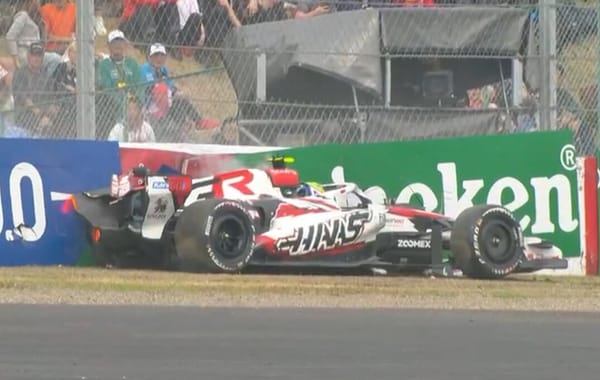
And it was the same story in Japan as, after the restart for the Ollie Bearman crash, third-placed Russell found himself moving backwards rather than forwards.
He lost out to Lewis Hamilton down the start-finish straight when things got going again, and a few laps later found himself pounced upon by Leclerc.
The triggers for this were related to an issue that Russell and Mercedes have been dealing with all season: the recharge limit.
As part of the F1 2026 rules package, each driver is limited to a maximum amount of harvesting over a single lap - and once the limit is hit then no more energy can be put in the battery.
So if you hit the limit too early, and then end up with an empty battery, then you can be left very exposed.
That is exactly what happened to Russell at the restart, as that recharge limit was triggered as the cars formed up ahead of the restart, giving Hamilton the opportunity to pounce.
As Russell said: "I couldn't recharge my battery at the safety car restart, so Lewis flew by me."
Then, with 16 laps to go, Russell's afternoon was made even more difficult as Leclerc swooped around him on the run towards Spoon curve.
Mercedes team principal Toto Wolff talked afterwards of a "software glitch that gave him a super clip" being the trigger for what happened.
It had been a consequence of Russell and Mercedes playing around with harvesting - in a bid to adjust deployment around the lap - in the hope of it giving the Mercedes a bit of extra boost later onto challenge Hamilton into either the chicane or Turn 1.
So in trying to save a bit more energy into Turn 13, it activated the super clip that further added to Russell's woes.
As Russell remarked afterwards, on a day when he had suffered from a poor start and a badly timed safety car, the restart issues meant it was "just one thing after another."
Will Miami be fourth time lucky for Mercedes in finally nailing a race start?