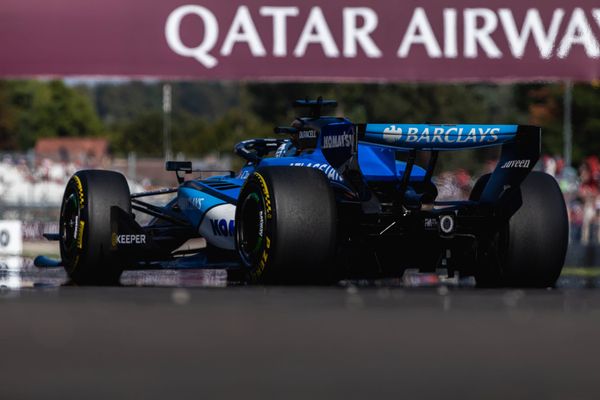
Where McLaren's been brutal with big F1 body package change
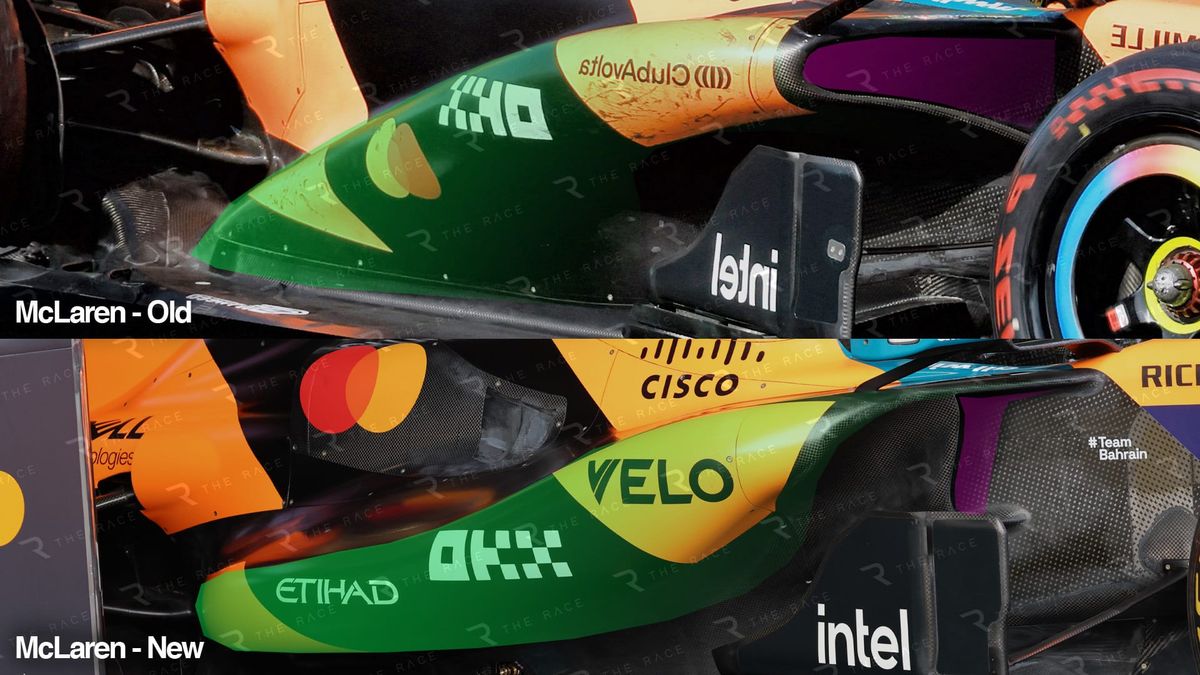
McLaren continues to push on with upgrades, with some visually striking developments appearing in Baku. For the Azerbaijan Grand Prix, it has introduced more or less a complete new body package, the most visible elements of which are the sidepods, sidepod intakes, engine cover and the profile of the airbox intake/rollover bar fairing.
It has struggled with these new regulations in terms of efficiency. McLaren has very seldom been up there as far as straightline speed is concerned, so I'm pretty sure this package was rushed through for Baku - as straightline speed there is a prime mover as far as laptime is concerned.
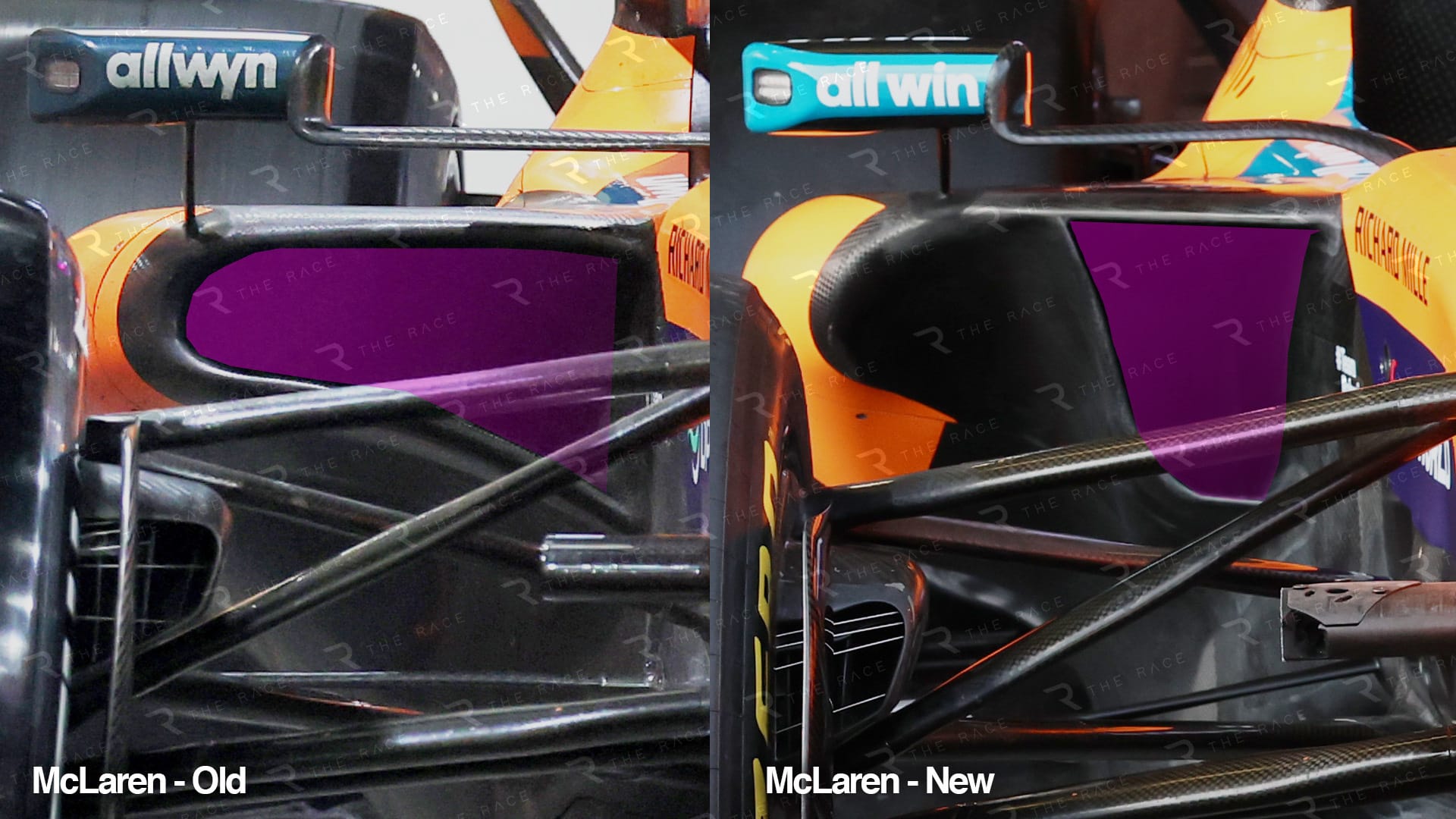
Starting with the radiator intakes, McLaren has gone off the beaten track here. If anything, it has gone down a similar route to what Audi has been running since the start of the season.
It's a fairly brutal change and you might call it a bodged-on blanking panel. The main reason for this is that this section of the sidepod incorporates the side-impact structure and is bonded to the survival cell, so to completely change that is not easy or, working within the budget cap, cheap.
However, if it improves the performance of the car, then it is better to get it on there, suffer the potential remarks (like mine) and reap any benefit in laptime possible.
The intake area highlighted in magenta is fairly similar as far as the open area is concerned, but the airflow into that area is coming from a very different place upstream. As most teams do, McLaren loads up the outer section of the front wing just inside the inner wheel fairing/brake duct inner surface. This change in the opening position will mean that loading up the front wing as required to get the balance required won't affect the cooling quite as much.
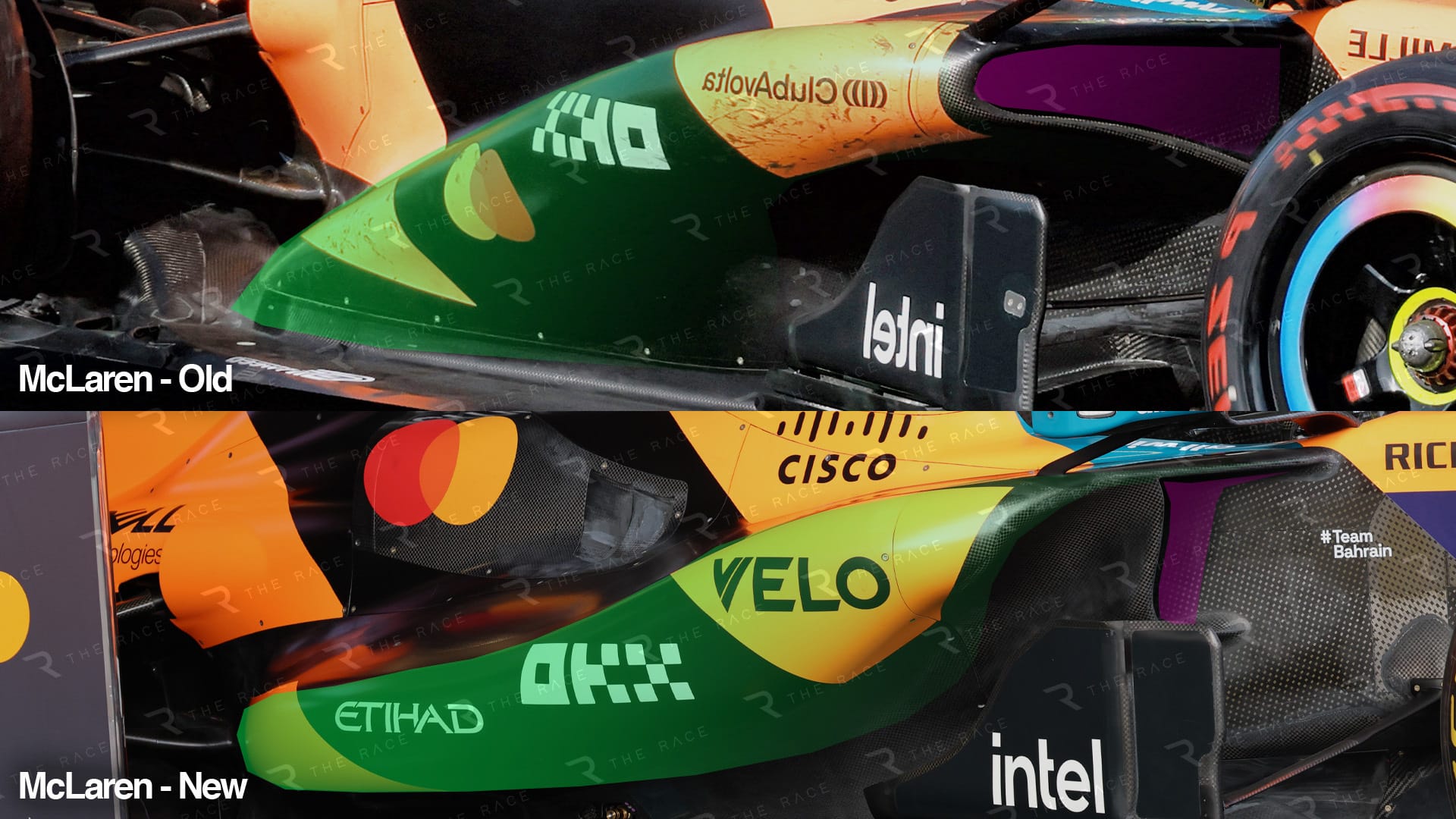
This has also allowed McLaren to revise the unseen cooling system. I would assume it has moved the radiator cores forward. This change in sidepod side profile will induce more downwash earlier.
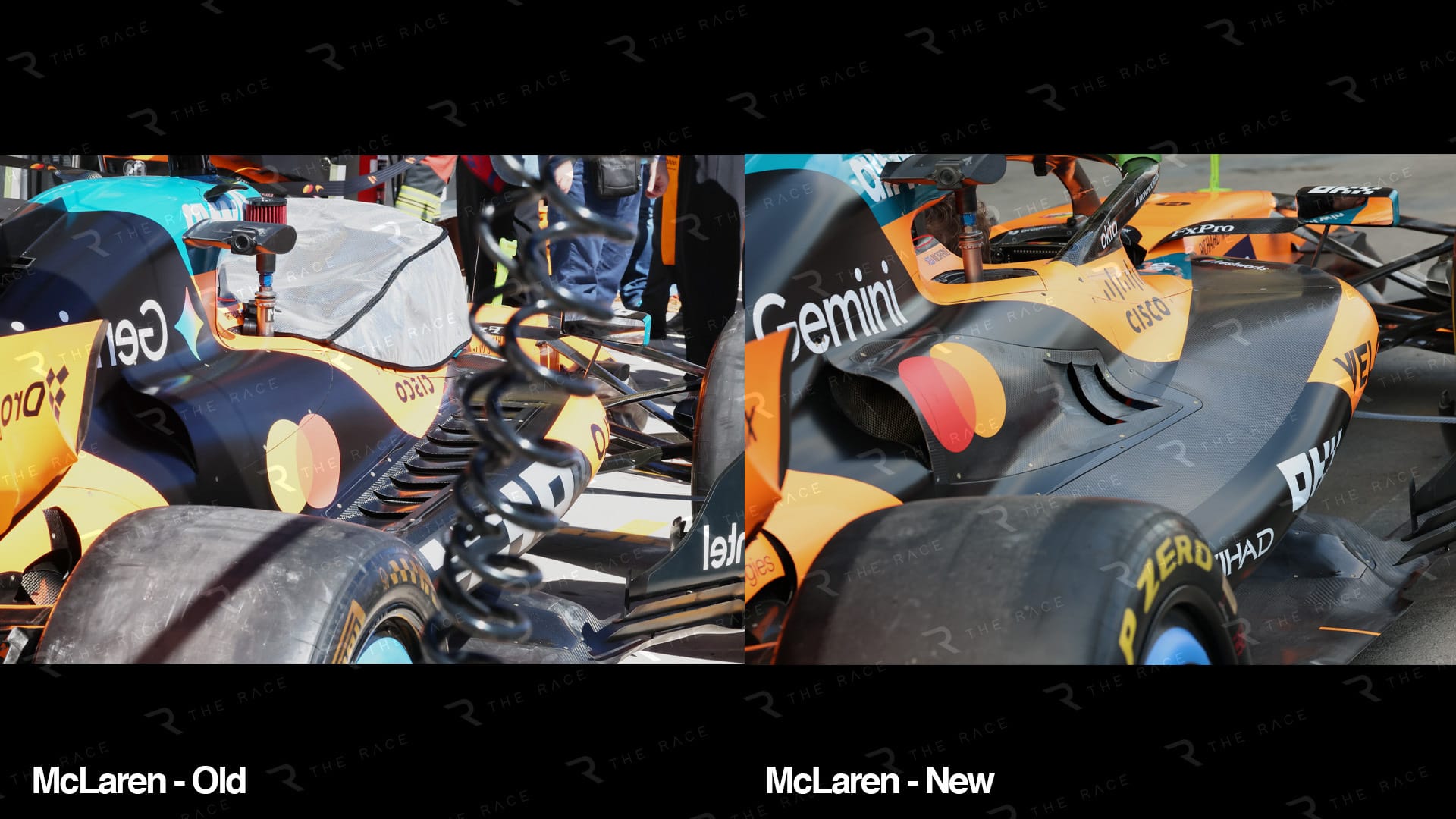
This sidepod change has also allowed it to revise the outlet louvres. It's difficult to say to what extent, as these are normally circuit-dependent. Slow, hot circuits mean the car needs more cooling. Baku has decent straights with high top speeds, meaning that cooling is not quite so difficult.
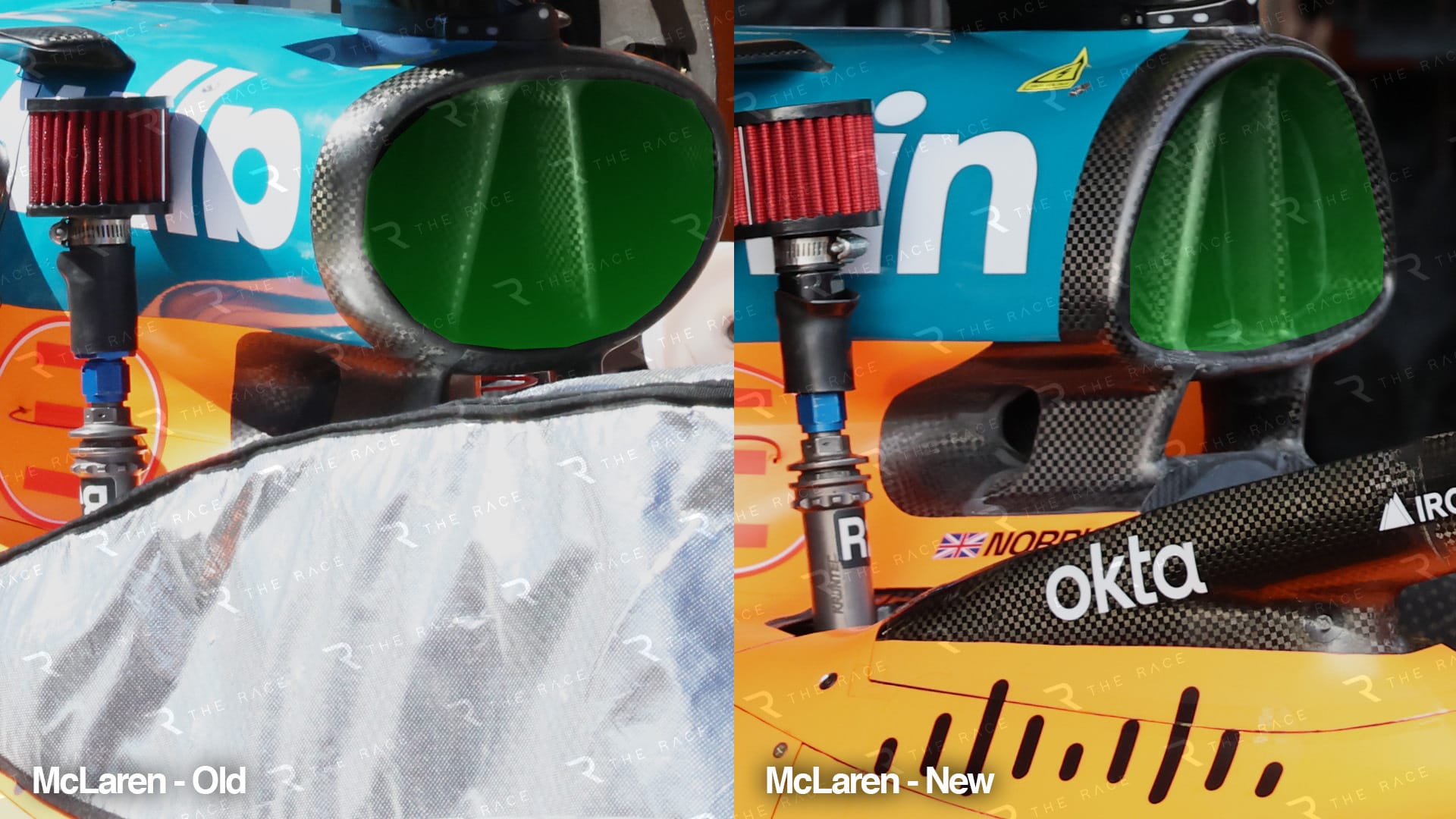
The change to the airbox intake from more of an ellipse to a triangular shape is again in line with cooling requirements. As I often say, airflow used for cooling is wasted as far as producing downforce is concerned. However, if some of the required cooling airflow has been moved from the sidepod intake to the airbox intake, then it is probably less dramatic as far as those losses are concerned.
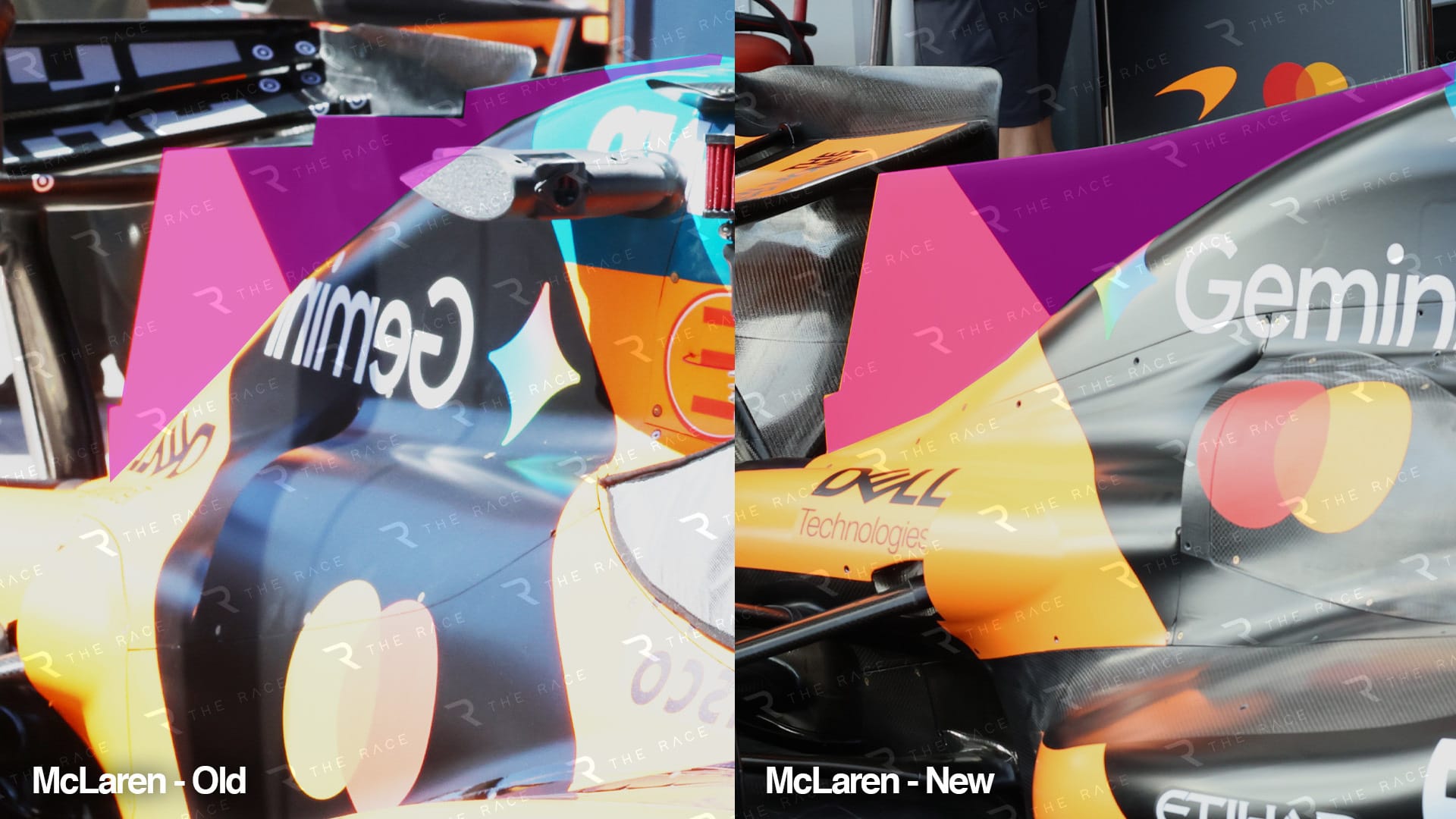
In line with that airbox intake change, McLaren has also altered the engine cover fin, which is highlighted in purple. These steps on the upper edge of the older version of the fin would generate vortices when the car is in yaw mid-corner.
Whether these vortices help or hinder the rear wing performance is down to hours and hours of CFD modelling and probably tunnel testing. Their requirement will also be dependent on rear wing configuration.
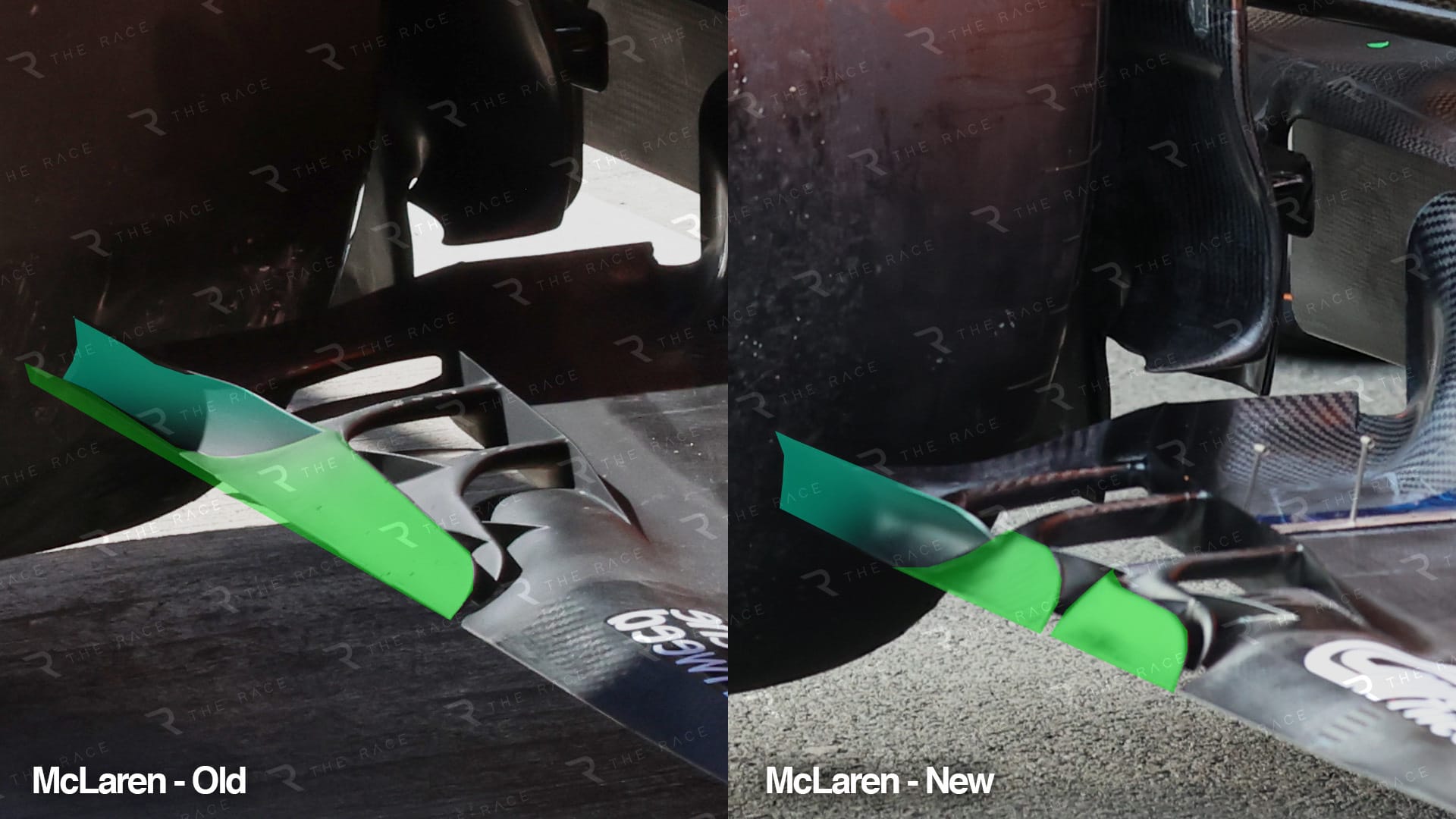
There are also small detail changes to the area in front of the rear tyre. This area is critical to the amount of inwash and outwash. The more outwash you can generate, the better the sealing of the underfloor and, in turn, the better the performance of the diffuser.
It will be interesting to see how these developments have improved the efficiency of the overall car. Can McLaren run a higher downforce level for these slow corners in Baku while reducing its straightline deficit?
Baku is definitely the circuit where you will find out very quickly.