Why F1 risks 'horrific incident' if Brazilian GP risks are repeated

Formula 1 might have proved in Brazilian Grand Prix qualifying that its 2026 cars can run on full wet tyres, but its problems in handling rainy conditions are not over yet.
In fact, Mercedes driver George Russell warned that if the kind of weather that drivers faced on Saturday is repeated in the race, then the chances of trouble are very high.
"I love driving in the rain here but, at some point, if that was a race, there was no way we should be driving in that because the chances of seeing a really, really horrific incident are very, very high," he said.
One of the running themes throughout the start of the current rules era was that the high-torque characteristics of the current power units allied to the performance of Pirelli's intermediates were a total mismatch.
Drivers had warned that problems in getting temperature into the inters - which were the default wet-weather tyre - made them quite a challenge.
Alpine's Pierre Gasly, who was far from impressed after running a wet-weather tyre test at Magny-Cours after the Miami GP in May, predicted an "elimination game" when talk of them needing to be raced earlier in the year cropped up.
Recent races have proven that the inter was not as bad as initially feared, but the doubts about the wet remained until now.
Wets became safety car tyres
F1 has faced years where it has been heavily restricted in terms of how wet things got before sessions could not run.
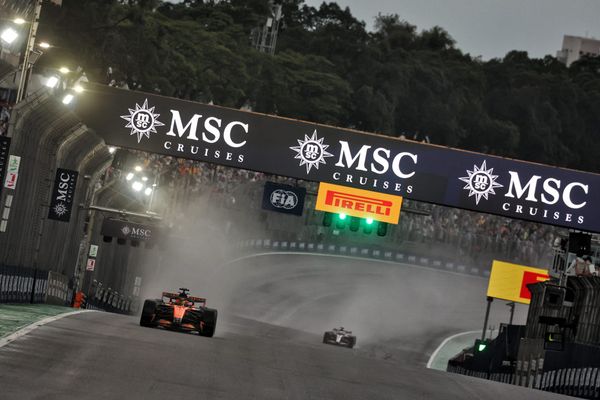
The limiting factor was more related to poor visibility caused by the rain, with the ground effect cars throwing up too much spray behind them for drivers to see when running close to each other.
This often meant drivers would stick it out on the intermediate tyre because, when conditions got bad enough for the wet, then cars would not run anyway.
It was often remarked that the wets were effectively only 'safety car tyres'.
All throughout 2026, the wet tyre had never been used in anger. It had been used on the formation lap in Malaysia prior to the power unit problems that forced a lengthy stoppage, by which time conditions had improved enough for inters to be used.
In the wet Singapore GP sprint race, the intermediate was again the default tyre.
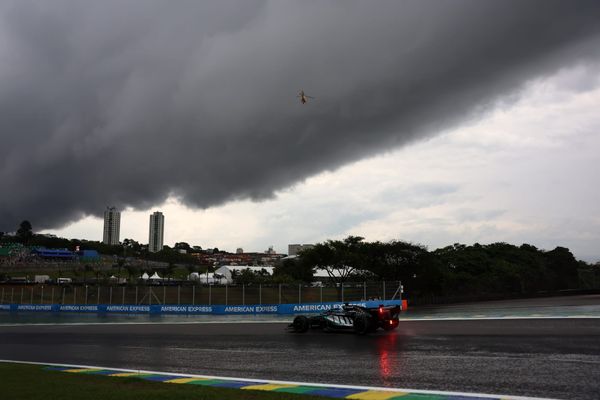
In Brazil, however, conditions got so bad that there was too much standing water for the intermediate to be used when the delayed qualifying session finally got back under way.
The wet tyre coming into play in anger for the first time was the consequence of a few factors.
The first was that by venturing into territory where the water was too deep for the inter tread, the wet was necessary.
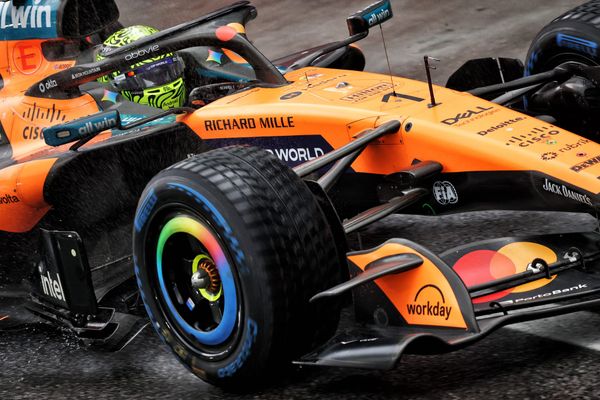
F1 drivers found themselves forced onto a tyre with a deeper tread and a lower operating range, which then proved less prone to aquaplaning and at a better running temperature - therefore reducing the risk of crashes.
Also, this current car ruleset seems to have opened a window of wet-weather operating that has not existed before.
The work that the FIA has done to pull back energy deployment in low-grip conditions meant that drivers were not overwhelmed with too much power.
Furthermore, while the 2026 cars have proved to be a handful in the dry when on the edge, there seems to be something in their behaviour that makes them more compliant in the wet.
McLaren team principal Andrea Stella said there seemed to be a different dynamic at play in the wet.
"In the dry I would say that because of the aerodynamic regulations and because of some specific aspects of how the tyres work, the cars in '26 are more difficult to drive," he said.
"But if we look at today's session, which possibly has been the most comprehensive wet session, in which we have had wet tyres, intermediate tyres, more water, less water, I would say that it's been relatively straightforward from a driveability point of view.
"I'm not sure if this is because of the car or because of the tyres, but the combination possibly is less critical than this combination is in dry conditions."
It could be that the progressive loss of grip of the current cars in the dry, compared to the snaps of the older generation of cars, carry over to the wet and make things more predictable.
Another important element was that the FIA proved to be quite bold in the conditions it felt comfortable to get qualifying going.
Mindful that there was a window to get things rolling before worse weather arrived, F1 race director Rui Marques picked the moment when safety car driver Bernd Maylander felt that conditions were safe enough to run in - providing marshals could clear away a few areas of standing water.
While conditions seemed on the edge - and Valtteri Bottas, who was first driver out on track, called it a fight for "survival" in the first moments - a lot of cars running together actually helped move a lot of the water.
Carlos Sainz reckoned that the timing was just about spot on.
"It felt a bit punchy when we left in the wet because we were aquaplaning in sixth and seventh gear down the straights and, if you lose the car at those speeds, it's always going to be a big one," he said.
"Also very little visibility when you were running close to a car, but we are not forced to run close to cars in quali, so you can create a bit of a buffer to see. But it was very sketchy for two laps."
From the drivers' perspective, the consensus was that it was the right call to get qualifying going.
Fernando Alonso said of conditions: "It was on the limit, yeah, but it is better than waiting in the garage."
Racing in the rain
But what works when drivers can leave gaps to help them see better only really applies for qualifying.
A different approach will be needed by the FIA for the race when the name of the game is to be as close as possible to the car ahead.
That is what Russell was referring to when he talked about the risks of something big happening if the race took place with the same levels of water as at the start of qualifying.
Sainz agreed that it would be difficult to get going based on how things were at the start of Q1.
"Like those first two laps [of qualifying] I think it could have been very tricky at the start of a race with the visibility, it would have been zero visibility basically and a lot of aquaplaning so it would have been interesting," he said.
Despite qualifying having been completed without any major incident, Red Bull's Isack Hadjar said that a lack of grip from the wet was still something that needed addressing.
"Honestly, I expected more grip," he said. "Usually on full wet, everything's a bit more comfortable: you put them on, and basically you run through the aquaplaning.
"Today was not the case at all, so it needs to be a lot better for next year because we cannot possibly race in these conditions."
Hadjar may find out as soon as Sunday if that really is the case or not.