What's really going on with Verstappen's McLaren F1 talks
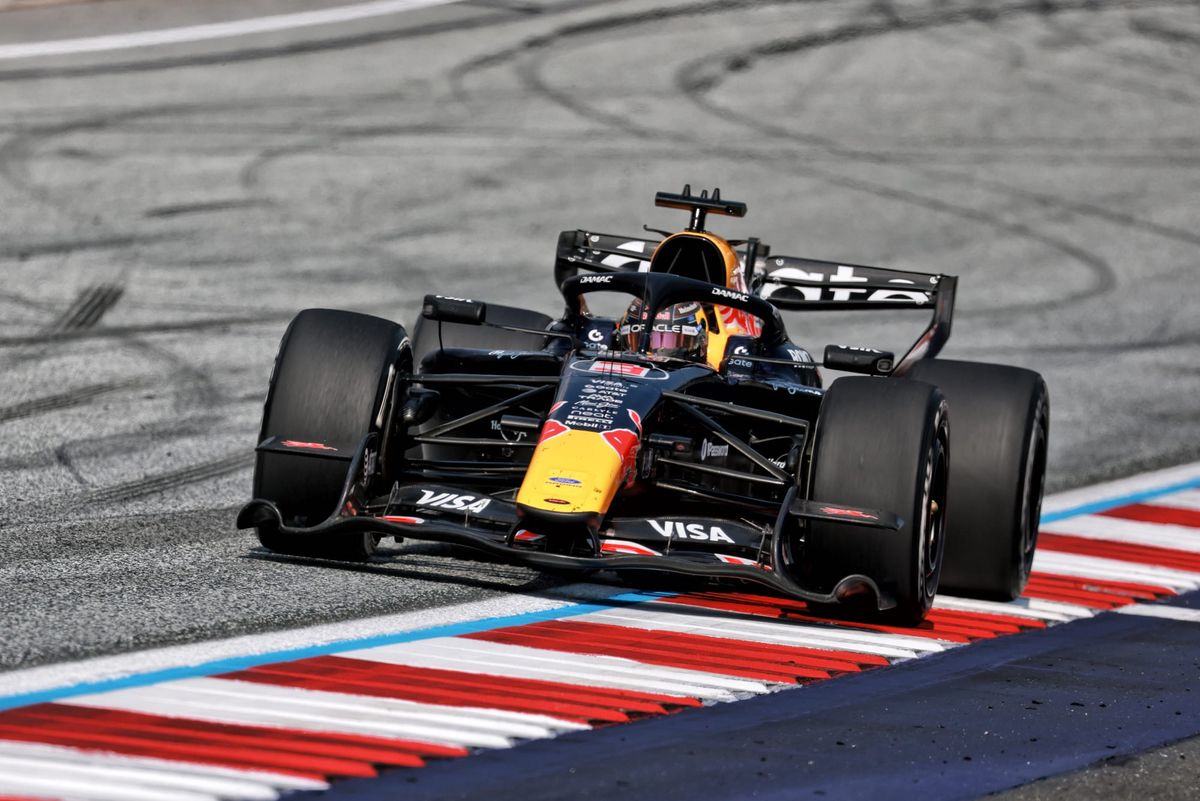
The next few weeks will be crucial to deciding Max Verstappen’s immediate F1 future, and while Red Bull was focused on successfully introducing its new car concept at the Austrian Grand Prix, Verstappen’s management was busy holding talks with a rival team.
British news outlet The Mail Online published a story on the Thursday of the Austrian Grand Prix reporting that Verstappen’s management had engaged in “preliminary talks” with McLaren Racing CEO Zak Brown about a potential deal.
The Race understands those talks certainly took place - and Brown took the meeting after being approached because after all, that’s his job to do so - but this is not about some power play to lever Oscar Piastri immediately out of McLaren and get Verstappen into that seat for 2027.
Verstappen has a contract with Red Bull running into 2028, but Verstappen’s contract also contains a clause that allows him to exit the team if he’s not inside the top two in the drivers’ championship at some unspecified point in August 2026. There’s also believed to be a mechanism that means Verstappen does not have to notify the team that the clause is being activated until October.
But where does Verstappen go if he activates this clause? All the alternative top seats - at Mercedes, Ferrari and McLaren - are all but locked down for 2027.
Charles Leclerc recently extended his mega-deal with Ferrari into the 2030s; Lewis Hamilton has a contract for 2027 and is understood to hold an option for 2028 too; reigning world champion Lando Norris and McLaren team-mate Piastri are both understood to be under contract for next season at least, and George Russell is staying put at Mercedes.
When Mercedes announced Russell and Kimi Antonelli as its driver lineup for 2026, it was curious that there was no reference to the lengths of the deals, or even a vague confirmation they were signed up to ‘multi-year contracts’.
This was widely understood to be Toto Wolff keeping his options open in case Verstappen became available, but Mercedes and Russell insisted there was a multi-year agreement in place beyond the end of this season.
Antonelli will certainly be on some kind of long-term agreement, likely dating back to his graduation to F1 in 2025, and his performances so far in 2026 certainly merit him remaining in place regardless.
Whatever mechanism that existed to ensure Russell remains at the team beyond this year appears to have been triggered, closing off the only realistic short-term option for Verstappen that isn’t staying at Red Bull.
This should also mean the players further down the priority order in F1’s driver market can start locking in their own plans. Flavio Briatore, for example, was recently quoted as saying he was waiting on any potential Mercedes driver availability before deciding Alpine’s 2027 lineup.
Where Verstappen stands
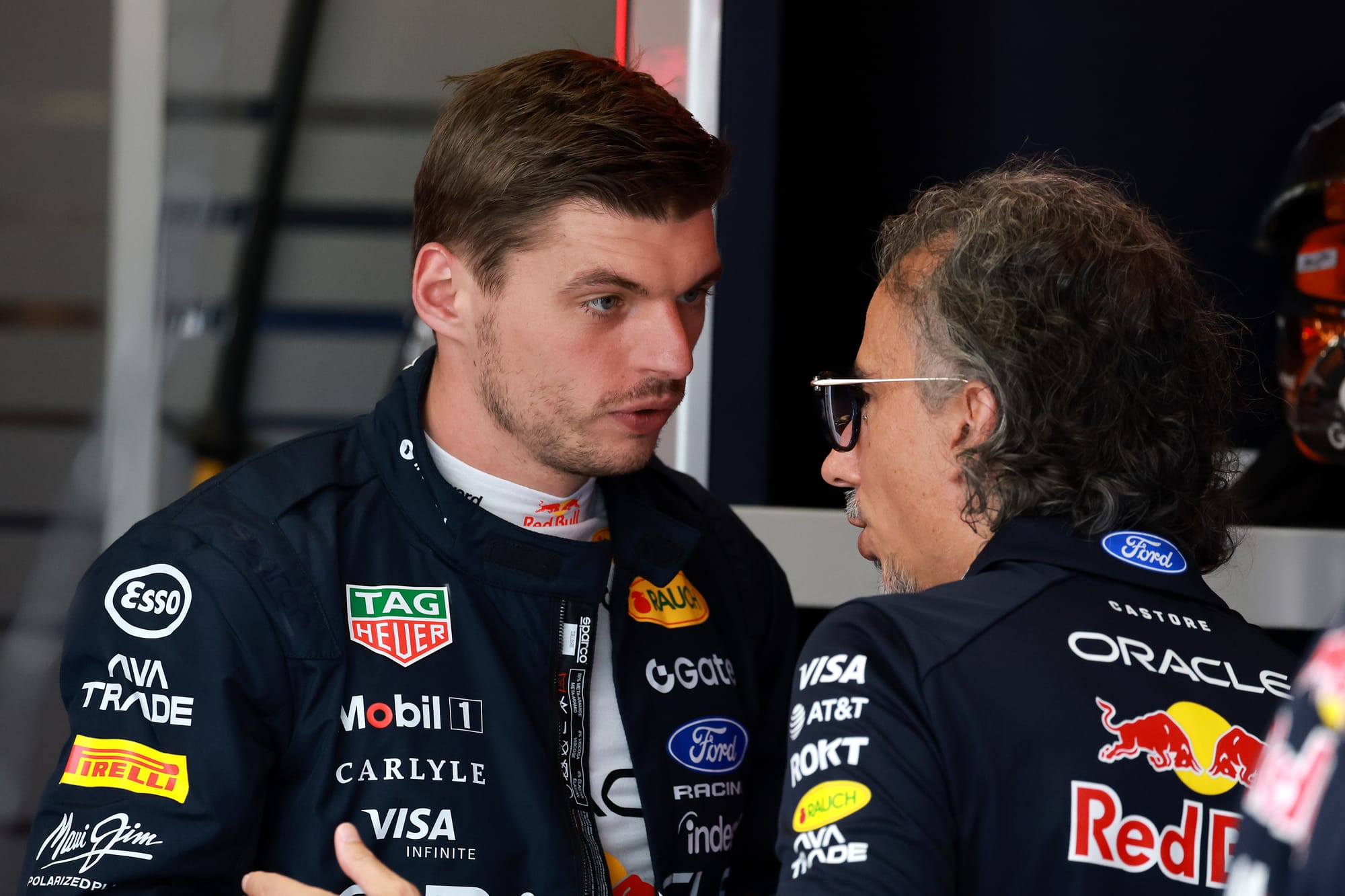
The bigger question is: where does all this leave Verstappen? And those tentative McLaren talks are a big part of that equation. This is about the longer term picture of F1’s driver market in 2028 and maintaining pressure on Red Bull in the meantime.
Verstappen’s often said he wants to remain at Red Bull as long as he’s racing in F1. But that loyalty only extends so far as Red Bull’s competitive standing.
Verstappen’s average qualifying position so far in 2026 stands at 7.4, though that is in large part down to the first three races of the season, when Verstappen’s best qualifying was eighth in China.
Since the enforced April break and Red Bull’s first major upgrade of the season for round four in Miami, Verstappen hasn’t qualified outside the top six and has twice made the front row of the grid. So performance has markedly and consistently improved, even though the power unit continues to be troublesome - particularly off the startline.
Verstappen’s management was quoted in the Dutch press ahead of Austria saying Verstappen wants to remain at Red Bull for life but “wasn’t born to race in the midfield”. How do they define where the midfield begins? That remains unanswered.
What’s most likely happening here is the Verstappen camp utilising what leverage it still holds in the driver market to prevent Red Bull from becoming complacent.
Red Bull knows Verstappen lacks viable options for 2027, the rest of the grid knows that too, and certainly Verstappen’s management does.
But what happens after that is a completely different question - and there’s a realistic potential scenario here where Verstappen activates his exit clause this summer and then tries to squeeze Red Bull for a better deal over the long term to prevent the possibility of him joining a rival for 2028.
Team Verstappen's priority is definitely for Max to remain at Red Bull - but only if the car is good enough to fight for titles. That remains the primary driving force here.
And they know the driver market for 2028 is a lot more uncertain - so in the meantime, Verstappen wants to maintain pressure on his current team to get back to the title-contending level that he expects.
After battling the Mercedes drivers for pole position in qualifying in Austria, The Race asked Verstappen what he wanted to see from the team to be convinced about its longer-term potential.
He replied: “They know what I want” and we understand he visited Red Bull’s headquarters in Milton Keynes prior to the Barcelona GP to deliver that message.
Successful upgrade is well-timed
Red Bull has been on an upward performance trajectory since Miami in early May, but the Austrian Grand Prix was a significant further levelling up for Verstappen - a race in which, for the first time this season, he felt that he could legitimately compete for victory.
The fact he finished sandwiched between the two Mercedes, with less than two seconds blanketing the three cars, tells you this was a tight battle - and Verstappen’s race pace was unquestionably a match for what has usually been the dominant force in 2026 so far.
Race winner Russell even admitted afterwards that Verstappen’s pace had made his life “uncomfortable”.
It was clear to see that Verstappen’s early Q3 pace in qualifying on Saturday - where he lapped within a tenth of both Mercedes before a problem with the rear wing transitioning from straight mode to corner mode threw him into the barriers - was genuine.
He was a proper threat to Mercedes in this race and very likely could have won it had he not started down in fifth and had to spend the early laps battling past Lewis Hamilton’s energy-starved Ferrari.
Even with that delay Verstappen forced himself into contention but then felt his pace in the second half of the race fell away - owing to an unspecified problem on the Red Bull’s rear axle.
One of the most pleasing aspects for Red Bull will be the fact it was able to get this major Austria upgrade working properly after a difficult time in Friday practice. An overnight simulator shift from 2015-16 Formula E champion Sebastien Buemi helped Red Bull knock the car into shape for Saturday and then what Mekies called Verstappen’s “magic” did the rest.
The RB22 is also understood to now be running close to the regulation weight limit, after previously giving away an estimated two tenths of a second to being overweight.
You have to be wary of getting carried away with just one strong race. We only need to consider the fact Ferrari went from race winner to abject disappointment in the space of one high-altitude circuit to realise how quickly the picture can change in F1. And Verstappen also feels Red Bull has some work to do to rediscover its former title-winning edge.
But there’s no doubt Red Bull has suddenly taken a massive step forward in the short term - and the timing couldn’t have been more perfect just as Verstappen’s management team fired its first major driver market warning shot for 2028.