How Red Bull's improved its F1 engine with no upgrades
Lewis Hamilton is calling it the most powerful engine in Formula 1. Toto Wolff says it's clearly not lagging behind. The FIA has officially labelled it the benchmark.
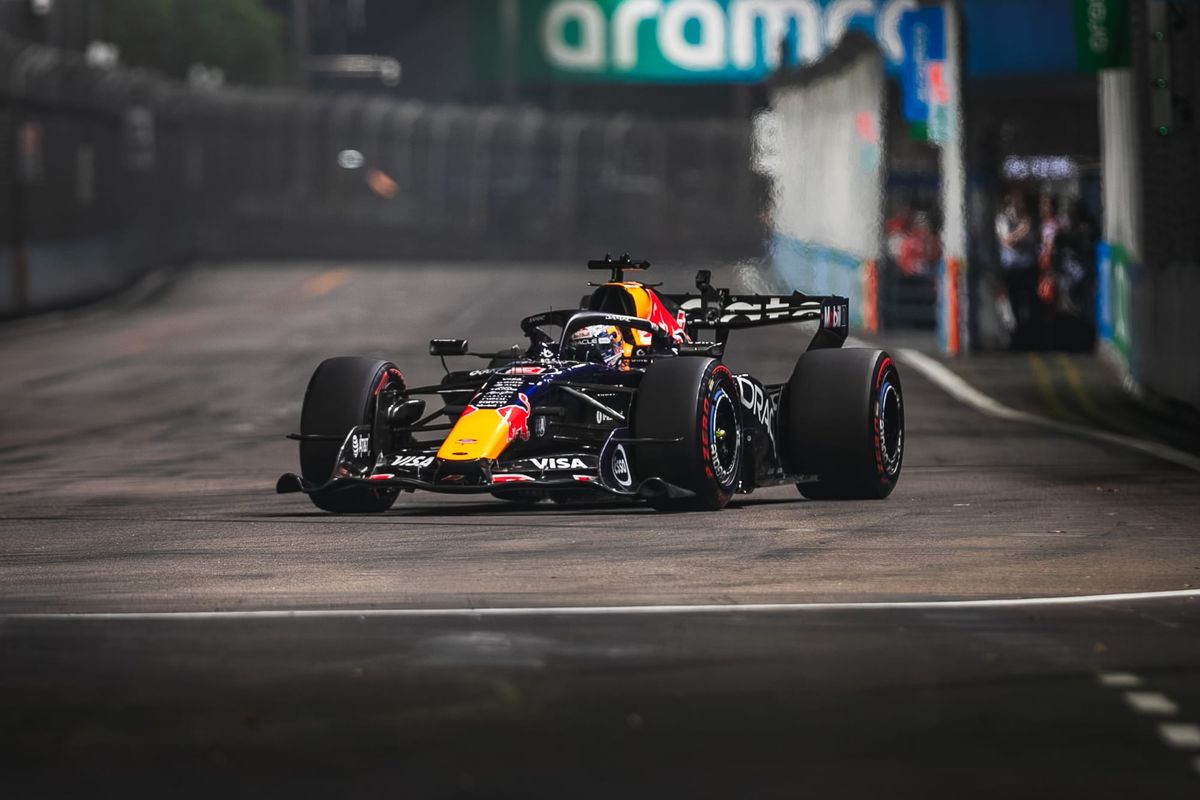
After Max Verstappen’s back-to-back wins in Malaysia and Singapore, the paddock consensus is clear that Red Bull’s recent gains have come as much from the power unit as from its chassis.
Yes, the team's Baku upgrade delivered the downforce step and a more consistent aero platform that has put Verstappen in a super happy place with the balance.
But in F1 2026, cars and drivers are nowhere if the power unit is not up to the job – and on this front Red Bull Power Trains (RBPT) is no longer playing clear second fiddle to championship leaders Mercedes.
Telemetry traces and those ghost lap replays have highlighted that Red Bull’s poles have been won as much on the straights as the corners – with a top speed profile that was not there earlier in the year.
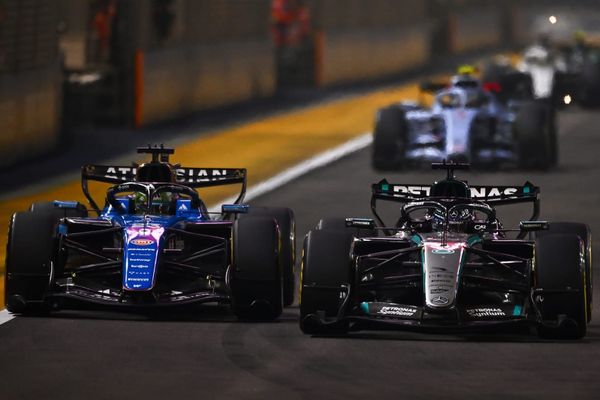
As Hamilton said after being unable to challenge Verstappen in the Singapore sprint: “To overtake the most powerful engine on the grid is not so easy.”
What is fascinating about this shift in the battle between power unit manufacturers – where once Mercedes was a step above everyone – is that it has happened without any hardware steps.
While Ferrari has used both of the upgrades it is allowed under the ADUO (Additional Development and Upgrade Opportunities) rules, neither Mercedes nor Red Bull has brought any new homologations.
Mercedes is holding fire until at least the United States Grand Prix, while Red Bull can't have anything new because it's been ruled as the benchmark engine (twice) by the FIA’s analysis.
But just because there have been no specification updates doesn't mean Red Bull hasn't unlocked more performance.
The story of its season, and how it's at a point where rivals are admiring what it's doing, is because it's more consistently using the full potential of its power unit.
Like a car's peaky aero package that delivers a lot of downforce in a very narrow window, Red Bull's power unit shone - but not at every track and every lap.
Finding the right level
There had been signs of promise from the Red Bull engine earlier on in the year – remember Wolff praising it as the benchmark in Bahrain testing.
But there was no evidence of that characteristic being there regularly over the first half of the season. Mercedes looked to be in a class of its own.
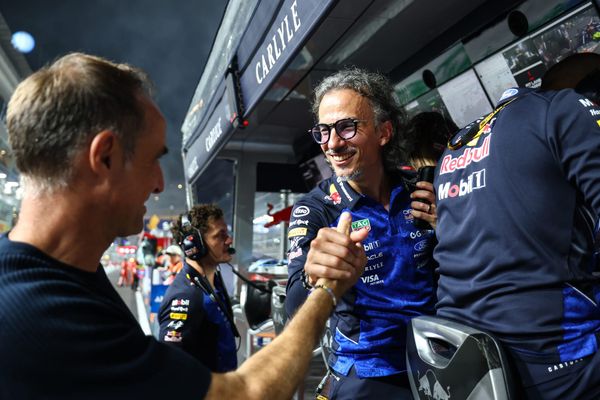
Looking at how things have changed, RBPT’s technical director Ben Hodgkinson told us the key steps forward are coming from calibration work – which has involved fuel supplier Exxon Mobil and Red Bull's own engineers at Milton Keynes.
This is effectively detailed work to marry up power output, fuel consumption, energy harvesting, and deployment strategies.
“We've sort of found that the most powerful engine that we can create has made a combustion system that is quite challenging to make sure you always get the maximum performance out of it,” Hodgkinson told The Race,
“That's put an awful lot of pressure onto the calibration team to try and make sure that it's always working at that right level.”
The picture at the start of the season of how things looked between Mercedes and Red Bull was also exacerbated by decisions taken at Milton Keynes to hold fire in committing to its design.
It elected to keep developing longer than originally planned. This meant it was still pushing forward with its design when, ideally, it should have been doing the preparation work on durability and calibration.
“At our original point in the pre-season, when we were planning to freeze the spec, we weren't really happy with the performance levels,” said Hodgkinson.
“So we made the decision to just keep going, which was giving us less and less time to do durability runs and do all the calibration work that we needed to do.
“We actually started the season with quite immature calibrations. But they have got better and better throughout every single race.”
Hodgkinson says the improvements have never stopped and there was a “nice step of learning” between the Baku weekend and Sepang – where that maiden RBPT win was delivered.
“This was able to make sure that the engine was performing closer to its best at all times,” he said.
“We sort of have an engine that sometimes underperforms to what we know it can do. There has always been this prize that if you can get it performing at the top of its range for every single lap, we're going to be in a really good place.”
But it's not just understanding the power unit in isolation that Red Bull has made progress this year. The F1 2026 rules have meant power units and chassis are having to work in closer unison than ever before, and this is an area where things have moved a lot at Milton Keynes.
Hodgkinson adds, “There's been a much, much deeper collaboration between the chassis and the PU side.
“It is about how you balance energy and deploy it, where you can harvest it and working with the drivers. I can really see how that team is just getting stronger and stronger. When we win, it really is a one-team victory - evidence of us all coming together.”
Verstappen’s back-to-back wins in Malaysia and Singapore, plus the pace it showed in Baku, have shown that the Red Bull package is not lacking anywhere.
As Wolff said: “You can’t see that it’s lagging. They have done it very well. The ICE seems to be very competitive. Obviously, you can see that with ADUO, but also in terms of energy recovery and energy deployment there. It’s pretty good.”
A 2027 opportunity
Hodgkinson thinks the RBPT is not at its peak yet – with the ever-improving calibration pointing to further gains this year.
“There's still improvement to be had just from the calibration side, so I think that you'll see a bit of that this season,” he said.
And then of course it must not be forgotten that a new fuel flow regime and a change of turbo boost pressure will somewhat reset the power units in 2027.
“What should have been a year of refining things is kind of a year of going again on the combustion system,” said Hodgkison, who sees opportunity for gains even if RBPT remains without any extra ADUO allowances.
“We've learned an awful lot about how to get the best out of this combustion system, and so the changes that we're making for next season are from that learning.”
Hodgkinson is not the sort of person who is happy to rest on his laurels.
“I think there's a lot that could still be got through the calibration,” he said. “I can see our engine; there's still a margin to its theoretical best that we see on dynos.
“And actually, it's not all down to calibration to solve that. You can make some hardware changes that make it a bit easier too, or a bit less of a diva, to try and use some terminology that's often used in F1.
“Our combustion system could be described as a bit of a diva, and we need to make it slightly easier to extract the best out of it.
“So that's some of the changes that we're making for next year, and hopefully we can get a nice step on in performance.”
It is little wonder Mercedes is predicting a tougher title battle than it's had this year.
Wolff said after Singapore: "One thing is for sure: next year it's full-on the fight between the teams and Red Bull is part of that."