How Ferrari's mastering F1's new hidden development war
Lewis Hamilton's surprise Barcelona Grand Prix win was certainly helped by the downforce gains that Ferrari brought as part of a major Formula 1 upgrade package.
But it has emerged there was an extra interesting contributor to its success, in an area where a hidden development war appears to be breaking out.
Mercedes had been the early-season benchmark when it came to tyre management, especially with Ferrari having struggled in this area. But the tables were turned at Barcelona.
On a race day when keeping the tyres alive was critical to success, as thermal degradation was the worst it had been all season, Hamilton and Ferrari were every bit a match for Mercedes.
While some of this performance swing will have been helped by the increased downforce from new aero parts bringing more load to the tyres, so they slide less, it was almost certainly no coincidence that Barcelona marked the race debut of a Ferrari development linked to improved tyre cooling.
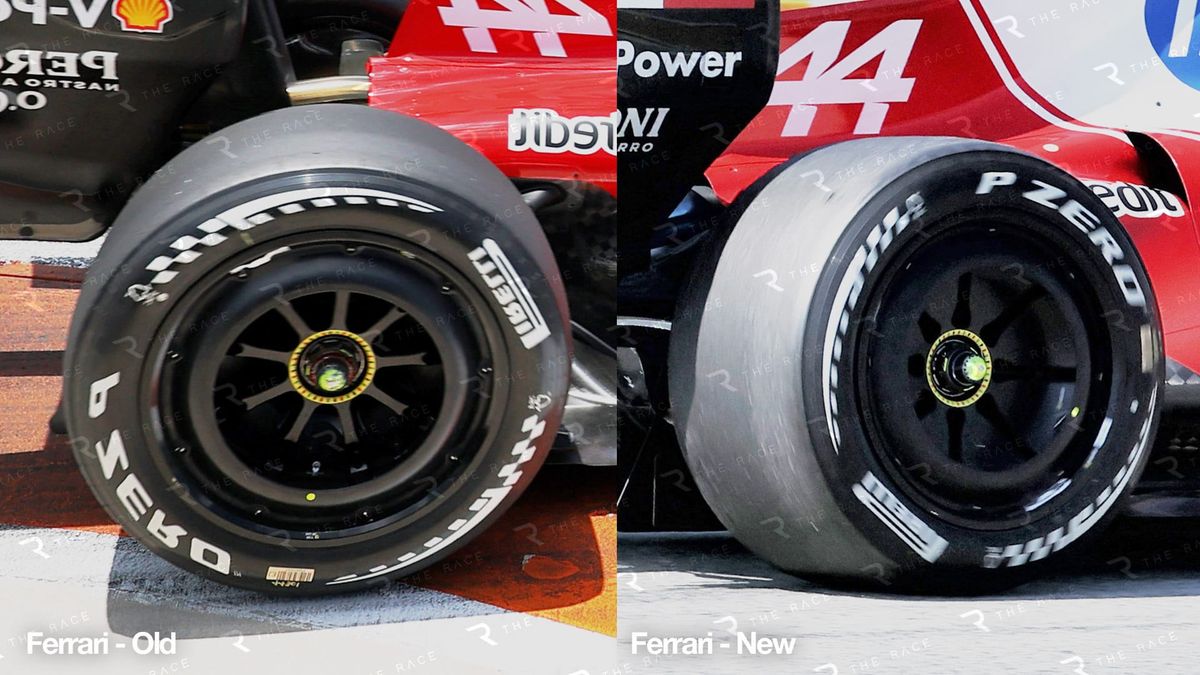
Not mentioned by Ferrari as part of the official declaration for new car parts it has to give the FIA, the team introduced new wheel rims aimed at improving its thermal management of tyres.
Wheel rimes are no longer a standard component (they were in the ground effect era) and teams have been working closely with their partners - in this case Ferrari uses BBS - to perfect designs for maximum performance.
As well as weight and rigidity being important, there is a big push in using airflow, convection and heat dissipation to keep tyres as cool as possible.
And it's become an important area of development because the gains can be so big.
Significant benefits
From the perspective of F1's tyre supplier Pirelli, there has been a noticeable step change in what teams are doing this year compared to last - as well as some considerable differences in how good teams have become in managing things.
Pirelli's F1 chief engineer Simone Berra said: "It's quite a significant variation.
"What we have seen this year is that generally stabilised conditions are much lower than in the past, and this is because the rim basically is cooling the whole wheel, and the tyres themselves.
"So this is generating quite a big difference - not only on the rim geometry, but also on the stabilised conditions, team by team.
"Some teams are stabilising quite high with temperature and pressure. Some other teams are stabilising very low. There are completely different approaches, and this can have a big impact.
"The teams that have worked to cool down the tyres a lot with the rims have quite a lot more benefit than some other teams."
Using convection
F1's rules don't allow air to be blown out of the brake drum nor the wheel rim to cool the tyre directly (both have to be sealed as much as possible).
But that does not stop teams trying to manipulate heat transfer in this area to help influence the air inside the tyre, which can help with pressures and temperatures.
Isolating the wheel rim from the hot brakes is critical, as is making use as much as possible of any cool air being circulated inside the brake tins that impacts the drum's surface temperatures.
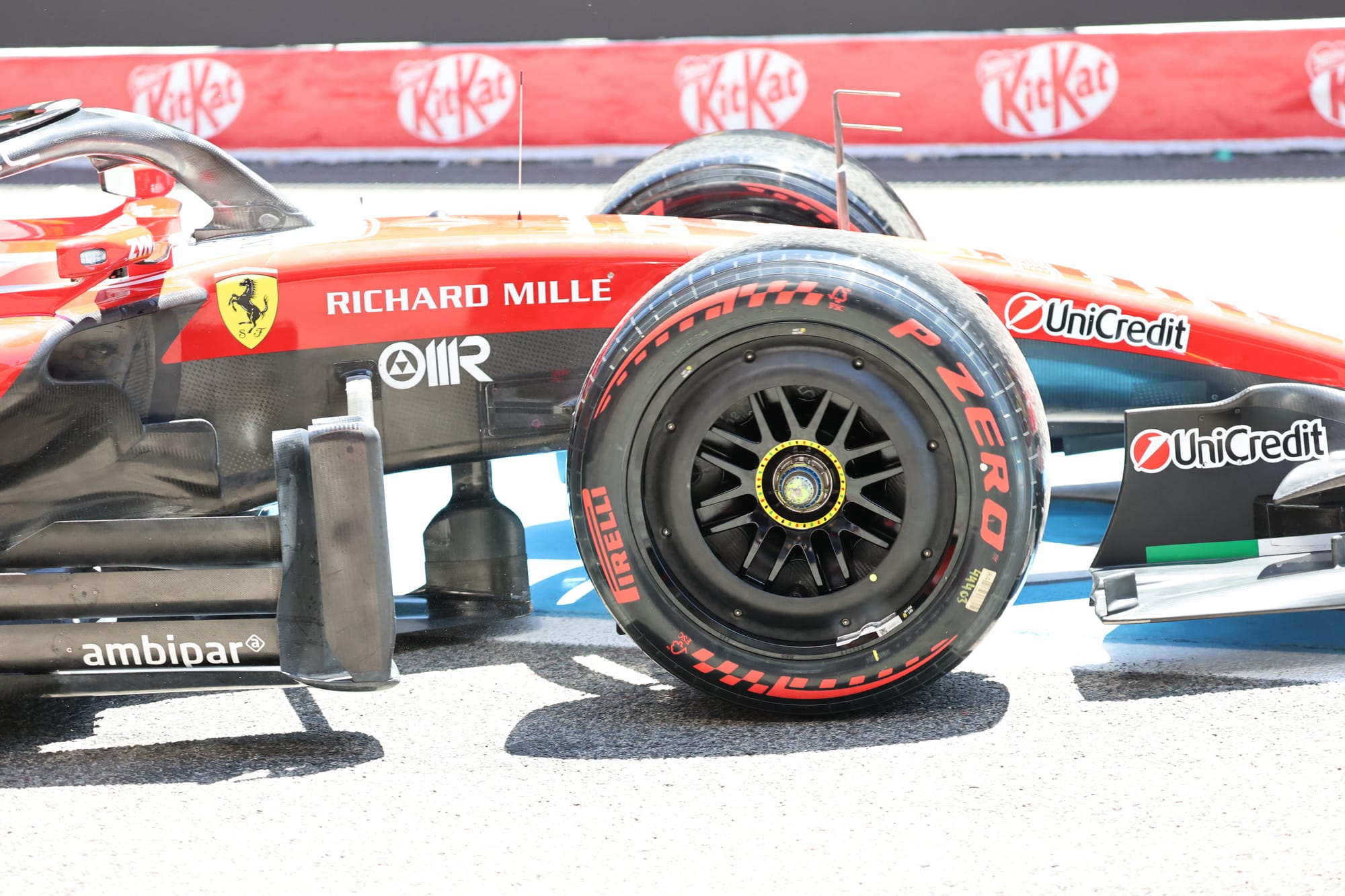
While the specifics of what Ferrari did at the back of its car are not known, as it kept the naked new rims hidden away for the weekend and The Race only got a shot of the new fronts, the concept behind developments in this area are clear.
As we can see from other approaches, teams are developing air chambers into the rims - which are designed to help manipulate temperatures inside the tyre.
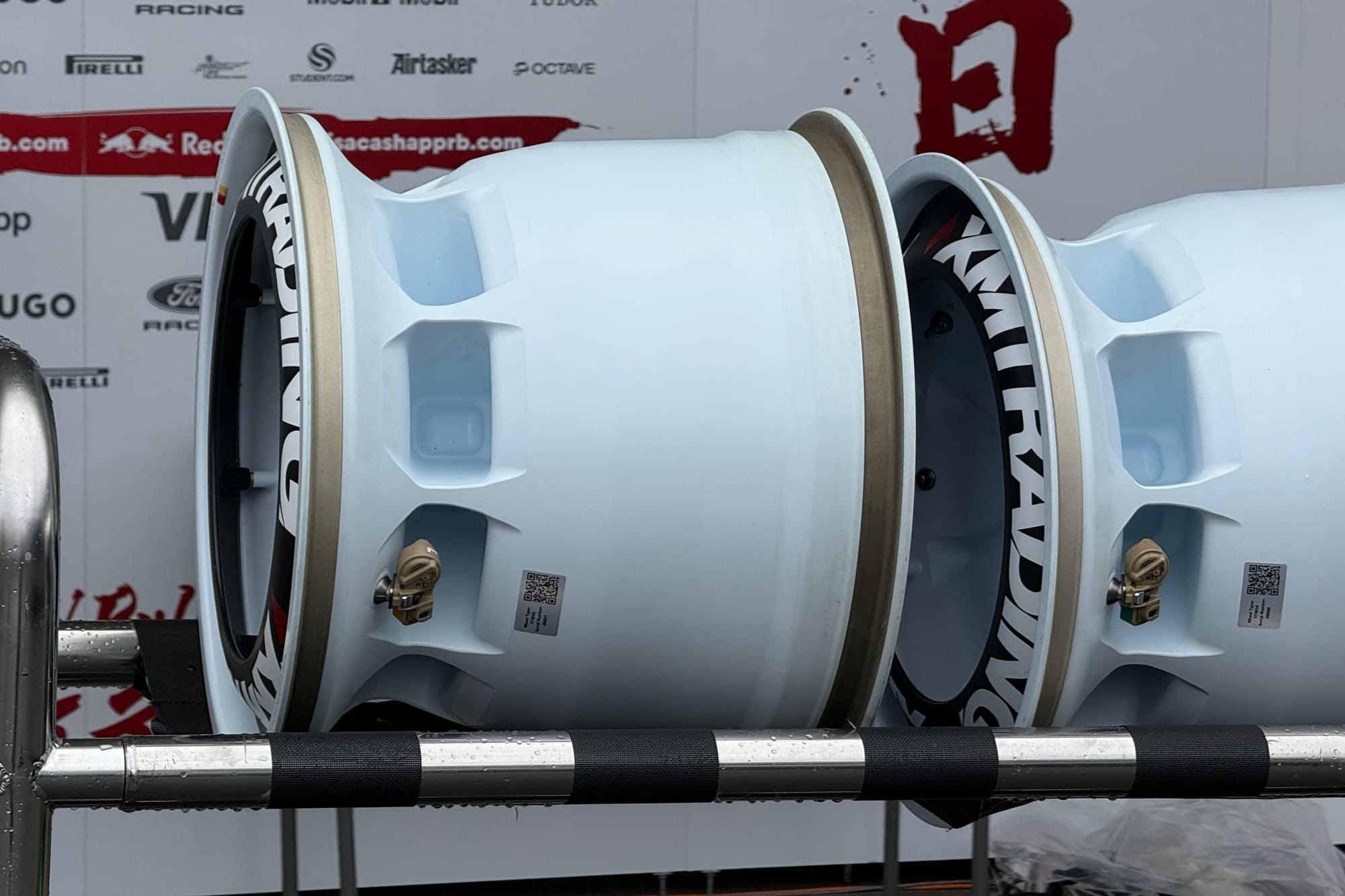
Cooler air hitting the inside external surface of the wheel rim as it travels through the air will be channelled by the spoke area on the outside.
This will help cool the magnesium surface of the rims in the areas at the bottom of these chambers, with the idea then being that through convection - the transfer of heat in a gas or liquid - this cooler air can be circulated around inside the tyre.
But this is not a one size fits all solution because, while keeping rear tyre temperatures cool in the race is a priority, there are times when teams need to warm them up as well.
At some low-energy tracks, such as Monaco, drivers often battle to warm up the fronts enough to get them into the right operating window.
So teams may choose to design their front rims in a way that means rather than trying to maximise what the cold air is doing, they want to trap warmer air that helps lift the temperature of the tyres.
Pirelli said it has been obvious this year how much wheel rim design freedom has changed the game when it comes to tyre management, both in terms of internal pressures and temperatures.
Berra said: "Last year in Spain, for example, we were seeing the pressures raise by 2.5-3psi [from starting pressures to in-race stabilised pressures]. This year is much less, probably in the region of 1psi or 2psi.
"Temperature-wise, I would say the front axle is not too much different, but with the rear the teams are able to stabilise with the carcass temperature quite low.
"So if we compare with last year, we are speaking about at least 15°C lower. Which then is exactly the equivalent of 1.5psi."
A new development war
The scale of the temperature-management gains made possible by nailing the wheel rim design made it obvious that teams were going to push hard in this area.
This is why the FIA and Pirelli have been in dialogue since the winter about the implementation of some restrictions in terms of what teams can and cannot do in this area.
The use of materials is limited to specific magnesium alloys and there are specific dimension and thickness limits, plus a demand that "there must be no passage for air between the inboard and outboard cavities" to stop blown air tricks.
The wheel rims are also not allowed to have any additional elements added to them that are designed specifically to help cool the tyres.
Article C.10.7k states: "Features intended to influence the heat transfer characteristics of the wheel rim are not permitted. F1 teams are required to submit designs to the FIA for approval."
While there is nothing in the regulations that specifically outlaws teams from bringing different wheel rims designs to each race if they wanted to, there are some off-book restrictions that prevent that.
The Race understands that as part of advisory documents sent to teams, once they switch wheel rim design, then they have to stick with it from then on - so they cannot keep swapping back and forth.
Furthermore, there are demands that as well as the individual designs being submitted in advance, the actual rims themselves need to be shipped to Pirelli's main factory in advance for some trial fitting of tyres to ensure that there are no problems and the rubber sits perfectly.
This process can take time, which effectively prevents teams from going through too many design iterations.
As Berra said: "They cannot switch for just one weekend, because for us it's difficult to manage different specifications.
"So they can start the season with one rim specification and, at some point, if they decide to change, they can switch to another rim [but not go back again]. Otherwise it would become a mess."
FIA's watching brief
The fact that Ferrari has made a mid-season rim design change, and it is understood Red Bull could be set to follow suit as early as the next race, the Austrian Grand Prix, has shown that this is a design area likely to be pursued by all teams.
The Race has learned that tyre rim development is being monitored by the FIA to ensure there is not an unnecessary development war that risks excessive spending or teams taking things to extremes.
And while the FIA sees no need to step in and lay down any fresh restrictions just yet, it is understood that the governing body is pondering some fresh guidelines over the winter to ensure that things are kept under control in 2027.
Berra said: "We know that the teams are working to try to extract something from the rims. And I think some of the solutions they have brought are going in this direction.
"There are some discussions also internally from the FIA side, also involving us, to see what is reasonable and what is not reasonable.
"And I know that FIA would like to regulate a little bit more, because they don't want the rims to be a tool to cool down or to heat up the tyres."
Ferrari stays cautious
The way that Ferrari was so much better with tyre management in Spain will have put rivals on alert about whether it has unlocked a significant step - thanks to both downforce and the wheel rims.
If there is a feeling that more performance can be gained from having better rims, then expect others to start exploring their own ideas more aggressively.
Ferrari team principal Fred Vasseur wanted to hold fire before committing to saying the team had found a breakthrough.
"It's not because you are doing one good weekend that you will blow up everybody every single weekend," he said.
"We know that the conditions are quite extreme, it was already the case in Canada for opposite reasons, but the next race in Austria it will be something more average.
"I think we are all really on the edge for validation. You can do a good stint and a bad stint with the same car on the same track, and we have differences between cars.
"If you compare the stints on medium and hard, some cars were much more performant on the hard, some were much more performant on the medium. It's not a given for the rest of the season."
If Austria repeats the picture shown at Barcelona though, expect others to start taking a closer look at their wheel rims.