Failed upgrade key to F1 midfield leader's rise
It is often said in Formula 1 that you learn nothing from success. It's the days you stumble and fail that prove to be far more valuable in making you stronger.
So as Racing Bulls reflects on a robust first half to the 2026 season in which it has emerged at the top of that chasing pack behind the big four teams, it is no surprise to hear it credit an "awful" moment in its recent history for helping lay the foundations for where it is now.
A current key strength, in the momentum from a sustained upgrade push that is hitting targets each time, has its origins in a brutal lesson learned two years ago.
Back in 2024, the squad had been a consistent points scorer over the first part of the campaign and quickly established itself in a comfortable sixth in the constructors' championship. The then RB team had every reason to feel it could kick on, stay well clear of Haas and Alpine and keep that top six position.
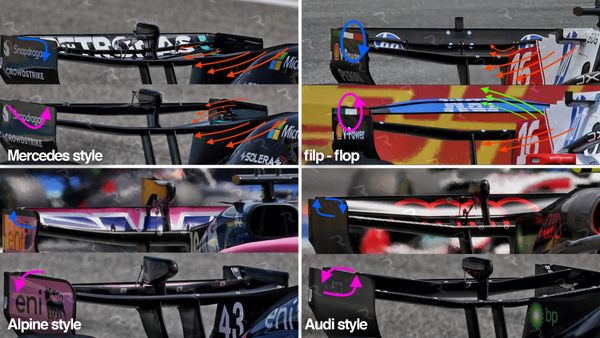
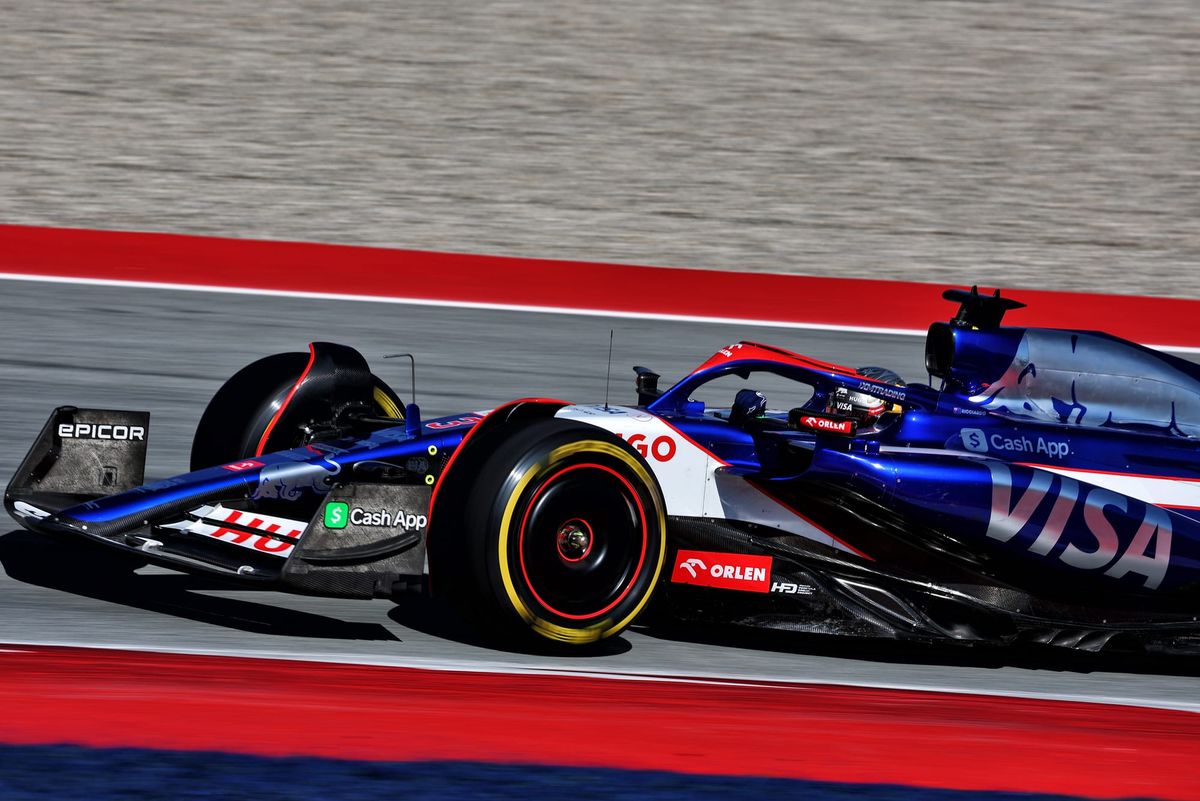
It arrived at the Spanish Grand Prix that June with a hefty upgrade package which included a near rear wing, updated sidepods, engine covers and a reprofiled floor.
But rather than bring it further forward as all its windtunnel data had said it should do, the upgrade proved to be a flop.
Its run of strong form ended suddenly as Yuki Tsunoda and Daniel Ricciardo were eliminated in Q1 at Barcelona. They then failed to make any impression in the race as Ricciardo ended up 30 seconds adrift of the points in 15th while Tsunoda was only 19th.
The upgrade failure cost RB momentum, as it needed time to unpick what had gone wrong, and it took it until nearly the end of the season to have faith again in what it was bringing to the track. By then, Alpine and Haas had leapfrogged it in the standings as it ended the year eighth.
Team principal Alan Permane says that under-delivering with upgrades is one of the worst things that can happen for a team – as it can wipe out development for weeks at a time.
"It's a double penalty, isn't it?" he tells The Race in an exclusive interview.
"Let's say it's four weeks between updates, you put one on and it doesn't work. So you've lost that four weeks, but you've lost more because you don't understand it either. That's awful. That's the worst thing."
It was the pain of having experienced such an exact misstep that sowed the seeds of the understandings that are paying off this year.
"Honestly, one of the reasons we're in this decent shape we are now is because way back in 2024, we had a huge upgrade for Barcelona, and absolutely no part of it worked at all," he said.
"It was awful at the time, but we learned an awful lot about that car, what makes a car quick, where to focus on it. It really helped us.
"As painful as it was in 2025, we went to Barcelona and had a completely different car. And here this year we went to Barcelona, and again we were the fifth quickest."
Liam Lawson, who has enjoyed his strongest season in F1 to date, sees the nailing of upgrades as critical to Racing Bulls having delivered this year.
Having been with the team on and off for five years, he thinks it has never been as on top of things as now.
"On the development side, it's by far the strongest," he said. "So far I think everything we've been bringing has been working very, very well and that's something that is hard in Formula 1.
"Honestly, you have upgrades that are run through simulations and theoretically can be better, but they're not always exactly what they seem."
Permane concurs that it is the robustness of its upgrade programme, which includes an impressive step that first appeared in Belgium and helped it move up to its current fifth in the standings in Hungary, that is the thing he is most happy with.
"We always want more, and we always want to do better, but we're happy," he said.
"I think what we're certainly extremely happy with is our tunnel to track correlation. I think that's what everyone strives for.
"We bring an update and it works. Bring the next one it works. Bring the next one and it works. That's why the car is where it is. We've seen a big progression from winter testing to where we are now."
Permane is coy, however, about offering too many details about what Racing Bull has done to hit this rich seam of development gold.
He says that the details are more the domain of his key technical staff back at base – and the proper answer is something that other teams would be chasing too so he does not want to give too much away.
"I'm just here to support my staff and help them where they need it," he said. "Now I can't tell you exactly what that process is, and to be honest, I probably wouldn't tell you if I did know!
"In fairness, that's because we see other teams floundering around a little bit, and people going, 'Oh, we've got a new front wing this weekend. It's going to be fantastic.' And of course, it doesn't work.
"Or other teams bringing upgrades, and you hear drivers complaining that they haven't really done what they should have done."
There are some obvious factors contributing to things though. In chief technical officer Tim Goss and technical director Dan Fallows, Racing Bulls has two F1 stalwarts who know exactly what makes things tick and what the processes need to be from idea to track.
Furthermore, there has been an upgrade in Racing Bulls' UK operation as it shifted away at the start of last year from its former Bicester base to a state-of-the-art facility on the Red Bull campus in Milton Keynes.
And while F1's IP regulations means that being close to Red Bull does not offer any advantage to being in any other geographical location, what has been an improvement is the quality of the work environment that has helped staff get the best out of themselves.
"There's no benefits to being in Milton Keynes other than it's a much nicer facility, and it happens to have been built by Red Bull," said Permane.
"But if you saw our Bicester facility and you saw the MK facilities, it's night and day. It's F3 team to F1 team, so that's made a massive difference for the aerodynamicists and the model shop."
Permane sees no magic bullet in what Racing Bulls has achieved so far this year. It's just hard work and the implementations of lessons - some of them painful - from the past.
Key now though is pushing on and capitalising on where it is; which means bringing even more improvements to its car while being mindful that 2027 is also fast approaching.
"It is about doing more of the same," he said. "There's loads of things we can do to go faster, but the most effective one will be more load. So that's where we're focusing, and I know what we've got coming.
"We are already on '27, and there will be a mix, but there will be a point where we switch over completely.
"At the moment though there's still more stuff to come, which is great."