

Aston Martin wanted its new works Honda partnership to pick up where the Japanese manufacturer left off with Red Bull as a Formula 1 engine powerhouse.
Instead, a torrid performance in pre-season testing was much closer to the dismal McLaren-Honda years that preceded a rise to winning world championships.
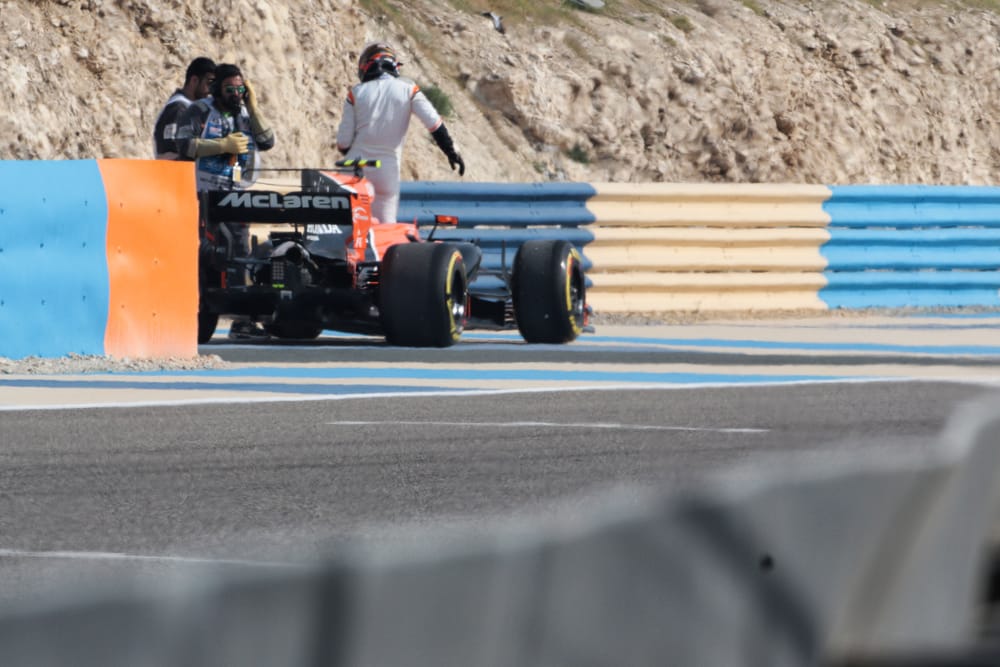
Honda could not have done much more to replicate its last F1 nightmare. So much about its two weeks in Bahrain were akin to what happened in 2017, the last year of its McLaren union, which began with chronic reliability problems and references to unusual, extreme vibrations that badly limited running and made the car and engine impossible to properly assess.
The very first problem is simple: the engine could not run beyond a certain number of laps without faults emerging and something breaking.
It did not appear to be the same thing every time. Honda identified multiple different faults over the course of testing and was gradually addressing them, but the biggest limitation was abnormal vibrations damaging the battery system - which it still does not have a clear root cause. In addition, the parts usage required to fix issues trackside effectively swallowed the programme.
Then there's a second-order limitation: performance. Honda could not recover energy to the maximum potential available within the MGU-K and the regulations in testing, although this seemed to be a conscious decision to limit its capacity in light of the reliability problems. In a formula where the engines are already energy-poor, that is significant. If recharge capacity is limited, deployment across the lap is compromised.
At the moment, even if everything runs, the package is inefficient and down on power over a lap.
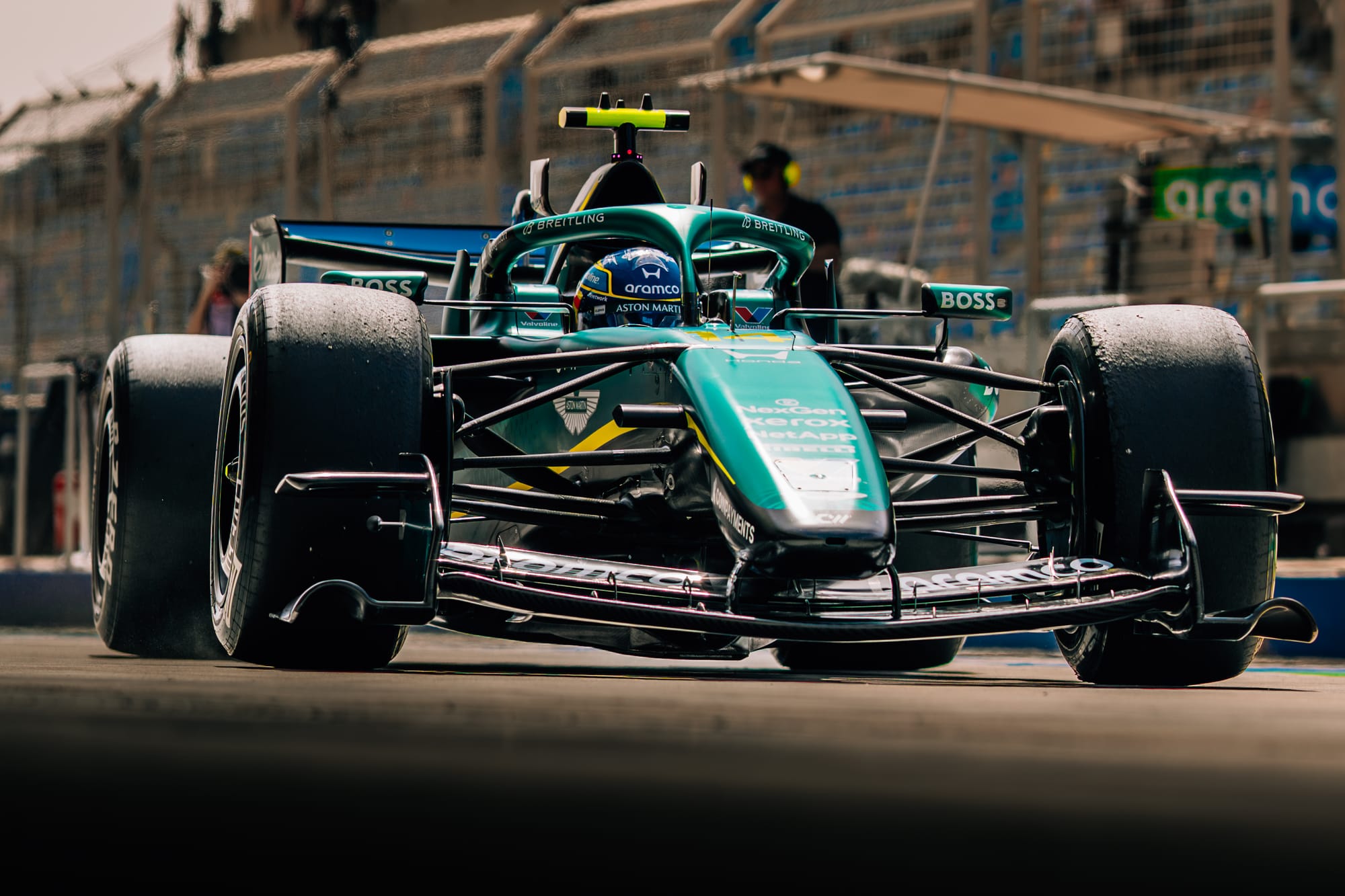
There are also unknowns layered over that: we do not know whether there are Honda-specific driveability limitations; we have not seen enough start practice to judge where it stands there; we cannot determine how well the Honda engine and new Aston Martin gearbox can really marry. And who knows where the car is at - it looks a handful to say the least - with so much less time to refine things compared to rivals.
The 2017 comparison is not necessarily all doom and gloom. It was a major step backwards for McLaren from a more respectable 2016 because of a huge change to the engine architecture that was required to address a clear performance limitation. What followed was not quite the catastrophe of 2015, but reliability was so poor, and performance targets repeatedly missed, that the McLaren relationship ultimately collapsed that season.
Why not all doom and gloom, then? Because the major architectural change that created fragility also masked the engine's potential and was actually the foundation of the reset Honda would get with Red Bull, and specifically the Toro Rosso team, in 2018.
Once the reliability problems were unpicked, and the environment shifted from politically toxic McLaren to an out-of-the-spotlight Toro Rosso, it became quickly apparent Honda had a reasonable base. From there, progress built year-on-year into a race-winning and ultimately championship-winning engine.
There's the silver lining: Honda's been here before, but it also climbed out of the hole. Of course, there is the small matter that it took years to get there even from 2017, so applying the exact same timeline means the engine being capable of occasional wins in 2028 (and that's assuming it is integrated into a car as good as what Red Bull could make a decade ago).
Plus, two differences now make recovery harder. First, the rules. There is no longer the freedom to throw money and development resources at the problem. Honda spent a fortune to become a winner with Red Bull and whether it's the cost cap and dyno testing restrictions, or the company's willingness to fork out that much money again, this time there is going to be a limit to how quickly it can iterate. Especially when you consider that cost cap has been in place since Honda recommitted to F1 and the Aston Martin project in May 2023 - whereas other manufacturers that were already working on their 2026 engines early were able to spend more freely before then.
Any short-term progress will be largely defined by how good the base level really is and what work is required to raise that level to that of its rivals. Reliability work will be the first-order priority and could be achieved quickest, although reports of a fix for the main problem - whatever that may be - at the second race in China are understood to have been misinterpreted in some way.
Performance-wise there will be some upgrade opportunities in the year defined by how far off the engine is, with the rules allowing more dyno time, and a couple of spec changes, for the worst performing manufacturers. But that's going to take months to action. Right now Honda's racing to lock in a specification that incorporates urgent reliability fixes.
The second complication for the recovery is expectation and how that impacts what is demanded and on what timeline.
This is not a low-stakes rebuild with a junior team. Aston Martin is positioning itself as a works contender with Adrian Newey running the show. Prolonged underperformance is not going to be tolerated at a team where chairman Lawrence Stroll has already spared no expense making it a theoretical class-leader in every department.
What killed Honda at McLaren was a toxic environment where the blame was apportioned to Honda at every opportunity, and there was not enough give and take. McLaren demanded the world, and when Honda underdelivered it was hung out to dry. That was in no small part down to the technical arrogance within McLaren at the time.
Newey's involvement inevitably shapes perception of this Honda struggle. There is a natural temptation to think if Newey has designed the car, the problem cannot be the chassis. Right now that's true but that doesn't mean it won't be a bottleneck at some point. And more to the point - going back to the McLaren comparison and what changed with Red Bull - dividing this into 'car and engine' renders the whole concept of a works partnership redundant. It would just reduce it to simple buyer/supplier status and there is no way that is the most effective route.
If or when Honda sorts things out, objectively assessing the quality of the car will be critical. Newey's delayed arrival played a role in the chassis being at least somewhat compromised at the start of this year.
Aerodynamic development was some kind of combination of paused/reset/delayed in the first months of 2025 until he came in. That means three or four months were effectively lost, whether because previous work was reconsidered or because development was consciously held back to avoid wasting allocation before he could validate it. Organisational changes followed and that may be to Aston Martin's advantage long term, but it does not create extra time in the short term or the stability that top teams thrive on.
There's bound to be some kind of clash between expectations and reality - or in other words a gap between what kind of progress Aston Martin demands and what Honda can deliver. It'll be a matter of striking a sensible compromise. But even if there is low-hanging fruit, climbing from where Honda is now to a midfield baseline by the second half of the year would represent significant progress. A podium-contending package within one year would require an extraordinary turnaround.
The more plausible arc, if the base architecture is right, is gradual: stabilise this year, build a stronger performance and reliability platform into the next, and only then think about sustained frontrunning potential.
That's how it played out post-2017, after all. It's whether Honda has the time and the resources to do it again.
