

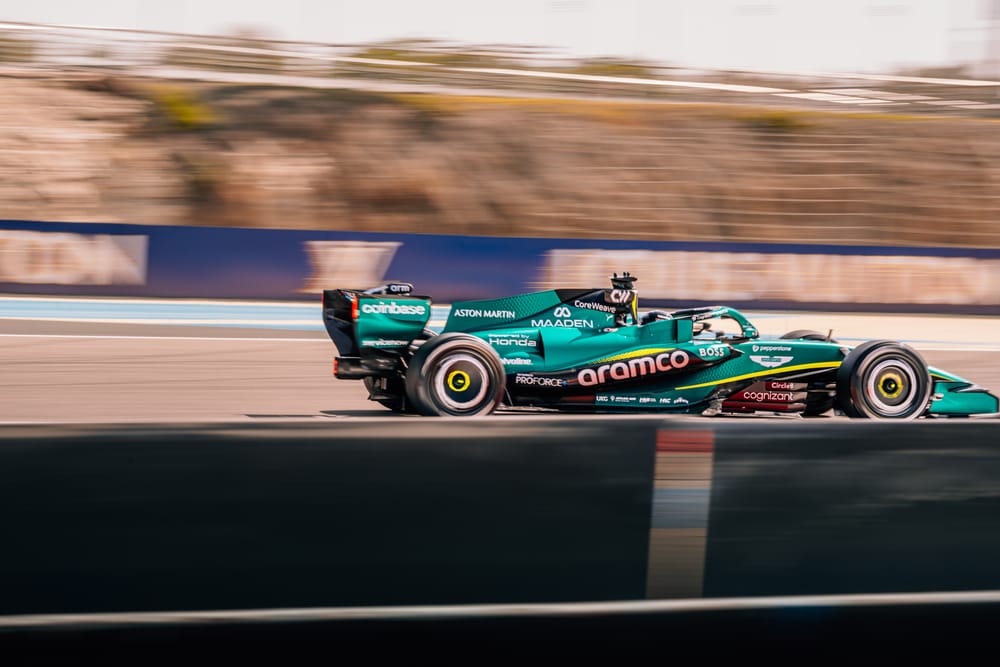
Honda's reliability problems in Formula 1 testing have been attributed to abnormal vibrations that damaged the battery system although a root cause has not been identified.
Honda and its new partner Aston Martin had an awful pre-season riddled with engine issues that drastically limited its mileage.
The car and engine only ran briefly at the Barcelona shakedown, immediately putting them on the back foot, and the situation got worse across two weeks in Bahrain.
In the second Bahrain test, Aston Martin's car completed just 128 laps across three days - and only six on the final day due to a lack of spare parts, such was the attrition rate of engine components through testing.
By comparison, all but one other team completed more than 300 laps and three managed more than 400 laps.
Gary Anderson: Test disaster is the kick Honda needed
Unsurprisingly, that meant Honda did not achieve the mileage it had targeted, and it expressed its unhappiness at both its performance and reliability, although did not offer an explanation for what the problems were or a timeline for recovery.
Speaking at an annual F1 pre-season briefing with Japanese media, not an emergency press conference as has been interpreted, Honda Racing Corporation leaders Koji Watanabe and Ikuo Takeishi admitted to suffering a "number of issues" in Bahrain, the most severe of which relates to the battery.
Honda observed abnormal vibrations that caused damage to the battery, although it is not sure whether the battery system itself is the initial problem. What Honda can see is the battery pack is being shaken because the structure it is attached to is vibrating more severely than expected.
Honda is investigating a combination of factors that likely caused these vibrations to emerge and running virtual track testing at its Sakura base with a chassis, engine and gearbox combined, but is yet to pinpoint the root cause.
"If we could identify a single cause, it would be easier to fix, but because multiple linked factors generate the vibration, we don't know whether fixing just one will solve it," said Takeishi.
"There is a possibility it takes time."
Together with Aston Martin, Honda is assessing what countermeasures can be implemented on both the car and engine side - including what can be done before the season opener in Australia next weekend.
Aston Martin is willing to modify components on its car if necessary. Controlling the vibrations is critical for the engine's chances of running reliably in the early races of the season, which includes Honda's home grand prix in Japan at the end of March.
After managing the start of the season with interim measures, Honda will look to change reliability-related parts where possible within the cost cap.
"The wall we face as a result of these tests is certainly a high one," said Watanabe.
Upgrade limitations
The countermeasures in question are not related to what has to be homologated on the engine.
The main specification needs to be submitted to the FIA by Sunday, March 1 - when all engines are homologated - and what was run in Bahrain will be the basis for this.
Although subsequent in-season modifications for reliability reasons are permitted with FIA approval, performance upgrades are strictly controlled by the 'Additional Development and Upgrade Opportunities' system based around an engine performance index that will be created.
There will be three periods from races 1-6, 7-12 and 13-18 and at the end of these periods it will be determined if a manufacturer is eligible for extra development.
If Honda is more than 2% but less than 4% below the best engine it will be allowed one upgrade; more than 4% and two will be permitted, with the usage of test benches and cost cap spending adjusted to accommodate that.
There is also a limit in the form of the engine budget cap and Honda admits encountering trouble now means consuming part of its development allocation earlier in the season.
Want even more insight from the world of F1 before the 2026 season starts? Join The Race Members' Club today and get 90% off your first month
"At this stage, our priority is to solve the current issue," said Takeishi.
"We are looking ahead, but right now we're fully focused on the immediate problems.
"Whether we introduce a major update or not is something to be discussed later."
A prominent claim after Bahrain was that the engine's regeneration capacity was limited and that running the MGU-K in reverse to charge the battery could not even be done at 250kW let alone the maximum 350kW allowed in some circumstances.
This emerged due to comments made by Aston Martin's managing technical partner Adrian Newey in private at an F1 Commission meeting - although Honda has suggested it may have been taken out of context from the run plan, the implication being that because of the reliability problems and spare shortages, Honda ran its engine more conservatively and did not make it through a full programme as intended.
This is an example of how reliability problems can lead to running the car and engine in a compromised state in some way. Whether that continues into the season itself has not been mentioned but the challenge of overcoming the problems seems significant.
This is why initial work for the first race will be to mitigate the issue rather than be a permanent fix. How robust a solution Honda can produce in a short amount of time will depend on where it traces the root cause to.
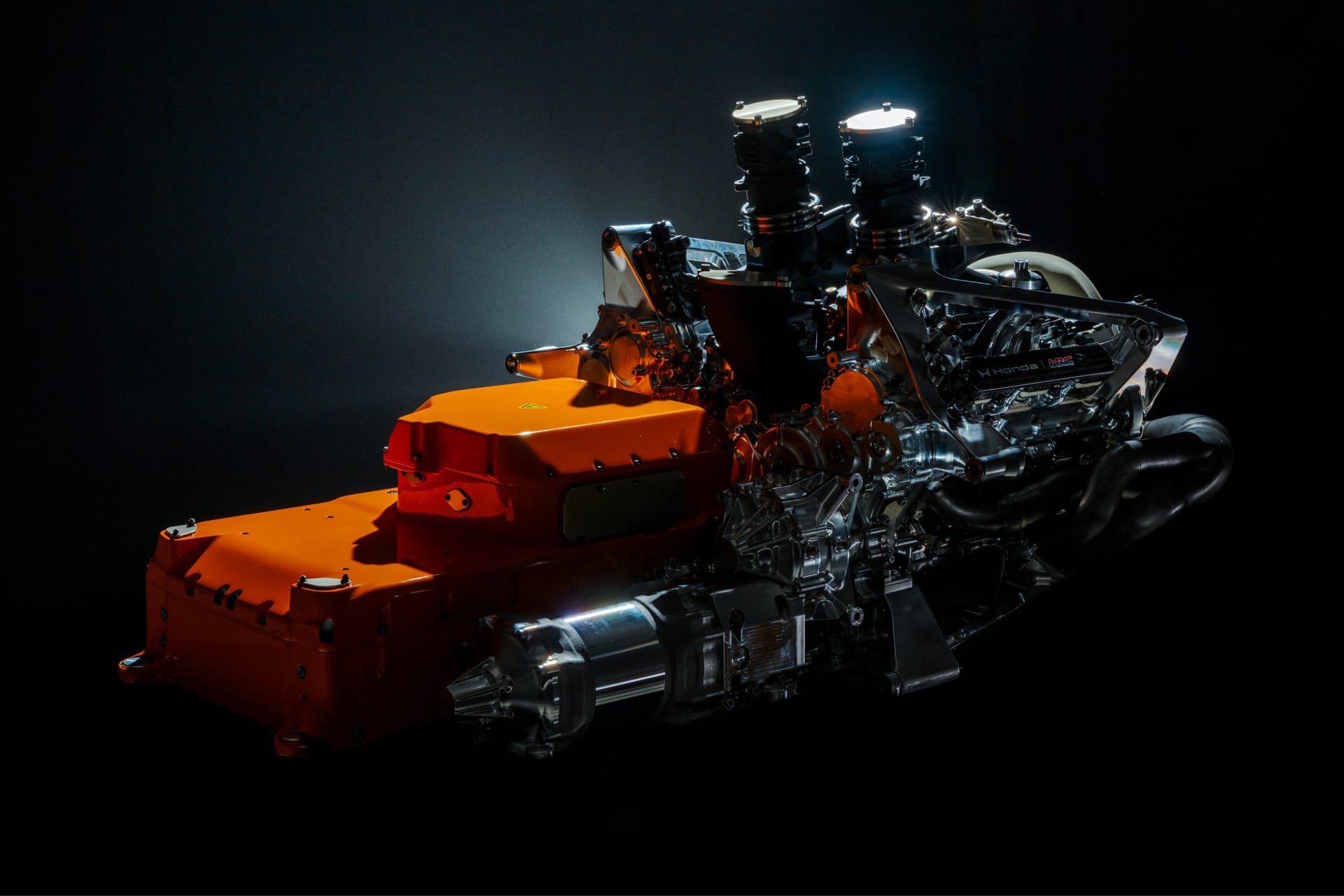
The battery itself has a new design for the 2026 engine rules, and is completely new internally to deal with the demands of the increased 350kW MGU-K.
Instead of a single longer and flatter shape like before, the 2026 Honda design splits the battery and control electronics into two tiers, which seems to be even more aggressive than what is demanded by the new rules requiring the battery to be contained within the survival cell.
Honda has previously said a desire from Aston Martin to make the overall engine length shorter and more compact prompted revisions to most of the engine's peripheral equipment and how it is integrated into the car, although the design of the engine itself did not have to be changed.
Echoes of McLaren problems
Honda was wary it faced performance and reliability challenges even before the engine ran on track in the car but its dyno testing did not pick up on the main issue it encountered in the real world.
Running on track makes clear the extent of any known problems and also reveals new ones. It is a critical part of troubleshooting because it visualises the issues most clearly.
There are some similarities here with what Honda suffered together with McLaren in 2017, when a brand new engine ran extremely unreliably in pre-season.
Key issues were traced to how the engine operated in the real world versus Honda's simulations and the impact of more severe than expected vibrations.
Then it was the oil tank that suffered as Honda could not recreate the same track conditions with its virtual testing, but there were also vibrations through the car that were much worse than expected which kept causing failures.
And Honda was known to have felt constrained by McLaren's demand on overall engine length and the original fixation with a 'size zero' engine design, too.
In 2026, Honda has again suffered a problem in terms of the correlation between its work at Sakura and the real-world conditions the car ran in.
Honda conducts its virtual track test work between engine, chassis and gearbox at Sakura, rather than at Aston Martin - whereas most top teams do that in-house, or outsource to a specialist company like AVL in Austria.
"If it were expected, we would have addressed it earlier," said Takeishi.
"Unfortunately, the situation developed in a severe direction."
Watanabe said: "We did expect some vibration from the real-vehicle dyno, but the actual values exceeded expectations."
