Gary Anderson: What Red Bull showcar tells us about F1 2026
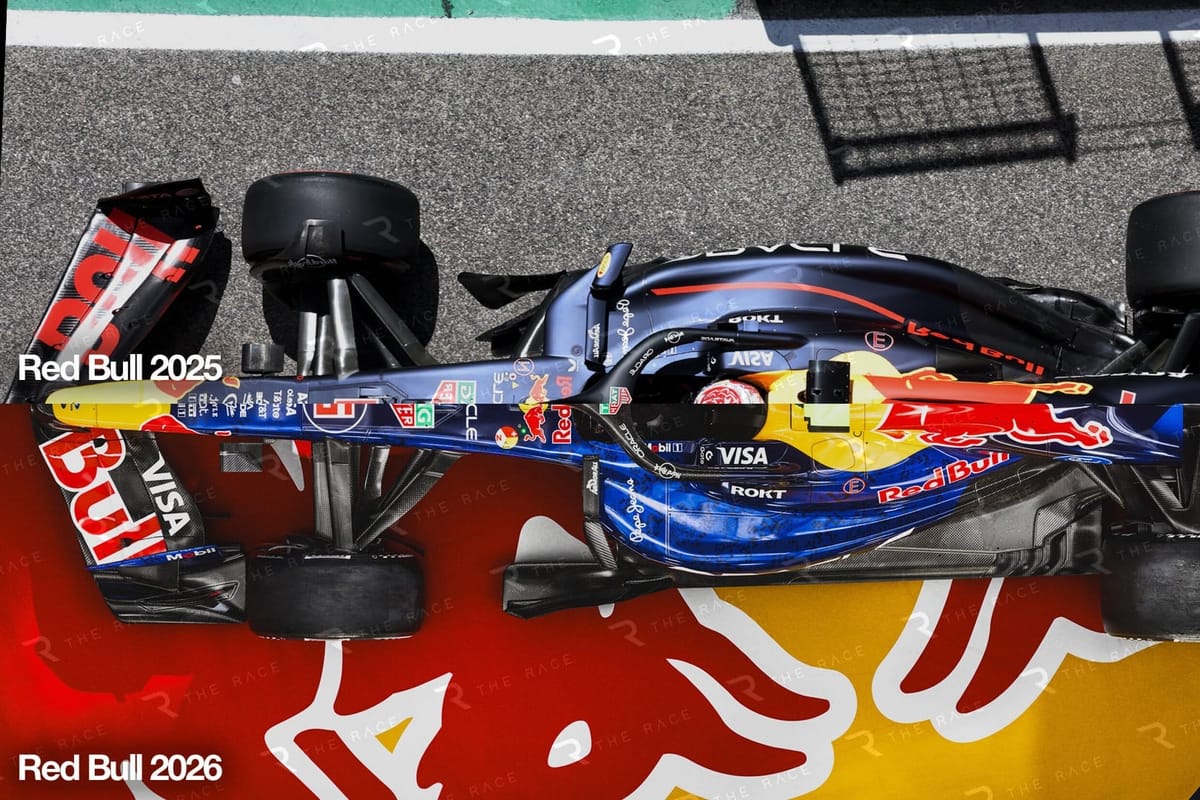
The car images Red Bull has released are not of its genuine 2026 Formula 1 car and we have been thrown a red herring on many occasions so this is nothing new. But they do at least show something different to the existing F1 showcar - and offer some hope that the new cars will look the part.
The various design cues included in what might be called Red Bull's 'alternative' showcar are taken from the 2026 regulations. This means it gives us some idea of some of the design directions we might see. That makes it worth taking a quick look at; please don't consider this in any way an analysis of the real Red Bull - it's more just an interesting alternative look at the kind of details that could prove significant in the year to come.
A comparison of the 2025 launch car, which was a real car, and the 2026 launch car, which is not, does allow us to get an idea of what's changing under the rules. It's not comparing like with like, but it's all that we've been given so far.
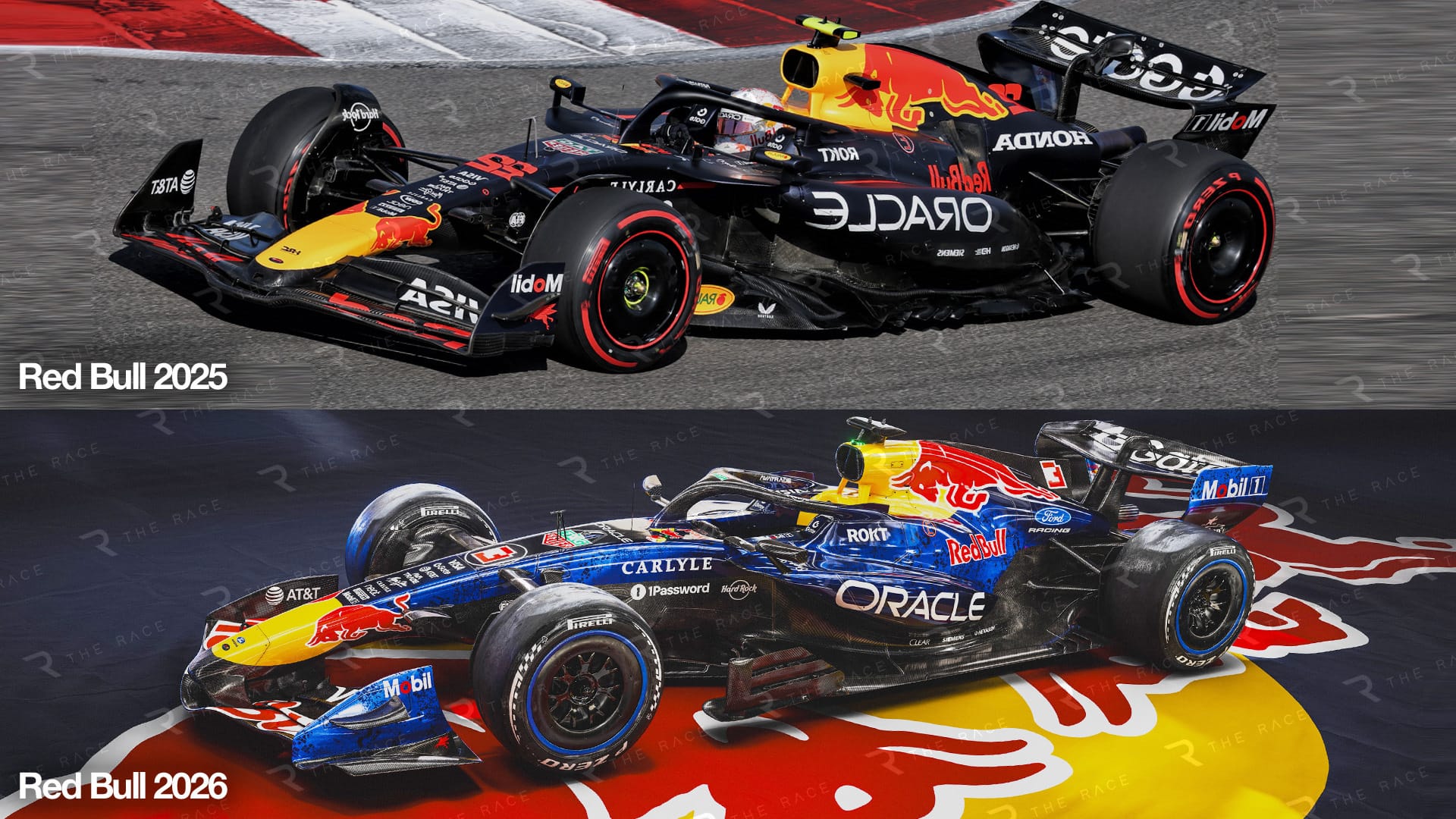
We can pick out some specific differences but, in general, they follow the same design trend as far as the sidepod and sidepod undercut are concerned. The bargeboard area is more akin to the pre-ground effect days, so I suppose that's not unexpected as the influence of ground effect has been reduced.
The floor detail in front of the rear tyre is also a lot simpler. Again, because of the reduction in ground effect underfloor suction it will be more about optimising the rake to get more work from the diffuser as opposed to sealing the floor.
Getting into more detail compared to the initial F1 showcar, we can see the front brake ducts are now more detailed and the tyre arches have also gone. Red Bull has also switched to a pushrod front suspension and still retain a reasonable amount of front anti-dive. Whether that is an accurate representation of the real suspension design remains to be seen.
The only real thing this comparison shows is how much more detail the teams will get into compared to the F1 showcar, which is based on the FIA research models. So is it any wonder that once they start optimising the regulations to increase the downforce that the wake created will get increasingly worse with the growing complexity?
To get anything more meaningful from this, I need to wait until I'm sure what I'm seeing. However, if this Red Bull RB22 studio launch showcar is in any way representative of what we will see when testing starts, then I'm not at all disappointed in what I am looking at.
The car still seems to have enough areas where the teams will be able to use their own understanding to optimise certain areas of the car in different ways. The nose to front wing area is a section that I am keen on as it has a major effect on the airflow structure to the rest of the car.
Also, the floor area in front of the rear tyres will now be up for new ideas that will improve the overall effect on the diffuser. So there is plenty of scope for each team to put its own stamp on its concept initially - at least until the designs start to converge over the coming years.
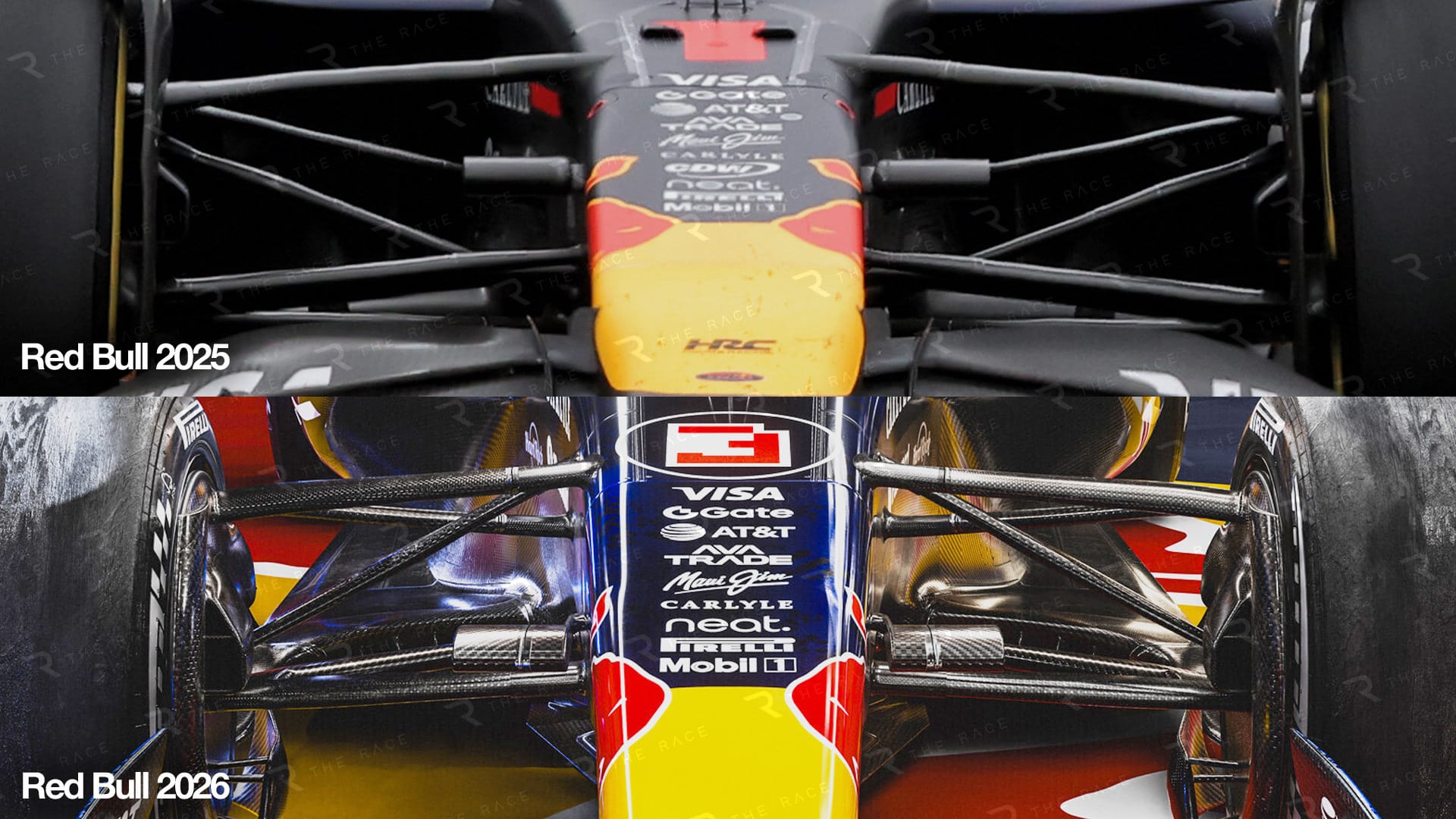
The launch showcar has a pushrod front suspension, as opposed to the pullrod Red Bull used previously during the ground effect era. The sidepod design is more of a 'Coke bottle' effect, as opposed to a dropped-off sidepod upper profile.
Looking at this overhead comparison gives us the chance to see how Red Bull went about achieving the now shortened maximum wheelbase, which drops from 3600mm to 3400mm by regulation for this year.
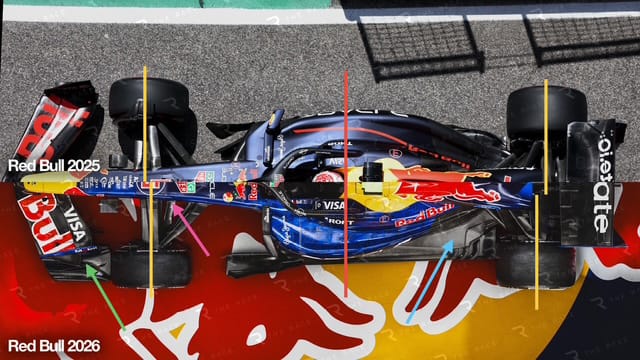
If we position the driver's headrest as the reference point we can see that relatively the team has moved the front axle rearward and the rear axle forward.
That's the area most design engineers would work around as it defines the cockpit opening, side impact structures, headrest and the halo positions. Everything else would then be positioned from there.
The comparison doesn't show much difference in how much each axle has moved but I'm pretty sure that it would be in the region of 40% front and 60% rear of the actual overall dimensional change which, assuming that for both sets of regulations the team would have pushed to the maximum wheelbase limits, means the overall change would be in the region of 200mm shorter so. So the front axle would be roughly 80mm nearer to the driver and the rear axle would be roughly 120mm nearer to the driver.
Going about it this way will mean a team is able to keep the weight distribution within the tightly controlled regulatory window.
The overhead shot also shows the increased area (light blue arrow) of the rear floor in the Coke bottle area where the bodywork narrows towards the rear of the car. Also, it shows the increased area (green arrow) and complication in the front wing endplate outboard area.
I am a little surprised that the front pushrod sweeps rearward (magenta arrow) as it goes towards the chassis. It would be interesting to see the layout of the inboard suspension mechanism to see how Red Bull created clearance for the drivers' feet.
Provided, of course, that the launch showcar we have seen bears any resemblance to the real car that runs on track.