Gary Anderson's verdict on the 2026 McLaren F1 car
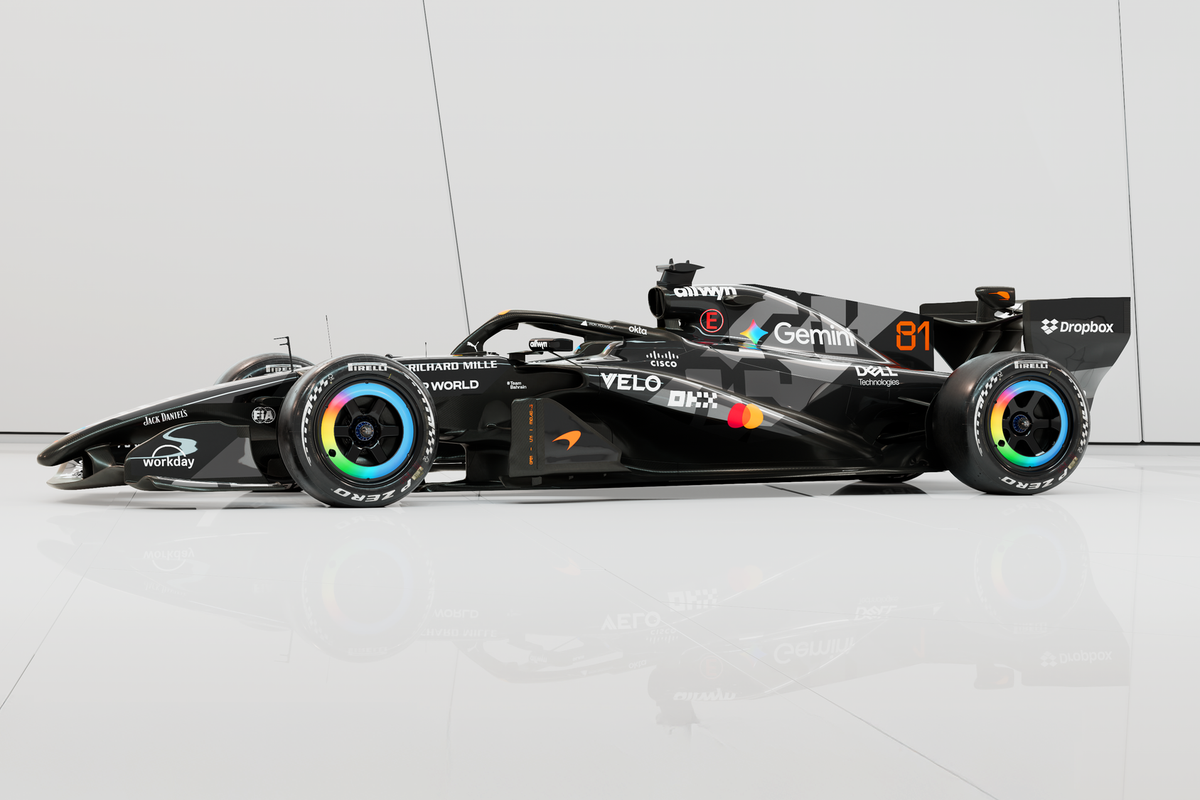
The McLaren was, without doubt, last year's most dominant chassis. Things got close with Red Bull as the season came to a close, but McLaren had stopped development early to concentrate on its 2026 car.
And now we've seen our first glimpse of it via a batch of renders released by McLaren on Monday.
Again, I go into this with the proviso that these are all renders. I'm sure we will see some changes when the car first hits the track in Barcelona later this week, as it's skipping day one.
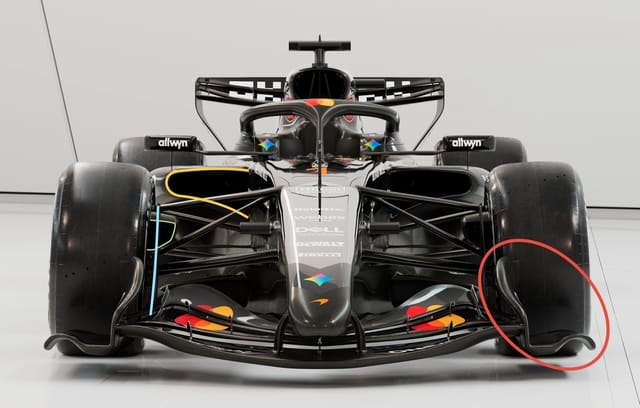
Starting with the aerodynamics at the front, the front wing endplate (red ellipse) is more three-dimensional than we have seen on most of the other cars and, although McLaren still retains the huge footplate, it doesn't have any upper fins like some of the other cars.
The front brake duct inlet (light blue highlight) is high up in the actual duct's inner surface to clear the pushrod. This allows better control of the airflow lower down around the inside of the front tyre, and is probably one of the justifications aerodynamically for the pushrod suspension system.
The vertical-ish light blue highlight denotes what could be called the inner surface of the brake duct. It is also part of that brake duct inlet, as it will turn airflow coming off the front tyre into the wheel void, creating flow through the wheel. Last season, the brake cooling and McLaren's way of using that cooling to influence the tyre cooling was a bone of contention amongst rivals.
I'm sure McLaren hasn't forgotten how to achieve this, so be prepared for a good off-track war of words.
The radiator inlet is very similar to last year's and to most others we have seen so far this year: high up, allowing for the more or less maximum sidepod inner corner undercut. As you can see from the front wing trailing edge profile, it is enticing most of the airflow coming off it to travel fairly wide around the inside of the front tyre - and that sidepod undercut will improve that flow.
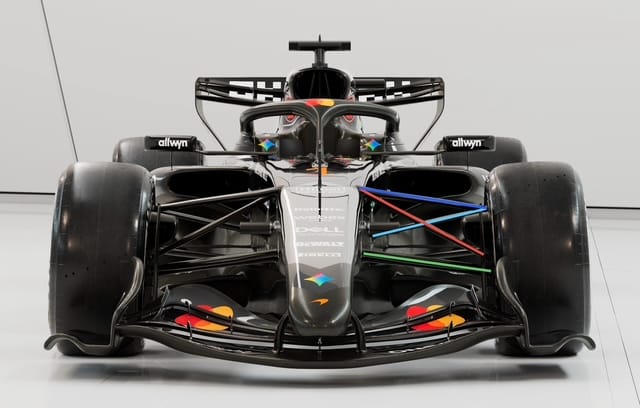
As mentioned above, McLaren has opted for the pushrod suspension system (red highlight), which, as McLaren's chief designer Rob Marshall said in an earlier interview, was for aerodynamic reasons.
I suppose you could say that when angled correctly, the pushrod suspension will manage the airflow coming off the front wing trailing edge, helping to turn it outwards.
McLaren has retained the anti-dive on the upper wishbone (forward leg dark blue, rearward leg light blue highlights). Again, even if the underfloor is producing less downforce than last year, you still need to control that platform as best possible. However, with that reduction in downforce, it just might create more front brake locking problems.
The lower wishbone (green highlight) is difficult to see in detail and its rear inner pickup could very easily cancel out some of that anti-dive. Time and a few more on-track pictures will reveal all.
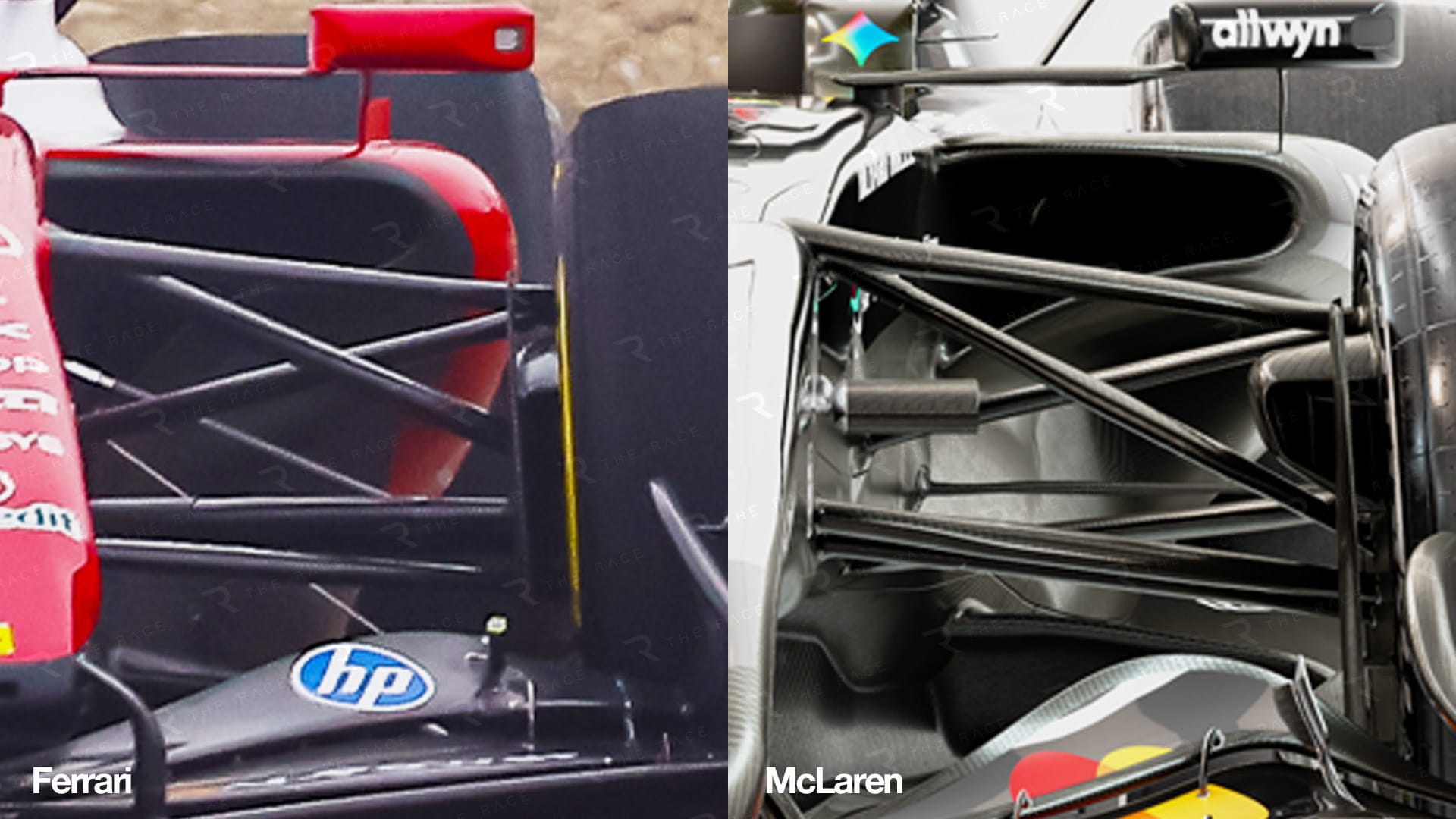
Other than the small details, you could say that the general layout of the front suspension on the McLaren versus the Ferrari and Mercedes is from the same family. I suppose that is where these tightly defined technical regulations take you, but as I often say the 'devil is in the detail'. Even the radiator intake profile is similar.
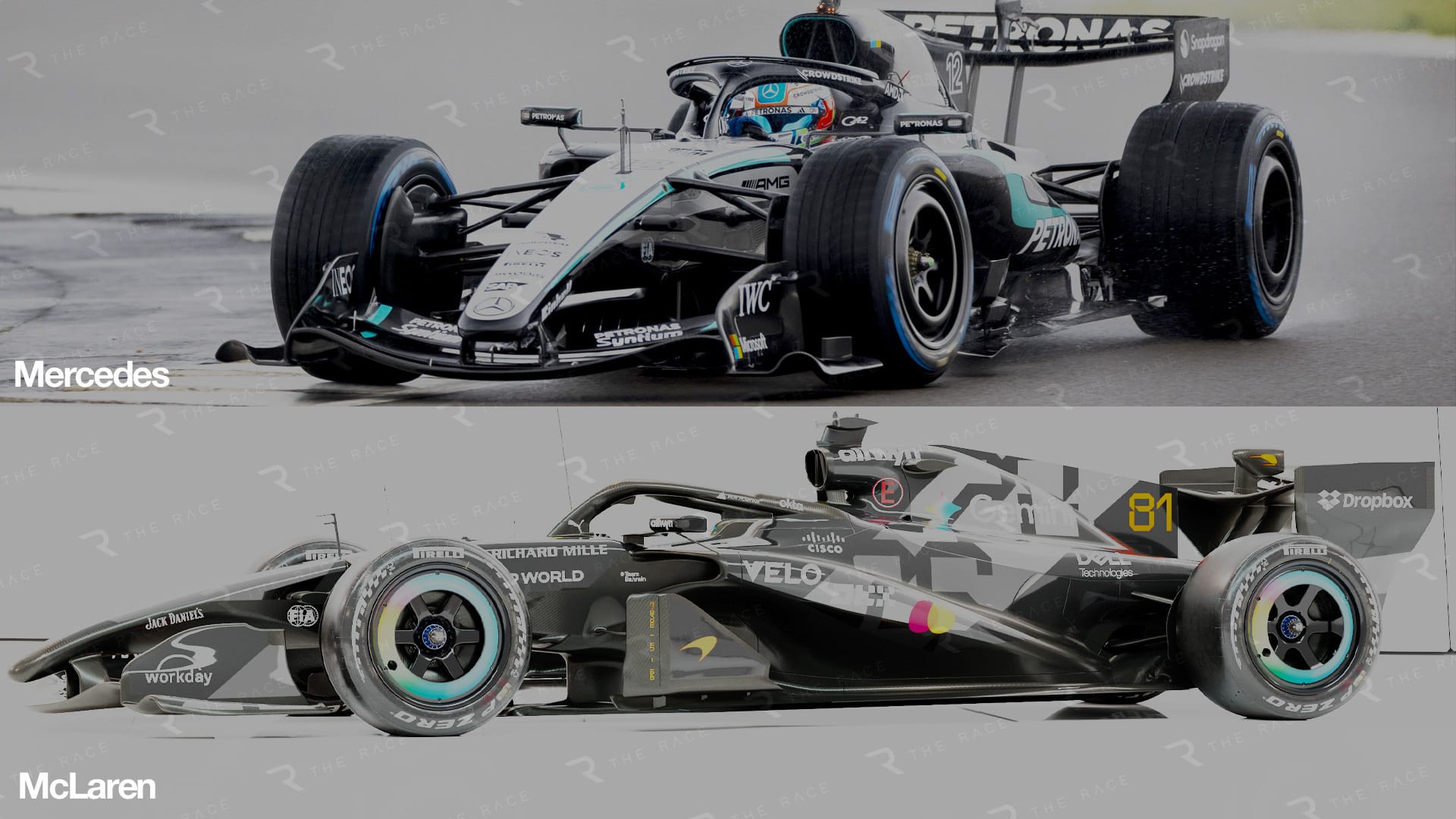
The brake ducts are a little different but both retain the vertical splitter managing the airflow coming off the front tyre. Also the lower wishbone and trackrod layout, which is difficult to see on the McLaren, is a bit different to the others.
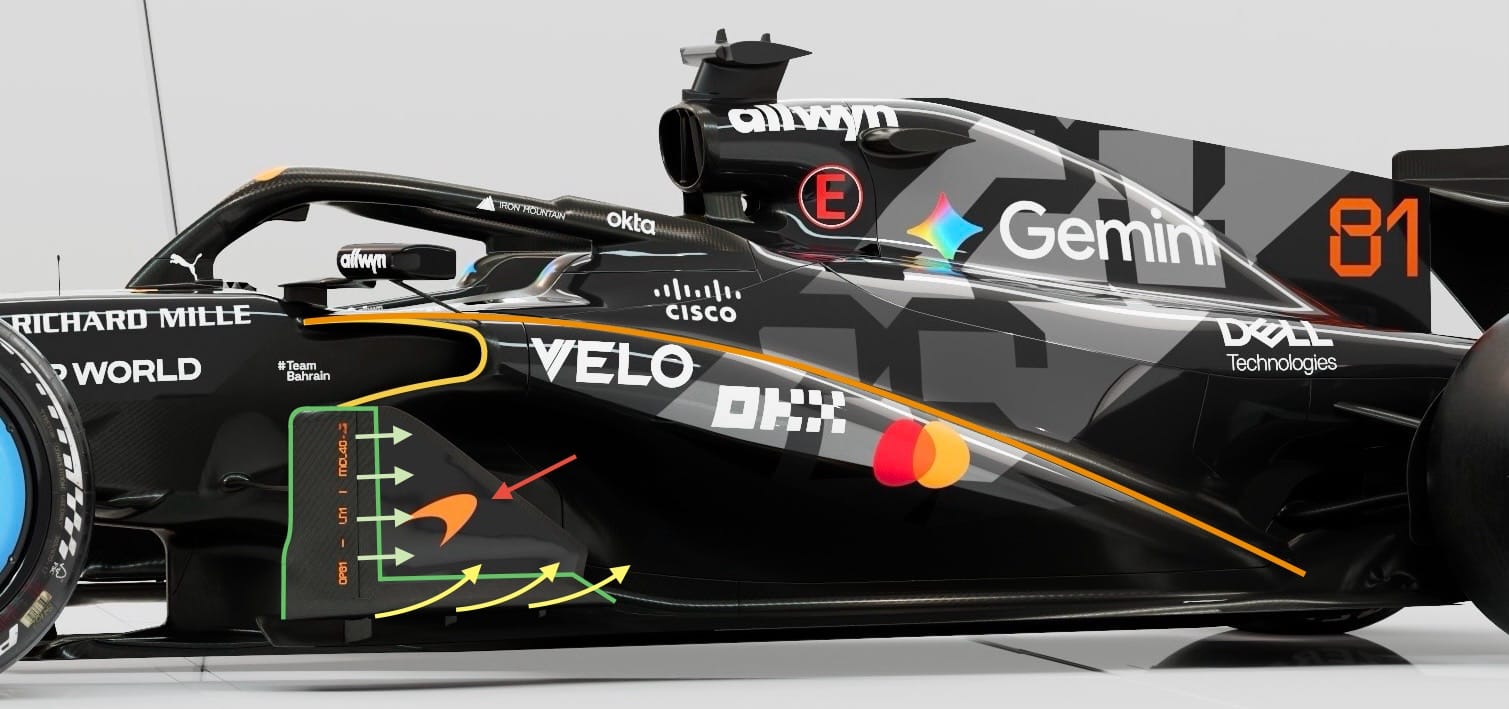
On the McLaren, the sidepod upper surface (orange highlights) is a neat and clean line. I can't see any floor vent details in front of the rear tyre but, as I say, these are renders, so when the real car runs I'm sure we will see more detail in that area.
It's the same with the bargeboards. Yes, the section (highlighted in green) is probably not far off the mark - it has the small vertical slot to manage the turbulent wake behind the front tyre and the lower curved surface to extract some flow from the footplate - but the section with the red arrow pointing to it looks fairly primitive relative to what we have seen on the Ferrari and Mercedes, so I suggest we watch this space.
Again, McLaren has the larger-for-2026 central engine cover fin, and thankfully it also put the car number there. For a bit of light entertainment, I must have a read through all 264 pages of the technical regulations to see if this positioning is actually compulsory - given it doesn't appear there on some other cars.
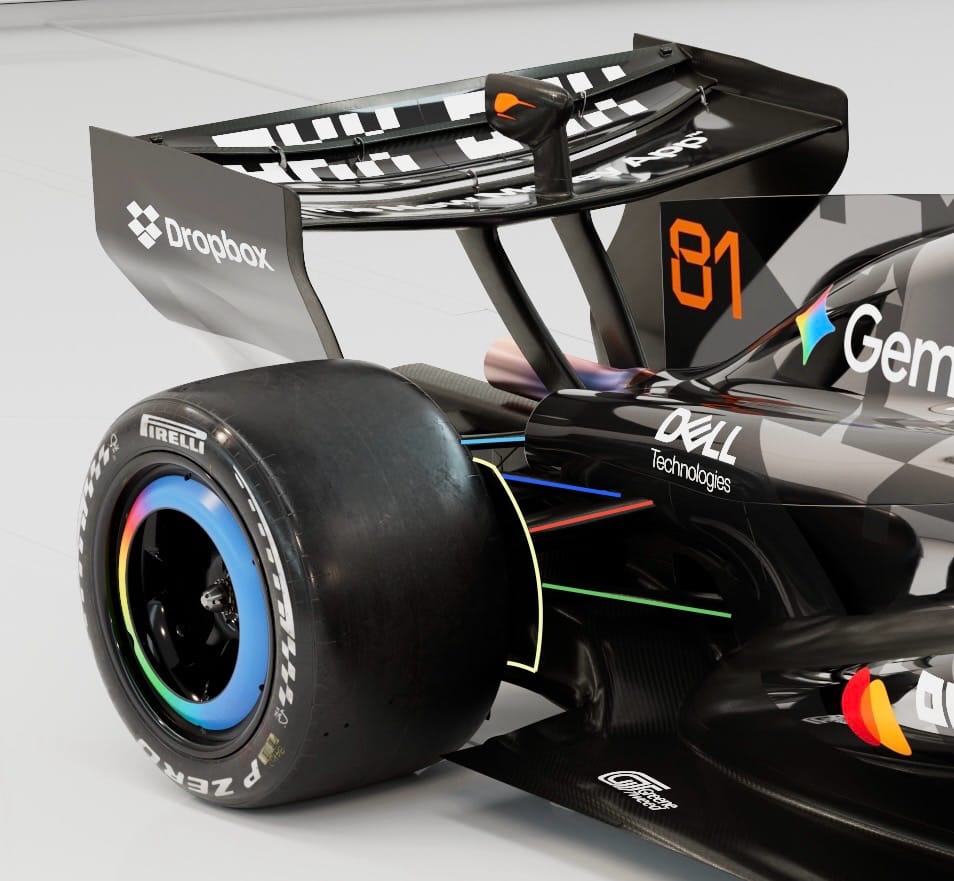
As last year, the rear suspension layout doesn't look very different, still pushrod-operated (red highlight) and still retains some anti-lift on the top wishbone (forward leg dark blue, rearward leg light blue highlights). The lower wishbone (green highlight) is again, as with the front, difficult to see and comment on, but it's still fairly high up and as it is more or less in line with the driveshaft. You can't do much with its rear leg geometry, otherwise you will create extra lateral movement in the driveshaft joints - which is not good for driveline efficiency.
The inner surface of the rear brake duct (light yellow highlight) is similar to what it has on the front: it is taking the airflow coming off the tyre surface and reducing its effect on the flow through the coke bottle area (the gap between the inside of the rear wheel and the inner body surface). This flow between the inner surface of the brake duct and the tyre will then be fed through the wheel again. Again, is this outwash?
Optimising this airflow and managing the turbulence is beneficial in many areas: it improves the overall flow structure around the complete car, as this area even has an influence on the performance of the front wing; it improves the performance of the diffuser, the performance of the rear wing and the performance of the cooling exits, which we can just see behind that Dell Technologies decal. Basically, it improves the overall efficiency of the complete car.
We can also see the rear wheel hub cap replacement - the full version from last season was banned to reduce weight, now we have this mini version. What I'm seeing here will be to extract some airflow through the wheel to help with brake and rim cooling. My question is: does it create outwash? My answer would be: yes.
Top dog in the constructors' championship for the past two seasons and drivers' champion with Lando Norris last season is not a bad return for your efforts. But it does put McLaren firmly in the crosshairs of all the other teams.
Want more insight from F1's 2026 pre-season? Grab a free 7-day trial of The Race Members' Club right now and go behind-the-scenes at F1's Barcelona test
Yes, there is probably only a few teams that can do anything to stop it making it three in a row for constructors' championships, but this early in the pre-season and with this fairly dramatic change in regulations for both the power unit and the chassis, you never quite know who might have come up with that 'eureka' moment and join the top four teams that we expect to be fighting for those championships.
It's early days for all and, in reality, this pre-season test at Barcelona is a semi-bonus just to get on top of potential reliability problems.
However, it has meant that all the teams have had to make a complete car to reliability specification 'A'. While you are doing that, you are using manpower. Yes, it gives the research and design team more time to come up with performance developments, but you could very easily create a bottleneck in the manufacturing of your final optimum performance specification 'B'.