Why Ferrari's F1 progress stalled - and what it plans to do
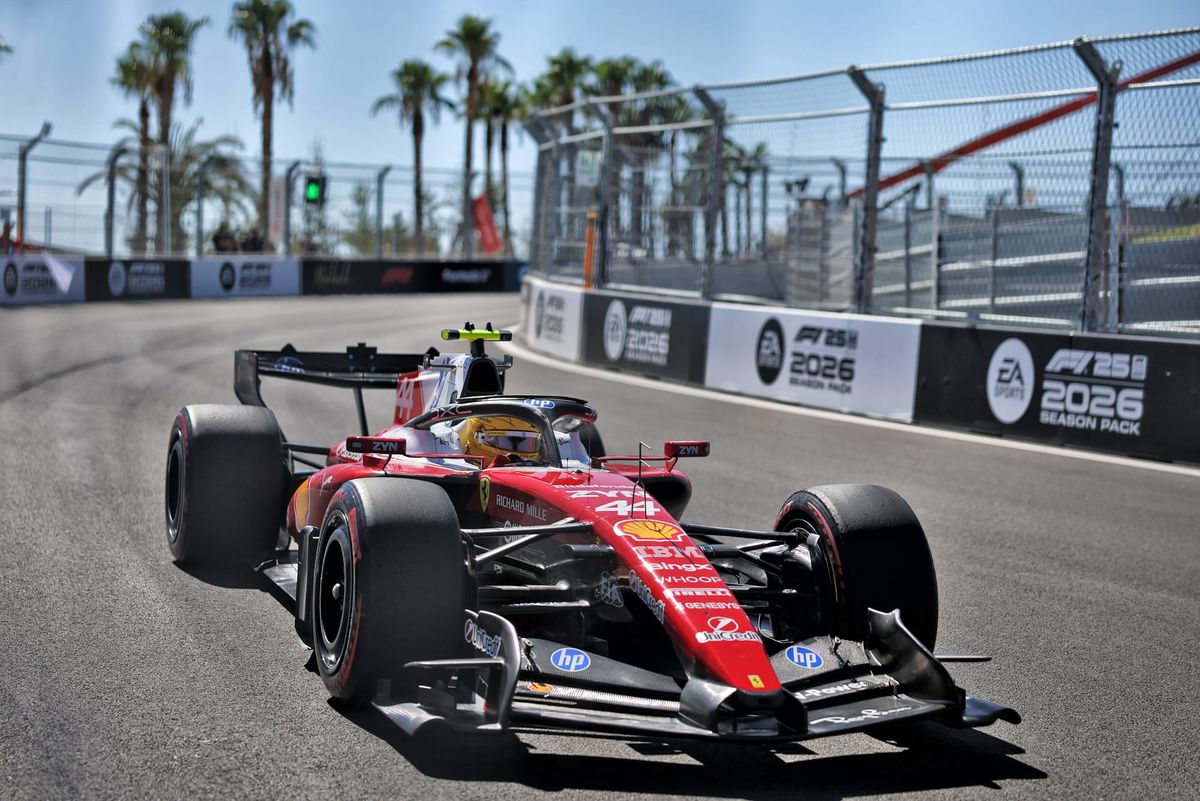
After a very positive start to the summer for Ferrari with its Barcelona win, the second half of its 2026 Formula 1 season has had a much more negative trend.
It hasn’t even been on the podium since Spa in July.
At times it still shows it can be close to the leading positions, but then fails to turn that potential into an actual top-three finish.
The SF-26 has not suddenly become an uncompetitive car, but the development rate of its rivals – McLaren above all – has progressively moved the benchmark forward and Ferrari hasn't been able to keep up lately, having actually postponed a major part of its own upgrade plan.
So what happens now?
Leapfrogged by McLaren
Between Hungary and the Netherlands, either side of the summer break, McLaren’s MCL40 received a series of aerodynamic developments, especially around the floor, which allowed the team to make a clear step forward.
Added to these were specific solutions for the faster circuits, such as the particular H-wing, McLaren's own version of the flip-flop wing - used everywhere after Hungary except in Madrid - which broadens the car's configuration possibilities when reducing aerodynamic drag becomes a priority.
But it would be reductive to explain McLaren's progress exclusively through the aerodynamic updates.
According to some competitors, one of the aspects on which the most important work has been carried out at Woking concerns the understanding and activation of the tyres.
It is a particularly significant topic because already in 2025 the ability to bring the tyres into the correct operating window was very important in McLaren’s performance, and an element which Lando Norris in particular has managed to exploit.
McLaren seems to have made a further step forward precisely in this area. It is therefore not only a matter of having added aerodynamic load to the MCL40, but of having become more effective in exploiting that load and using the tyres in the correct window.
The delayed upgrade
At Maranello, on the other hand, it was already known before Zandvoort that the update introduced in the Netherlands would not represent a particularly large performance step.
The changes to the floor were in fact only part of the work initially planned.
The package brought to Zandvoort can be considered, conceptually, around three quarters of the update Ferrari had planned in that area. Some of the more substantial interventions were postponed - because progress was not living up to what Ferrari had hoped.
The choice of the technical group led by Loic Serra, with Diego Tondi at the head of the aerodynamic department, was not to accelerate the production of the entire package simply to meet the Netherlands window.
Ferrari preferred to give the aerodynamicists more time to work on other areas, including the floor, and to look for a greater performance gain.
One of the areas on which work has continued concerns the outer edge, where Maranello's technical department gave the aerodynamicists more time to develop, dissatisfied with the gain that had been achieved up to that point and also taking the budget cap into account.
Major changes coming for Austin
It is at the Circuit of the Americas late next month that the postponed interventions on the SF-26 are expected to make their debut. These should comprise a more substantial evolution of the floor and of the areas on which the aerodynamicists have continued to work since after Barcelona in June.
Ferrari has accepted going through the current part of the season with an incomplete solution. From what The Race has learned, the aerodynamic department has worked extensively around the SF-26 in a very dynamic way in the second part of the season, changing different components between new and old parts in the windtunnel. This is because some solutions had not produced great results in the windtunnel.
The main new parts are now scheduled for Austin, for both logistical reasons and because of the track layout, which is ideal for evaluating the hoped-for progress.
Ferrari's penalty plan is being finalised
On the power unit front, Ferrari believes it has reached the targets set with the ADUO 1 and ADUO 2 developments. It has always been clear that the in-season changes permitted under ADUO would not produce a game changer for the engine, which has nevertheless followed a development curve that has met the expectations of power unit technical director Enrico Gualtieri’s department.
The ADUO 2 spec introduced at Monza, with the fourth internal combustion engine and fourth turbo fitted, is understood to have lived up to expectations.
The issue to resolve now concerns penalties: Leclerc’s power unit underwent extensive checks following the accident in Italy, with Ferrari deciding to contest Madrid using the ADUO 1 power unit.
The unit is understood to have survived. However, it is certain that both Hamilton and Leclerc will fit a new power unit between now and the end of the season. Rumours suggest the team could choose to unlock Leclerc’s fifth unit as early as Baku next weekend, thereby serving the penalty that would send him to the back of the grid at a circuit where overtaking should be achievable.
The fifth unit will certainly be in ADUO 2 specification for Leclerc and would then be rotated with the unit introduced at Monza over the following remaining races, in the team’s ideal scenario.
The decision on whether to take the penalty in Baku will only be made during the Azerbaijan GP weekend, where Leclerc will run the unit used at Monza in free practice. Only afterwards, also depending on the performance shown by the car, will Ferrari decide whether to fit the new power unit and take the penalty.
Sacrificing the starting position in Baku is not the ideal option, but it could put Leclerc in a position to tackle the following races with a fresher power unit, while at the same time keeping the unit introduced at Monza available for use.
Can Hamilton's fifth power unit wait?
Hamilton's situation is different, although the possibility of introducing a fifth power unit on his car remains open. The decision has not yet been definitively made. But as he now appears to be out of the fight for the drivers' championship, the possibility of taking a penalty in one of the remaining races and having two ADUO 2 units to rotate becomes more likely.
At the moment, two places considered most logical would be Mexico City or Interlagos - or Austin at the start of that triple-header if Ferrari wants to bring the change forward.
Much will naturally depend on the mileage accumulated and on the condition of the power units present in the seven-time world champion's pool over the coming weeks.