Ferrari's engine weakness hides biggest Vasseur success
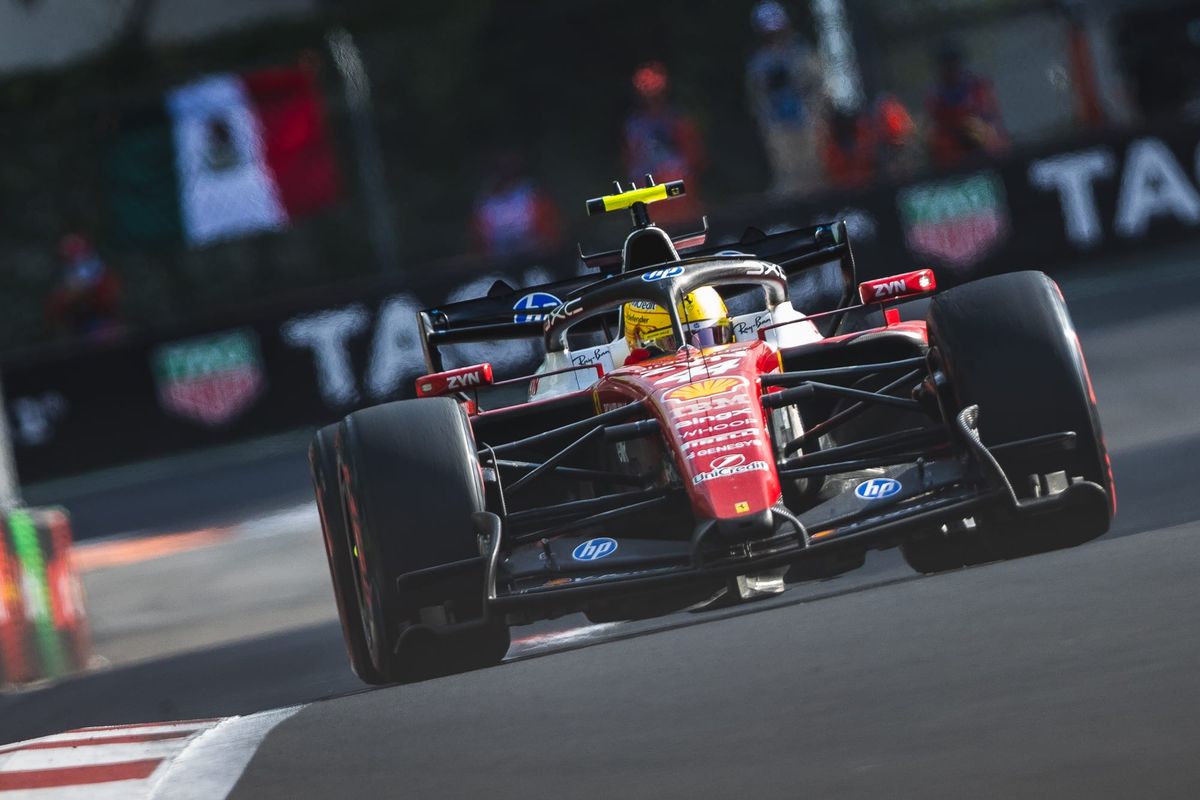
Ferrari’s 2026 will be remembered for the counterproductive battles between Lewis Hamilton and Charles Leclerc, the 18th season of its record Formula 1 title drought and snatching defeat from the jaws of victory several times.
These are all justifiably big storylines, but they shouldn’t bury the lede that team principal Fred Vasseur’s revolution has made measurable progress that, factoring in an engine deficit that he says the team long knew would hold it back in 2026, means that in the Ferrari SF-26 it has produced arguably the best chassis.
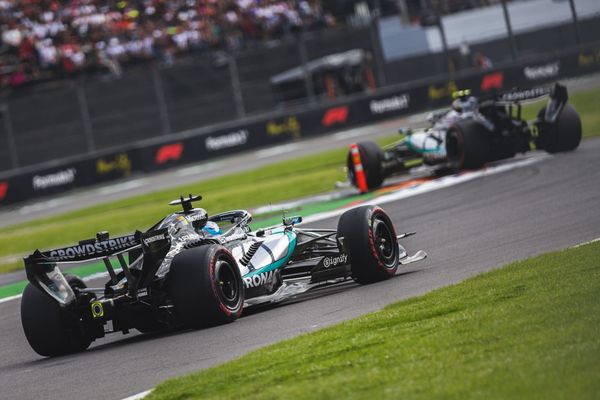
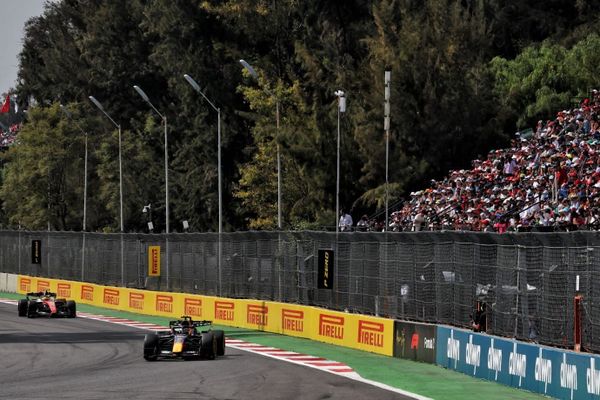
Ferrari has consistently shipped time to its rivals on the straights, and has been most competitive on tracks with plenty of traction-limited content, for example the Hungaroring - and at altitude at Mexico City, where this engine disadvantage is mitigated.
The car is impressive in the corners, and while it would be overstating the case to say that this is universally the case rather than being a general trend, there’s little doubt that it would be a big threat to Mercedes, and possibly its superior on that front.
Vasseur took over as Ferrari team principal at the start of 2023. At times, he's been a beleaguered figure plagued by inevitable rumours about his replacement flaring up and frustrated by the occasions when his drivers get in each other's way. His avuncular manner shrouds a steeliness that has brought success across motorsport.
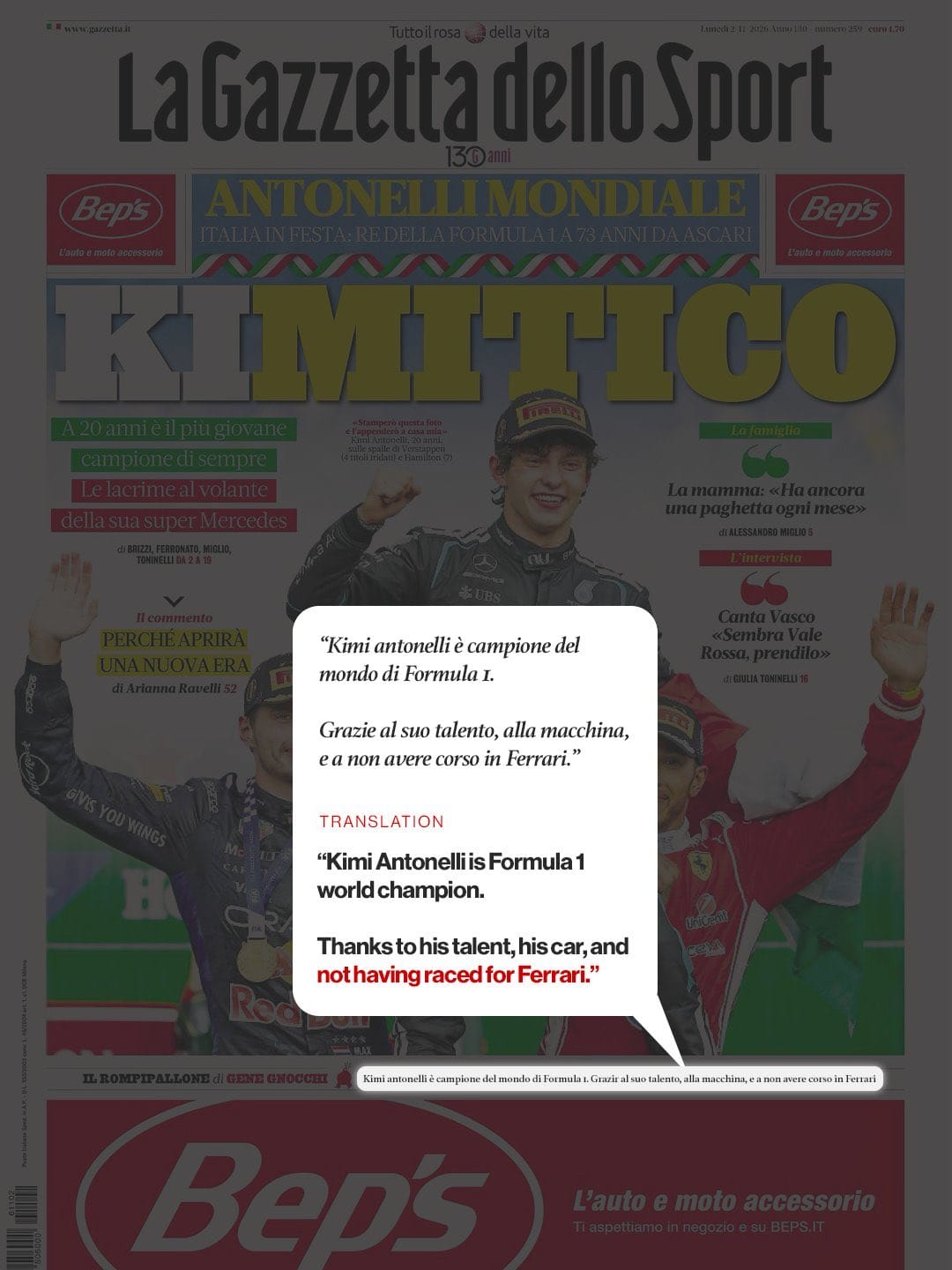
Quietly, he made some progress in rebuilding Ferrari’s long-lost winning culture, although this remains a work in progress. That task is complicated by the relentless scrutiny of the Italian media, which regards Ferrari as more than an F1 team. Gazzetta dello Sport, Italy’s largest sports daily, even used Kimi Antonelli’s world title to attack Ferrari on its front page.
It’s fair to criticise Vasseur for the concerning pattern of drivers not being entirely co-operative on track, given he is the boss and the buck stops with him. But knowing the way he works, it’s impossible to shake the feeling that his hands may be tied by those above.
Maybe that’s now changed. There are also times when he could perhaps play the media game, in Italy in particular, a little better, although it might be that’s an unwinnable fight it's best not to get drawn into. The only way to do that is results. And although two wins so far this year is a failure by Ferrari standards, the trajectory is positive.
Prior to the Mexican Grand Prix, I joined another journalist for a semi-exclusive interview with Vasseur that allowed him to get into detail. And while he’s characteristically keen to stress that for a team to succeed every aspect must contribute, he does point to the root of the problem.
“It would be a mistake to imagine that performance is coming from aero or whatever. It comes from everywhere,” says Vasseur. “[The closeness of the field means] every single detail makes a huge difference, not in terms of lap time, but in terms of position. This message is clear at the factory.
“We knew that the engine would be difficult, we knew for years that we were late compared to our competitors and year one [of the new rules] would be mega difficult. But I think it was a good challenge, it was a good exercise, and I’m really pleased with the determination of the team.
“When you are a bit behind on the chassis, you can always expect to have an upgrade to come back next week. When you are a bit behind with the engine, you know that it will be like this for all the rest of the season. The fact that we continue to push and to try to extract the last hundredths of a second [means] I’m quite pleased with the job done by the team.”
Vasseur remains tight-lipped on the reasons for this delay in engine development. The long cost-capped development cycle of the new power units began in 2023 based on decisions made before his arrival, meaning that it’s only possible to fairly judge the totality of his impact on Ferrari once it has fully corrected for the wrong direction that led to a relatively late change in the engine concept.
The fact it qualified for ADUO (additional development and upgrade opportunities) points to the disadvantage of the internal combustion engine, with Ferrari’s earlier missteps very much emphasising the combustion part of that moniker.
When Vasseur talks of being behind, it’s not so much about starting late as starting on the wrong course. The lead times mean it takes years to correct. The obvious question I put to him is whether that means the whole strategy is built around ensuring that it hits the ground running with the 2027 power unit - even if it’s unrealistic to expect it to eliminate the gap completely in one leap?
“I won’t disclose the situation, but it’s true that the ADUO is a bit perverse,” says Vasseur. “When you are in April/May, you know that you will have ADUO, but the question was: do we want to have a new engine in June, a new engine in September, and to work on the new engine of ‘27? Or do you sacrifice, because you can’t with the budget cap and the resources that you have, you can’t develop three things in parallel. It was a difficult question.”
Surely, I suggest, an easy question because you have to prioritise 2027 given gains this year could never change the fundamental shape of the season. In that context, the strategy of using the two ADUO upgrades to make limited steps (introduced in Austria in late June and in Italy in September) is the logical one.
“Yes, but the question was more to push like hell on the ADUO2, for example, in Monza, and to sacrifice perhaps a little bit ‘27,” says Vasseur. “The cost cap really is a constraint today and the ADUO gives you extra budget, but while it’s not nothing, if you have to put a new engine on the dyno, the bill of material of the engine is almost the [extra budget available under] ADUO.
“The budget approach on the engine is completely different. If you want to do a new engine, just to do the first one, the first, it’s $1.5million, just for the first one. And then if something pays off and you have to introduce it on track, you have to do a long stint, you have to do a sign-off.
“On the chassis, it’s a bit different. You can find a trick, sometimes it costs almost zero. We had teams, including us, bring some small upgrades with an extension of [existing] parts and it was a tenth of a second. To do a tenth on the engine is…”
It’s difficult to transcribe the final word of that sentence, but best to characterise it as a Gallic noise to indicate astronomically expensive.
While in many ways F1 teams are incredibly fast moving, say with turning around the design and production of a new aerodynamic geometry that delivers performance, there are others where there is a huge amount of inertia.
Engine development is one of those, recruitment is another. These are two of the factors why, realistically, any team boss's tenure needs to be measured across five years or more given there are some areas that do not lend themselves to quick fixes.
For all that, do not mistake Vasseur for complacent. He is anything but a maker of excuses taking refuge in hypothetical chassis performance. Ferrari has its problems, but it’s not Honda-era McLaren tricking itself into thinking it's better than it is.
Offer Vasseur the chance to talk up the car when you power-unit correct and he doesn’t take it. Instead, he warns of being too binary in attributing performance to specific areas and lack of performance to others.
“One of the most important approaches is that we are speaking in lap time, this is quite obvious,” says Vasseur. “Every single F1 team is focused on lap time, but it’s not always obvious between departments. You can have aero pushing for very small bodywork, and the engine pushing for big radiators because they want to have the engine temperature low. You always have this kind of friction in the team, it doesn’t matter what team.
“I’m quite pleased with the approach because we had a couple of decisions where we went more in one direction, and always with the focus on lap time. This is good for the future.”
The 2027 car is part of that future. As Hamilton suggested last weekend, if Ferrari really can make significant gains with the ‘27 engine while continuing on the development path with what should be an evolutionary car, then things could look very different next year.
“I’m hoping next year we have an engine to be able to actually compete with them,” said Hamilton. “They were just flying past us on most of the straights throughout the year so if we can fix that and keep this car, the base of it, I think we can do really great. So I’m relying on the team. I have 100% faith in them.”
There is a reason for this faith when it comes to the chassis design side. Under Loic Serra, recruited by Vasseur from Mercedes early in his tenure but with a long lag before he could start work in October 2024, Ferrari has made good progress.
Yes, 2025 was a misstep, the consequence of reaching for gains as the ‘24 car concept was considered to be reaching its ceiling despite almost winning the constructors’ championship, but what has been impressive is the development rate. It’s high for everyone, but Ferrari has the upgrade track record to suggest it has the right direction for next year. It’s a question of ensuring the right lessons are drawn from conclusions that might not always be as clearcut as the stopwatch implies.
For example, differentiating between an upgrade not working as hoped and a set-up deficiency becomes more difficult as the rate of development shallows.
“True, but keep in mind that at the beginning of the season, when we were bringing upgrades in Miami or Spain, or McLaren in Canada, you have a rate of development where we are making four tenths per upgrade,” says Vasseur.
“And at the end of the year, when you have a kind of plateau, the upgrade is more one tenth or two tenths than four tenths. It means that if you are in a good weekend, in a good spot with the rest of the car, or not, you can ‘overshoot’ the upgrade. If you have a poor weekend in terms of set-up, the upgrade is working, but the performance is lower.
“We have to pay attention to that at the end of the year - and it was the case two years ago with the old car because when we brought something it was less than one tenth and quite often, we also introduced a new approach on the set-up, and sometimes we are a bit lower in performance with the new upgrade, and then we are coming back [when the set-up is refined].
"And the correlation is one of the assets of the team - correlation between CFD, windtunnel, track, and so on, it’s under control.”
Culture is the essential intangible. It’s a word that can mean everything and nothing, but seems particularly pertinent to Ferrari. This is a team with a unique status, a phenomenon in a way that every other team in F1 history can only dream of. That makes it a place where people work with remarkable passion and zeal, but harnessing that is the challenge every Ferrari leader faces.
It comes with difficulties because there are times when that passion has a negative impact. Ross Brawn famously stopped the process of newspaper clippings being circulated internally at Maranello. Eliminating fear of failure is a perennial problem. The truth that “it often requires more courage to dare to do right than to fear to do wrong” often attributed to US president Abraham Lincoln applies here.
Taking Ferrari head strategist Ravin Jain as an example, he and his team will be criticised externally for any failure to take an opportunity to win and that risks leading to hesitation or conservatism at the point you must reach for victory.
It’s one of the reasons that strategy errors are always defended by Vasseur, who understands part of his job is to protect his people and he wants to empower them to do what they do best without judgement being clouded by such fear. Multiply that by the countless departments that make up an F1 team and that’s a lot of time spent being a public shield - but it’s something that gives personnel the space to thrive.
Vasseur himself says “it’s quite impossible to judge for me” when asked about how the philosophy of the team has changed on his watch. However, he points to bringing his own approach from a lifetime in motorsport and in a variety of cultures. Like all teams, it’s about taking the best of all to make a group of, in Ferrari’s case, 2000 talents drawn from around the world and making them gel.
Ferrari has in the past been too reactive - as much as anything as a result of pressure from the very top of the company - but Vasseur characterises it as needing to be more forward-looking.
“I came from Sauber and even if the distance between Zurich and Maranello is not the biggest of the grid, the culture is different. The team is much more in reaction, [but] in Switzerland they are much more in the anticipation.
"It’s not a coincidence Sauber in 2022 scored 80% of their points in the first five races of the year because they were able to come mega-ready to race one, where some other teams were more able to develop during the season.
“It’s the DNA of the team and we are putting tonnes of processes to anticipate much more than the past and I think we made good steps. Reliability is always an issue, but so far we have had two DNFs. This is a good example of a mega-long-term process.
"If you start to identify why we are weak in the first part of the season and how to improve to change processes it takes ages.”
Time is the key. Vasseur has had a positive impact on Ferrari, those in the team speak of improved clarity of objectives and while his spell in Italy has so far yielded only seven grand prix wins - and really there should have been more - the progress is real.
The weakness on the power unit side is the first-order problem and it’s no coincidence that this is the aspect of the package that has the longest lead time.
The calls to ‘sack the manager’ will doubtless flare up regularly, especially with someone like Christian Horner on the market. Vasseur should certainly not be immune from criticism and the current driver situation is a test for him, but looking at the big picture there are signs that in the difficult business of car design and development Ferrari is not giving away anything to any of its multiple-title-winning rivals.
This doesn’t mean his revolution is certain to succeed as there is still work to do, but the hindrance of the power unit and the time it takes to complete the course-correction necessitated by early missteps that put Ferrari behind mean that, even in his fourth season, his Ferrari project has yet to complete a full cycle.