Mercedes backs V8 F1 plan, suggests 1200bhp 'mega' engine
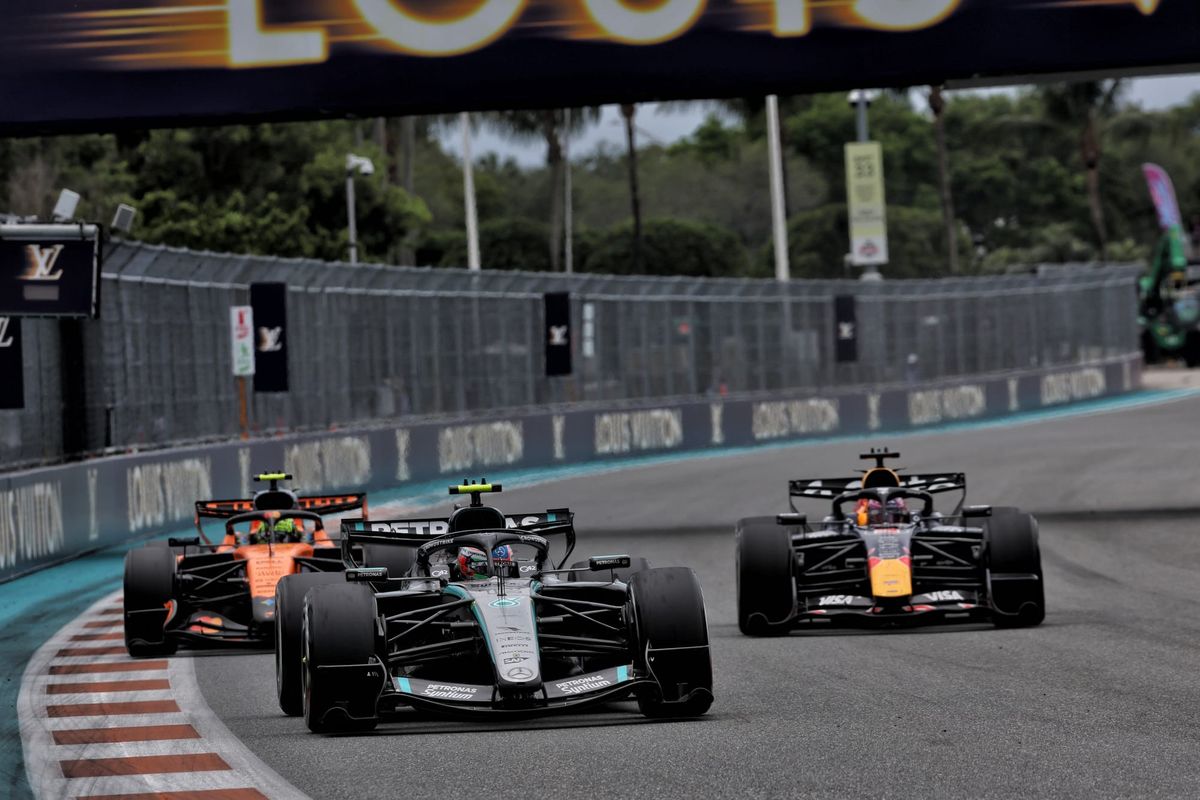
Mercedes is on board with FIA president Mohammed Ben Sulayem's push to bring V8 engines back to Formula 1 and has suggested a 1200bhp "mega" engine plan.
Ben Sulayem said at the Miami Grand Prix that the FIA was advancing plans for a new cheaper and lighter V8 power unit, with only "minor electrification", to replace the current turbo hybrids from 2031 at the latest.
He suggested that current competitors were supportive of the idea, which could come in a year earlier, for 2030, if there was enough support.
"I'm positive, they want it to happen," Ben Sulayem was quoted as saying by Reuters. "But let's say the manufacturers don't approve it [for 2030]. The next year, it will happen. In 2031 it’s done anyway. It will be done."
Mercedes 'loves V8s'
The move to V8 engines would be a major departure from the current hybrid rules, which were favoured by manufacturers because of the near 50/50 split between the internal combustion engine and electrical power.
But Wolff said Mercedes, which is one of the most vocal supporters of the current power units, would embrace the new concept, so long as some form of battery element remains.
"We are open to new engine regulations," said Wolff, when asked by The Race about the potential shift.
"We love V8s. That has only great memories and, from our perspective, it's a pure Mercedes engine. It revs high and then how do we give it enough energy from the battery side to not lose connection to the real world."
Wolff suggested that rather than dramatically rolling back the contribution of the battery, F1 could make electrical energy a core component of the most powerful power units in history.
"If we swing 100% combustion, we might be looking a bit ridiculous in 2031 or 2030," he said.
"We need to consider that, make it simpler and make it a mega engine. Maybe we can extract 800bhp off the ICE [engine] and we put 400bhp on top of it - or more, in terms of electric energy.
"We are absolutely up for it, as long as those discussions happen in a structured way, people are being given consideration and being taken on board.
"We recognise the financial realities of manufacturers these days. We don't have it easy, but if it's well-meant and executed, count us in to come back with a real, real racing engine."
Support for the V8 plan in the F1 paddock also extends to Red Bull, despite it having spent millions on setting up and building a power unit for the current generation of rules.
Team principal Laurent Mekies said: "As Red Bull Ford Powertrains, we are pretty cool with it. We feel we had to start from zero to go and try to deal with this power unit and I think the starting point is decent.
"We are quite excited to have another challenge tomorrow. We are probably a bit more flexible and independent."
F1 CEO Stefano Domenicali told The Race recently that cheaper power units were essential for the next generation of rules.
And this is one of the critical factors that Ferrari feels is a priority for it when it comes to new rules.
Team principal Fred Vasseur said: "From the beginning we have one parameter in mind, it's to reduce the crazy budget of the engine.
"This is for the manufacturers but also customers and for the benefit of the F1."