The F1 'differentiator' tipped to return in 2026
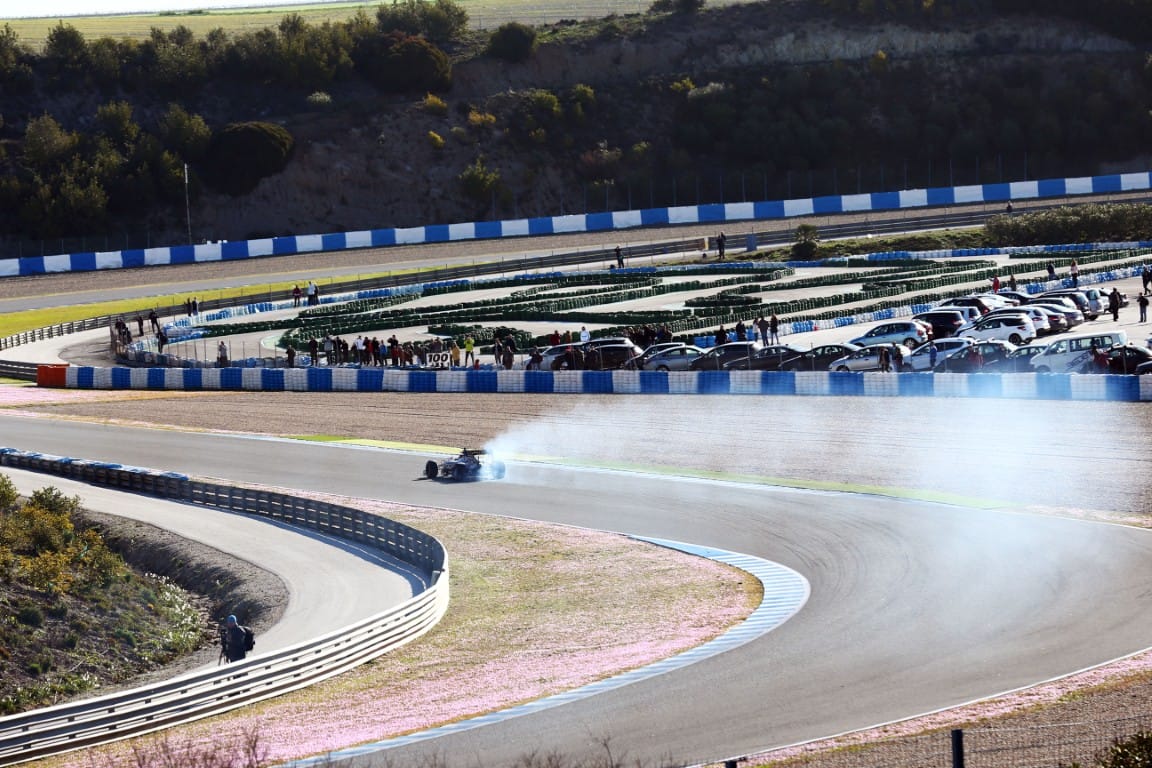
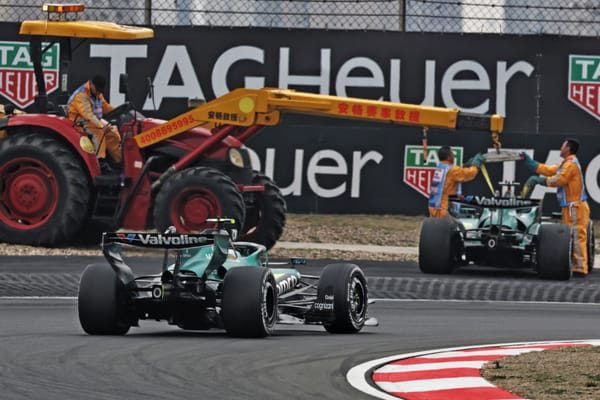
Unreliability always adds a frisson of excitement to a race. It’s a feeling that’s become increasingly uncommon in Formula 1 in the 21st century, to the point where mechanical failures are vanishingly rare.
But the introduction of the 2026 engines might change that, albeit only temporarily, with Mercedes trackside engineering director Andrew Shovlin suggesting there will be “more jeopardy” thanks to the risk of reliability troubles throughout the field next year.
The last two F1 seasons have been the most reliable in grand prix history. The retirement rate across both 2024 and 2025 was just 10.5%, when measured by proportion of starters to be classified finishers - and in both cases the majority of those were down to driver errors rather than an engine blowing up or something breaking.
While the days when half the field or more might fail to finish won’t return - the last of those was in 1994 when the retirement rate was 51.8% - there should at least be a little more unpredictability on this side of things early in the year.
“You'll have more jeopardy because it's going to be so difficult to get these cars reliable in the early years,” said Shovlin. “The last two years of winter testing, I don't think we've had a red flag on day one.
“Yes, they do a bit of rig work and things to check them, but you've got 10 teams building cars with 8000-9000 design components on them that all go together, that then run reliably for two days of testing and no-one breaks down. That's quite an impressive feat, and that's the level that F1 has got to.
“However, the scale of the change and the different technologies next year, it's going to be very difficult to hit that. And I think suddenly reliability is going to become a differentiator in a way that it hasn't really been a big factor in the last couple of seasons.”
Shovlin referenced the jeopardy in the context of a question about the type of racing F1 will produce next year, so it’s a general observation rather than reflecting concerns about the Mercedes PU specifically. He’s right to highlight how big a deal it is to introduce brand-new engine packages, a challenge that will test all of the manufacturers.
The 2026 power units are conceived to have approximately a 50/50 split of conventional V6 to electrical power, and require significantly more battery capacity. While these power units don’t require F1 engine manufacturers to create new technology, as was the challenge with the MGU-H that was introduced in 2014 and that is dropped for next year, these are nonetheless brand new designs that will not run in the real world outside of simulated conditions until January 2026.
Just as in 2014, when Renault in particular encountered major problems, while Ferrari and even Mercedes also hit trouble, this could make pre-season testing a stressful time. With just nine days of testing - plus the possibility of two promotional days of 200km each and two demonstration days of 15km each - there will be limited time to troubleshoot problems before the season-opening Australian Grand Prix.
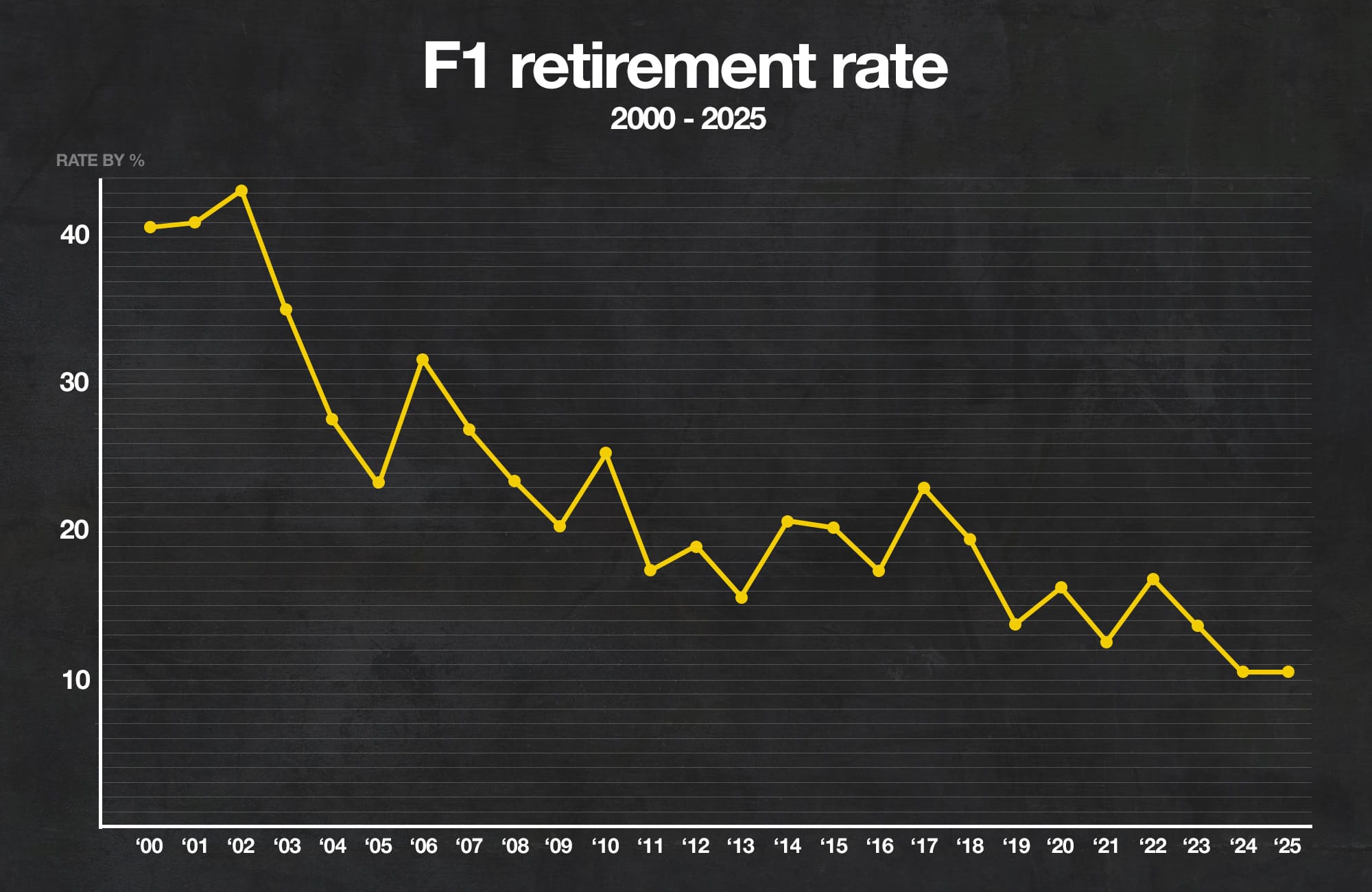
Even in the 21st century, rule changes have tended to lead to an increase in retirements. When the 1.6-litre V6 turbo hybrid engines were adopted in 2014, the retirement rate was 20.8%. That in itself seemed impossibly low during the first pre-season test at Jerez that year, when running was so limited.
In 2022, when the ground-effect cars that have just been retired made their debut, the retirement rate was 16.9%, which was a step back from the 12.6% managed the year before. When the wider, high-downforce cars were brought in for 2017, the retirement rate jumped from 17.3% to 23%.
However, F1 teams and engine manufacturers have become accomplished at fixing and managing problems. In 2014, it seemed inconceivable there would be enough finishers in the Australian Grand Prix to fill the 10 points-paying positions yet come the race 14 cars took the chequered flag (albeit one not classified).
Even so, for at least a time in 2026 there is likely to be the added potential for drama created by unreliability - something that can make even a processional grand prix one you can’t take your eyes off.