Gary Anderson on the 2026 return of an F1 design trend
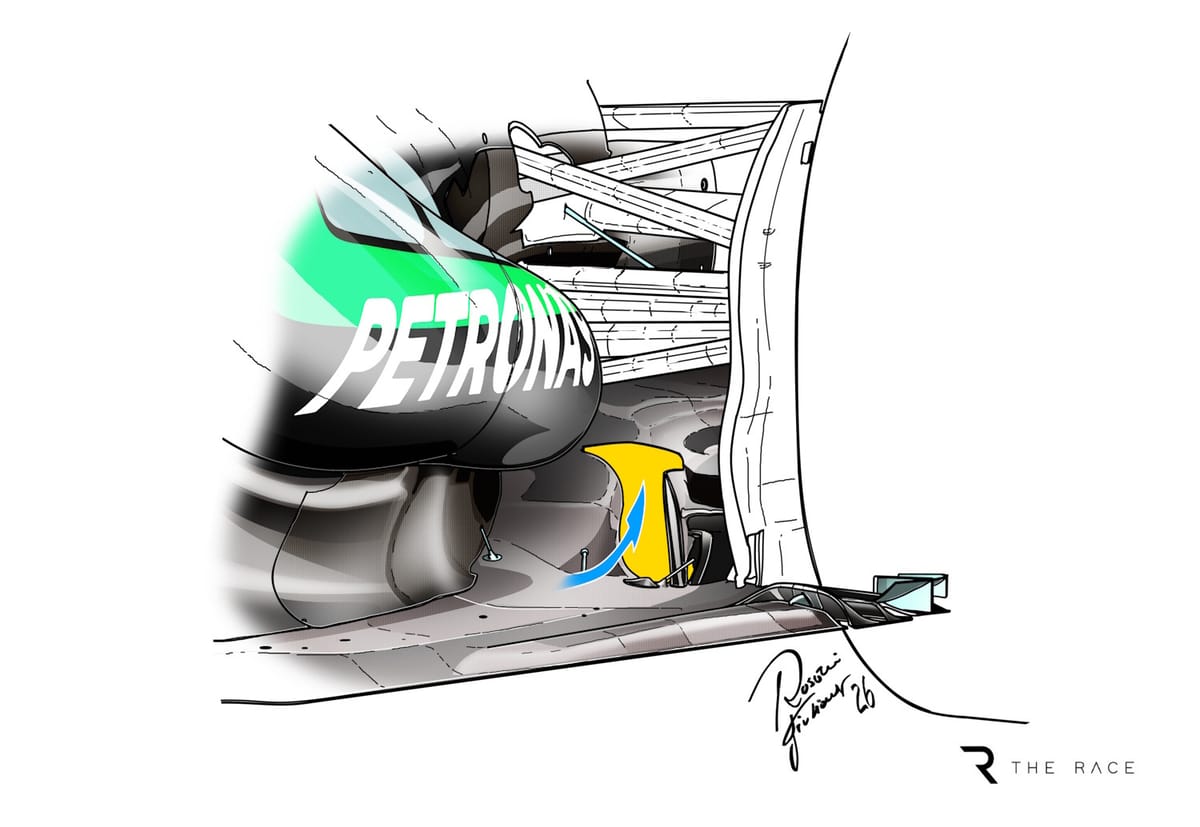
One of the big talking points about the new 2026 Formula 1 cars is the return of what was called the "mousehole". That can be seen, below, with the red highlight here on the McLaren under the old ground effect regulations.
As the slot in the rear of the floor leading into the diffuser exit has been enlarged this year, I suppose it should now be called "the rathole", and it certainly could put the cat among the pigeons in terms of performance.
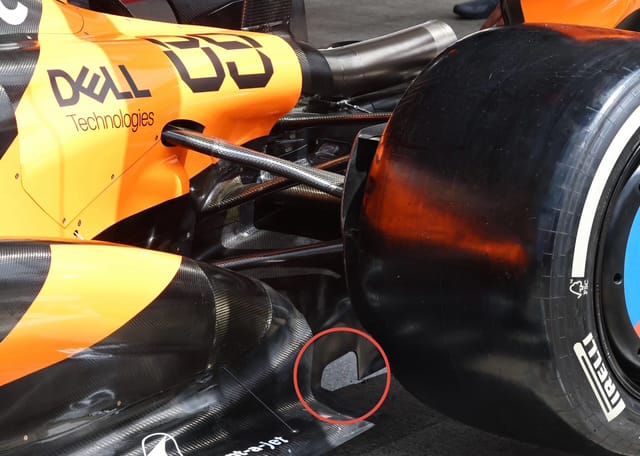
The lead illustration shows how the opening is on the Mercedes. It's believed to allow airflow to be pulled through it into the diffuser expansion area, which is similar to the effect with the mouseholes that we have seen before.
But why would you want to reduce the performance of the diffuser with such a big opening?
As is always the case with these cars conceptually, it's not quite as simple as that.
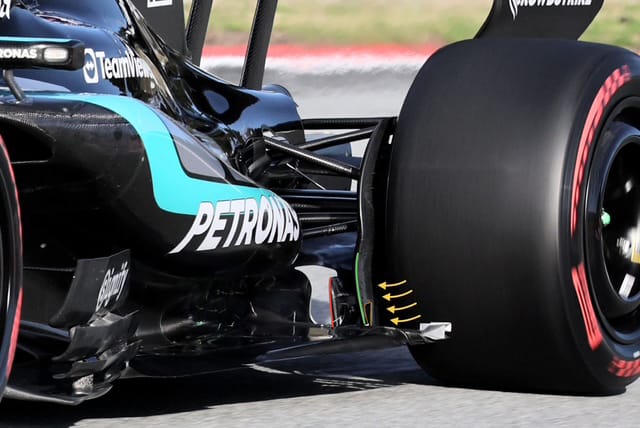
The slot is positioned well after the start of the diffuser expansion area. The inner surface of the brake duct (green line) is there to contain the airflow spilling off the inner corner of the tyre where the tread meets the sidewall (yellow arrows). It even has a small duct (orange) in the lower section to allow more of the flow lower down into another inlet route.
Internal to that inner surface of the brake duct, there is also another vertical splitter (highlighted in red). This will contain that flow spilling off the tyre corner and help redirect it around the inside of the tyre into the void where the tyre tread comes away from the track surface.
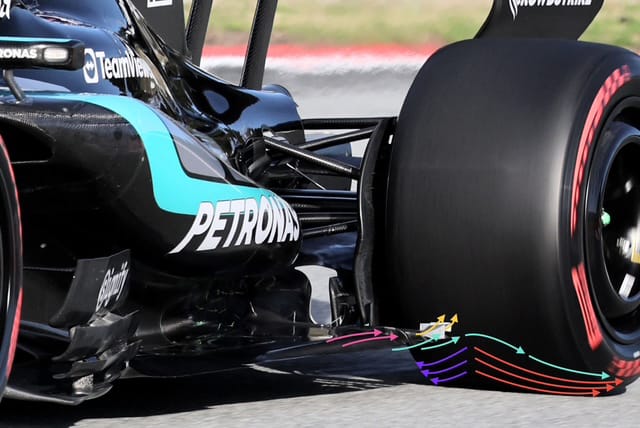
To complicate the airflow structure even more in this area, the small louvres on the floor's top surface allow airflow to be pulled through them (magenta arrows). These will help reduce the airflow that is being pulled under the floor by the low pressure underneath the car and connect it to the tyre squirt, which is the airflow created by the squeezing effect from the tyre tread meeting the track surface. If this can be achieved, it will improve the performance of the underfloor in this area.
I have highlighted this tyre squirt with the purple arrows showing what will probably try to go inboard and the red arrows showing what will probably try to go outboard. The red arrows are longer than the purple arrows because the objective here is to maximise the outwash and minimise the inwash. If that outwash can connect up to the airflow that these louvres set up, then more airflow will be extracted outwards and again improve the sealing mechanism of the underfloor.
Mercedes has also added what looks like a small wing section above the floor, increasing the power of that outward airflow (yellow arrows) in that area.
Where this inlet duct is positioned is behind where the diffuser ramp starts and it could be just about where on the inner surface the diffuser boat tail sweeps inwards fairly dramatically around the gearbox. If it sweeps inwards too dramatically, it is a prime area for airflow separation - so optimising the airflow on the inner diffuser wall might just mean that this opening is required in this area of the diffuser to reduce the risk of airflow separation further outboard.
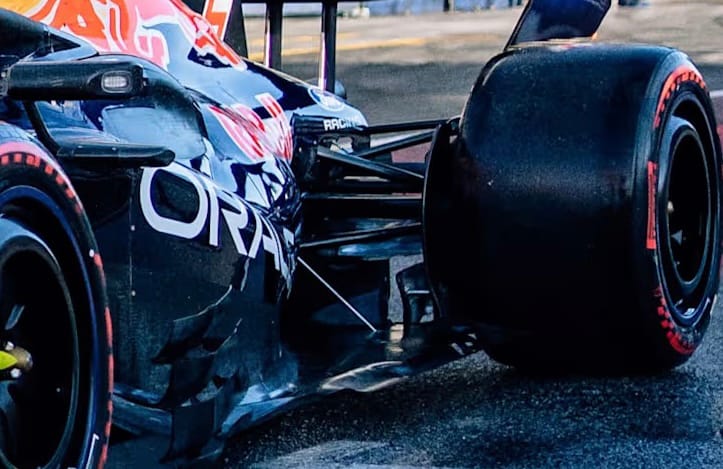
As we can see from these pictures, above and below, most of the other frontrunners have, to some degree, an opening in this area. They also have the secondary turning vane mounted to the inner surface of the brake duct.
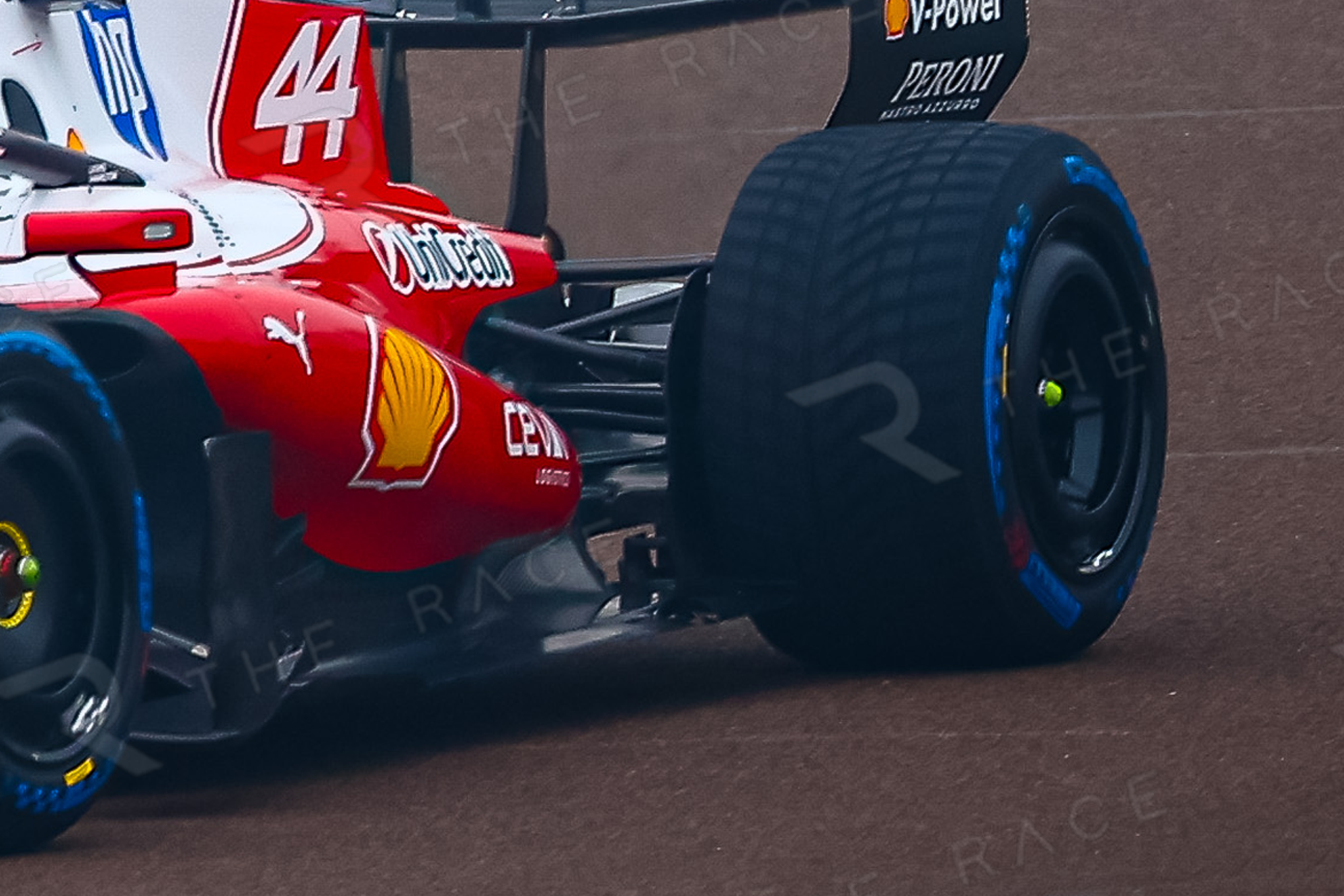
McLaren (for now) is the exception, although from this picture it could be just around the corner. If it's not, I'm sure we will see its interpretation of this opening in Bahrain.
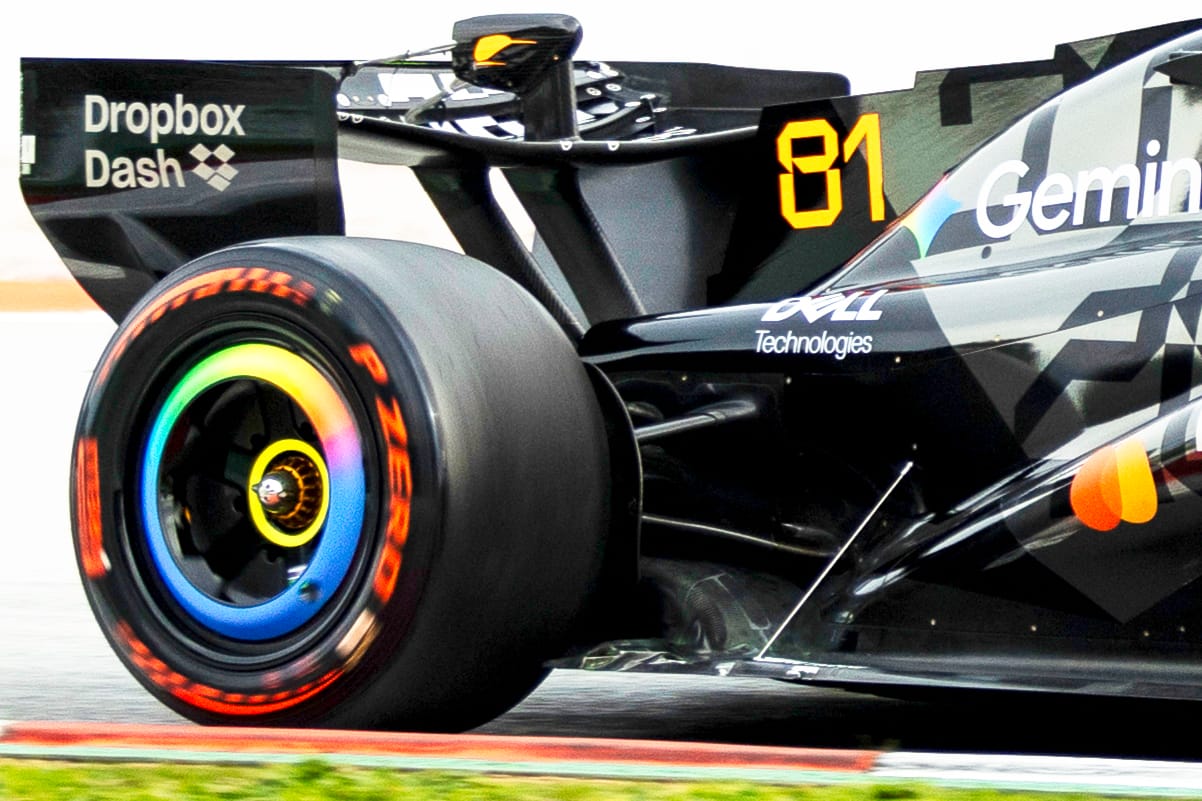
Is it legal? We often talk about the grey areas, but grey is simply a lighter shade of black and to get that you mix white with it.
As with many areas of discovery across these new cars, I doubt that much is black and white and I'm sure the FIA will have a close look at it, but I doubt that the height of the lower edge of the diffuser sidewall is defined even in the 264 pages that make up the technical regulations.
As long as it's not a hole and it's a cutout, I don't see it being a problem.