Was Piastri robbed of Japanese GP victory by the safety car?
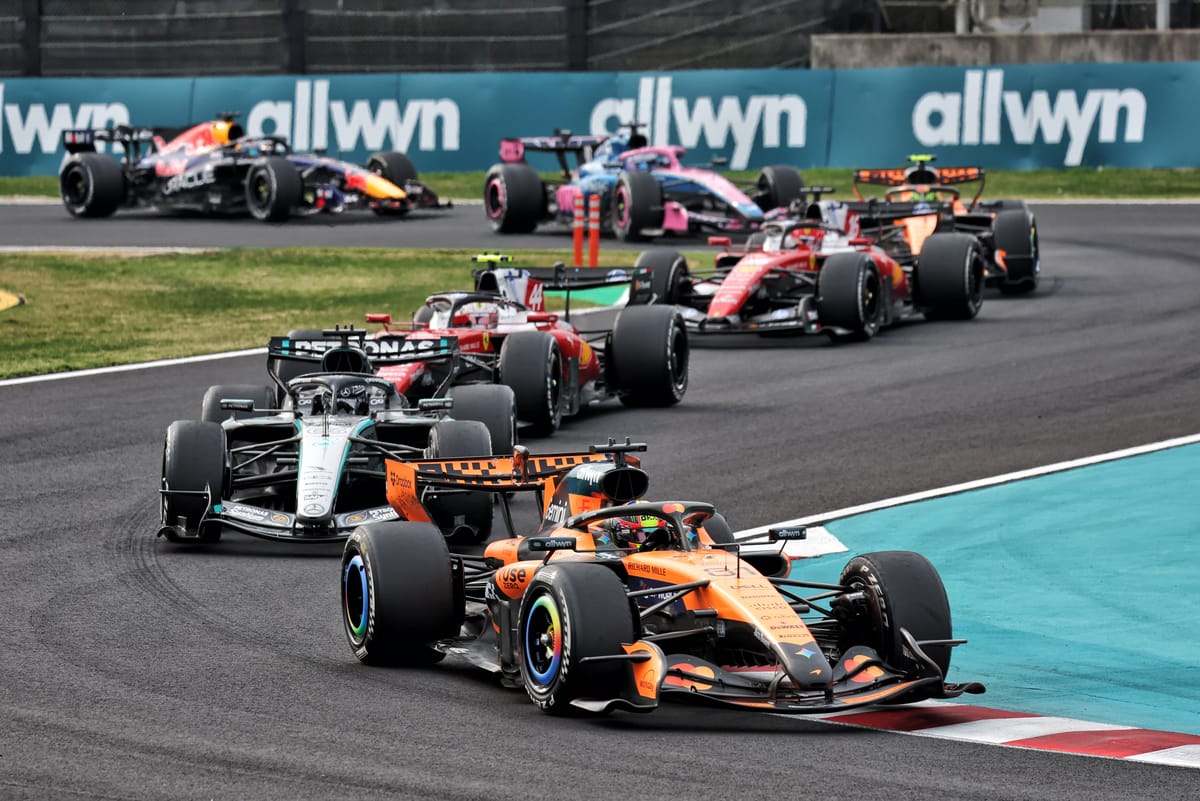
Oscar Piastri never had the chance to find out if his “I think we can hang onto this” victory radio prediction would have come true thanks to the intervention of the Japanese Grand Prix safety car that handed the advantage to Mercedes driver Kimi Antonelli.
So was he robbed of victory?
The way the early laps of the race played out supported this.
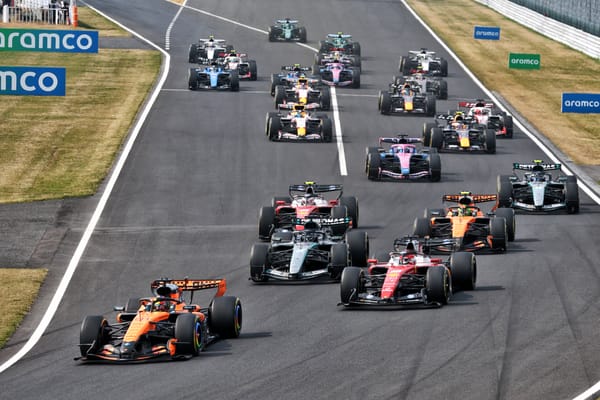
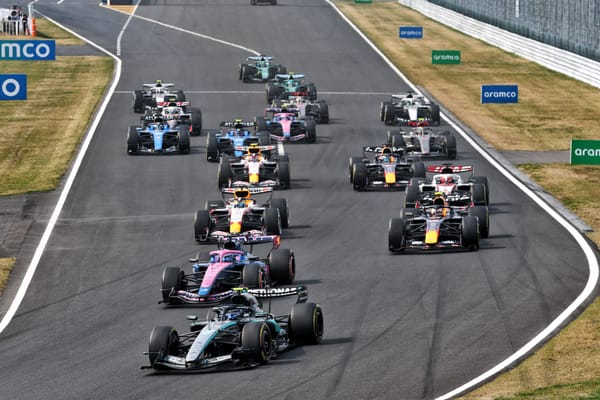
Having jumped into the lead at the start thanks to the slow starts of the two Mercedes drivers - Antonelli because he dropped the clutch too aggressively, and Russell because of a trailing brake that was a team rather than driver error - Piastri kept the chasing Russell covered.
Aside from the moment at the end of lap eight/53 when Russell overtook him into the chicane, which Piastri quickly reversed thanks to the resulting deployment offset on the run to Turn 1, he didn't lose the lead in that opening stint.
“The pace was probably a positive surprise,” said Piastri. “Having clean air probably helped quite a lot at the start, but we did a good job and I could pull away from George a little bit right before the stops. And the strategy was good as well.”
There were slight concerns about the graining of the medium-compound front-left Pirellis, but he had Russell at arm’s length when McLaren called him in to pit for hards at the end of lap 18.
This was a proactive measure to ensure Russell didn’t undercut his way past. Mercedes kept Russell out rather than responding immediately, but after expressing his concern over the radio that “I’m going to lose a lot of race time extending” he was brought in at the end of lap 21. Primarily, this was because his pace wasn't good enough to cover off Ferrari driver Charles Leclerc, who pitted on lap 17, and was threatening to push into Russel’s pitstop window.
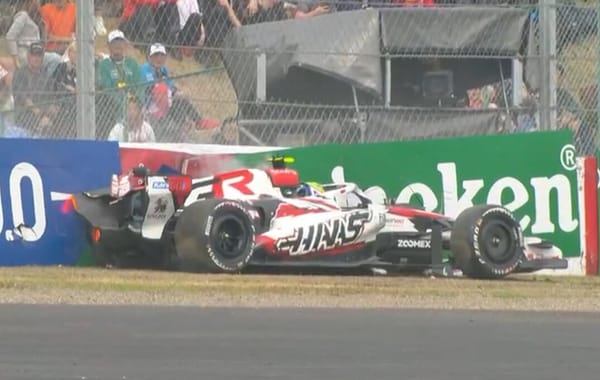
Russell emerged in fifth - de facto second place with Antonelli, Lewis Hamilton and Pierre Gasly ahead yet to pit - and was 1.9s behind Piastri when Ollie Bearman crashed and the safety car was deployed.
Effectively, it was as you were once both had pitted, albeit with Piastri now with a three-lap tyre age disadvantage and on the hards that McLaren had not used up until this point during the weekend.
That’s where our speculation must diverge from the reality, as this turned the race into a straightforward win for Antonelli with Piastri clear in second.
We know that Piastri fulfilled the criteria he had laid out of holding position through the pitstops, so the final 30 laps of the race would have been a resumption of the stint-one battle, but with the added complication of Antonelli being closer.
Antonelli was the faster Mercedes given the set-up error that Russell made before qualifying that meant “the rear was trying to step out on me”, which amplified the pace deficit that was already therein practice.
Antonelli was closing before Russell’s pitstop. Therefore, it’s necessary to factor in the threat of Antonelli, as well as Russell. Indeed, even before the safety car, Antonelli was Piastri’s bigger headache.
When the safety car was deployed, Antonelli was showing good pace on mediums and Mercedes had no plans to bring him him in. Given his pace there was the possibility he could have run significantly longer even to the point where Mercedes felt doing the final stint on softs was a viable possibility.
Piastri’s pace on the hards would therefore have been crucial - and in the three laps between his stop and the safety car emerging he was losing a couple of tenths per lap to Antonelli.
How that pace delta evolved would have influenced Antonelli’s strategy, but as his advantage over Piastri was 18.2s when the safety car deployed, the most likely outcome is Antonelli runs longer but probably isn’t able to overcut Piastri.
Especially as in the early laps on hards Piastri was bringing them in as carefully as a tight race situation would allow given overworking tyres when the tread is at its maximum can have a negative impact on the performance later in the stint.
But that would have given him a significant tyre-life advantage when he did eventually stop. This is why Antonelli could have won the race even without a safety car.
The battle that played out in the second half of the race that didn’t happen would have been all about track position.
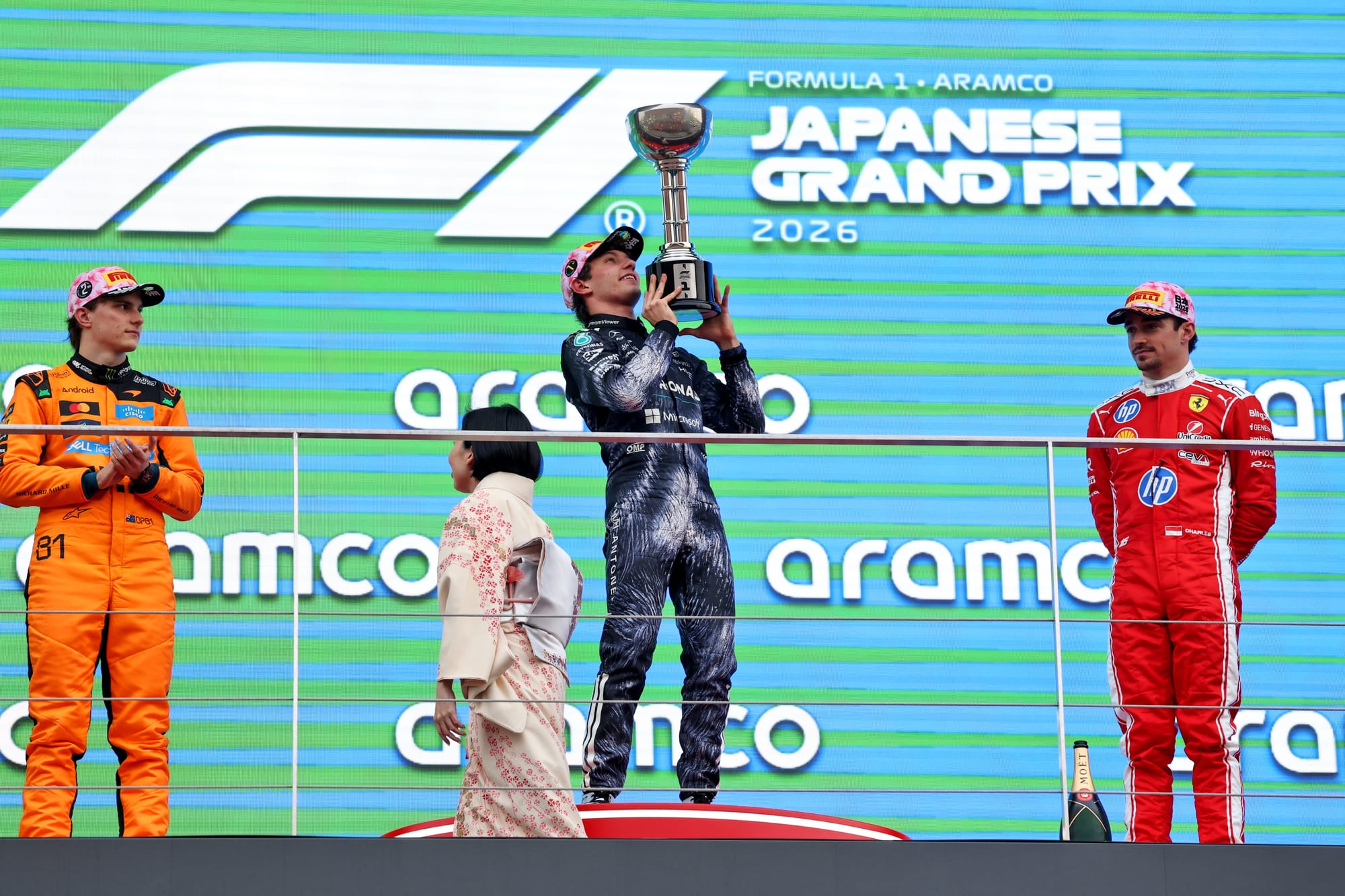
The Mercedes was the faster car, but McLaren’s big step forward in Japan meant that Russell was only slightly faster.
What’s clear is that if either Mercedes had got ahead of Piastri and been able to stabilise the battery state-of-charge, something Russell failed to do when he led across the line at the end of lap eight, then it likely would have stayed there.
The most accurate read on the Mercedes pace advantage is the rate at which Antonelli pulled away from Piastri at the restart.
The gap had grown to 13.2s by the end of the race, which is an average of 0.493s per lap from lap 28 (the first after the restart) to 53.
However you slice and dice the pace in this stretch of the race you get figures in that kind of ballpark or slightly higher, although if you take the first 10 laps after the restart the figure is the slightly higher 0.547s. While we have to add the caveat to that of Antonelli having clear air, the pace advantage remained once he was well ahead.
However, that’s not sufficient margin to absolutely guarantee that there would have been a pass were positions reversed.
The scenario that most likely would have arisen is Piastri leading from Russell once Antonelli pitted, with the Italian faster and on significantly younger rubber.
Within that, there’s the question of whether Russell could have got ahead of Piastri before the situation arose where Mercedes needed to have Antonelli leading the challenge.
That would have either required Antonelli to resolve the problem by passing Russell, or perhaps even team orders. Even without the tyre offset, Antonelli was the faster Mercedes, so with it that would have been compounded.
Whatever happens, this hinges on whether Piastri could hold off either Mercedes, one faster than the other but both with a pace edge over the McLarens.
It would have required a drive of precision with no errors, but Pierre Gasly proved that it is possible to keep a potentially faster car behind with the way he covered Max Verstappen for most of the grand prix. The Red Bull may not have had the same edge that Mercedes did over McLaren, that battle is an example of what might have played out between Piastri and the Mercedes drivers in this hypothetical second stint.
“I would have loved to have seen how it would have panned out,” said Piastri.
“I need to look back and see whether Kimi was quicker than George or similar pace. I think if he was the same pace as George, then it would have been a pretty stressful afternoon because I probably would have had both of them right on my gearbox.
"But once Kimi had clean air, clearly he was a lot faster than me, so I'm not sure we would have won the race, but I certainly would have loved to have found out.”
The implication from this is that Antonelli was the real threat, something team boss Andrea Stella echoed.
“I think it would have been possible against Russell, because we saw that Russell was struggling anyhow to overtake even Ferrari," said Stella.
"And I think today, McLaren and Ferrari, they were on a similar pace.
"Antonelli though, he had faster pace than anybody else so I think Antonelli, at some stage, he would have been in the competition for the victory. So we will not know whether Oscar could have won the race or not.”
Would McLaren have definitely won the race without the safety car? No, it’s impossible to say that with certainty.
Could it? Absolutely, and the way Piastri handled Russell in the opening stint proves that he would have had the opportunity to stay up front.
But the most fascinating hypothetical is how it would have played out on the Mercedes pitwall given the evidence supports the belief that Antonelli was its better victory shot.
Piastri showed in stint one that he had Russell beaten, but Antonelli would have been a complete different challenge.