Boost, overtake mode, active aero - Key 2026 F1 terms explained
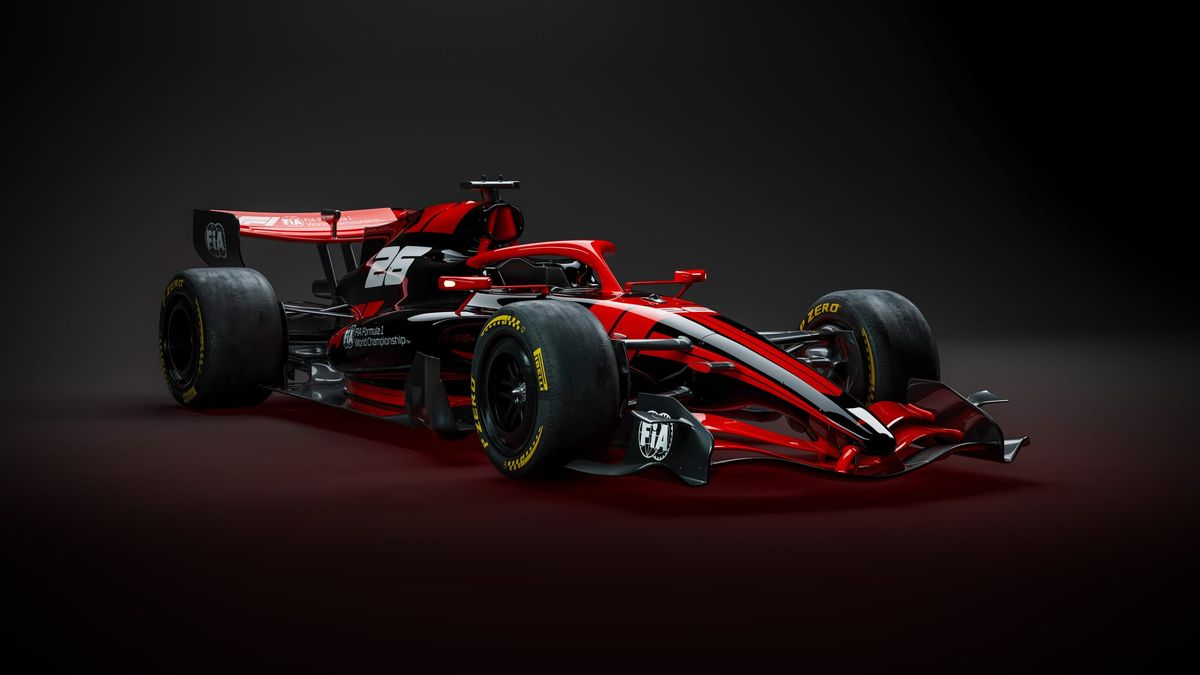
Formula 1's brand-new 2026 ruleset brings with it a whole host of new terminology to get used to.
It's out with the drag reduction system (DRS) and in with the likes of 'active aero', 'boost', 'overtake' and 'recharge'.
All of those terms are crucial to the new 2026 chassis and engine regulations and you'll be hearing them plenty throughout the course of the season.
So below we've compiled definitions of all of them.
'Active aero'
After 15 seasons of use DRS has been dropped, but in its place is 'active aero' - in which the angle of both the rear and front wings can be adjusted between two different modes.
For 'straight mode', the front and rear wing flaps will 'open' to reduce drag in predetermined activation zones around the circuit. Unlike DRS, you won't need to be within one second of the car ahead to do so.
For 'corner mode', the front and rear wing flaps will be in the normal position for the higher downforce needed for cornering.
This is essentially the default aerodynamic setting before the flaps switch to 'straight mode' in the activation zones.
The reduced drag isn't an overtaking aid like DRS, but is there to improve the efficiency of the cars and the new 2026 power units.
For wet conditions where more downforce is required, there will be the option for race control to enable partial aero mode, whereby the front wing elements can be in 'straight mode' and the rear wings in 'corner mode'.
The terms 'active aero', 'straight mode' and 'corner mode' replaced 'X-mode' and 'Y-mode' - which are no longer in use, having been confusing from the off.
'Overtake mode'
The chief overtaking assist in 2026 will be 'overtake mode'. When drivers are within a second of the car ahead at the activation points (nominally the final corner of the lap), they'll have the ability to gain an extra +0.5MJ of energy to deploy on the following lap.
The lead car’s energy deployment will taper off after 290km/h, while the car behind can use the override for a full 350kW up to 337km/h.
This will in theory increase the likelihood of overtakes.
The 'overtake mode' terminology replaces what was previously known in the 2026 regulations as 'manual override mode' or MOM.
'Boost'
In 2026 'boost' will refer to the regular use of battery power that has been harvested by the energy recovery system (ERS), which can be used by a driver whenever and wherever they want on track, via the press of a button on their steering wheel.
This is similar to what's been in use for a number of years.
It can either be used throughout a lap in small bursts or be used in a bigger burst to either attack or defend against another driver.
'Recharge'
The 'recharge' term is fairly self-explanatory as it simply means when drivers are recharging their battery with recovered energy.
But this can be achieved in a number of different ways - under braking, on part-throttle, the engine clipping at the end of a straight or the classic lift-and-coast (when a driver lifts off the throttle early in a braking zone).
Recharge will mostly be automated via a series of electronic control unit (ECU) functions, aside from a driver lifting and coasting.