What we learned from first F1 2026 Friday at Australian GP
After a long pre-season, Formula 1's finally had its first proper day of 2026 at the Australian Grand Prix - which has given some big pointers for the season opener.
Ferrari and McLaren topped the two sessions - so pre-season favourite Mercedes was never fastest on Friday...so we're in for a surprise, right?
Mercedes is actually ahead
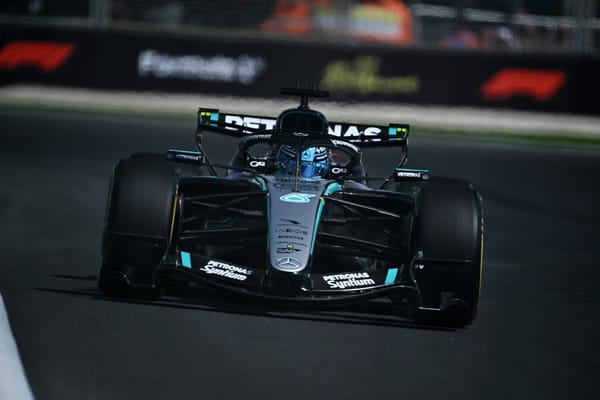
For now, whatever the classification says, nobody doubts that Mercedes is the class of the field. That was revealed by George Russell's impressive long run pace.
While FP2 was patchy in terms of the long run data, it showed Mercedes having the clear advantage with Russell able to run at a pace the rest couldn't match.
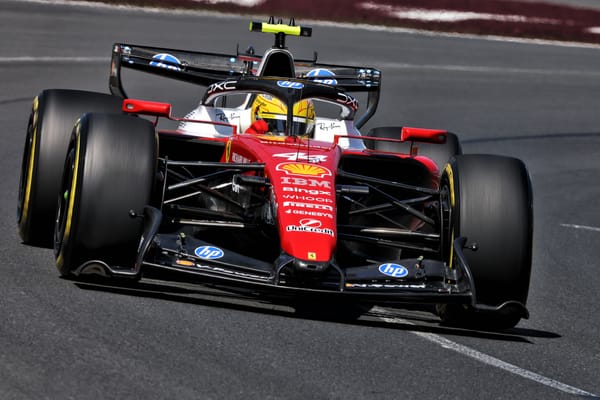
"At the moment, it seems to be Mercedes a step ahead and then Red Bull, McLaren and ourselves after," Ferrari driver Charles Leclerc said.
That's not to say it was a perfect day for Mercedes. All of the Mercedes-engined cars struggled in FP1 with deployment. "We had a few configuration issues on the power unit side that took a couple of runs to unpick," explained Mercedes chief trackside officer Andrew Shovlin.
What that means for the qualifying potential of Mercedes is unclear. You would normally expect a strong correlation between race and qualifying pace, and that is the most likely outcome tomorrow given the importance of harvesting and deployment even on a single push lap.
But when it comes to race day, all the signs are that Mercedes is well ahead.
Qualifying will be truly 'chaotic'
The biggest point of competitive jeopardy over the Australia weekend is going to be qualifying.
Even without the added complication that comes from Q1 having an extra two cars in it thanks to Cadillac's arrival, the list of elements that could potentially trip drivers up is extensive.
Nailing the perfect lap is going to involve ensuring that the battery is fully charged, the tyres are in the right window, the speed is optimised crossing the start-finish line, that energy management is spot on - and that you don't get yourself tangled up in traffic either on your hot lap or preparing.
It is little wonder teams - teams that aren't Mercedes, anyway - seemed to put more focus on single-lap performance than long-run data.
All teams look likely to have a nervous build-up to Saturday afternoon with FP3 the last chance to dial in not only their car set-ups but their run plans, their energy deployment, tyre prep, and so on.
As Red Bull chief engineer Paul Monaghan said: "It's going to be a bit chaotic, isn't it?"
Norris is on the back foot
With running at a premium thanks to unfamiliarity with these new cars, world champion Lando Norris won't have been happy to be restricted to just seven laps in FP1. This was the result of a transmission control issue that struck his McLaren.
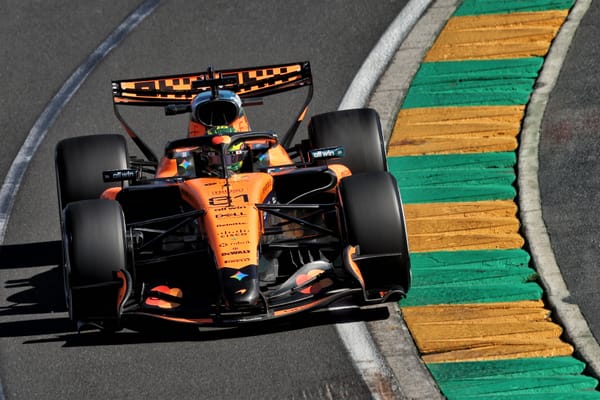
That lost track time contributed to his lack of pace in FP2. Although he completed a full programme and logged 29 laps, he was down in seventh - a second off pacesetting team-mate Oscar Piastri.
There was no specific area where Norris was losing the time as he was slipping back from Turn 2 onwards. However, the harvesting and deployment of electrical energy played a part and around half of the deficit was on the straights.
That FP1 'no-show' is surely still being felt - given it was a session Piastri described as "by far the trickiest and most complicated I've ever had".
And with McLaren in what could be a tight battle for the front four rows of the grid, even a small deficit for Norris could be costly in qualifying.
A surprise midfield leader
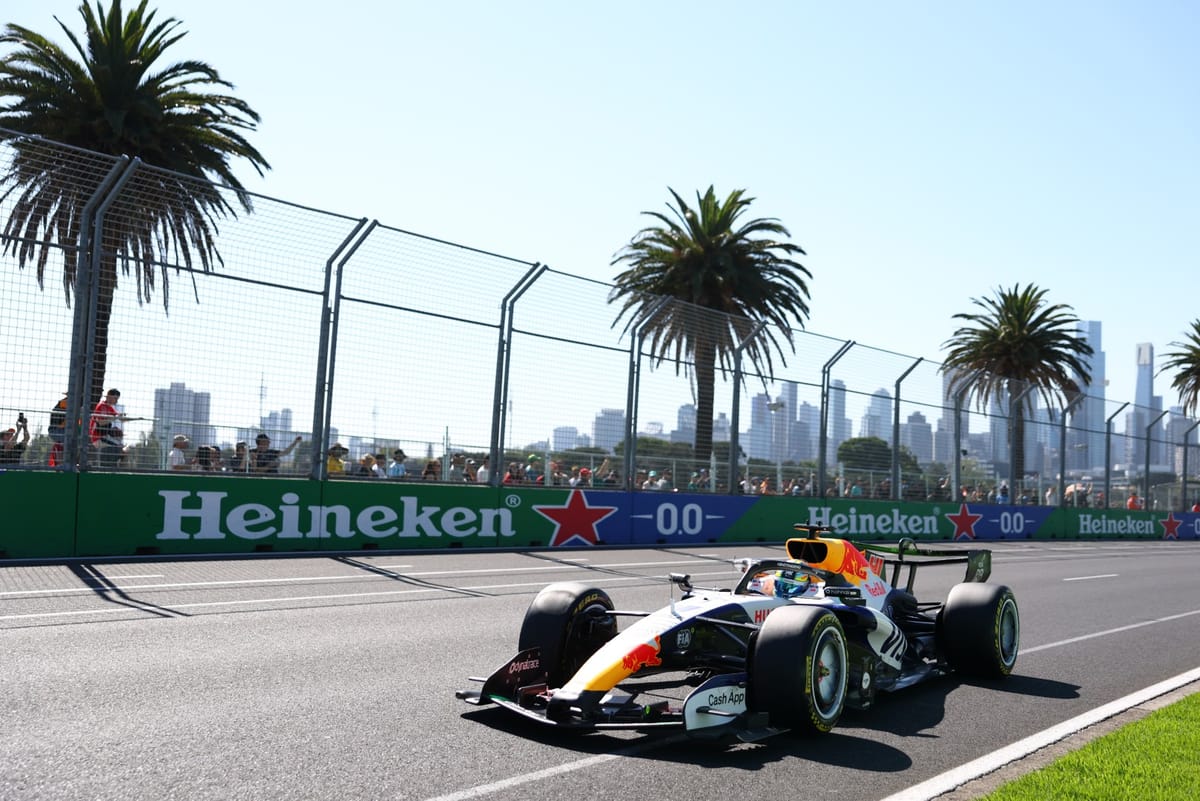
There are no other rookies to benchmark Red Bull's newest F1 driver Arvid Lindblad against, but he outpaced Racing Bulls team-mate Liam Lawson on Friday and was the fastest driver from a midfield team in both practice sessions, ending FP2 eighth.
That put him ahead of new Red Bull Racing driver Isack Hadjar, too, and this was actually reminiscent of Hadjar's electric pace on his own debut weekend in Australia 12 months ago.
What makes that all the more impressive is that Lindblad's FP1 had been compromised, losing half an hour to what the team called a software glitch.
But "it really didn't seem to faze him or hurt him at all", Racing Bulls team principal Alan Permane said, and the rest of the day really backed this up.
How weak the cars really are here
The energy-saving demands of the 2026 engines are being seen in full effect in Melbourne.
After some initial experimentation in FP1, there seemed to be reasonable convergence on the methods teams settled on to maximise charging the battery.
For example, the previously epic Turn 9-10 high-speed left-right combination has been sacrificed at the altar of energy management.
Every car is super clipping there - the driver stays on full throttle but the MGU-K is in charging mode, so engine power drops and speed reduces by about 40km/h or more before the driver even lifts or get on the brakes.
That's made that corner way less challenging as even though the minimum speeds aren't drastically different they are just being coasted down to - and the car is then rolled through the corner.
A similar thing is happening at the blind, awesome fast Turn 6 right-hander, with super clipping or even just more lifting and coasting.
The upshot is that, as expected, we're seeing the 2026 cars close to their worst on push laps: hence Piastri's FP2 benchmark being 3.3 seconds slower than Leclerc's from last year.
In Bahrain, where recharging and deployment wasn't so taxing, the gap was only around two seconds.
Aston Martin's weekend hanging by a thread
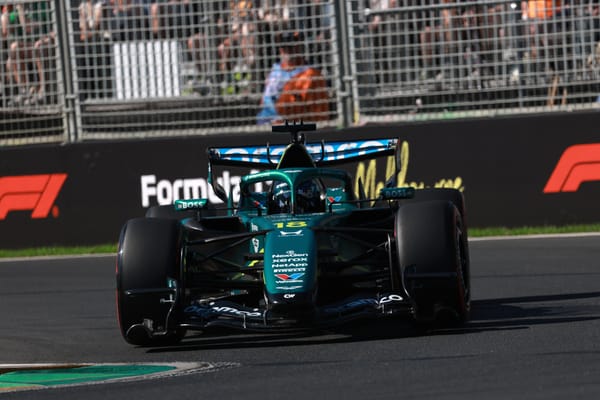
Every time it seems like Aston Martin and Honda's situation can't get worse, it does.
Their Australian GP weekend is hanging by a thread, with Aston Martin team principal Adrian Newey revealing that two more battery failures in FP1 caused by a different issue with how the battery and the electronic systems are interacting means there are no spare batteries on-site in Melbourne.
The only two left are in the two cars: so any further problems and it's game over.
After no laps at all for Fernando Alonso in FP1, and just a single unrepresentative timed one for Lance Stroll, FP2 was at least better as they managed 31 laps between them.
This at least seemed a good sign for Honda's countermeasures for mitigating the impact of the severe vibrations that had wrecked Aston Martin's pre-season work.
But there's still a big question mark over how far into the weekend the engines will run. And even if they survive, the package is dog slow.
Alonso was the fastest of the two, 4.9s off the pace. Stroll was actually outside the 107% limit in FP2 - although would at least be permitted to race if that happened again in qualifying, given Alonso's shown the car can be fast enough.
Alpine's made an underwhelming start
Alpine was one of the below-the-radar success stories of pre-season testing, seemingly near or at the front of the midfield pack.
But that wasn't the case on Friday, with Alpine only ninth-best among the teams and 2.4s off the pace. Its long-run pace didn't look much better either.
This doesn't appear to be a case of history repeating itself with echoes of last year, when the Alpine was fast in testing in Bahrain but struggled at most other tracks.
"We've got some issues to fix which we haven't found in testing - half were expected, half of it was unexpected," said Pierre Gasly, who had stopped in FP2 in what was understood to be a battery-related precaution.
Alpine also had a messy first session in terms of its deployment strategy, but that moved closer to the approaches taken by the works Mercedes team and McLaren come FP2 once calibration work had been done.
"We've got lots of things we didn't optimise, so working on those overnight means we should take a good step forward," said Alpine racing director Dave Greenwood.
Whether that step forward can be enough to get it back to the front of the midfield pack given the pace of Racing Bulls and Haas is another question.
Williams still a strong Q1 exit contender
Although Williams reached the heady heights of 15th in the more representative FP2 session with Alex Albon, its performance confirmed that anything beyond elimination in Q1 on Saturday will be overachieving.
While it has woeful Aston Martin and newcomer Cadillac covered comfortably, expect Alpine to leap ahead on Saturday. That said, Williams itself has gains to make, with Albon saying there's "some work to do in understanding the deployment".
Albon had ground to a halt with a hydraulic problem during FP1. But he at least had a better day than team-mate Carlos Sainz, who sat out most of FP2 with a suspected leak of unspecified nature.
The Williams looks like a car that's losing time to weight, which will be chipped away at over the coming races, on top of its other problems. However, its race pace is unclear.
"I did a very short long run, which was also the only long run we've done so far today between the both cars - and wasn't that enjoyable," Albon conceded.
Cadillac's got a testing hangover
Friday practice was a tale of two Cadillacs.
Valtteri Bottas put Cadillac about where it was expected to be: ahead of the limping Aston Martins, around 3.5s off the pace, and just too far adrift of the back of the midfield to be sniping at anyone else over a single lap.
Sergio Perez didn't have such joy. His running was limited in FP1 by a fuel system problem that Cadillac had to remove the car's battery to fix.
And in FP2 he stopped on track after joining the session late, completing no laps, because of a hydraulic leak.
It's a continuation of the niggling problems that caused downtime for Cadillac throughout testing and that it was optimistic it was on top of.
Unsurprisingly, Perez sounded a little annoyed by the reoccurrence - so Cadillac does need to clean up its running and stop this hangover from pre-season being a long one.
Aero concerns prompt pressure change
The unintended consequences of F1's new 2026 rules have continued to roll out in Melbourne, as became clear when Pirelli suddenly raised the minimum tyre pressures on Friday morning.
In a revised document sent out by the FIA, it was announced that the minimum starting pressures were being lifted from 27psi to 28.5 psi at the front, and from 24.5psi to 26psi at the rear.
The change was unusual because it occurred without cars running on track. Normally such tyre pressure changes take place in response to how things have looked in practice.
Pirelli chief engineer Simone Berra offered a fascinating explanation for the move, saying it had come as a preventative safety measure to head off problems that could be caused by active aero failures.
Concerns had emerged that if there is sustained running where the wings are in corner mode on the straights - either for safety reasons or because of a mechanical failure - then that risked extra forces on the tyres and potential trouble.
Berra said: "When the SM [straight mode] is off, the load on the tyre is around 30% higher than with SM on."
Extra forces means more risk of failures. So the best way to avoid this is to raise the minimum pressures.