The thing people are missing about F1's commercial boom
Formula 1 has spent years chasing bigger audiences. What is easy to miss is that a good number of the people it has picked up along the way belong to a surprisingly small and important group: the investors, chief executives, policymakers, founders and media personalities whose judgment shapes how markets, regulators and the public understand a company.
Communicators have a term for this group. They call them key opinion formers, meaning people whose views carry outsized weight with everyone else who is paying attention.
Before joining The Race, I saw firsthand how much time, budget and internal political capital Fortune 500 corporate communications and corporate affairs teams poured into reaching them. As Axios's first Chief Revenue Officer, I helped build the commercial foundation, in its early years, for what became one of the most influential media brands in Washington and corporate America.
The playbook for reaching them is well established, and for good reason, because it often works: Sponsor premium business and political journalism. Secure a speaking slot at the flagship conference. Build a thought-leadership programme timed to an earnings cycle or a regulatory debate. Host a boardroom dinner or a curated summit. Each of these channels succeeds because it meets influential people inside their professional identity, while they are thinking as investors, operators or policymakers.
What that playbook has never fully reckoned with is that these same people do not stop being influential when they close the laptop. They are also fans of things. And a rising number of them are fans of Formula 1.
That is the point that often gets overlooked. Formula 1 reaches many of the same people corporate communicators work hardest to reach, but it reaches them through passion rather than professional obligation.
That distinction, between an audience that shows up because it has to and one that shows up because it wants to, changes what is possible for a company trying to earn genuine authority rather than simply rent attention.
Why Formula 1 is different
Formula 1 is not a typical sports property, and its recent trajectory backs that up. Nielsen Sports reported that the 2025 season delivered a cumulative global television audience of 1.83 billion, the sport's largest audience in five years and a 6.8% increase on 2024, with live race viewership up nearly 20%.
Liberty Media's full-year 2025 results, published in February 2026, showed Formula 1 revenue of $3.87 billion, up 14% year on year, alongside 6.75 million fans attending races in person, an increase of 4%. A joint fan study conducted by Formula 1 and Motorsport Network in 2025, drawing more than 100,000 responses across 186 countries, found that 61% of self-identified fans engage with Formula 1 content daily and 86% watch at least 16 of the season's races.
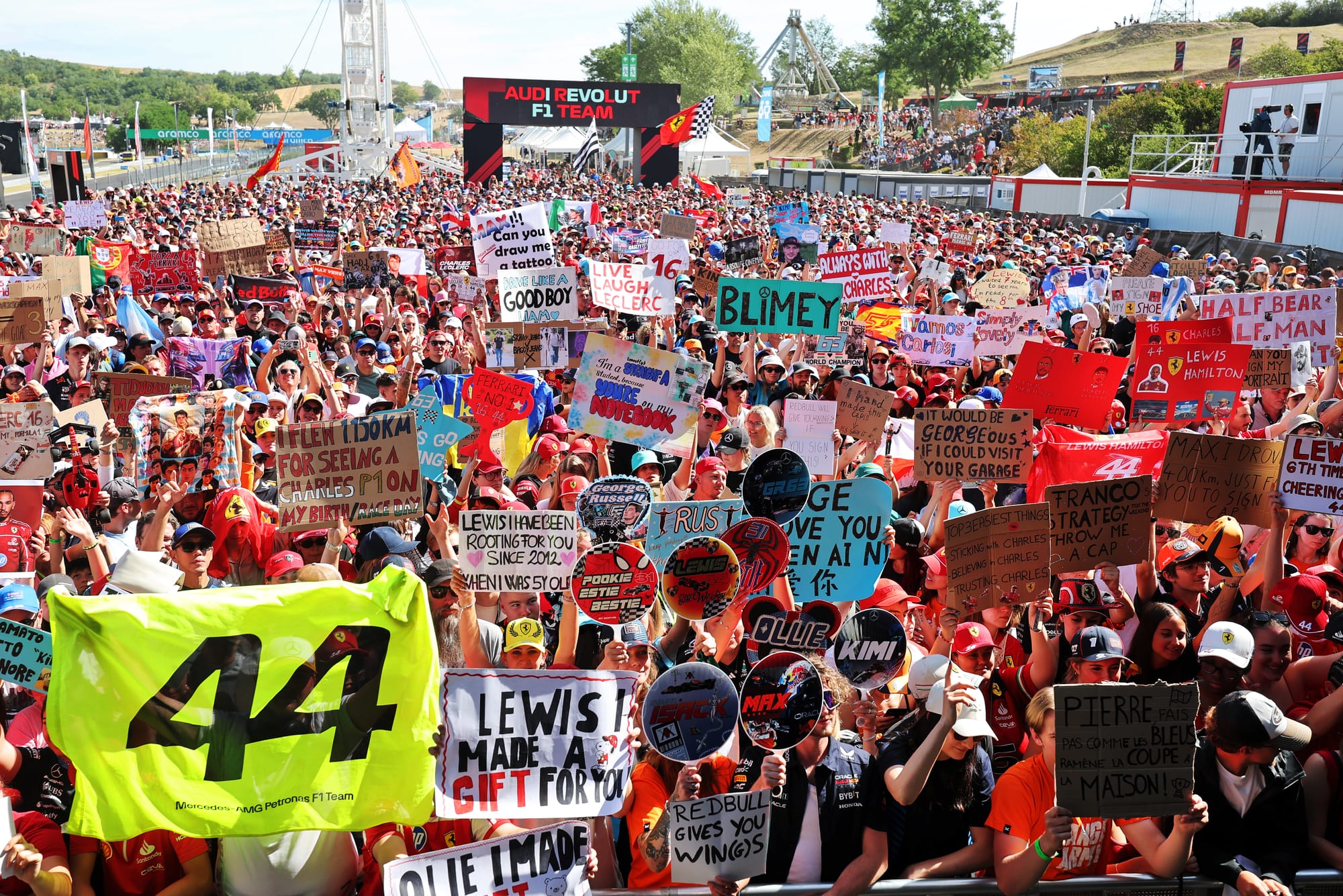
Numbers like that describe reach, not necessarily influence, and I want to be careful about that distinction. But reach is only part of what makes Formula 1 interesting to a corporate communicator.
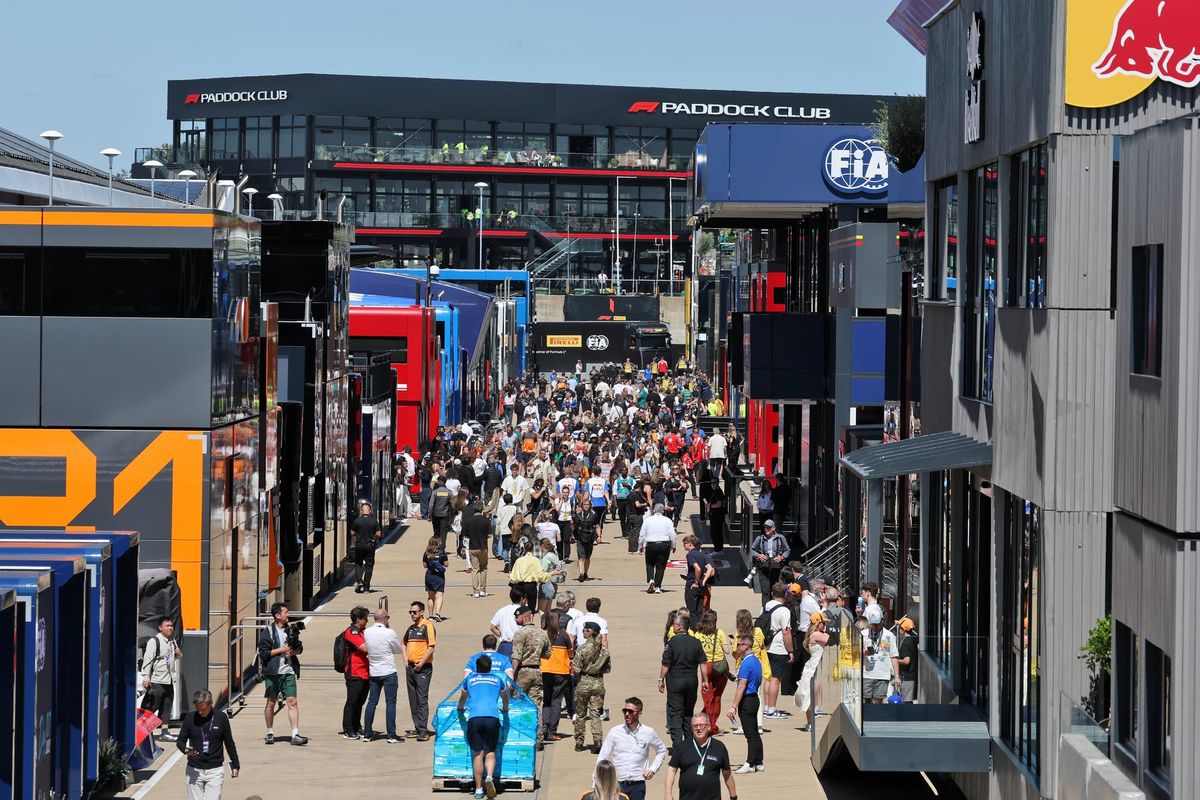
F1 sits at an unusual intersection of business, capital, advanced engineering, technology, luxury and global culture. A grand prix weekend brings together automotive and aerospace engineering, artificial intelligence and data science applied at the pit wall, energy and materials innovation, high-performance leadership under extreme time pressure, and a hospitality and cultural scene that draws executives, investors, celebrities and policymakers into the same physical spaces.
Formula 1 itself has begun formalising that convening power. Liberty Media now runs an F1 Business Summit alongside the Las Vegas Grand Prix, bringing together executives from sport, entertainment, hospitality and fashion for panel discussions on sponsorship, race promotion and brand strategy, a clear signal that F1 sees itself as a business gathering place and not only a broadcast product.
Becoming an influence ecosystem
For most of its modern history, Formula 1 was sold to corporate partners largely as a visibility platform: a logo on a car or a suite in the paddock, measured in television seconds and impressions. That era is not over, but it is no longer the whole story.

Formula 1 now supports a year-round media and content ecosystem that extends well beyond race Sundays: independent motorsport journalism, business-focused coverage of the sport's finances and strategy, podcasts and video series, a large and active social media presence, race-week hospitality and live events, and a growing body of writing in culture, fashion and lifestyle publications that treat Formula 1 as a subject in its own right rather than a backdrop.
Publications like Sector, which covers the commercial side of Formula 1 through technology, sponsorship, finance, sustainability and personnel, illustrate how much specialist business journalism has grown up around the sport. Esses, an independent title launched in 2024 at the intersection of motorsport, culture and lifestyle, shows the same shift from a different angle, treating the sport as a subject for design, fashion and storytelling rather than laptimes.
The Race, where I am now CEO, is one part of that same shift, alongside official Formula 1 channels, established motorsport outlets and a wider group of newer media companies approaching F1 through business, culture and lifestyle. None of us owns this opportunity. The ecosystem is bigger than any single publisher.
What corporate communicators may be missing
Most conversations I have with brand and communications leaders about Formula 1 still start with consumer marketing questions: how many people watched, how many impressions did the logo generate, what did the activation cost per eyeball.
Those are reasonable questions for a sponsorship budget, but they are the wrong questions if the goal is influence with the audience described at the start of this piece.
A more useful set of questions looks like this: Who is actually paying attention within this audience? Why are they paying attention, and what does that tell you about their state of mind while they are engaged? What subjects do they care about in this context? What can our company credibly add to that conversation? And in which environment, editorial, event, audio, video or cultural, does that contribution actually belong?
The credibility test
None of this works if a brand simply shows up. An influential audience being present does not guarantee that any message aimed at it will land, let alone change how that audience understands a company or an issue.
Success depends on the relevance of the company to the subject, the quality of the idea, the environment it appears in, and whether the audience actually gets something useful out of the exchange. A cybersecurity company with real expertise in protecting high-value data has something legitimate to say about how a Formula 1 team defends its telemetry and strategy systems from attack. A generic wellness brand attaching itself to the same story usually does not, no matter how large its media budget.
This is also where the line between sponsorship and journalism matters most. Hospitality and paid partnerships create visibility and access, both of which are legitimate and useful. But credible, independently produced journalism is what helps an audience actually understand a complex subject, and that credibility depends on editorial independence.
A company can support a conversation, contribute expertise, or make its people available to be questioned. It should not expect to control the conclusions.
A practical framework
When I think about whether a company has a legitimate role in this environment, five questions tend to sort it out.
Audience: which stakeholders actually matter to this company's reputation and business, and are they present here.
Authority: what can this company credibly discuss, based on real expertise or action, not aspiration.
Environment: which editorial, event, audio, video or cultural setting actually fits the subject and the audience.
Value: what will the audience walk away understanding that they did not understand before.
Measurement: did the activity change attention, understanding, relationships or perception in a way that can be observed, rather than simply generating a number that looks good in a report.
None of this is an argument against business journalism, executive conferences or the other tools corporate communicators have relied on for decades. Those channels remain essential, and nothing here suggests replacing them.
It is an argument for expanding the map of where influence actually happens, and recognising that a serious motorsport story, a well-constructed podcast episode or a genuine conversation about the business of the sport can now sit alongside a keynote or a magazine feature in that map.
The next frontier of corporate influence will not always look like a business conference stage or the homepage of a financial publication.
Increasingly, it will also look like a grand prix weekend, a deeply reported motorsport story, or a serious conversation about the business behind the sport, provided the company involved has earned its place in that conversation.