Qatar expects its F1 race to be sold out
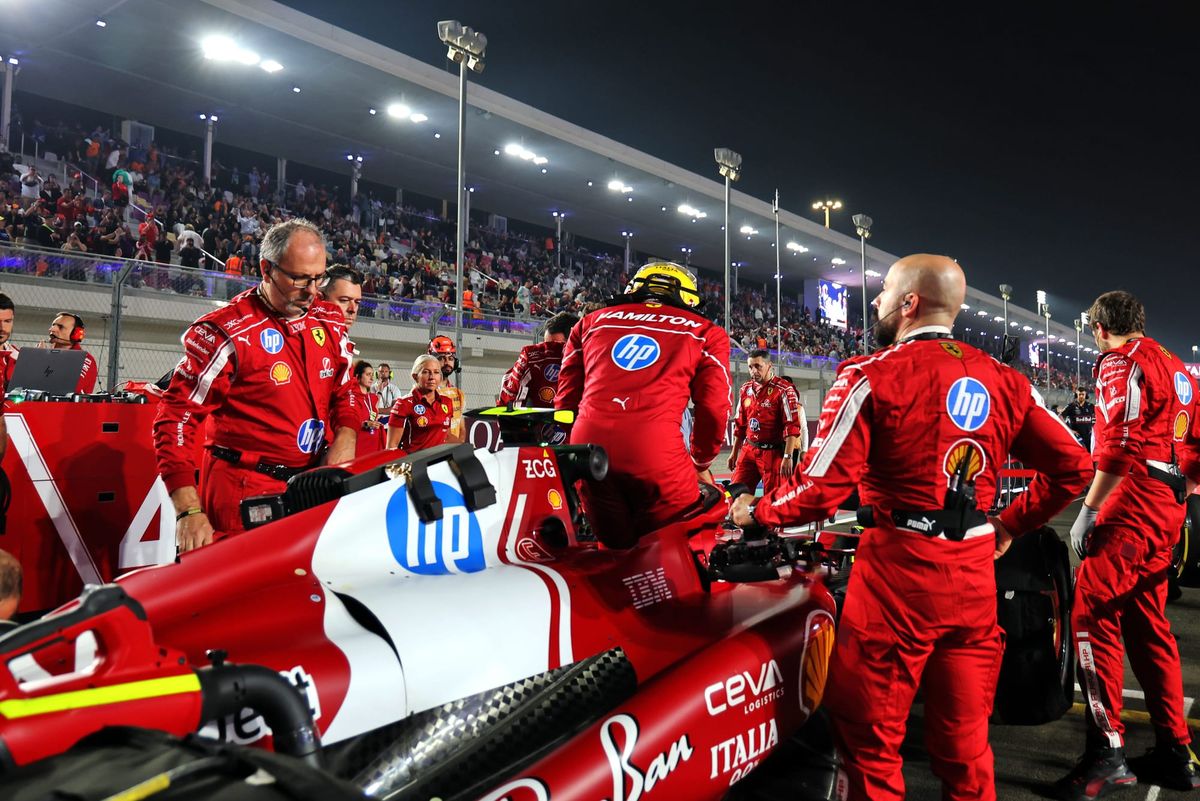
The Qatar motorsport federation is "expecting a full house" for the 2026 Formula 1 Grand Prix despite regional conflict and associated safety concerns in the lead up to its running.
Conflict in the Middle East led to uncertainty over whether the 2026 Qatar and Abu Dhabi GPs would take place, the Bahrain and Saudi Arabian rounds having earlier in the year been postponed.
Imola was the contingency venue, had it not been able to stage the two season-ending races, but the Italian circuit was stood down in November as F1 committed to continuing its plan to race in Qatar and Abu Dhabi.
Despite worries over safety in the region, Qatar Motor and Motorcycle Federation (QMMF) president Abdulrahman Bin Abdullatif Al Mannai said: "We are expecting a full house on Sunday. We sold out most of our grandstands, we sold out all the hospitalities.
"I think there is only one grandstand [not yet full] that should be sold out within probably tonight, I'm guessing. So far, actually, we are a sell-out."
Al Mannai - who is also president of the Lusail circuit - said that MotoGP's Qatar round, which did go ahead earlier this month having been moved from April to November due to the Israel/US-Iran war, was a significant milestone for making spectators and entrants feel safe.
"It was actually important and it was really exciting, we had a full house here, I think we had the highest number of attendance - as you know MotoGP has been here for more than two [decades, since 2004] and that was the biggest one we had.
"I think the championship also had an impact on attendance, but it proved that trust is really important."
The 2026 Qatar MotoGP round, contested by nine of its 11 teams following the withdrawal of Yamaha and its satellite team Pramac, attracted a record 55,120 spectators despite safety concerns.
Al Mannai said he was "very happy” that F1 teams did not withdraw from the 2026 F1 race.
He said that attendance was "much better than expected" and equated the situation to the global pandemic in 2020.
"I think it reminded me of COVID, when everybody thought, 'Oh, nobody's going to go out, nobody's going to go to events'. And just people went crazy about going to events," said Al Mannai.
He added that "really high" demand meant the QMMF did not need to offer concessions to attract spectators.
"I think it says a lot about how strong Formula 1 is today and the fanbase we have and how much they love the event. The demand is really high."
Qatar didn't consider Bahrain-style relocation
Al Mannai said that despite uncertainty over the last two rounds of the 2026 F1 season, with Imola as the contingency venue, the Lusail circuit always planned for the event to take place.
"With the situation, it brought some doubt. But for us in terms of planning and trying to make sure we are absolutely ready for the race, we never stopped preparing and planning for these races," he said.
"And I cannot think of anything that was too challenging to make us reach that point. So we went ahead with our plans and we assumed the events we know will happen.
"And Formula 1 or MotoGP, they never said, 'We're not coming'. Everybody said, 'We are coming, but we are assessing the situation'. It wasn't the other way around, it wasn't like, 'We're not coming until this happens'.
"And that's why we never stopped putting our plans together and executing the plans for the races."
Al Mannai added that the Qatar GP did not consider essentially presenting a race by holding its round in a different country, as the Bahrain GP did in Malaysia.
"No, we are at the end of the season, we are before Abu Dhabi. That never came to be something we wanted to do. But obviously it was very successful for them [Bahrain]," he said.
Qatar GP's measures
Safety concerns around the Qatar GP revolve around Iran's role in the conflict.
Iran fired 66 missiles at Qatar in February 2026 according to Qatar's interior ministry, before numerous attacks in March and April.
Al Mannai said that his circuit's safety measures were based on the Qatari government’s guidelines.
"They tell us, go ahead, or don't go ahead, at the end of the day. If they say, 'Do it', we do it."
He added that Lusail did not make "big changes" to the safety plan for this year's event as "exactly the same plan" is in place for emergencies as for other events.