How a key resignation attempt taught Wolff a valuable lesson
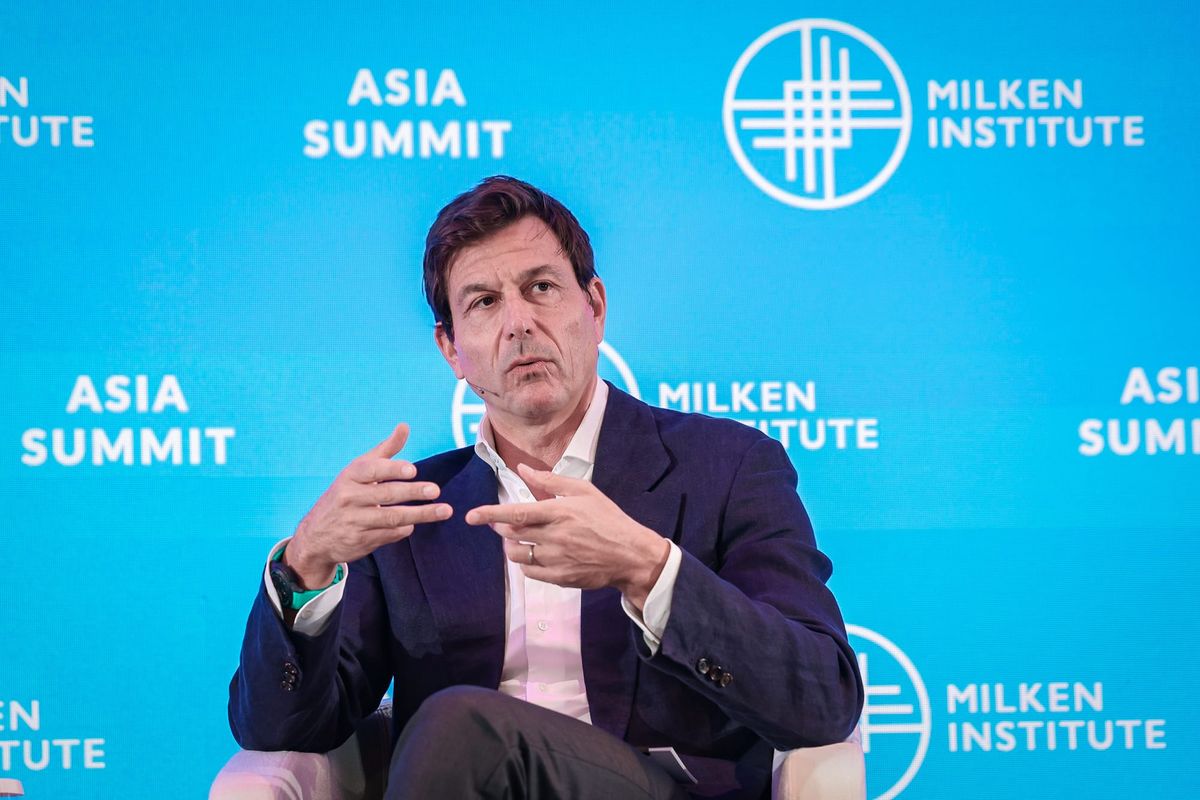
Mercedes Formula 1 boss Toto Wolff has revealed one of the key lessons he learned from the way he handled Mercedes’ slump in fortunes after its dominant run of consecutive world championships.
From 2014-2021 Mercedes won eight consecutive constructors’ championships and seven drivers’ titles during an unprecedented period of F1 dominance.
But during the ground effect rules era from 2022-2025 it struggled to regularly compete for victories, and Wolff has admitted that adapting to a spell where Mercedes wasn’t as competitive taught him valuable lessons about how to manage the team - particularly when one of its key players tried to quit in late 2023.
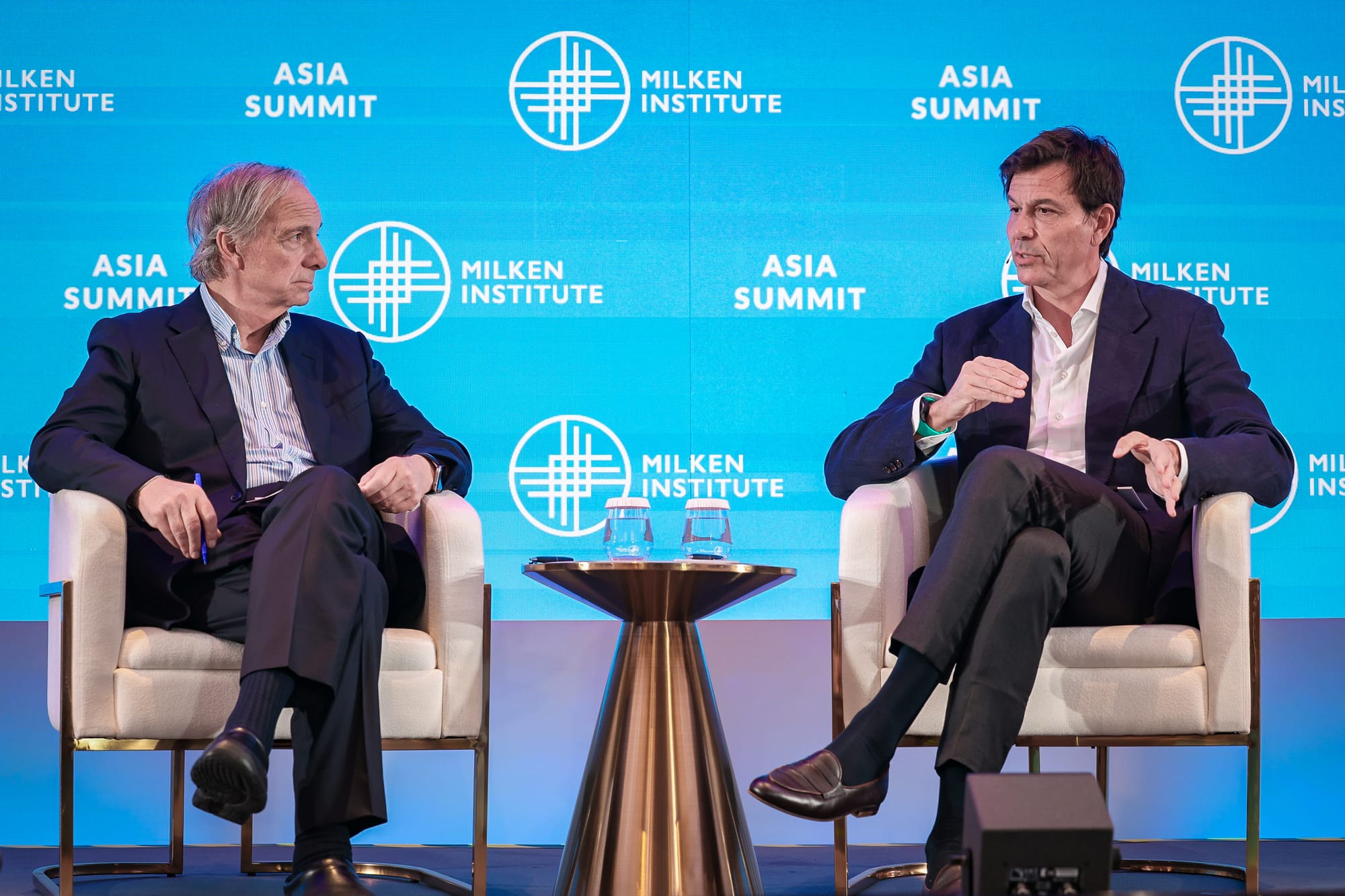
Wolff recalled the story in great detail when speaking at the Milken Institute Asia Summit 2026 in Singapore ahead of this weekend’s Singapore Grand Prix, explaining how his actions in front of the media had driven Mercedes’ technical director James Allison to want to leave the team.
“A few years ago we won eight constructor championships in a row and suddenly the regs changed and we really crashed down,” Wolff told moderator Ray Dalio on stage at the event.
“Now when you look at the stats in 20 years people are going to say that wasn’t so bad because we won eight times in a row. First-first-first-first-first-first-first-first, second-third-fourth-second doesn’t look like complete losers. But back in the day that felt pretty bad.”
Speaking about Allison, who he didn’t name directly, Wolff said: “I have this unbelievable technical director, he’s the best the sport has ever seen. He’s also like a brother in crime for me, and I put pressure and pressure [on him], because pressure is the way I’ve worked in the organisation, setting the expectations so high.
“And I came to a situation that, we lost another race we expected to win - Brazil 2023. We won Brazil in a year [2022] that was really bad. Next year the season is pretty average, we go to Brazil, our expectation is ‘this is where our car is good, this is where the drivers drive well, we’ve got to win’.
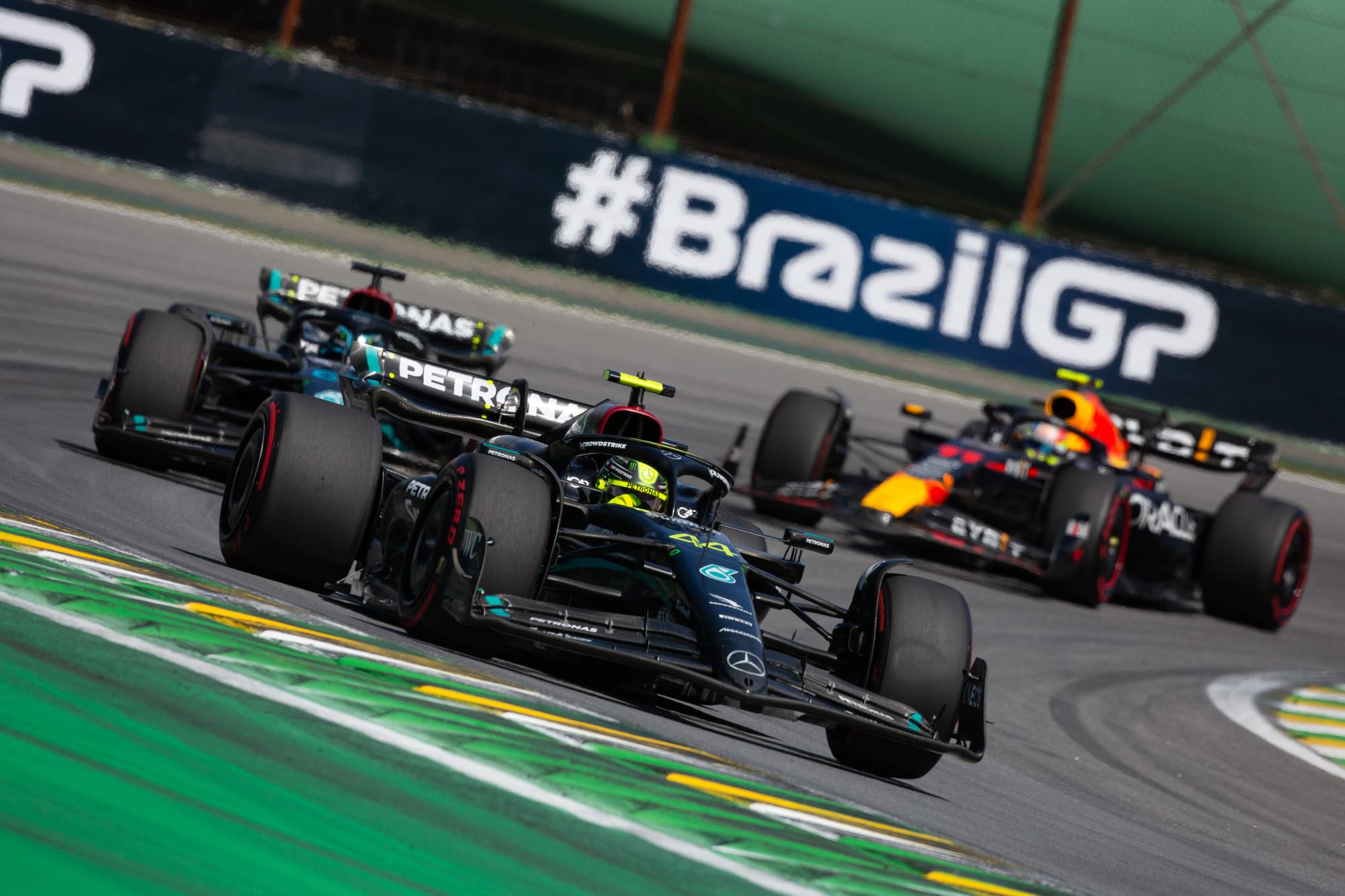
“And it was a massive disappointment. We were nowhere. And by the end of the race I fell in a trap from a journalist who said to me, ‘Does that car deserve to win?’, and I said ‘No it doesn’t deserve to win’.
“My technical director and chief designer said they watched it on Sky [UK broadcaster of F1] and they thought I was directly speaking to them, which in a way I was.”
Wolff said those comments triggered Allison to decide he’d had enough and he needed to leave Mercedes.
“I came back and this ally of mine says, ‘I’m quitting, I can’t take your pressure anymore. How do you think I feel? Do you think I don’t make myself pressure of trying to be successful? If you think you are hating the situation can you believe how much I hate it? I’m responsible for the technical things’.”
Wolff worked hard over the weeks that followed to convince Allison to change his mind, with Allison eventually signing a new contract over the winter of 2023-24.
Having to change
The key leadership lesson Wolff took from the situation was that he had to adapt his style based on the situation his team found itself in.
“Fundamentally I had to change,” he said. “I couldn’t continue what was my modus operandi over 30 years: constant pressure, constant pressure, constant pressure and the notion of tough love.
“It’s something I learned from Lewis Hamilton. He taught me that if you realise that you’ve taken the wrong decisions or maybe that you have acted in the wrong way, change.
“And if you are actively seeking to change, you will change. So when it comes to the leadership style, the adaptability, [that] is a moment where I had to change.”
Learning from the bad times: tougher than it sounds
Wolff agrees with the cliche that tougher times make people stronger, and he certainly feels that applies to Mercedes, which has an internal mantra of “the days we lose, our competitors will regret”.
But he accepts it’s not always easy to believe that in the moment when things are going wrong.
He added: “We have a [post-race] debrief on a Monday. You rarely come back and say in the debrief, ‘Why the hell did we win?’, but the opposite: ‘Why the hell did we lose?’. That is the driver and it mobilises a force that is tremendous.
“When you win many people don’t reflect actually why it’s gone well, but this kind of introspection while losing is tremendously important.
“Whilst you are in a moment of pain it is very difficult to say to yourself, ‘this is a good exercise’, because you don’t know when it ends.
“You know afterwards, you reflect and you say ‘that was so important, I questioned myself, I came to the right conclusions’, and it lasted a month or half a year. But whilst you’re in there it’s so difficult to remind yourself.
“Now you can read Instagram and you read all these things of being knocked down, get up, being knocked down and get up, but after the 10th time you’re being knocked down the Instagram motivational thing doesn’t help you anymore. At least it doesn’t work for me!
“So it is about going through these experiences, and when it’s really difficult you make the biggest progress.”
After four years without contending for an F1 title, this year Mercedes is on course to do ‘the double’ of winning both the drivers’ and constructors’ championships for the first time since 2020.