F1's cost cap fix: What's actually proposed, and for when
Formula 1 teams are set to discuss a potential overhaul of financial regulations for 2027 aimed at ending what has been labelled a “cost cap trap” for smaller squads.
The Race has learned that the idea of a catch-up mechanism being added to the cost cap is set to be raised at the next meeting of the F1 Commission, which takes place in November.
The plan is being pushed for by Williams boss James Vowles, who wants revised cost cap rules in place for the start of next season to avoid what he thinks has become a “two-tiered” F1, where the big four teams have pulled away from the chasing pack.
Vowles sees this situation as a consequence of legacy advantages having been locked in.
The way that things are playing out, in hampering the ability of smaller squads to catch up, has left them in what has been labelled a “cost cap trap”.
Vowles fears that the more this becomes bedded in, then the bigger the risk that the divide becomes permanent.
Should teams not have the chance to mix it with those at the front, they will become less attractive for sponsors and there will be less incentive to invest. That will stop progress, lead to even worse results and see team valuations go down.
Williams is not calling for an end to the cost cap, which it thinks has been hugely positive in bringing financial stability to F1 and adding value to all the current teams because there is no longer an arms race of spending.
Instead, Vowles’ idea is to have a sliding scale catch-up system within the cost cap that allows the teams outside of the top four to spend more.
He wants it in place for 2027 because, with its impact probably going to take three years to come through the system, it needs to be there for the next rules cycle that begins in either 2030 or 2031.
The specifics of what sliding scale may be adopted depend on how talks develop within the F1 Commission or F1’s Financial Advisory Committee (FAC), but there are a few ways of doing it.
It could be implemented in a similar way to F1’s Aerodynamic Testing Restrictions, so that the team that is bottom of the standings gets the most extra allowance, with the spending freedom behind steadily reduced up until the fifth team.
Or it could be done with a tier system like happens with F1’s Additional Development and Upgrade Opportunities (ADUO) engine catch-up mechanism. So, teams within a certain percentage range of points of the big squads are grouped together to get extra spending allowances.
Another way of doing it could be to base it on a scale that is directly related to points gaps - with it perhaps only being triggered for teams that are 100 points off the top four.
This would ensure that the system would not benefit a team that finished a close fifth and would only come into force if there was a genuine step between the 'big four' and the rest.
Is there support for his plan?
For Vowles’ plan to go through, it will need to secure support from teams in the F1 Commission.
Under F1’s current governance structure, for changes to take place at this stage for 2027, it is understood they would need support from the FIA, FOM plus six of the current 11 teams - so Williams and five others. This will secure what is known as a super majority.
However, changes to the rules for 2028 could be pushed through if there is support from the FIA, FOM plus four teams in total - so Williams and three others. This is known as a simple majority.
It is obvious that Vowles’ plan will not have universal backing – especially from the big four teams, who are unlikely to be supportive of moves that could potentially allow others to catch up.
The bigger teams are up for changes to cost cap rules, but this is more focused on pushing for areas that are currently inside the cap being moved outside.
Most recently, for example, there have been discussions about moving cybersecurity spending outside the cap.
Other squads, like Alpine, have pushed back against this and suggested that the situation should be the opposite – and all team spending should be inside the cost cap.
Mercedes thinks more thought needs to be put into how the cost cap is squeezing staff wages, as teams are limited in attracting the best staff because they cannot afford them or they are losing them to other industries.
Deputy team principal Bradley Lord said: “Every team is having to trade investing in its people against investing in its car. And that's the most difficult and uncomfortable of the trade-offs that the cost cap imposes.”
The Race understands that as part of the discussions Vowles has had about his idea, four squads have indicated broad support. These teams are Audi, Aston Martin, Alpine and Cadillac.
Sources suggest Haas is against the move as the Banbury-based team is already running a tight ship and is not at the cost cap limit. Therefore, supporting any extra freedoms for spending will simply be a green light to help the opposition.
Right now, that leaves Vowles one vote short of the super majority needed to get changes in place for 2027.
Key then will be what Racing Bulls does. Getting it on board could rest on convincing Red Bull chiefs that it may be in their interest to help their second team.
Even if Racing Bulls cannot be won over, getting majority support for 2028 - so those four votes - is possible. But Vowles wants this in place for next year, so he needs to win more support.
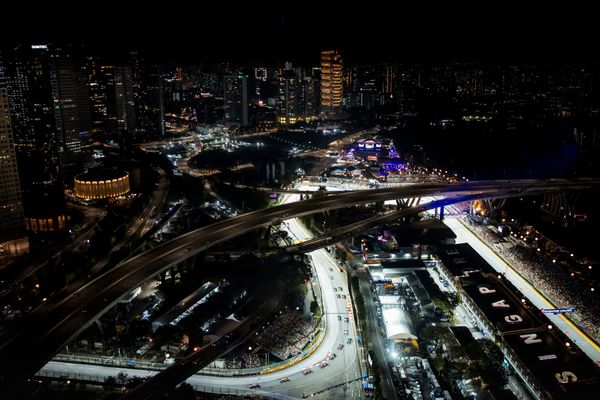
The matter seems finely poised right now, which is why the intensity of conversations in the paddock is set to ramp up from Singapore this weekend ahead of that crunch F1 Commission gathering next month.
What is causing the 'trap'
Vowles says his experience of working at both Williams and previously Mercedes is illustrative of how smaller squads suffer disadvantages under F1’s cost cap.
That is because there is a combination of factors in play that mean smaller teams have less headroom for spending on development each year compared to the big teams – plus it costs them more to produce the same things.
As Vowles said: “One car is about 30% more expensive compared to what I remember from a previous team.”
There are many ways that this expenditure offset happens.
One example is processes and manufacturing. Big teams have been able to improve efficiency through big finance departments to make sure that there is no wastage in the system.
Alpine managing director Steve Nielsen said earlier this year that key to his squad moving forward was exploiting the cost cap more as it was coming off a period of under-investment under previous owners.
He told The Race that its finance department was “under-resourced” and that “there are all sorts of areas of the budget cap which we haven't really explored properly”. “We're doing that now,” he insisted.
Nielsen said that when money was being wasted through inefficiencies in one area, that then directly limited the amount of money that could be spent on upgrades.
“If you leave stuff on the table in the budget cap, that's basically stuff that could have paid for a new front wing or a new floor or a new rear wing,” he said.
Expanding a team tomorrow to create a more efficient system for the long term is expensive. Invest a lot of money doing it, and that money has to come out of current car build and development - so results in the present dip.
Another way the bigger teams save money is by manufacturing more parts in-house. Smaller teams that do not have that luxury have to use external suppliers, which can be much more expensive.
But it is not just in cost cap spending compared to the big teams where the smaller outfits feel they are being held back.
One bone of contention has been allowances for capital expenditure, which permit teams to build the infrastructure where they can make improvements.
From F1’s cost cap coming into force in March 2020 until the end of 2025, CapEx was limited - with a broad $36 million limit from 2022-2025, although some extra concessions were given to help smaller teams in late 2023.
The system has changed since the start of 2026, but it’s still not straightforward.
CapEx limits were removed completely from the start of this year and all spending on this front was placed inside the wider $215 million overall cap.
However, any expenditure on this front has to be allocated in the cost cap through depreciation on a standardised straight-line method.
This means, for example, that if a team spends $25 million on a new windtunnel, then that money is written off over a set period. If a 10-year timescale is chosen, it would mean that $2.5 million would have to be taken into account each year.
So, if a team has made $100 million of investment on CapEx projects to improve machinery and systems, then that means $10 million more coming out of its development budget each year - compared to a bigger team that already has that infrastructure in place.
At least part of why Williams hasn’t been able to replicate McLaren’s revival is that its own infrastructures and systems had slipped badly behind the times over the last 20 years.
Whereas McLaren’s still remained very good - it was just not making the most of them.
This was proven when McLaren’s technical restructuring was initiated in 2023 under Andrea Stella’s leadership and its development work suddenly became massively more impressive even before it switched to a new windtunnel and simulator McLaren had been developing since 2019.
Williams fell much further behind the curve, which in turn held back its processes - and it was also not staffed to the same quantity or quality as McLaren either.
Even with the money from owner Dorilton, it would take time to build the team back up - and the CapEx limits were an obvious additional hurdle here, as Williams could not pump money into its factory even if it wanted to.