The 'weird' car theory sparked by F1 pecking order surprises

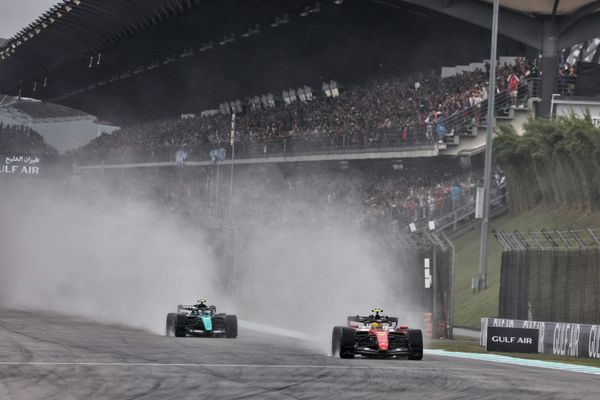
Among the factors potentially behind a swing in Formula 1's recent pecking order in Malaysia is how an extreme track surface could have made some cars behave in a "weird way" aerodynamically.
Mercedes and McLaren had claimed 14 of 15 pole positions between them prior to the Bahrain Grand Prix in Malaysia, and won 13 of the 15 races in 2026 so far.
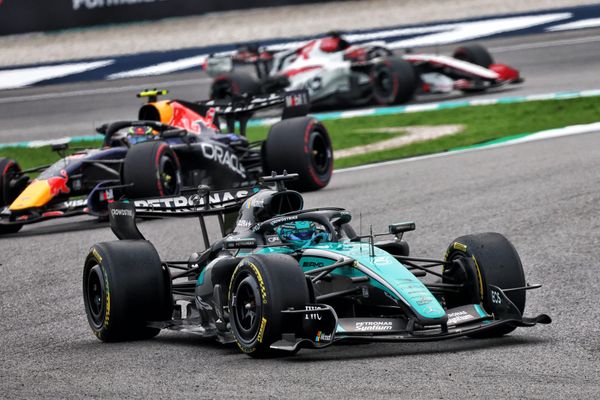
But they were comprehensively bested by Red Bull, and outqualified by Ferrari too, as Max Verstappen took advantage of F1's return to Sepang and its unique challenge to best the usual benchmarks. Even Red Bull team principal Laurent Mekies admitted this was a "surprise".
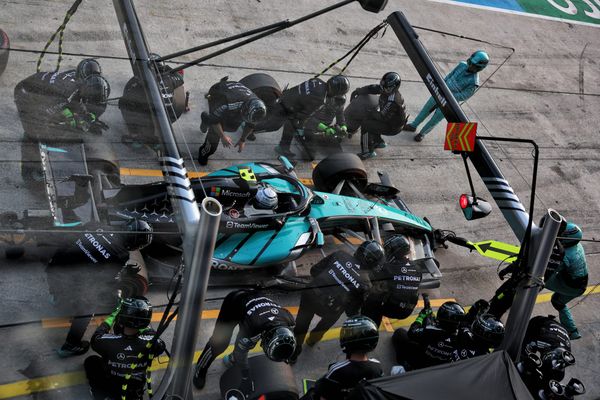
The biggest surprise within this was Mercedes' major upgrade package, which sent it half a second backwards in Malaysia according to team principal Toto Wolff, rather than delivering the expected three-tenth gain - but McLaren had also anticipated being a lot more competitive.
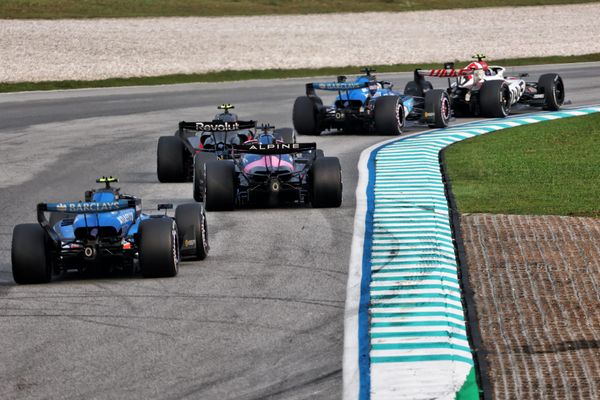
A prominent theme of the week was how the Sepang surface was unusually rough, ironically only matched by Bahrain's own Sakhir circuit, which this grand prix replaced. Mekies said the extreme heat, track roughness and layout of the track meant "most of the cars out there were out of their ideal operating window".
An open, abrasive track surface combined with high temperatures is an established and well understood challenge, though. More interesting was a more intricate variable that hints at how that kind of surface disturbs a car's aerodynamic performance.
Mercedes acknowledged its biggest issue was around parts of the lap where Sepang's track was its worst and most broken-up, with an emphasis on slower corners.
Meanwhile, McLaren team principal Andrea Stella was "puzzled a little bit" why its prowess in high-speed corners from recent races in Madrid or Zandvoort - the latter also utilising older asphalt - was not evident in Malaysia.
Stella offered an intriguing hint at why this could be the case when he said: "There's some conditions, even the Tarmac conditions, they make the car operate in a weird way, not only from a tyre's point of view."
He did not want to elaborate in much detail on a technical matter but when asked by The Race if it has an aero effect and he could point to the vague areas it has an impact on, Stella replied: "I think your pointing is not inaccurate."
This is understood to relate to how loose stones in such a rough surface generate disturbed airflow so it does not behave smoothly, or as expected, along the car's aerodynamic surfaces.
So it may be that there were moments when some cars were more sensitive to this and did not have the real-world performance or aero consistency to match the actual load teams could see in the data.
Such a phenomenon was also prominent during the previous ground-effect era from 2022-25, as those cars generated huge amounts of downforce from the underfloor but at the same time were extremely sensitive to disruptions in that airflow.
"We think that the car operated where it should have operated to extract the downforce and the mechanical grip," Stella said of McLaren's weekend.
"If anything, it's more about the potential of the car and we actually increased the potential of the car with the upgrades - the information we have tells us that that's the case.
"It's more the competitiveness on track that tells us, 'Oh we seem to have lost some ground' relative to the others.
"It's difficult to understand these things.
"We need to observe the car, the upgrades and the relative competitiveness in Singapore and then we'll go with the final races."
Mercedes did not allude to something quite so specific, but deputy team principal Bradley Lord did describe it as "a bit of a 3D problem that we need to work through".
It was - in relative terms - a disappointing weekend for Mercedes as championship leader Kimi Antonelli was only second behind Verstappen and was unable to really challenge him for the win despite jumping into the lead at the start.
"The combination potentially of updates, track temperature and track surface caused an interaction, a set of behaviours that meant the car was not in its usual happy state, that the drivers were having to turn the car on the throttle in the slow corners," said Lord.
"That was further exacerbating the challenges of tyre temperatures. So that's not an easy thing to unpick."