Gone backwards? Mercedes's upgrade letdown explained

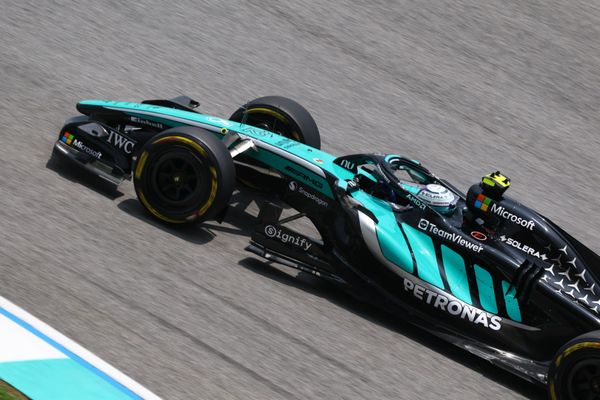
Mercedes is scrambling to understand why its upgrade appears to have taken it backwards rather than forwards at Formula 1’s Bahrain Grand Prix in Malaysia.
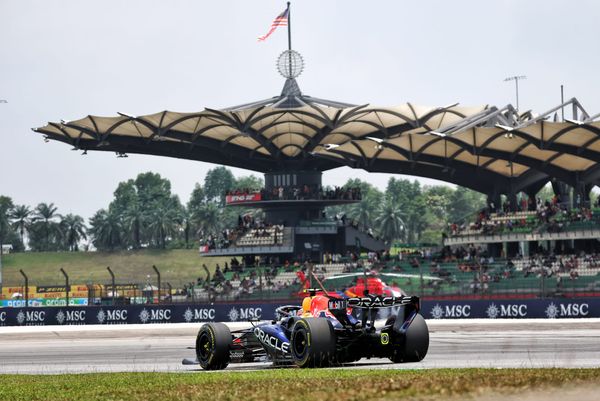
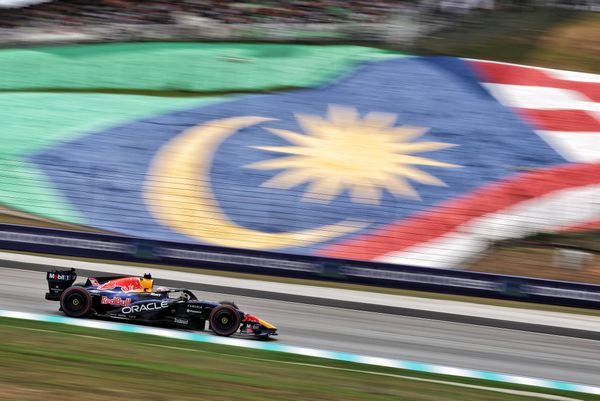
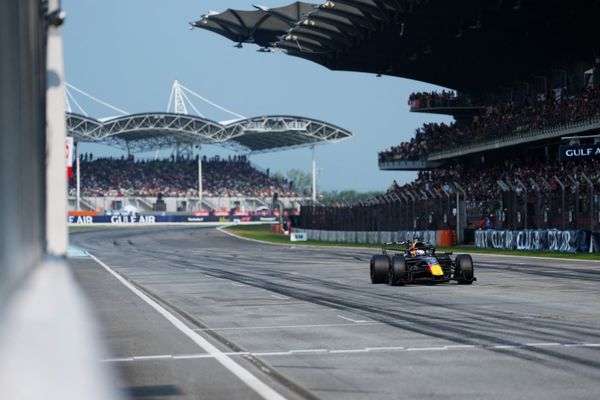
Dominant 2026 championship leader Mercedes suffered its "toughest Saturday" of the season at Sepang, with Kimi Antonelli and George Russell fourth and eighth, half a second adrift of Max Verstappen’s polesitting Red Bull.
That’s despite Mercedes introducing a major car upgrade that pre-event simulations predicted would bring a laptime improvement of around three tenths.
“You're expecting 0.3s gain to kick in and it looks like 0.3s or 0.4s or 0.5s backwards,” Toto Wolff told Sky Sports F1.
“[It’s the] first time we miss out on the top three and by quite a chunk, so... Odd. But I guess we will find a solution.”
Mercedes was outside the top three in qualifying in Hungary too, but with a deficit that’s almost half of what it faces at Sepang.
So what’s going on? Has the upgrade not delivered as expected, how much is down to the unique characteristics of Sepang and can Mercedes hope for better in the grand prix?
Unexpected car behaviour
Mercedes wasn’t helped by having its toughest Friday of the season so far, as weaknesses that it hasn’t suffered with all year appeared.
“We have been a little bit caught out on Friday with some car behaviour that we didn't see all year,” Wolff explained.
“But it's very hot and the tarmac is very different to all the tracks. It looked really good in [FP3] we seem to have, at least with Kimi , made a step in understanding. Then qualifying was a little bit back to what we saw before, just no performance.”
Asked what that unwanted car behaviour was, Wolff said: “It looks like we are very draggy, because it's the first time that we're losing a lot of time on the straights to especially Max [Verstappen].
“Then through the low speed, Turn 2 we are not able to turn the car. There's just too much understeer. So overall things we haven't seen all year.”
The data backs that up with Antonelli losing three of the five tenths to Verstappen through the low-speed Turns 1-2 alone in Q3.
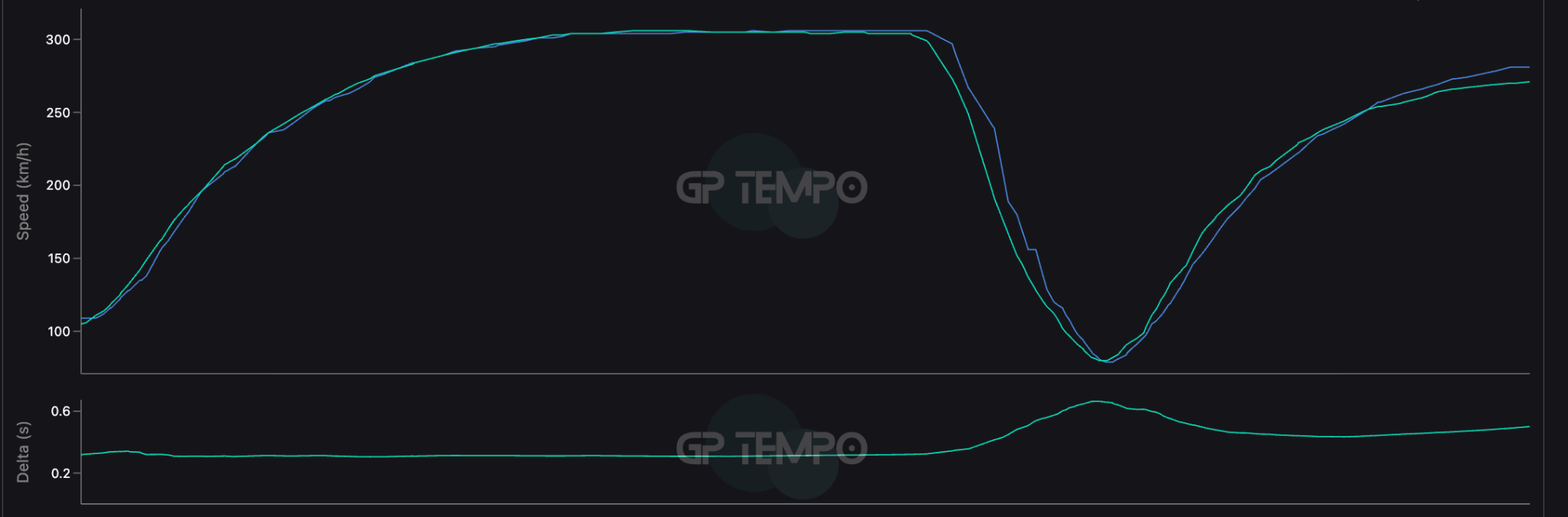
Mercedes can’t rely on its usual straightline advantage on the back straight and the start/finish straight as Verstappen (blue) gains another two tenths on Antonelli (green) from the run out of the Turn 14 right-hander to the line.
“With this new package, obviously the window of the way the car operates is different,” Antonelli said.
“We're trying to understand in which window the car performance is best. In the high-speed, our performance has been very strong this weekend, but in the low-speed is where we lacked.
“Overall we need to understand why and try to move on and improve.”
Is the upgrade actually working?
So is the Mercedes upgrade working as expected but being blighted by Sepang’s unique conditions (the aged tarmac, the long radius low-speed corners), or is the upgrade mis-firing versus expectations?
“Well, that is the big question mark,” Russell said when that was put to him.
“If you could have done a direct back-to-back, it would have been great to know, but that's the challenge of this sport.
“If I put the upgrade package on last week [in Baku], even if it was worse, we probably still would have been on pole and we'd have been saying it was fantastic.
“Equally, if we had the old car here, maybe the result would have been even worse. So that's the challenge.
“As a team, we have yet to have a bad race this whole season and this was clearly a very bad qualifying for us.”
Russell had taken pole position by over eight tenths in Baku, the biggest pole margin of the season, but the team always expected Sepang to be tougher because it’s a less favourable circuit for its car.
“The whole year whenever we went on tracks like this with very open tarmac, we've always struggled,” Antonelli said.
“So is it because of the tarmac and because it's so hot out there? Or is it because maybe we're missing something with the new package? So it's really hard to understand.
“But we try to do our best and probably Singapore will give us a better read on the package.”
Russell described the track surface as “like driving on gravel” and that’s clearly hurting Mercedes more than other teams.
There is an element of qualifying looking worse on paper because Antonelli wasted a set of tyres after a Q2 track limits deletion, which prompted him to run earlier than others in Q3 on a single set of tyres.
“I understeered off the track, but I think with a clean qualifying, probably P2, maybe P3 on the road, but not P1,” Antonelli said. “Max was a bit too quick for us today.”
But there is still undoubtedly a sense of disappointment at Mercedes about how the upgrade debut has gone with Russell calling it the “toughest Saturday of the year” so far.
“All the numbers say it's an improvement, but obviously it's a sport that we need to follow the laptimes and not what the numbers say,” Russell said.
“So the numbers look absolutely fine and in line with expectations, but the result wasn't.”
Ultimately there isn’t one reason for Mercedes’ struggles, as Wolff said: “There are many factors we will need to take into consideration, and we can’t rule anything out at this stage”.
There's only so much Mercedes can do more before the grand prix though with only minor set-up tweaks allowed under the parc ferme rules.
"I think we have a good opportunity tomorrow starting on the clean side," Antonelli said, and he'll be third because of Isack Hadjar's grid penalty for taking a seventh engine of the year.
"But I still believe that Red Bull still has the upper edge on pace and Ferrari is very close. But we'll do our best. I think track position is going to be very important.
"We'll try to manage those tyres the best way as possible. And then try to, if we can fight for the win, great. If we have to settle for P2 or P3, we'll take that."
The real challenge for Mercedes will come in the coming days as it bids to understand exactly why it's seemingly gone backwards.
And it will need to optimise this new package as rolling back to a previous spec car isn’t really an option, given the older spec parts were very near the end of their life, and producing new versions would take an unplanned bite out of its strict cost cap allowance.