Are F1 teams still undervalued compared to US franchises?
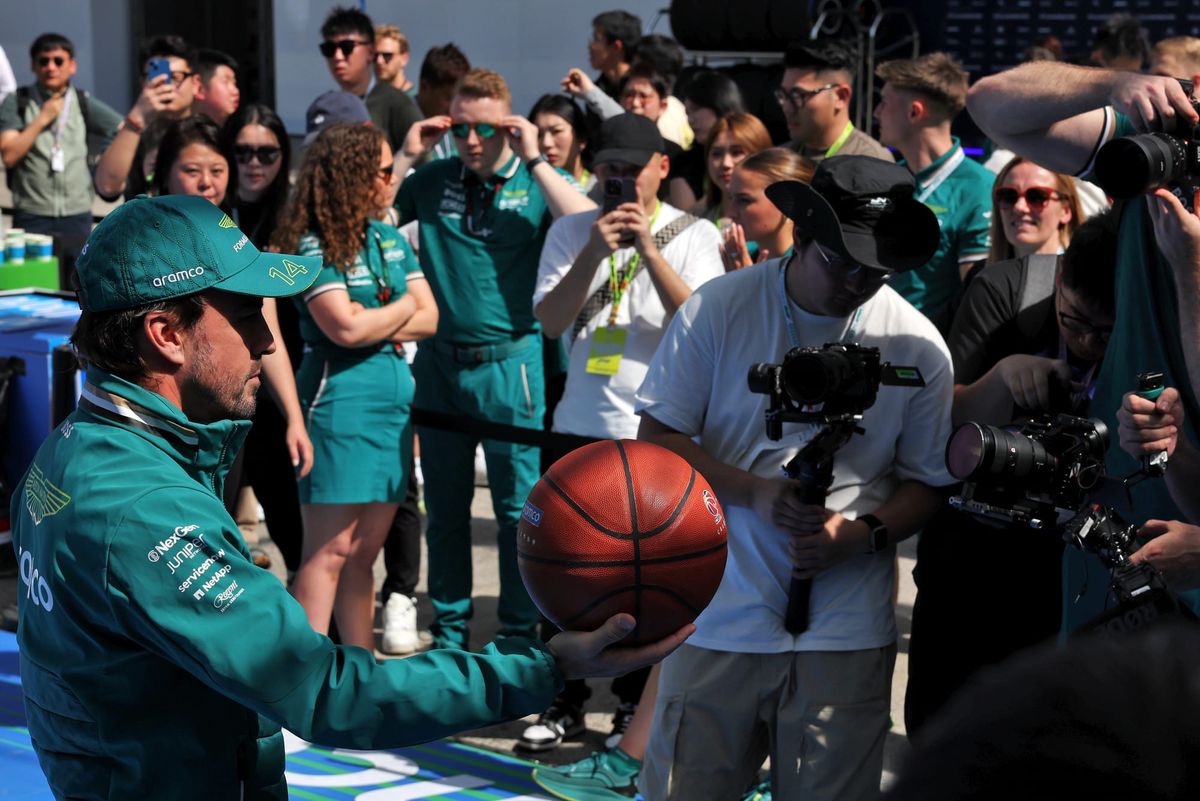
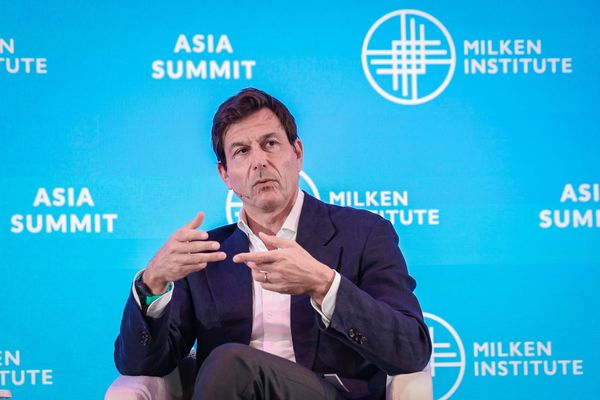
“I think the teams are undervalued compared to US franchises” - Jefferson Slack, managing director of Aston Martin, at the 2026 Monaco Formula 1 Grand Prix.
Seventy-six days after Jeff made this statement at The Race Business’s event in association with Axios at Monaco, Aston Martin announced that the owner of the New York Jets NFL franchise has bought into the Aston Martin F1 team.
F1 team personnel have been at pains to tell the world that the gap between F1 team valuations and those of American sports franchises should not exist. The announcement that Robert ‘Woody’ Johnson had bought into Aston Martin was the third piece of American sports franchise related news of the week - and all of them a surprise.
I had written the first draft of this article after deciding during the summer break that I should reflect on various conversations I’d had with paddock heavyweights for The Race Business in the first half of the season.
I had started the original piece with quotes from Zak Brown and Flavio Briatore to set the scene, but, with the Aston Martin news, I shall let Jeff’s words build on the blunt ones above.
“In my opinion, we’re still trading at relatively low levels. Franchises, which is what Formula 1 is, because there’s no promotion and relegation like football, are valued based on a multiple of revenue. We’re valued at six or seven times revenue. Why is an NBA team valued at 12 times revenue?
“There are only 11 Formula 1 teams, and there are probably only ever going to be 11. The risk is relatively low in the sense that we have a global footprint. We have long-term contracts and the sport continues to grow."
Zak was agreeing with his fellow American in the quote I had chosen to lead the original piece.
“If you look at sports in general, values have only ever gone up. Every time there’s a record-breaking deal in any sport, people say, ‘Oh, that was crazy’. Then, five years later, you look back and see that the values have continued to rise,” said Brown in conversation with The Race Business in Miami in May 2026.
Whilst Flavio did sound a little stunned at the evolution of values when looking back and predicting forward.
“I sold my share in Benetton, and the value of the team was $80million. OK, now you’re talking about $3.5, $4billion. And everybody predicting Formula 1 in three, four years, the team is worth $10billion,” said Briatore in conversation with The Race Business at Enstone in July 2026.
Team valuations are very personal to those we talk to as part of our new focus on the business of the sport, which we imaginatively titled The Race Business. The news flow about F1’s finances is also of increasing interest outside of the paddock, with the numbers always moving and always in a positive direction.
I’m sure we have not reached peak newsworthyness on this subject as there is movement and intrigue around the teams themselves, their shareholders and the macro sports investment space.
As well as the New York Jets connection via Robert ‘Woody’ Johnson, the LA Lakers ‘sale’ also has an F1 angle and is an ongoing story related to Mark Walter’s complex and varied financial dealings that include TMG Motorsports, which owns Cadillac F1.
The takeout from the Lakers deal for the purpose of this article is that it’s the ‘biggest valuation for a sale of sports franchises ever’. An increase from $10bn paid only 10 months ago to an ‘agreed’ sale price of $12.5bn this week gives added credence to Jeff and Zak’s insight above.
Private equity behemoth Apollo Capital has set up a sports investment arm and has got to work quickly with investments in the Wrexham and Atletico Madrid football clubs and, most recently, the legendary New York Yankees - with franchise valuations a big part of the story.
The ownership profile of F1 teams is starting to change to reflect this private equity lead in the Lakers and Yankees deals. Dorilton Capital is the most visible representation of the genre in F1. In the UK, private equity has gained a bad reputation in football where it has been operating for several years, and yet everything I heard from Matthew Savage in our June conversation at the Williams factory gave me huge comfort that Dorilton has a very different approach and mindset.
During our conversation Matthew gave plenty of insight into how he has viewed valuations before and during his ownership of Williams. Once again his comparison to American sports franchises won’t have hurt Jeff and Lawrence Stroll’s negotiations with ‘Woody’.
“In 2020 we saw that valuations were around one times revenues at the time for Formula 1 teams. NBA teams, NFL teams were going for seven, eight, nine, 10 times revenues. And I just looked at this and I thought, look, there’s only 10 teams at the time. NFL is 30. It’s a great global sport. These teams are going to go for more. We thought valuations would increase,” said Savage.
The full interview is well worth a watch or listen to get the full context and an insight into the man and his company.
Currently private equity is only a small part of the ownership structure in F1 teams. Like most things in F1, below the surface the differences in the team structures are stark and all unique. No one ownership model is the same and that subject will deserve a further deep dive on The Race Business in due course. This means in some regards valuation comparisons are somewhat irrelevant across the grid as they are mainly theoretical.
What is the Ferrari F1 team worth? Impossible to say, due to its ownership structure. To a lesser extent it’s the same case with Red Bull. The debate gets most solid when an actual transaction takes place. And recently, that’s helped feed the news frenzy. Toto Wolff structuring an unusual deal using some of his personal stake in Mercedes that spat out a $6bn valuation and a tidying up of McLaren’s ownership implies a $4.1bn valuation there.
Where will the next real, firm valuation data come from? The Aston Martin deal gave no indication of the financial details but, as Briatore and I discussed, it could be in September when Otro Capital is free to sell its Alpine stake. A stake that Flavio has done the man-maths on…
“We have an [offer] for the 24% of Otro, the valuation [is] $3.2bn. All [of] Renault is worth $8.3bn. So we’re representing 40% or 50%.... it's completely crazy.”
Yes, really. The part of the Renault group that races two cars is now potentially worth 40% of the whole company that produces two million cars. Is that credible? We might soon find out. It may not be Alpine that provides that firm data point as there are other various deals in process across the grid. None of those opportunities are public but a process of sorts is allegedly in progress, whether by design or need, with the most obvious one being Cadillac.
My A-level Economics is enough to tell me why the numbers associated with any new deal that does become public can only be ‘up and to the right’. There are several sensible, defensible and additive theories into what is driving the demand side.
The investors behind the Lakers and Yankees deals have previously described their shifts into sports as being because respectively they “wanted assets with qualities that cannot be replicated by technology” and that “sport is structurally insulated from AI-driven substitution”.
Adam Kelly, president of leading sports marketing agency IMG, makes the point even clearer: “I actually see sport as an antidote to AI. AI content is going to flood the market and flood our platforms. Sport becomes a counterweight: live, appointment viewing that cuts through the noise, with scarcity value and human stakes.”
Briatore’s apparent surprise at these levels of valuation is countered by others that think that valuations around tech companies and specifically AI businesses are crazy. They are seemingly increasingly being fuelled by “circular financing”, one of several reasons investors fear parts of the AI boom may be overheating.
It allows Iuri Struta, Editor at S&P Global Market Intelligence, who specialises in technology, mergers and acquisitions, and capital markets, including AI and sports investment, to once again use American sports franchises as a positive reference point.
“I would rather bet that the Lakers are going to be around in a hundred years, but I’m not sure about Apple, or Alphabet, or any other big tech company," said Struta. "The durability of an asset should be valued at a premium.”
These and many other inputs mean that Savage clearly sees the impact on the demand side by and says he receives ‘two or three calls a week’ from “institutional investors, high-net-worth families, and the occasional car manufacturer.”
Speaking at our Miami Grand Prix event this year, Brandon Snow, chief commercial officer and operating partner of RedBird Capital Partners, which is one of the group of investors represented by the now-almost-infamous Otro Capital 24% Alpine share, provided some of the insight for the motivation for one of those groups: the institutional investor.
“The most valuable IP [intellectual property] out there in the world today is sports. We’re going to be long on F1 as long as we can. What you’re seeing in most of these PE [private equity] firms now moving into sports is much more evergreen, long-term capital investments. No one is really looking for short-term trades.”
All of that demand is balanced against a supply of 11 teams, of which at least half, seemingly, have no interest in selling, or can’t.
Economics 101 is at play here despite a very complex and fast evolving market. In short, huge demand is outstripping very limited supply.
On reflection, it is perhaps not a surprise that three senior executives (Slack, Brown, Savage) in F1 with more exposure to American financial markets and interest, experience and knowledge of American sports franchises have been the most vocal about how F1 teams were undervalued against that benchmark.
Now, the rest of the paddock has been schooled in the subject and as more crossover ownership takes place might we see F1 outperform those iconic names like the Yankees and Lakers financially?
One thing is for certain: The Race Business will be asking those that matter in the coming months.