What we've already learned about MotoGP's unique Brazilian GP track
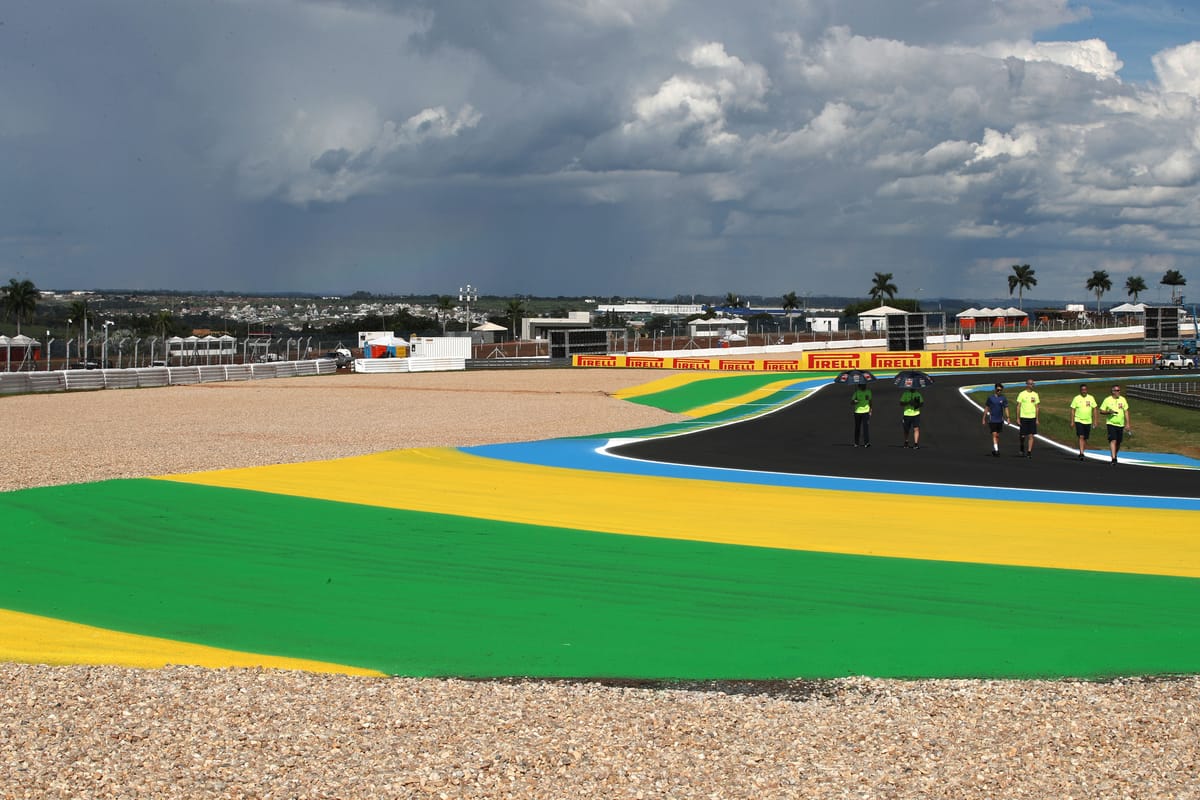
This isn't the first time motorcycle grand prix racing has visited Goiania for the Brazilian Grand Prix - but with a gap of nearly four decades, it might as well be, as an all-new series comes to what is now Autódromo Internacional Ayrton Senna.
Goiania will host a 31-lap main race, the longest in MotoGP since Laguna Seca was still on the calendar in 2013.
The track is particularly short and particularly fast - and virtually unknown for the majority of the grid. While home heroes Diogo Moreira and (half-Brazilian) Franco Morbidelli - and Luca Marini - at least rode some demo laps at the track last year, everyone else is limited to knowledge gathered from videos and track walks/cycling earlier this week.
So all riders are being very cautious with their early assessments - but there are still enough early hints here and there.
The surface
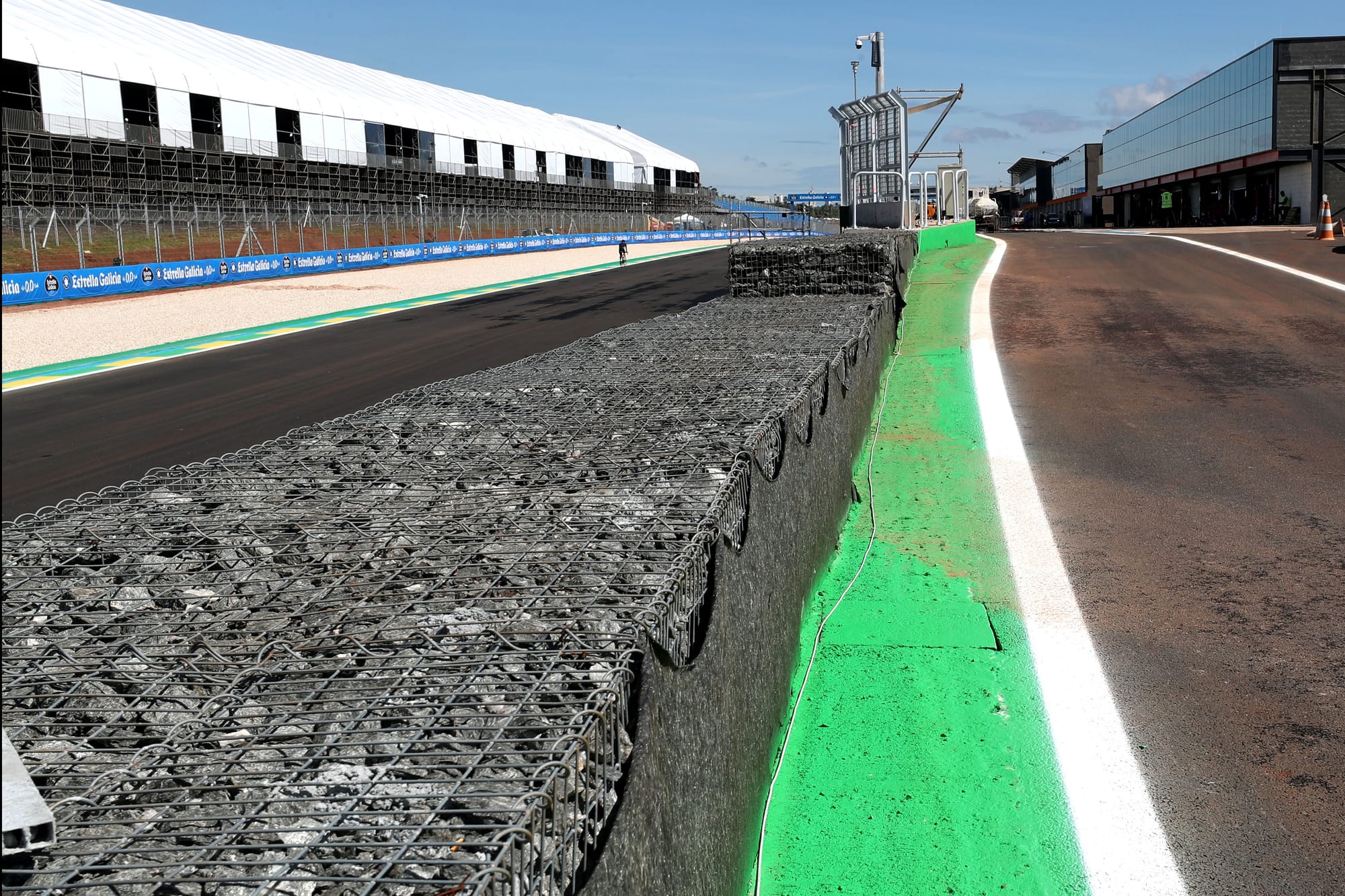
Before MotoGP running has taken place, the Goiania track that's met the grid is one properly covered with that trademark Brazilian red soil, an ever-familiar shortcut for recognising pictures from the country.
Dustiness is hardly unusual for a new track, but it means there's expectation of an off-kilter FP1, with bikes sweeping the "completely red" - as Enea Bastianini put it - asphalt instead of trying to set any meaningful laptimes. But "the last exit of FP1 could be already a good moment to try to understand the situation", according to Marini.
However, multiple riders acknowledged the surface itself looks proper. "Tarmac looks fantastic, a bit dirty but fantastic," was Pecco Bagnaia's assessment, and the general sense is it should be grippy on the racing line.
Off-line is a different matter. There are some question marks over the overtaking points - Marquez pointed to Turn 1 as the only surefire one, with the last corner as the other main option, but stressed that it depends on how much grip there is to explore off-line. But an optimistic Raul Fernandez said he'd studied other races at the venue and saw riders able to vary up their lines.
The layout
"Very narrow but fast and technical" is how Bagnaia described the layout, while his former Ducati team-mate Jack Miller cheerfully highlighted "a lot of positive-camber corners, old-school kind of thing".
Small and technical is usually Marquez territory but with nine 'official' right-hand corners versus five left-handers it isn't his kind of corner balance, and Marquez himself has preached caution.
"I would like to have more left corners, obviously, but yeah, the layout looks nice. It's true that it's not the best layout for my riding style," he said.
"These right corners are quite similar to Barcelona - and Barcelona is not a good circuit for me!"
KTM's Brad Binder reckoned it was "a little bit like a track at home", meaning South Africa, rather than being akin to any of the more internationally used venues he's competed at.
A glance at the track map - and at an onboard - does suggest Aprilia should thrive given the average speed being kept up.
The argument from within Aprilia though - as articulated by Jorge Martin - is that that isn't really how MotoGP works anymore.
"In the past they used to say, 'One bike is good for one track, another good for another one'. But Thailand was completely stop-and-go, and we were super fast. Then Montmelo last year was [seen before as] like the Aprilia race, and we were 10th. I don't know. We'll see.
"I think KTM, Ducati and Aprilia now are at a super-good level, all of them. It's more on the riders to adapt to the track and to understand how to go fast."
The other factors
Another reason why Aprilia will be hotly-tipped is the perception is that it handles better than anyone - and certainly much better than Ducati - the reinforced-carcass rear tyres that Michelin brings to deal with heat.
But if that's indeed what tripped up Ducati in Thailand, it still needn't play out the same way here.
There are three options on the rear available this weekend (instead of the conventional two) but as Alex Marquez explained, the soft and medium is more like the construction that is used at the Red Bull Ring (where Ducati had no issue last year) and only the hard is like Thailand. "I think that hard tyre is just for safety, honestly speaking," he reckoned.
"In reality we have one good option in the front or one or two good options in the rear," reckoned Honda rider Marini, though he added that this was purely "speculation" before he'd ridden this weekend.
"I think the front soft is already [put] on the side - because the left side is too soft," said LCR Honda's Johann Zarco. "You cannot do many laps. And then the rear, we have no idea. Michelin predicts it can be the track with the highest [wear] on the right side."
Another big question - potentially the biggest question depending on how the weekend plays out - is rain. It was raining earlier in the week, with images of a flooded (but quickly drained) track going viral, and it was raining on Thursday during the media scrums.
There are some "hoping" for rain - like Pramac Yamaha rider Miller, who said he believes the Yamaha can also show something improved in the dry - and some quite wary of it. It could be a "huge problem" in the first and final sectors, said Bagnaia.
What's the concern, beyond rain being so heavy as to make things impossible? Miller offered a detailed explanation.
"I think the track itself, in full wet conditions, will have a lot of grip, just looking at the asphalt. But it'll be tricky when you get that sort of half-wet, half-dry, when it's not quite enough water to keep the dirt patches wet - you start to get almost like a slime on the track from where the dirt essentially starts to turn to mud."
As part of the track acclimatisation process, both Friday practice sessions have been extended by 15 minutes, though this isn't expected to be a game changer.