Williams surprised by what Mercedes can extract from 2026 engine
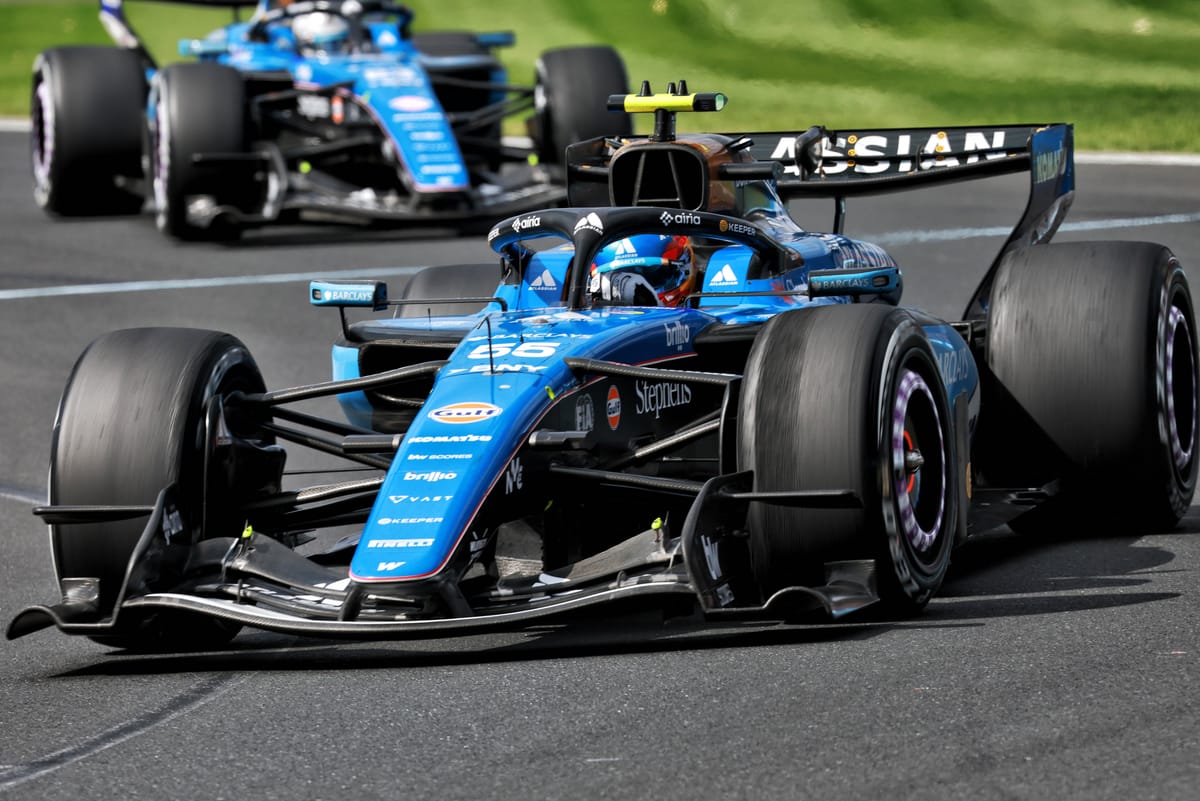
Williams has admitted to being "caught off guard" by how much Mercedes could unlock from its own engine at Formula 1's Australian Grand Prix, as customer teams faced some learning difficulties.
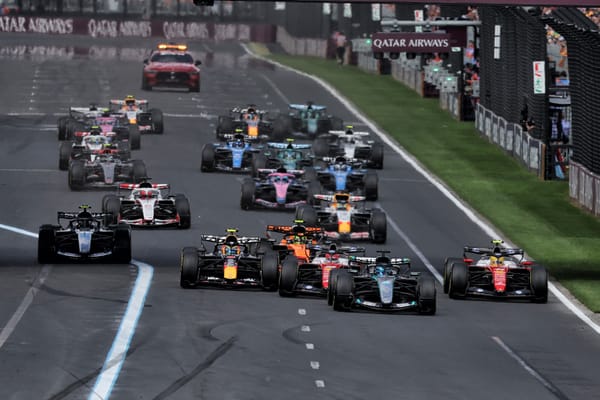
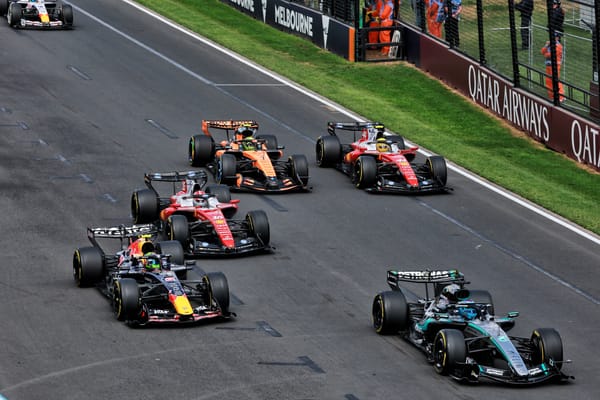
As the Mercedes works squad secured a comfortable 1-2 on the grid and followed that up with George Russell leading home Kimi Antonelli in the race, Mercedes' other outfits had a more challenging time.
Defending champion Lando Norris at McLaren came home fifth, more than 50 seconds adrift of Russell at the chequered flag, with Alpine's Pierre Gasly scoring a single point in 10th. Williams's best finisher was Alex Albon in 12th place.
On a weekend when the Mercedes power unit in the works car was so strong, the fact that its customers did not enjoy a clear advantage came under the spotlight, as there seemed to be a power unit performance difference.
Although the regulations are clear that customers have to be supplied with identical equipment and engine modes, how each power unit is run and the energy management optimisation is down to teams.
And it is in this area where Mercedes' customers have found themselves behind, with the extent of where the works outfit has got ahead leaving them surprised.
Speaking ahead of the Australian GP, Vowles said: "What Mercedes are doing on the power unit is something that caught us off guard.
"It took a qualifying for us to really see just how off the pace we are. In that regard, that's probably three tenths [of deficit on the engine side] - something in that ballpark."
Vowles has no doubt that Mercedes is supplying it with equal equipment and opportunity.
However, he suggested that there is not a free flow of information being made available to customers like his squad when it comes to extracting as much out of the Mercedes engine as the works team is.
"It is not an open door, as you would imagine, because that's where the performance is found," he said. "So it is down to us to try and work around it.
"We have to acknowledge that we, as Williams, do not have the sophistication that they have in other technologies, and definitely that's on us.
"I would say the converse is that there's some inherent knowledge they have which we don't. And that's down to us to figure out."
Asked by The Race if he had expected knowledge of a performance advantage to flow a bit more freely, Vowles said: "I had expected it to a certain extent, yes. That's why I said I was caught out yesterday."
Where McLaren and Alpine stand
Williams's suggestions of a knowledge gap between what Mercedes knows about extracting the most from its power units compared to its customers comes with McLaren suspecting the same thing.
McLaren has openly admitted that it is not on top of optimising energy management.
Its team principal Andrea Stella said this situation only became clear in qualifying, when Mercedes finally unleashed its full potential for others to see.
"Somehow it took a qualifying, it took to be all in the same condition, on track, same power unit to actually have enough of a reference to understand what is possible," said Stella.
"From this point of view, being a customer team doesn't put you certainly on the forefoot. This doesn't have to do with the hardware, this has more to do with learning about the hardware and identifying the best way to exploit it.
"We are certainly entering a new era of Formula 1 in which these factors become essential in terms of sensitivity to driver's input, the way you use your energy in the preceding straight to have the maximum deployment in the following straight, especially if it's a long straight.
"All these factors become essential. And in a way, this is a new language and also a new way of thinking."
Steve Nielsen, managing director of Alpine, an engine customer for the first time since Renault took back ownership of the team in 2016, said Mercedes was "giving us as much assistance as they can", but there remains a big learning curve.
Asked if the information flow from Mercedes was as expected, Nielsen said: "I'm not sure I even know what to expect.
"It's the first time we've done it, so from a sample of one...Yeah, I guess we'd liked a bit more [but] I can tell you many things that I would like more of.
"All I know is the working relationship with them is very good. They're also learning. I'm sure they're passing the stuff on as quickly as they can to us. And we're appreciative of it when we get it. They'll learn. We'll get better.
"But I can't lay any blame at the door of the PU. I think what was there, four Mercedes cars in the top six in qualifying or something, that's not our issue."