What we know about major Williams setback with 2026 car
Williams being forced to miss the Barcelona test is the first major setback a Formula 1 team has faced with this year's rules overhaul.
The team has suffered "delays in the FW48 programme as we continue to push for maximum car performance" and will not take part in the private test the other 10 teams will be part of in Spain from Monday to Friday next week.
Here is what we know about its plight and what it means for its F1 recovery.
What has gone wrong
The key detail missing from Williams's short statement about its test absence is the exact cause but its car build programme has been interrupted.
Though there was speculation that Williams's chassis is not ready, The Race understands this is not the case and it has passed everything required.
That does not preclude that process taking longer than expected, though, either because of a failed crash test or a problem identified by Williams itself. Either will potentially have added weeks of development and manufacturing work to rectify the situation.
Williams switched its design focus to 2026 extremely early and had intended to sign off the first version of the car early too, to make sure it avoided exactly this situation.
With that in mind it cannot just be poor planning or improper tools, and it's understood to not be a result of a supplier or production issue.
It must relate to a core architecture design - like the monocoque or suspension - needing reinforcement in some way and Williams wanting to find a way to make its intended designs work as it chases performance with the car.
The challenge it's failed to manage
This set of rule changes, including a massive 30kg reduction in overall minimum weight despite the engines getting heavier, has been widely described by F1's most experienced personnel as the biggest combined car and engine overhaul they can remember.
In addition to being an intense development exercise, the process has put immense strain on production and manufacturing capabilities, and the FIA has increased its demands of various homologation tests for 2026 too.
Getting a car light enough and packaged as necessary to meet the required standards is not straightforward given the timelines. A packed pre-season schedule with three separate tests - one in Spain and two in Bahrain - was designed to give teams as much running as possible with the new cars, but made it necessary to hold the Barcelona test in January to fit everything in.
This is unusually early and added further strain to the process as it brought all major deadlines further forward and compressed the winter.
Williams suffered delays in its production capacity just two years ago and technical director of engineering Matt Harman was in charge of Alpine that same winter when it had its own chassis build problems, so the potential for things to go wrong when trying to pass crash tests and meet strict performance targets is unfortunately well known to the organisation and key personnel.
However, it must be something in Williams's control, and that it has misjudged, given other teams have managed this target - including fellow Mercedes customer Alpine.
Why it's missing the test completely
It is telling that Williams has pulled the plug on the first test entirely.
Were it a minor setback or logistical issue, Williams would almost certainly be aiming to get to Barcelona later than intended but still with time to run the car.
The test spans five days but teams can only run on three of them. So Williams could have got its car out on Wednesday and still maximised its runtime.
It is not doing that, or even trying to run on Thursday, for example. Williams does not want to get into what could have been possible - either a truncated test, or participating with a car compromised in some way.
But it decided not to take part in the test - or attempt to - in a way that was not how it intended, which means running the car properly in its full form.
That it has ended up in this position when others intend to run immediately at 9am on Monday, new engine manufacturer Audi had a car on track back on January 9, and new team Cadillac did so on January 16, shows how far behind schedule Williams is.
It is a matter of missing deadlines by several days at a minimum.
The virtual alternative
In an attempt to mitigate the setback, Williams is planning a comprehensive virtual track test programme in place of going to Barcelona.
This involves being able to run the real car and engine in a controlled environment but it is more relevant and detailed than normal dyno testing. The chassis, engine and gearbox will be hooked up and be put through specific, more intense programmes.
This will involve a detailed runplan and it's understood Williams will do this over multiple days starting this weekend.
Williams has completed a fire-up in the factory, so the car and engine are in a state where they can run quite extensively on a rig.
But it clearly implies the team has completed the fundamentals of the build too late to be able to complete the necessary validation work before running anything on-track.
Whether an adjacent simulator programme will take place is unknown but this would not really offer anything that its existing sim work has not already provided.
How it compares to previous disasters
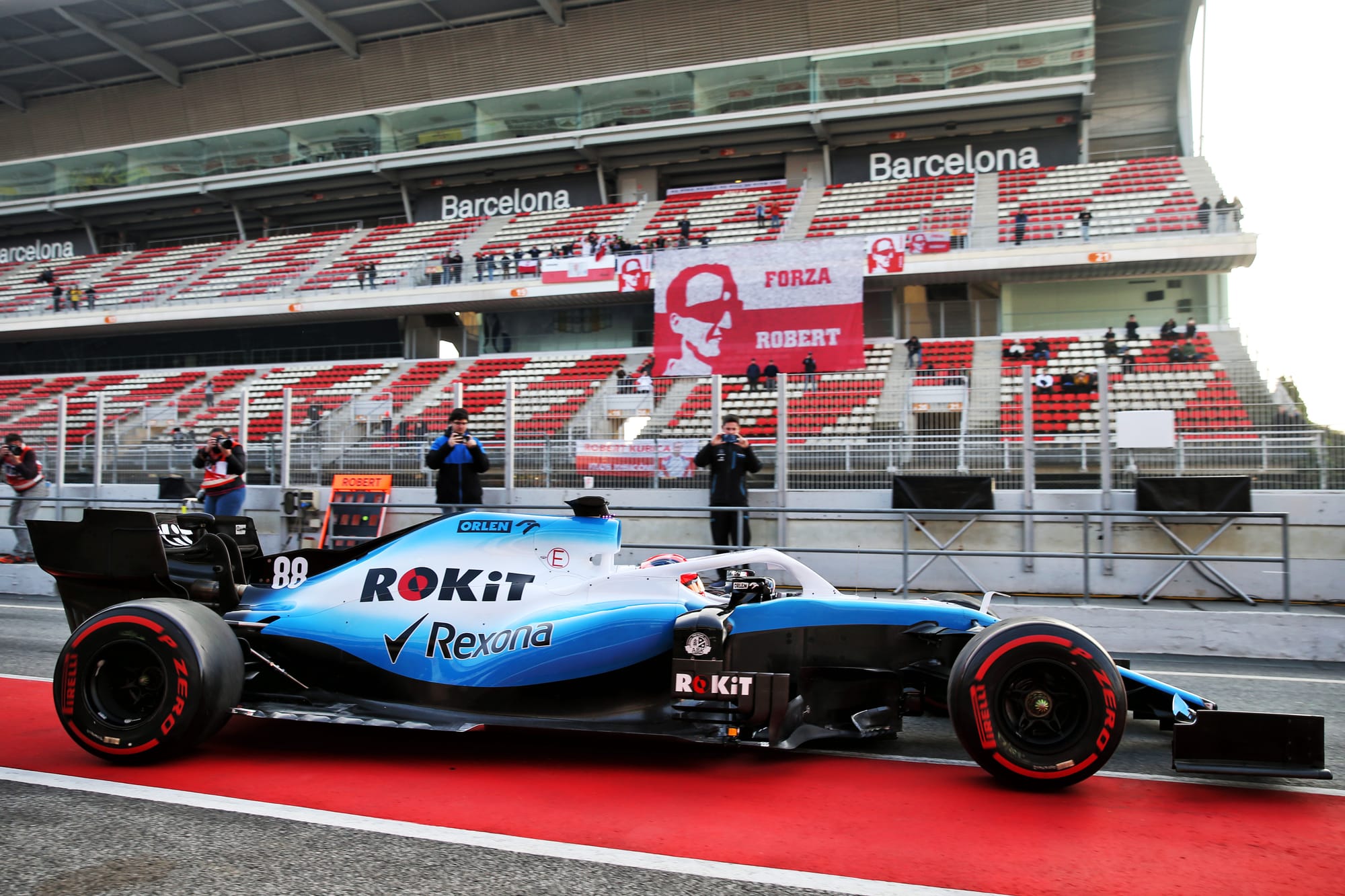
For the third time in eight seasons, Williams is suffering a seriously compromised winter.
In 2019, it missed the first two and a half days of the opening pre-season test, only getting on track briefly in the afternoon on day three.
In 2024, Williams was behind schedule after an off-season and car-build phase plagued by production problems, and though it did make the first test it was light on parts and overweight, which compromised it through the whole year.
Its current situation draws inevitable parallels with both past instances. What happened in 2019 was undeniably worse: that was one of only two four-day tests, whereas Barcelona this time is being played down as a big group 'shakedown' ahead of two separate three-day tests in Bahrain.
That car also turned out to be terribly slow, and even started life with illegal parts on it.
The 2024 comparison is also different. While that year Williams did at least get all the necessary mileage complete, it was in a much worse state in terms of its tools and methodologies. The suggestion this time is that there is not such a big web of failings behind a bad winter - that something specific instead has knocked it back.
And part of the reason for not doing Barcelona at all is to maximise the chance of getting its preparation back on track from Bahrain onwards, so the consequences don't linger into the season this year.
It's helpful that Williams can do some more extensive work at base to be as prepared as possible for the first Bahrain test that starts on February 11, and better to focus on that than put together a half-baked Barcelona programme just to be there.
Still, it is undeniably on the back foot.
How badly the plan's gone wrong
Specifying "delays" means the team is at least fronting up to something going wrong rather than pretending it was always considered an optional test.
But that was never an option given how vocal team principal James Vowles had been in terms of not making this year a repeat of 2024.
He made it clear just how much runtime Williams intended to give itself to ensure it got a car on track even before the Barcelona test so it could maximise its mileage and season preparation.
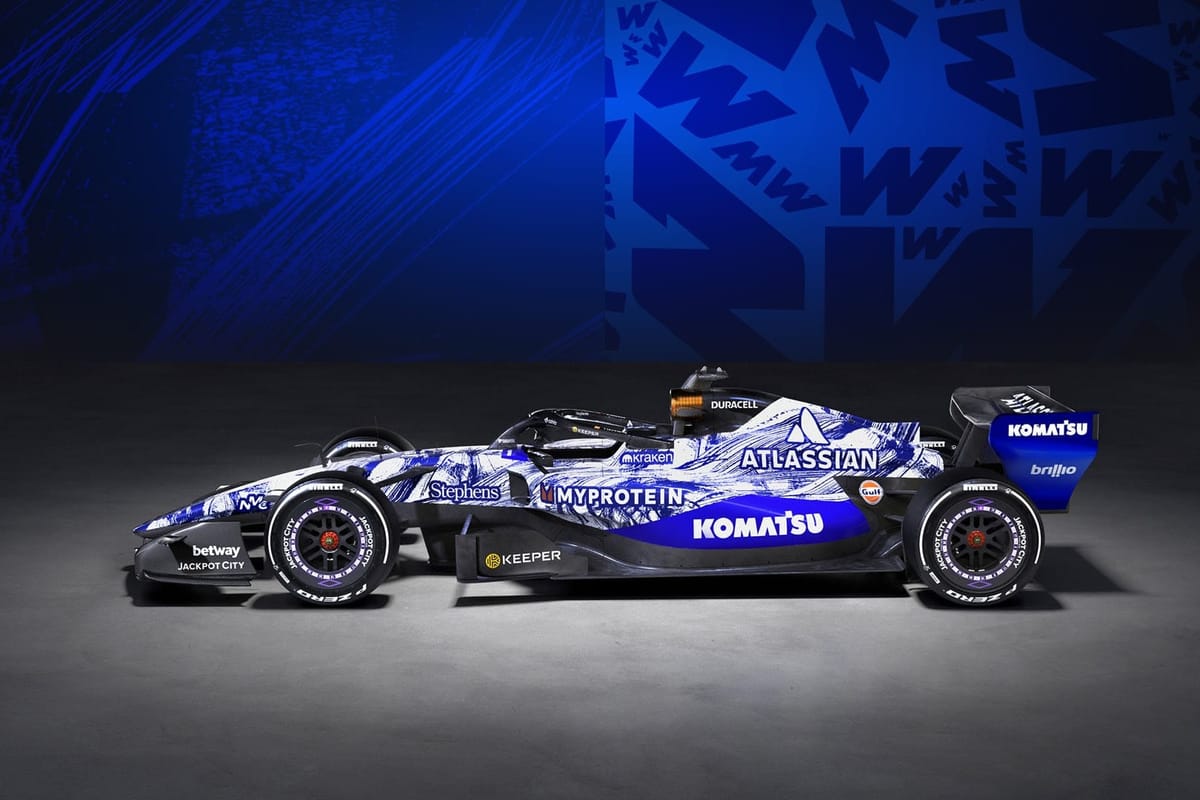
And, of course, Williams ran a fan poll to decide its special testing livery ahead of a full reveal in early February.
So it had every intention of being at Barcelona, which was meant to be a springboard for an important season in which Williams hopes to build on the obvious progress of 2025 when it finished fifth in the constructors' championship and scored two podiums.
Like in 2024, when a fuller explanation comes, there may be an emphasis on the need for aggressive targets, the pursuit of performance, or how much Williams is having to change the way it works to operate like a top team.
But that will not quite fit the narrative laid out before Christmas, about leaving as much runway as possible, so it will be interesting to hear Vowles explain such a big blow.