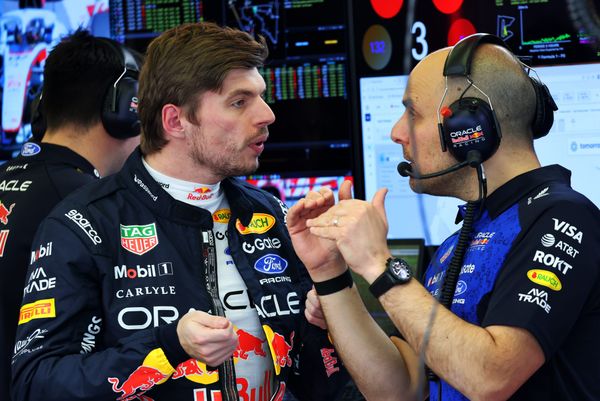
What's left Williams compromised for F1 2026 opener
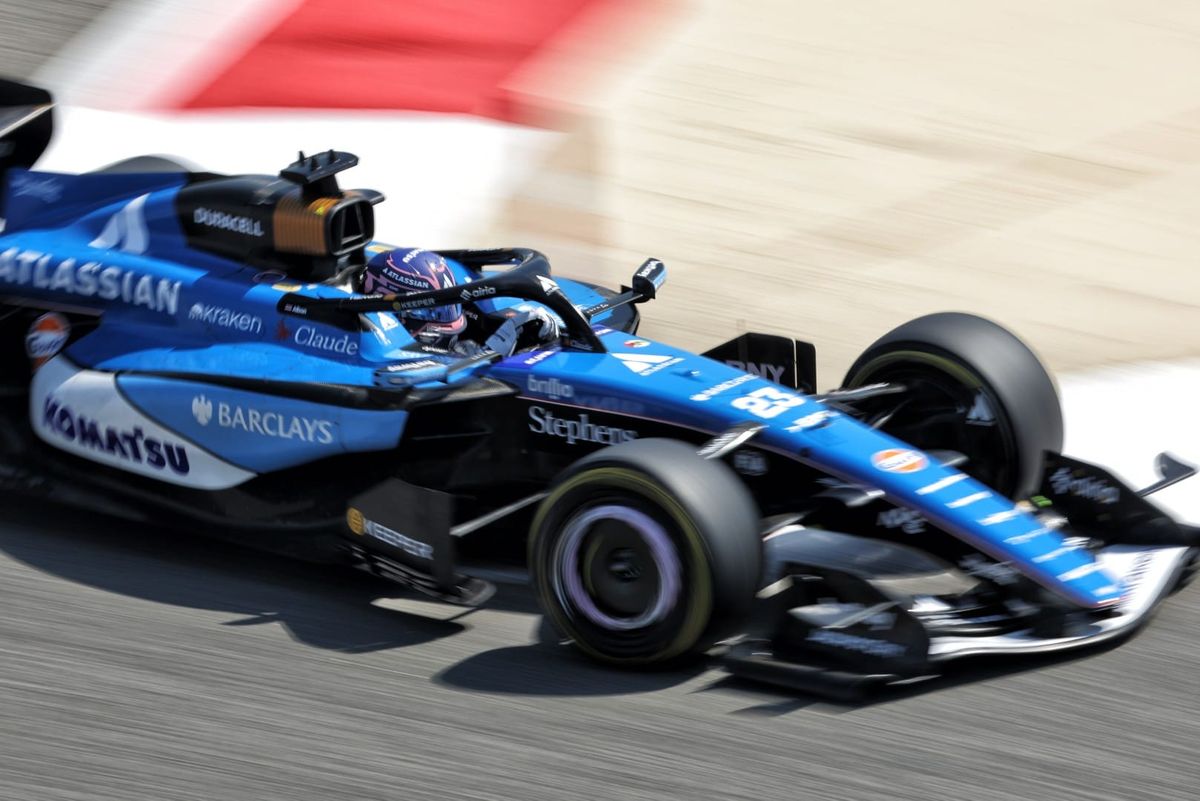
Williams admits it is heading into the new Formula 1 season still on the back foot, after limitations with its new FW48 were exposed in last week's Bahrain test.
The team was late getting its new challenger on the track, having missed the first shakedown at Barcelona in late January.
While it has managed to recover some of its lost mileage - the third-ranked team overall in terms of laps completed across six days in Bahrain - it has quickly learned that its new car is not where it wants to be.
For the second Bahrain test, as it started pushing the performance envelope a bit more, it found that the laptimes and pace of the car were a bit behind.
As Carlos Sainz reflected about Williams understanding more on the strengths and weaknesses of its 2026 challenger: "The car is running reliably from the beginning.
"That's allowing us, obviously, to find out the limitations and the areas where we have to improve, which, unfortunately, there are quite a few."
The reality of what Williams has found with its car is why team boss James Vowles is remaining cautious about things for the start of the campaign.
"No one truly knows where all the performance lies," he said. "That's what Melbourne is all about, so I can't wait to go there, to gain a further understanding of where we are.
"What I know for sure, though, is we have work to do. There's no doubt about it. We've put ourselves on the back foot.
"But my assurance to everyone is that we have an aggressive programme lining up in front of us in order to make sure that we extract as much performance in this car as possible over the forthcoming months."
The weight question
One of the key elements that is hard to understand about where Williams stacks up - and how much performance it is missing out on - is how overweight the FW48 is.
There were rumours over the winter that the team was somewhere between 20-30kg above the minimum weight limit with its launch-spec car, as a consequence of compromises it had had to make to get itself out on track in the necessary timeframe.
With it estimated in F1 that 10kg is worth around 0.3s per lap, then - if the team is that far over the limit - chipping away at that alone will lead to a big improvement in laptime.
Vowles has been cautious about revealing any details about how much the team has missed the weight limit by.
However, he has gone as far as revealing that there is a plan to get mass off the car over the early races.
"I don't think we're on the weight limit right now as I talk to you," he said.
"But there's a plan in place, both for Melbourne and then across the first three rounds or so, just to make sure that we're chomping into that again.
"But anyone who tells you exactly where they are is probably because they're right on the weight limit, or just below now.
"But there's sensor packs on the car that are worth around about 12kg here [in testing], just to give you an idea. This is why, until you shake that all off, no one exactly knows."
Lost time
The other reality for Williams is that, in a new rules era, there is a lot of performance coming from teams being fully on top of the different car dynamics, energy harvesting and performance drivers.
While Williams's mileage was respectable in both Bahrain tests, in total it still is missing around a third of the number of laps of other teams - as the below total pre-season running for teams highlights.
Overall testing totals (km)
1 Mercedes 6193km
2 Haas 6095km
3 Ferrari 6090km
4 McLaren 5759km
5 Racing Bulls 5458km
6 Alpine 5289km
7 Red Bull 5048km
8 Audi 4966km
9 Williams 4275km
10 Cadillac 3935km
11 Aston Martin 2111km
As Alex Albon said: "We are playing catch-up in many ways. We learned a lot. We did good mileage on week one of Bahrain.
"This week was a little bit more performance-orientated, and we're not, maybe, where we want to be. We won't get those days back, but I think we've got as much data as we need to."
The ultimate conclusion is that off the back of a surprisingly strong 2025 campaign, considering the team diverted resources to its current car super early, there is a far more cautious outlook.
Sainz said: "We go into the first half of the year with lower expectations than 2025, knowing that we'll be starting slightly on the back foot."