Why Mercedes can't fast-track McLaren-matching upgrades

Mercedes says it has a “major update” in the works to help it fight back against the renewed threat from rivals in Formula 1, but admits it faces a tough battle until then.
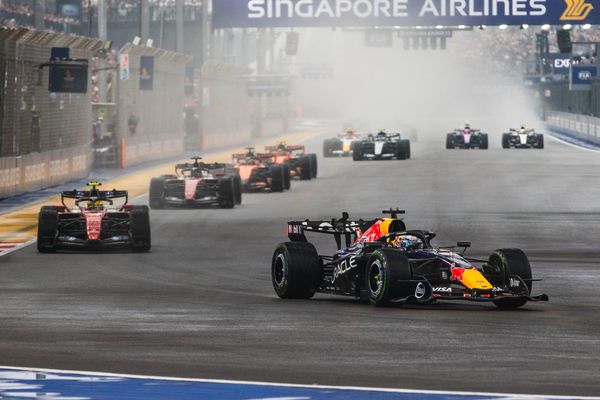
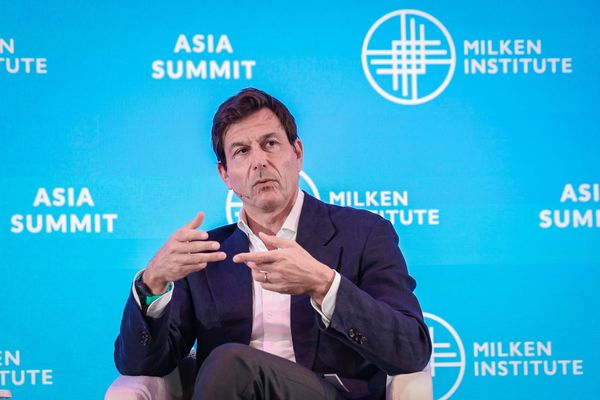
There has been intrigue about how capable Mercedes is of responding to the step forward that McLaren in particular has made with its car, with team boss Toto Wolff suggesting that cost cap limits were restricting it.
Speaking about whether Lando Norris’s second victory of the season, in the Dutch Grand Prix, meant it needed to fast-track some upgrades, Wolff said: “We haven't got the money to put developments on the car.”
It is understood his comments were in relation to his team not having flexibility to do extra updates beyond a plan it has put in place since the start of the season to space out its new parts.
Mercedes has adopted a different strategy to its rivals so far this year with upgrades, introducing fewer developments to its car compared to many other teams.
It has not had a major new package since the Canadian GP back in May, and its lack of upgrades has led to uncertainty about whether it spent too much in the build-up to the year, or if it is saving everything for a late season splurge.
Speaking in Mercedes’ regular post-event debrief about the wider title fight, Mercedes’ trackside engineering director Andrew Shovlin said the team was not without upgrades at all – it was just biding its time for the right moment.
“It's obviously getting really tight now in terms of performance,” he said.
“We're still waiting for our major update to land, and that will help. But in the meantime, it is going to be a bit of a fight.”
The timing of Mercedes’ next upgrade is unclear, but it would be highly unlikely to come for the low-downforce Monza – especially with the team electing to take an engine penalty there for points leader Kimi Antonelli.
It would be much more beneficial either for the Madrid Grand Prix street race - although introducing it at a new circuit may not be ideal - or for the Malaysia/Singapore double-header.
An offset strategy
Mercedes’ upgrade tactics appear well offset to others, both in terms of timing and resources.
It is unclear why the team is so restricted on money despite having introduced so little, while others are able to keep up developments.
Based on the official FIA figures for declared upgrades over 2026, Mercedes is well behind when it comes to the number of new parts it has brought.
Ferrari has introduced 40 new components, Red Bull and McLaren 38, while Mercedes has added just 24.
However, those basic numbers do not tell the full story of how much spending has been done on development, as for example, a new floor costs a lot more than a mirror shroud.
A weighted analysis giving a cost grade for each new component puts Red Bull at the top of the leading four teams, just ahead of McLaren, with Ferrari third and Mercedes quite a bit adrift.
A clue to Mercedes’ approach may have come from technical director James Allison recently though, who suggested that Mercedes spent heavily on development before the start of the season.
It felt doing that would help capitalise on a really aggressive development slope with the new rules that was delivering improvements six to seven times greater than 2025.
Allison told the Mercedes YouTube channel: “We took a decision internally on the aerodynamic side and on the bodywork side of the car that we were going to leave it later than we've ever left a car before by several weeks.
“We were going to do a plan that had less than no contingency in it. As a result of that plan, we got as much of that very, very steep development slope in the first car at the first race as I think was humanly possible to get in there. And we emptied everything out to do that.”
Allison believes other teams delayed spending to introduce more in-season upgrades, putting squads out of phase.
He accepts that the strategy did bring with it some risks in terms of there being phases of the campaign where rivals caught up.
“Our strategy is just to try to keep our nose ahead and to make sure that the next lump of performance that we deliver will restore the status quo ante – restore the goodness we put in at the beginning of the season," Allison added.
“We just have to ride out these scary events where other people bring their fancy new bits.”
Allison reckons that, with gains being found in the windtunnel of around two tenths for every month of work, that opportunities are still great to catch up.
So if Mercedes has not unleashed anything since May’s Canadian GP then it may have 0.6-seconds of development potential available.
That would in theory be enough to decisively put it ahead of rivals McLaren and Ferrari which have closed the gap or even caught up with their latest packages.