Where Aston Martin and Honda stand ahead of Chinese GP
Honda believes that the Chinese Grand Prix can be a more normal Formula 1 weekend for it and Aston Martin as its reliability improvements mean it can target a full race distance.
After suffering from excessive vibrations during pre-season that were critically damaging Honda's batteries, short-term countermeasures in place for the season opener in Australia facilitated rapid progress through the weekend compared to testing.
The Aston Martin-Honda package is still weak compared to the majority of other teams and neither car completed the grand prix in Melbourne, so as chief trackside officer Mike Krack observed this was "probably not the best day in history".
But the mileage it managed was well beyond anything achieved previously, and made the first race the most it has learned in a single day.
Fernando Alonso and Lance Stroll completed a total of 64 laps combined in the Australia race, although in unorthodox fashion, as Alonso retired mid-race and Stroll was an unclassified 17th, 15 laps down, despite running at the chequered flag.
Alonso spent 16 minutes in the garage then managed six more laps before coming back into the pits for good to conserve parts.
Stroll, meanwhile, managed to go deep into the race - 38 laps - before having a similar 18-minute spell in the garage, then completed nine more laps at the end of the race punctuated by a pitstop.
Whether Honda needed to check some data to ensure it was actually feasible for the car to complete a handful more laps, or it was just a result of stint lengths being imposed as a precaution, was not clear. But it reflected the conservative way the opening race had to be approached given that Honda was down to its last two batteries - the ones in the cars - already by Friday practice.
No extra components existed even if they could have been transported to Australia in time, and the same situation applies to China given it is back-to-back with Melbourne.

So Honda had to be very careful to manage its stock as a failure in Melbourne would have wiped out a whole second weekend as well. This would have been embarrassing but also extremely challenging for a programme that desperately needs to complete laps to make progress.
Honda now feels buoyed by the "big improvement" in reliability, while Krack said plainly that "I'm quite confident that we could have finished" were there not a desire to be careful managing the parts.
China will be followed by Honda's home race in Japan and a gap of one week, during which Honda should be able to replenish battery stocks and roll out a better fix than what it was able to achieve in the short time from testing to Australia.
That signals a more normal event could be possible in Shanghai and, if they choose to, Aston Martin and Honda can risk running parts to failure in the race to see what mileage can actually be achieved.
"Now we have confidence from more mileage, so next week should be a more standard week," said Honda's trackside general manager Shintaro Orihara. As Honda's battery vibrations have continued to decrease, the company is confident it is "on track to complete a full race distance".
Sitting ducks
Honda's target in China is to build up more mileage on the battery, as well as further optimising energy management. Because even if Honda has made an important and permanent step in reliability its performance is an urgent priority too.
As Lance Stroll glibly put it when asked about his racing on Sunday in Melbourne: "Well, 'racing' is a strong word. We circulated."
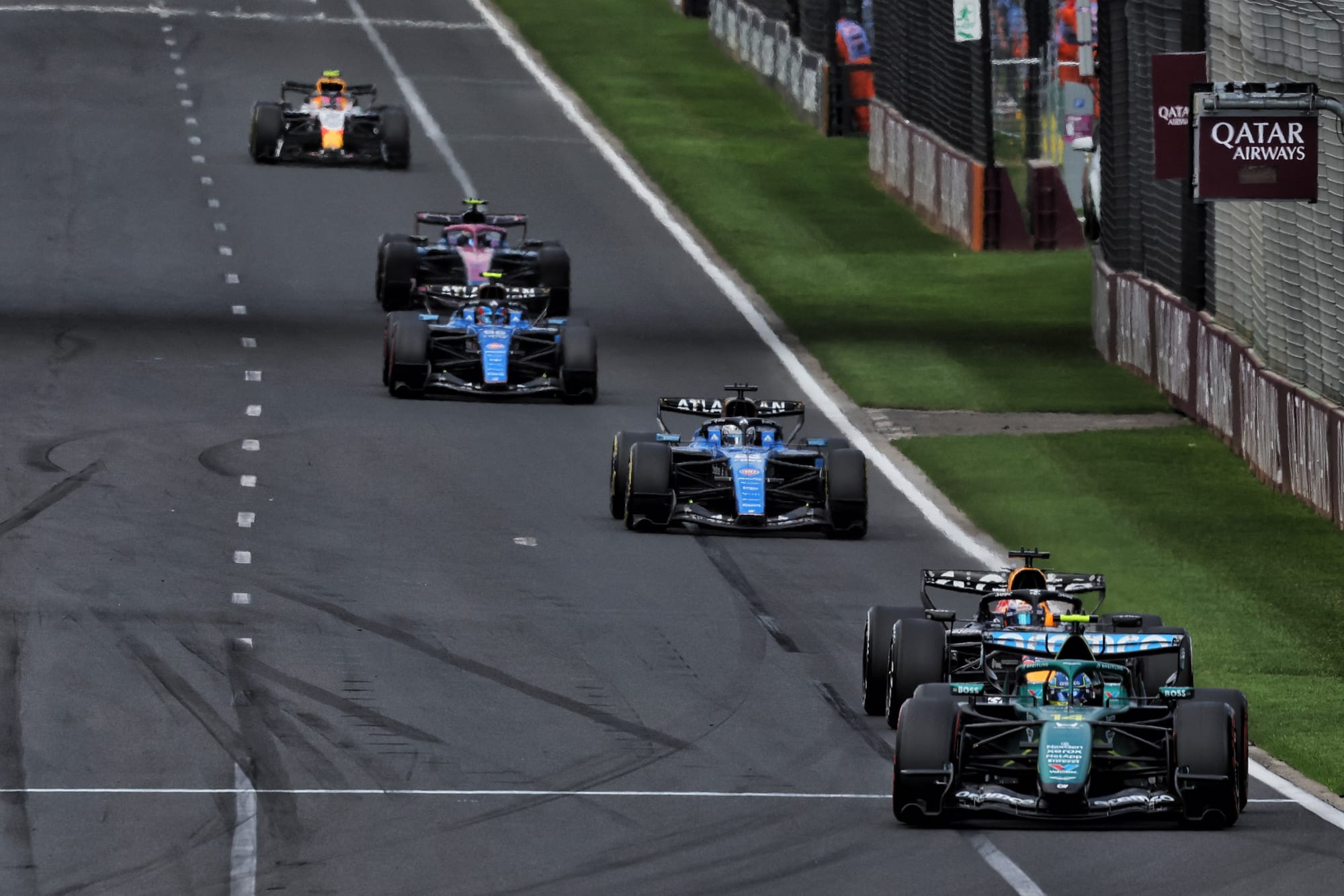
After picking up places on the opening lap - especially Alonso, who did a particularly fine job of squeezing down the inside of Gabriel Bortoleto's Audi for 10th into Turn 3 - it was not long at all before the Aston Martins slipped back.
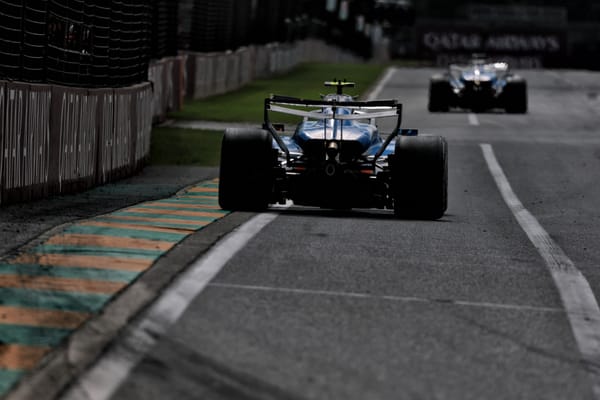
Watching Alonso's fall down the order from onboard his car makes for a hard watch. The run to Turn 9 in Melbourne never looked so long, even in the context of everyone approaching that corner slowly due to super-clipping demands, as both Aston Martin drivers were sitting ducks.
Looking for even more insight on the Aston Martin-Honda situation? The Race Members' Club is the place to be - sign up today for 90% off your first month
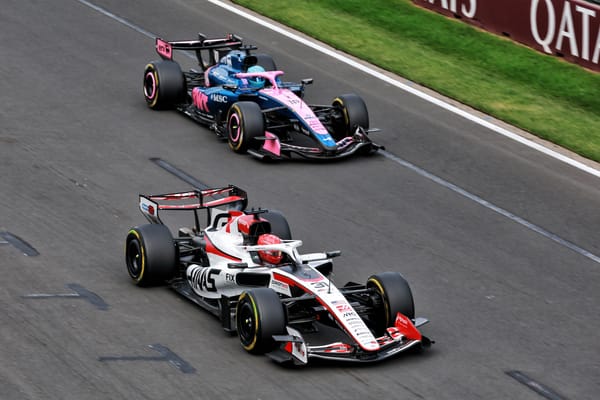
On lap three, Alonso succumbed to Bortoleto, who was so much faster at the end of the straight that despite slowing down and moving around in different directions behind Alonso through the sweeps he was still able to nip inside just before Turn 9 itself. Haas driver Ollie Bearman took advantage to slip by into Turn 11 afterwards.
Alonso just about rebuffed Alex Albon for one lap into Turn 9 but Max Verstappen breezed by on the run to Turn 3 afterwards.
Then as Alonso was told to bring a little bit of energy back into Turn 9 - even more?! - Albon got by there at the second attempt. Carlos Sainz followed by in the other Williams at the same place a lap later, then Franco Colapinto cruised past in his Alpine down to Turn 11.
Liam Lawson's recovering Racing Bulls closed the gap down to Turn 9 and got through into Turn 11 after a much better run down that straight, completing Alonso's fall to the back of the real midfield and only ahead of the two Cadillacs and Stroll.
The 'good' news is that Melbourne should be a particularly extreme manifestation of this kind of super clipping or lift-and-coast demand. China has a very long back straight that could be painful if the Honda requires excessive energy management there but the rest of the lap affords more recharging opportunities so it may not be quite so bad.
Overall, though, Alonso predicted the experience to be "no different" - which means reliability concerns, vibrations and a lack of performance, and therefore "I expect another tough weekend".
"But we cannot give up, we need to keep on trying different solutions, especially on the chassis, and try to understand and get better in the package in general," said Alonso.
"We are not optimised in anything yet because of the lack of mileage, so China will be another good opportunity."
Drivers still uncomfortable
What may still be a factor in China is what the drivers themselves experience in the car.
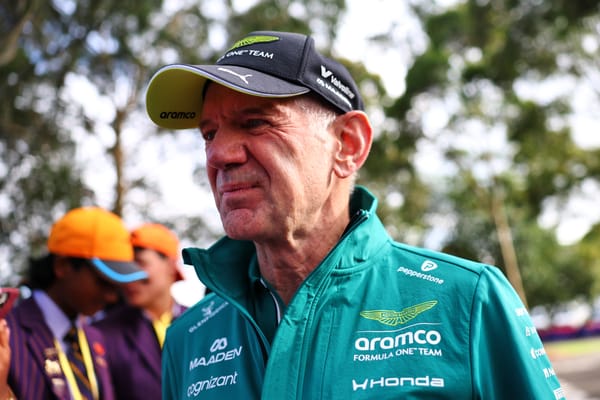
It was claimed by Aston Martin boss Adrian Newey at the start of the Australia weekend that the drivers were suffering from vibrations just like the battery.
This led to them fearing permanent nerve damage due to the frequencies coming through the steering wheel, and a concern that they could not sustain that for even half a race distance.
While Honda has made progress containing the vibrations suffered by its battery, protecting the drivers is a different challenge because the chassis is a stiff structure with little damping.
So the vibrations from the engine are being transmitted through the monocoque to the driver and Honda admitted that needs "a different fix", having so far prioritised the battery because that was the critical reliability problem to resolve.
"It's not the best feeling, driving with this level of vibrations," admitted Alonso post-race in Australia.
"Honda thinks that the vibrations on the battery are reduced since Bahrain, with some of the modifications, but that didn't happen to the chassis yet because they need to isolate the battery in a different way.
"It will take a little bit more time. So we try to do our best and to do as many laps as possible to help the team."
Aston Martin will continue to measure this in Friday's sole practice session in China but the likelihood is that whatever the drivers are having to put up with will remain the case for a little while longer.
Where there could be a step this weekend is in overall performance. The engine "is what it is", to quote Alonso, but the more reliably it runs the more Aston Martin can finally start tapping into what potential its AMR26 has.
Newey has confidently declared it the fifth-best chassis already, with improvements coming in terms of aero upgrades and weight reduction.
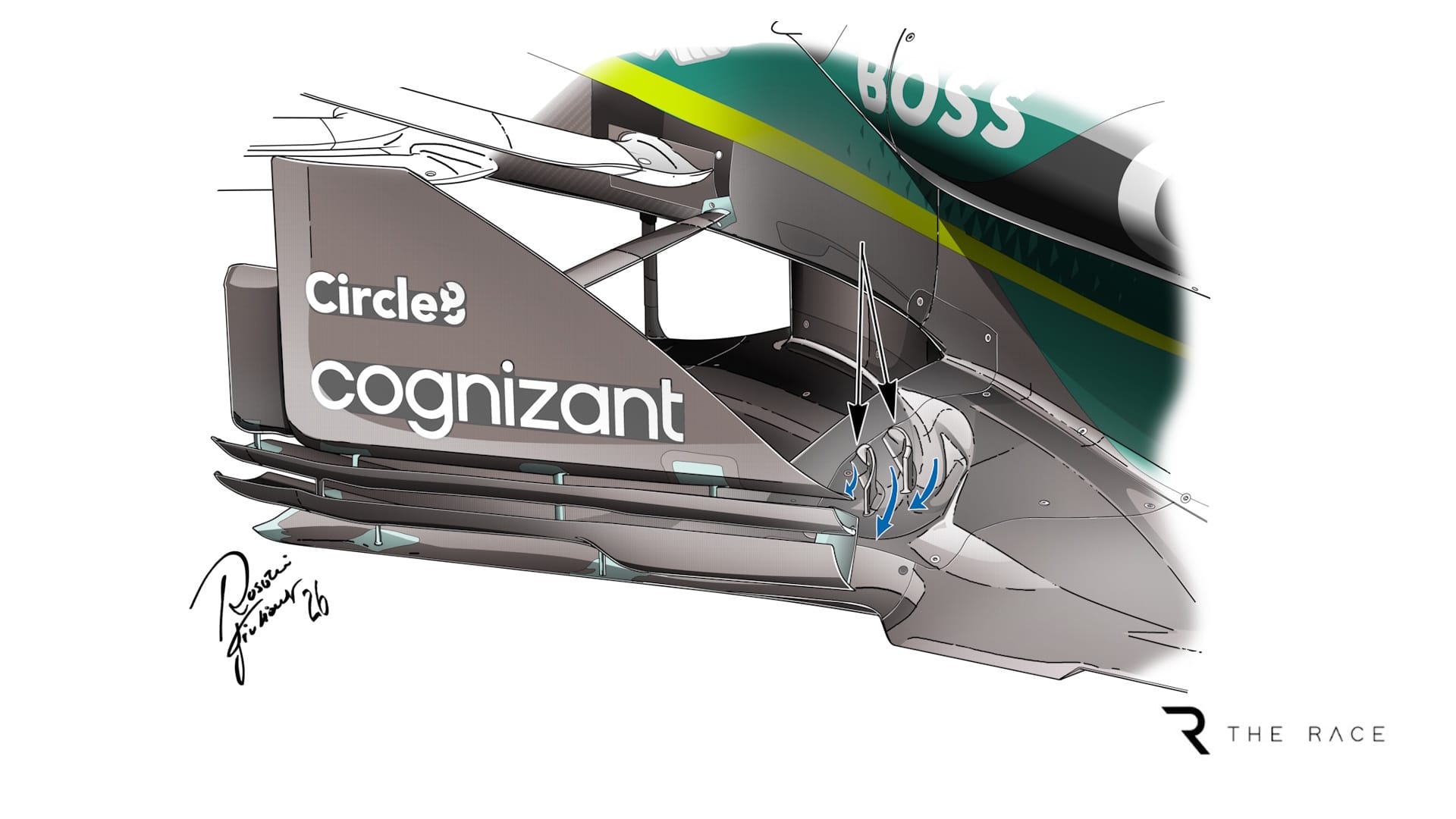
Aston Martin already had an upgraded floor in Melbourne, for example, and simply by being able to do laps in practice it was able to progress from around five seconds off the pace on Friday to 2.7s slower than the quickest car in Q1.
"[Being] trouble-free [from] problems in FP2 and FP3 allowed me to finally be on track and in sync with other cars and try different things with the set-up," said Alonso.
"And even if the power unit is the same, we gained like two seconds just because we went on track and we were optimising a little bit on the chassis.
"There is huge potential on the car, we just need more laps, we just need more consistency. It seems very fragile at the moment. It's dependent on the day."
Should Honda's confidence be justified and that fragility reduced in China, it's conceivable that gap comes down further, closer to whatever Honda's engine allows.
Whether either driver can snipe at a Q2 place or replicate Alonso's early, brief running in a points position in the race is far from guaranteed, of course.
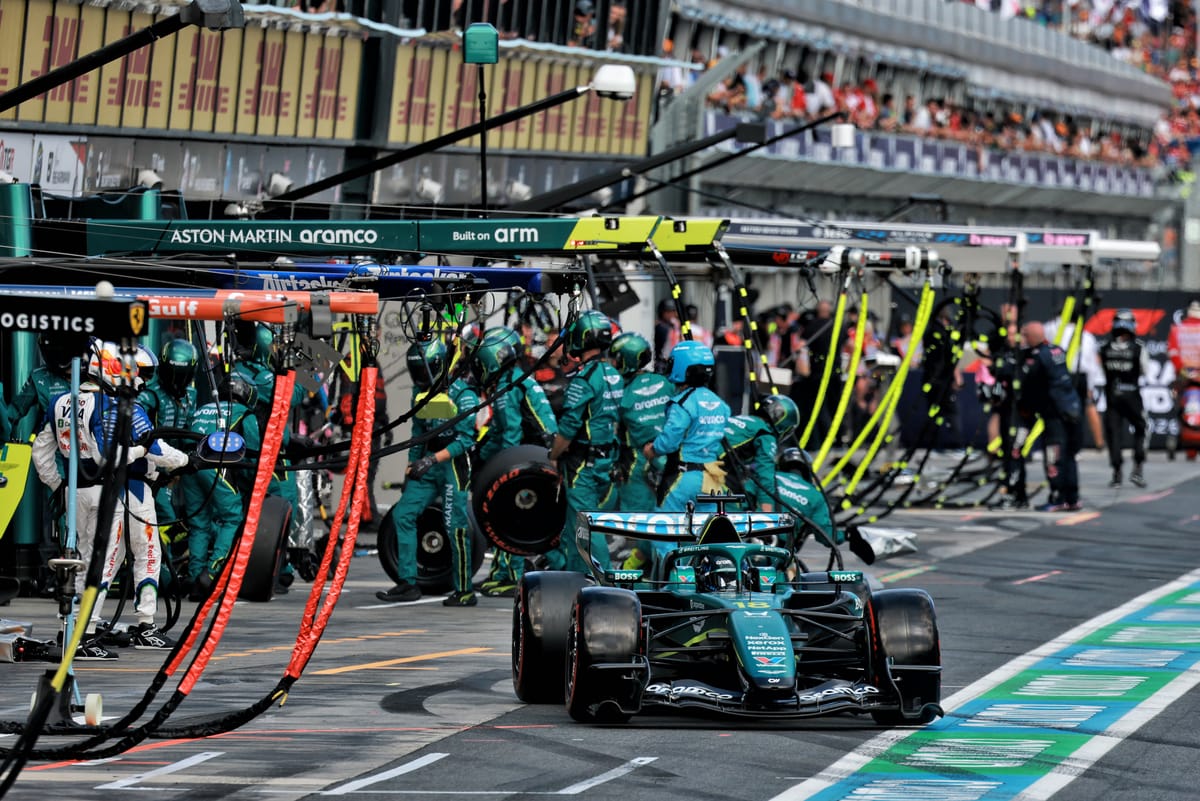
Another element that can improve immediately is Aston Martin's operations. Its slack pitstop work in Australia - labelled a "mess" by Krack - is a reflection of this being something "we have not done much of" in pre-season.
If China is indeed a more normal week, then there should be time to get on top of these basics again.