What's really going on with F1's cooling vest dilemma
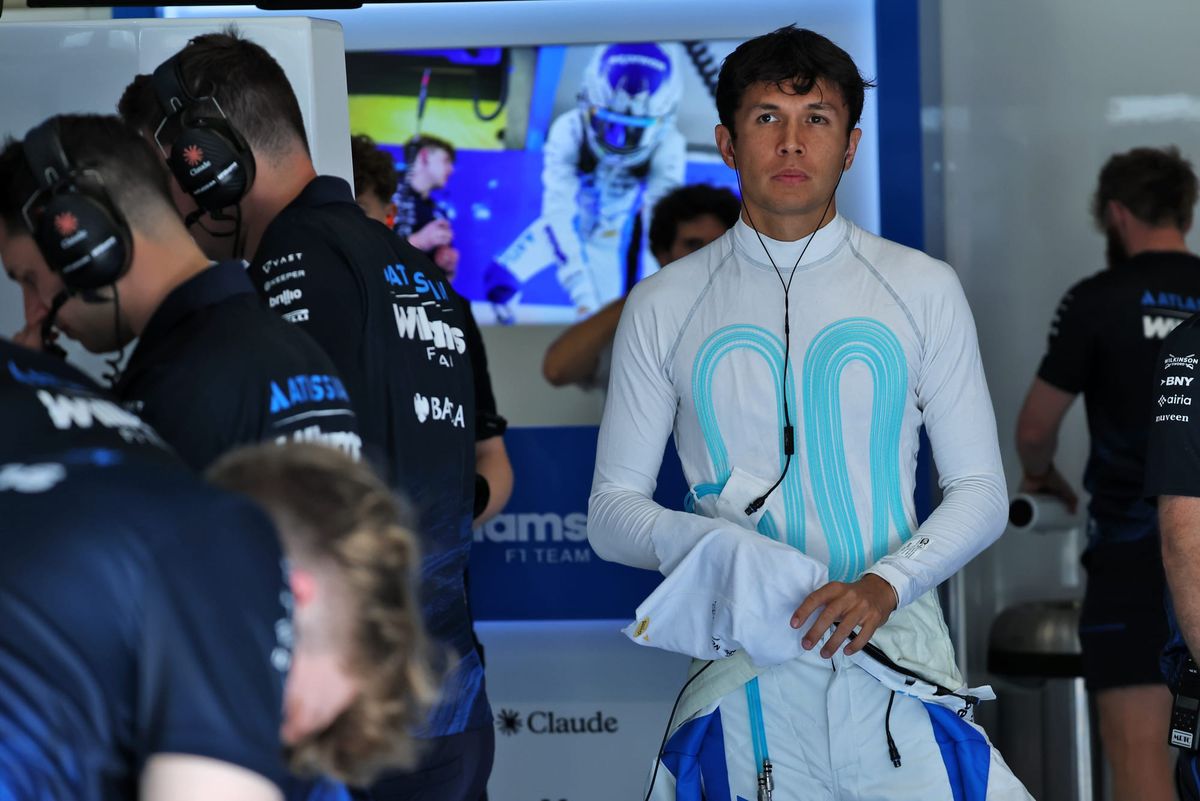
As a driver who famously suffered heat exhaustion after the Singapore Grand Prix back in 2024, George Russell raised eyebrows in Malaysia last weekend when he revealed that there was no scope for him to wear a cooling vest this year.
The Mercedes driver said he was not allowed to use the device because his team could not afford to develop it under the cost cap. Instead, it felt better to divert that cash to car improvements.
Speaking to The Times, Russell called on the FIA to step in and do more to help drivers because, when he had worn a cooling vest in the past, it had been a help.
"We won't be running the cooling vest because we haven't put the resource into making it robust enough," he said.
"I feel we need the FIA just to step in and say, 'Here's some money extra in the cost cap,' or there's an external company who's going to develop it for everybody, you just put the money towards it. Because we should all be wearing it."
Russell's remarks triggered a fair deal of debate, especially because of that episode after the 2024 Singapore GP when he and then Mercedes team-mate Lewis Hamilton were close to heat stroke after a brutal race at the Marina Bay circuit.
The intensity of that evening's event, which had run without a safety car, pushed drivers close to their physical limits and proved to be another catalyst for cooling vests to arrive at the start of 2025.
Why vests are problematic
While Russell became one of the first to race with the system earlier in 2025, the technology has proved to be more complex than originally anticipated as teams up and down the grid struggled to make it work as well as they hoped.
The systems seem to work well for a short spell in pumping cool liquid around the body but things soon heat up – and drivers then find themselves surrounded by warm liquid, which makes things worse.
That is why the cooling vests have remained voluntary up until now – with teams and drivers left with the option of wearing their own systems when official heat hazards are declared or carrying ballast instead so those that fit them are not at a weight disadvantage.
Russell's comments had suggested that the FIA needed to up its game and try to force teams to install systems that work.
That sounds easy in theory, but it is actually quite a complicated thing to do.
A standard system would not be easy to create because the layout of cockpits and racing seats are different from team to team, so finding something that worked for everyone would be very difficult.
So that is why, behind the scenes, the FIA has been giving teams some extra financial flexibility to work on their own systems.
At the end of 2025 it became obvious that there were two clear issues with the cooling vest systems that meant they had not been universally adopted.
The first was that the cooling effect did not last long enough, with the liquid pumped around the drivers' bodies only lasting between 20 and 40 minutes.
The second issue was that the tubing in the vest that carried the liquid around the driver was often uncomfortable in the cramped cockpit – so drivers did not particularly like wearing them.
The cost cap allowance
It was clear more work was needed to develop the systems, but moving the cooling vests outside of the cost cap to allow teams to do this risked them using that as an opportunity for spending in areas that were not directly related to this issue.
So instead, the FIA offered teams some extra development allowance for cooling vests if they could come up with systems that worked.
The arrangement was that if they created a cooling system that could last the full race distance, they would be granted an extra $50,000 allowance under the cost cap.
If they produced a cooling vest that solved the driver comfort issues then they would be given another $75,000.
This extra cash was only available if teams could prove that the systems they came up with worked – and this would be tested either in a practice session or on a simulator.
So the onus was on teams to ensure that money spent in this area produced a genuine working product at the end of it.
From Mercedes' perspective, it weighed up what was on offer and decided that the extra allowance for the cooling system and vest were not enough to be sure it could make things work.
It did not want to risk spending cash for something that was no improvement and then did not trigger the extra allowance.
Mercedes deputy team principal Bradley Lord said: "There was a small allowance that was made. We didn't believe that allowance was sufficient for us to be able to develop a solution that would be robust enough to last for the entire race."
Why drivers accept racing without them
Lord explained that the drivers had been consulted on the idea, and the risk assessment was that there would be very few races where the heat would be a problem. The Bahrain GP in Malaysia was a late addition.
Mercedes also has some pre-race cooling options that cannot be used in the car, such as the ice pack set-up worn by Kimi Antonelli below.
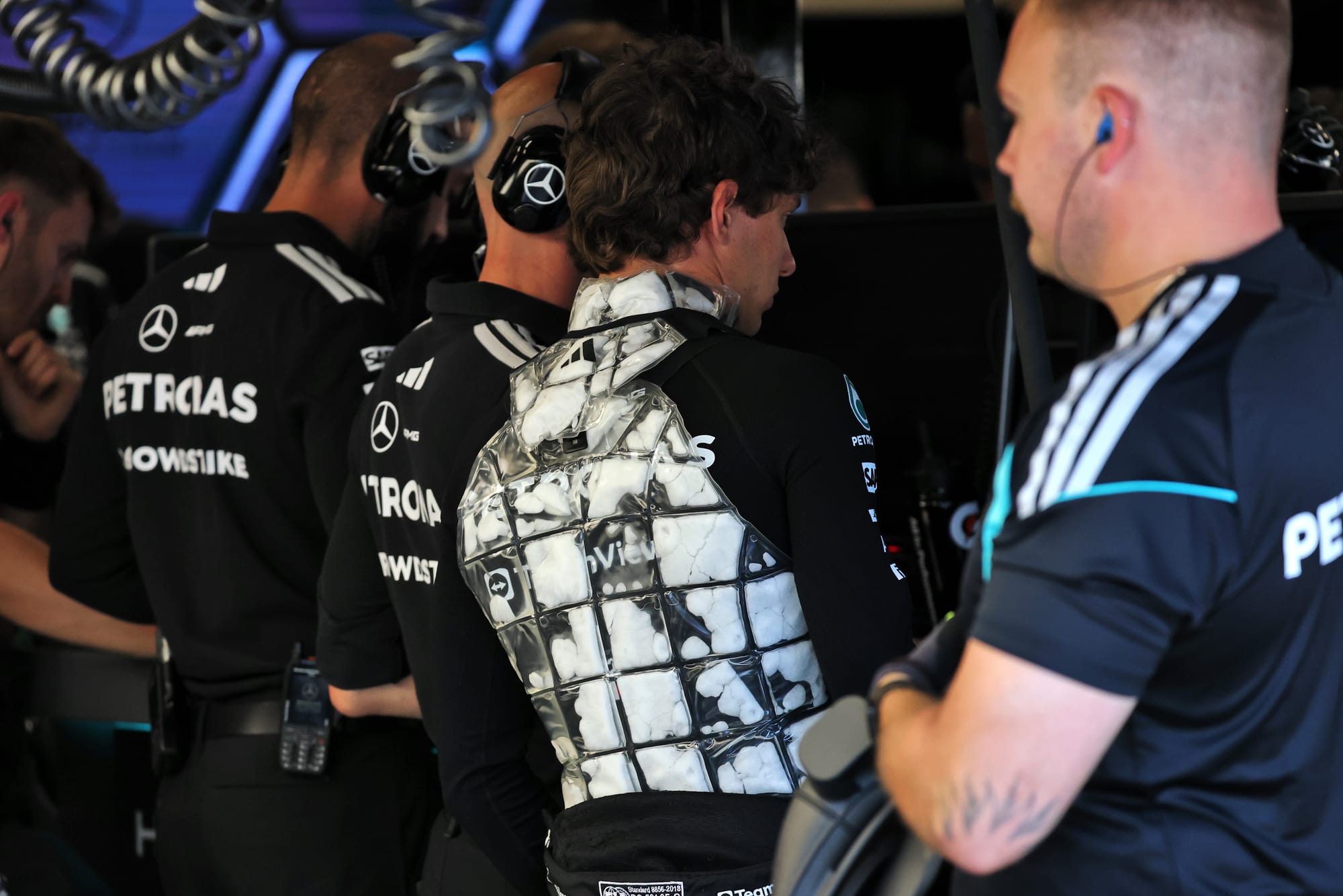
But not having the cooling vest in play does not mean that Russell and Antonelli are consigned to a repeat of what happened in Singapore 2024 if this weekend proves to be just as intense.
Mercedes has also worked a lot on improving cockpit cooling, so it means its drivers should not experience as harsh an environment as they have in the past.
Lord added: "The overall cooling in the cockpit of the car is in a much better place than it was a couple of years ago when both George and Lewis at the time struggled so badly in Singapore.
"In terms of the overall trade-off, the drivers are always happy if we're looking to trade something that ultimately is a comfort factor versus pure performance. They, like all the rest of us and like every racer up and down the pitlane, will take performance over comfort."