Seven things we learned from day two of F1's Bahrain test
Formula 1's first Bahrain test continues to drop more and more hints about the likely shape of the 2026 pecking order.
Here's everything our team on the ground in Bahrain learned from the test on Thursday:
Where drivers are turning on the 2026 rules
F1’s hopes of keeping a unified spirit of positivity surrounding the 2026 rules are over after Max Verstappen lobbed a verbal hand grenade.
Verstappen labelling the new cars as "anti-racing" and like "Formula E on steroids", just one day after Lewis Hamilton started the ball rolling by questioning the complexity of the rules, means that driver unease about F1’s new era is now in the public domain.
It was no secret that the new cars would be powerful but energy-starved, and it is the latter aspect that is at the root of unhappiness.
As performance has started to be unlocked from the new cars, and the energy management aspect thrust front and centre, it is no surprise that top-line racing drivers don’t like driving in economy mode and having to lift and coast early.
But the real headache for F1 is not that the negativity has started now.
It is instead how bad things could get when we get to even more energy-challenging tracks like Melbourne, and drivers get to experience what the racing is really like with battery annoyances. - Jon Noble
Aston Martin and Honda aren't just lacking laps
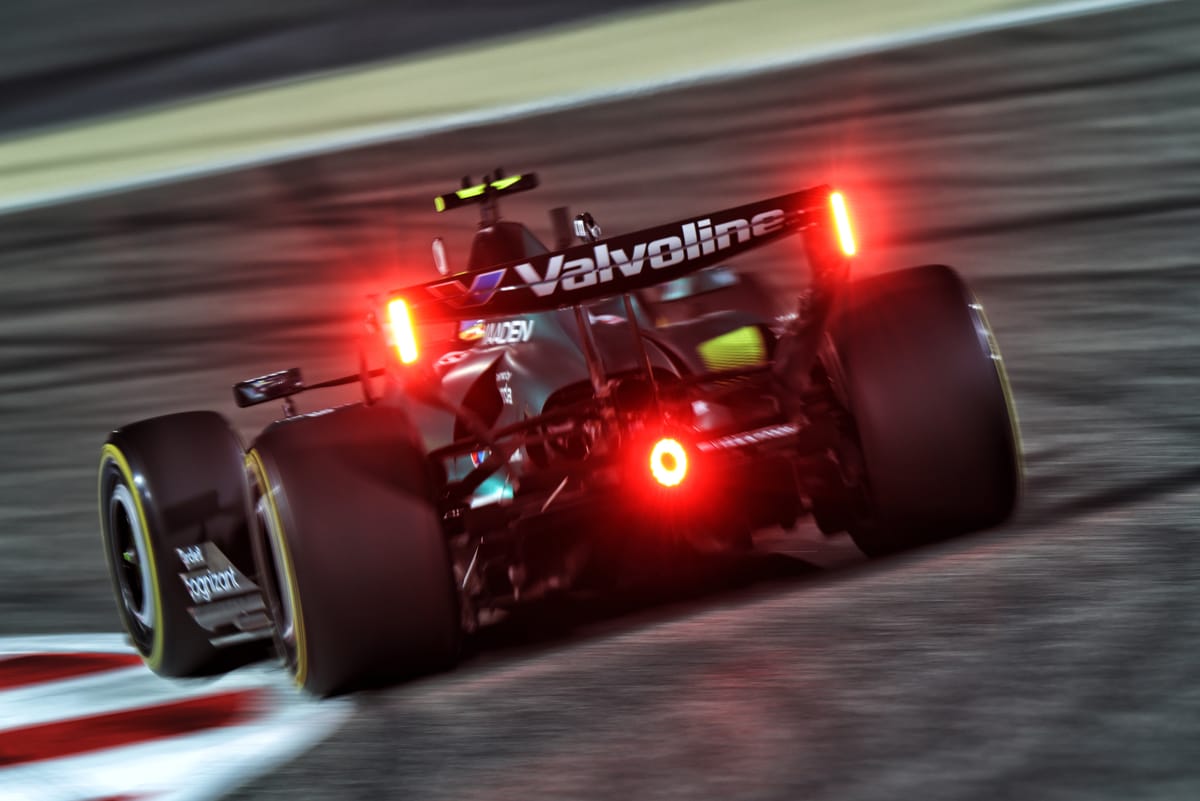
“Engine, balance, grip” - Lance Stroll’s summary of where the Aston Martin is lacking makes for grim reading as Thursday revealed that its problems run deeper than just lacking laps.
There is a link between the two. If the AMR26 had hit the track sooner and completed more laps than a disrupted single day (of meaningful running) at Barcelona, or the paltry 36 Stroll managed in Bahrain on Wednesday, it would be a lot further along its obvious early curve troubleshooting.
Fernando Alonso had a much more productive Thursday, at least, falling just short of a century on 98 laps - but all that has done is expose the various weaknesses of the Aston Martin-Honda package.
It looks prone to front and rear locking under braking, stiff, awkward to drive and lacking grip on both axles. The engine’s not strong, the car’s heavy and far from being optimised.
- READ MORE: Scott's trackside view of the Aston Martin
All that will save this combination from a deeply underwhelming start to the season is if there’s a lot of low-hanging fruit by finding big, big chunks of laptime just by dialling out various problems quickly – but it seems some limitations are more baked-in than that. - SMM
Where the Ferrari engine is an outlier
How good the Ferrari is remains a mystery in this test as there are moments on track where it still looks tough to control, but others where its pace on short and long-ish runs looks quite good.
Charles Leclerc’s test is over after a full day in the car on Thursday, and he said the feeling is “OK” – but we didn’t get to hear from him properly, so he is yet to elaborate.
The main thing that day two really confirmed about Ferrari is on the engine side, and where it is an outlier. Its cars are the only ones that seem to be eschewing the high-revving tactic most are adopting.
The technique of dropping the first gear as much as possible – seemingly mastered earliest by Verstappen and Red Bull – has become commonly adopted as this test has progressed. Unless you’re driving a Ferrari, Haas or Cadillac.
It seems the Ferrari engine and gearbox are designed around a shorter first gear and that ratio means the shift from second to first is too disruptive to each of the cars dynamically.
If it’s worth crucial extra energy harvesting, it might be something out of reach for Ferrari – although it is important to note it could be prioritising recharging through other methods. - SMM
An extreme Audi approach comes with a price
If Verstappen and Red Bull are the leaders in getting on top of extra downshifts in Bahrain, Audi is definitely top of the pile for how extreme the approach gets – but it comes at a high price.
The Audi drivers regularly arrive on the scene bashing through the gears quickly and early but that tends to leave the car all over the place and not looking comfortable to drive at all.
- Want more insight directly from the Bahrain test? Get exclusive podcasts and videos from Scott, Jon, Edd Straw and the rest of our team in The Race Members' Club. Right now, you can see it all for free by taking out a free 7-day trial here.
Gabriel Bortoleto seems to be taking a bit more time to get used to this than Nico Hulkenberg and when we asked how bad the downshifts are in terms of how much instability it's causing, it’s telling that Bortoleto replied: “It's a great question” and in his answer said: “Let's put it this way, we are working a lot to improve that.”
If Audi can, it will go a long way to helping its drivers because there is an awful lot of scrambling around trying to catch a lairy rear end and make it to the apex at the moment. - SMM
Race starts are weird and complex
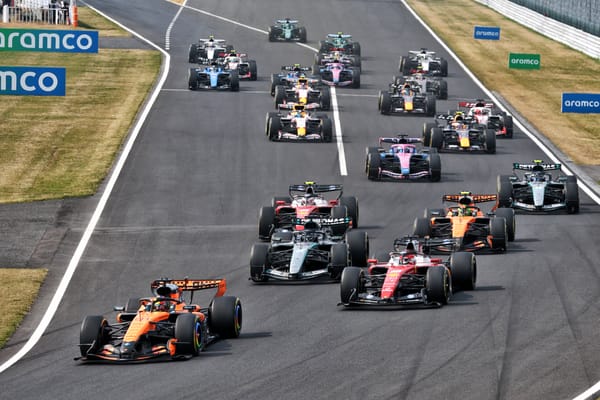
As drivers have begun to unlock the complexities of the new F1 2026 rules, some aspects have emerged as being more challenging than others.
One of the big headaches at the moment is race starts – which are proving to be a massive step more difficult than they were in the past.
Demands to spool the turbo up for around 10 seconds, not over-charge the battery, and then balance revs for the perfect getaway have resulted in a number of fumbled practice attempts – and opened concerns about startline issues occurring when things get real in Melbourne.
Some now suggest that F1 should look at tweaks to the start procedure, to either give drivers more time before the start lights come on to properly prepare things, or even just make their life easier by allowing them to use the battery and not need to cover from turbo lag gaps.
But getting changes across the line will not be easy, after it emerged that Ferrari blocked a previous attempt at a rules tweak last year – because it felt it would be unfair to those who had prepared their engines in a certain way. - JN
Red Bull has its first real setback
Yes, Isack Hadjar crashing on the second day of the Barcelona test wasn't ideal - it meant Red Bull had to ship out spare parts so it could participate on the final day of the test - but in pure mileage terms, it didn't cost the team much.
So Thursday in Bahrain was Red Bull's first proper testing setback as an issue meant Hadjar could only log a single installation lap right at the end of the morning session.
He did get back out in the afternoon and clocked 86 more laps, leading to the post-session claim that "the morning disruption hasn’t affected our overall plan" because Hadjar was able to work through plenty in a short timeframe.
Hadjar will share the car with Verstappen on Friday for the final day of what has been a solid, if now not bulletproof, test. - Josh Suttill
Cadillac's first show of pace
Cadillac seemed to be building up some speed on day two in Bahrain.
On day one, Cadillac was four seconds off the pace with Sergio Perez 14th and Valtteri Bottas 16th out of 18 drivers. Today, Bottas was just over 2.5 seconds off the pace (although Perez was still around four seconds off).
And, despite Bottas’s mirror falling off at one point, Perez was able to reflect positively on the team’s showing.
“In general it's been a more productive day,” he replied to a question posed by The Race. “We still have some work to do, but generally I think we're getting the maximum out of the car and hopefully in the coming weeks we are able to improve more.”
Recharge might be a contentious feature of the new breed of F1 cars but Perez said the team had made a proper step up with its Ferrari engine.
“Mainly, it's been the progress we've been able to make, understanding on the engine side - it's a tremendous change… a lot of understanding to do as well, so [I’m] looking forward to getting on top of all those things.”
It’s not just raw pace, but consistent pace that Perez says the team is working on - given the variation of “half a second to one second on each lap” in this new era. - Samarth Kanal