Eight things to watch out for at F1's first 2026 test
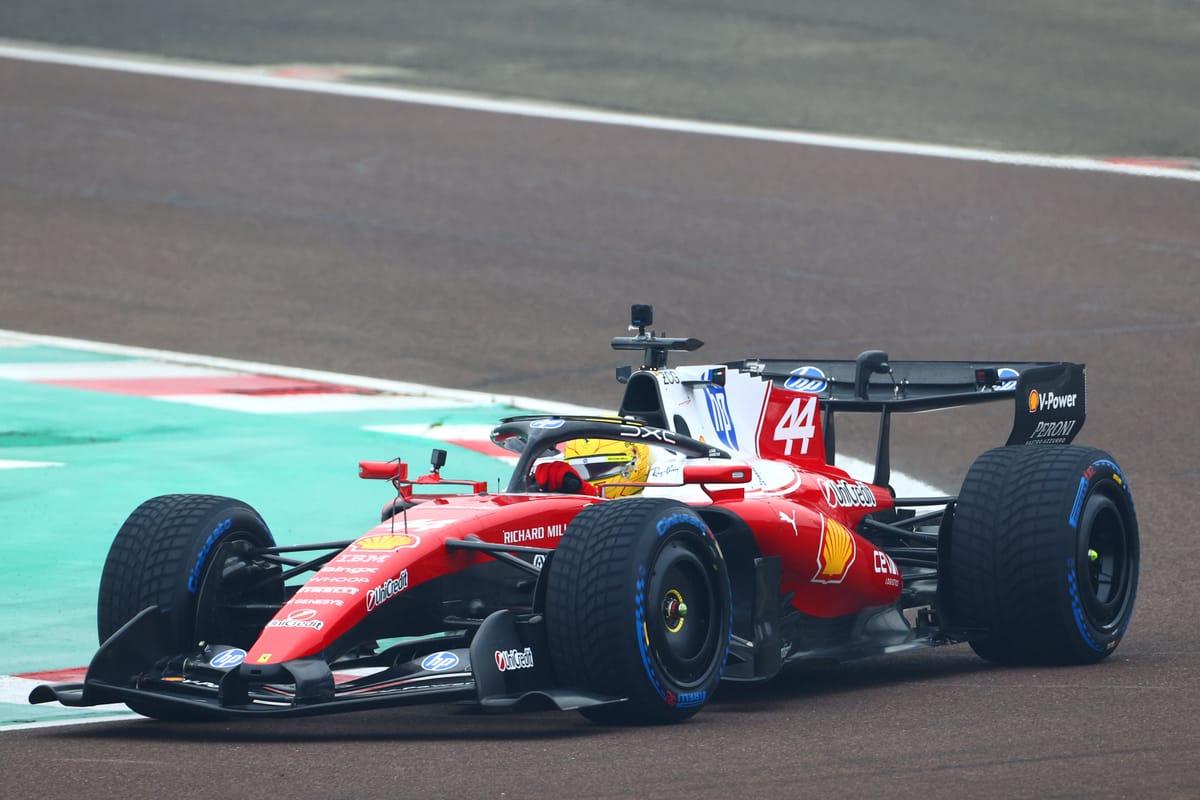
The first Formula 1 test of 2026 is finally upon us and even though it’s going to be quite different to normal, there’s still a lot to look out for.
Ten of the 11 teams should be present at Barcelona, with Williams missing the entire test because of delays in its new car programme.
The five-day event is taking place behind closed doors from January 26 to January 3o, with only the teams in attendance plus a small crew to record official F1 content.
So what should you expect and what are we keen to learn?
An odd week
Teams are only allowed to run on a maximum of three of the five days, which makes this week more varied in terms of runplans.
Some teams are set up to maximise early mileage so they can validate systems and chase reliability straight away, then adjust the rest of their week depending on what they learn.
Audi is ready to run at 9am on Monday, for example, to work out any problems early, then decide how to use the remaining two days based on variables like car reliability or the weather
We’ve heard one suggested optimal schedule is to run on days one, three and five. That gives you early learning, a day to fix any problems or run experiments on the simulator, then get back on track - and repeat over the final two days.
But not everyone is thinking like that. For starters, with reliability set to be a big talking point, the first day of anyone’s running is more likely to bring problems. So running on Monday or Tuesday could be disrupted by red flags.
McLaren and Ferrari have already committed to not running on day one and, for McLaren, potentially not even day two. Aston Martin has also been rumoured to be missing the first day at least.
Plus, every team has made different choices when it comes to tyres too.
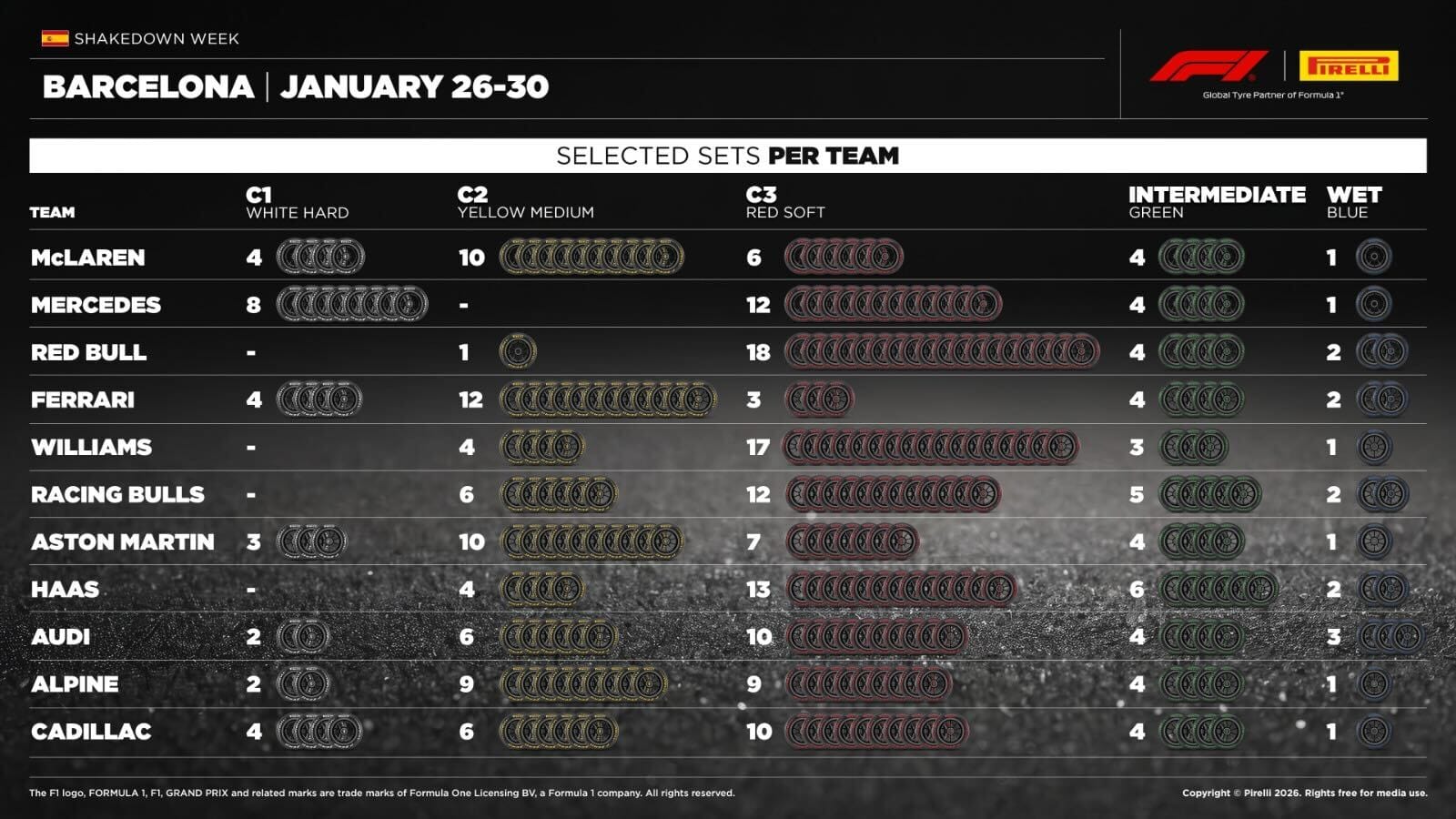
This week will be fascinating for who runs when and what those plans give away about how a team’s test is going.
Restricted imagery
The amount of genuinely clear detail we’ve had from only a few ‘launches’ so far is limited. With most teams present, you would assume this first proper test means we will finally see everything clearly.
There will be a small highlights package from each day, and interviews over the week with drivers, team and tech personnel, all provided by F1. Which is good.
But the Barcelona running comes with restrictions on imagery and footage teams can publish. This is part of the clampdown on access and coverage, presumably to save the full reveal for the subsequent Bahrain tests.
Bahrain pays to host pre-season testing, so it is not hard to imagine the commercial value in saving the biggest content moments for there. That is why Barcelona’s recently been labelled ‘Shakedown Week’, even though it was always just stated to be - and is - a test.
So what else will we actually get? Some teams are planning to release detailed renders, with a split expected between sharing them at the start of the week and later.
And we might get spy photography from outside the circuit perimeter, or maybe even drone footage if anyone is feeling brave and has the equipment, but that brings a big warning sign with it.
Low-quality images invite artificial enhancement, overconfident interpretation, and outright fakes.
We already saw how easy it was for people to be misled around the Audi shakedown imagery.
Curated information
What comes out of the test will be carefully curated and that will make pecking order clues even harder to come by than normal in pre-season.
For example, we are not expecting access to live timing - but there is also no guarantee that laptimes will be shared at all, either on each day or at the end of the test.
Beyond the restrictions imposed on still and moving imagery, the teams have discretion over some elements.
If they want to put out daily updates, mileage counts and laptimes they can. Some are definitely planning to do so. But there is no obligation.
So it could be a case of putting together a puzzle at the end of the week, let alone each day, without having all the pieces.
The real Audi
Though Audi has already completed a shakedown, and held its season launch showing images of the car on screens behind the stage, Audi hasn’t properly put those images into the public domain.
We expect Audi to share something officially at the start of the week, though, and hopefully we will then get a chance to see what it has done with a likely quite basic initial car.
To get the first-ever Audi-branded F1 car on track early, it has an immature initial specification to validate systems, prove the fundamentals, and shake down reliability.
But we don’t fully know how conservative it might have been with this preliminary design and how it compares to other cars.
Red Bull clues
Red Bull Racing’s tradition is to keep its cards close to its chest, but it may surprise by sharing imagery of the RB22 proper.
It did take an unusual and genuinely appreciated step by producing an interpretation of the 2026 rules alongside its livery reveal, but that was not to be mistaken for Red Bull’s actual 2026 car.
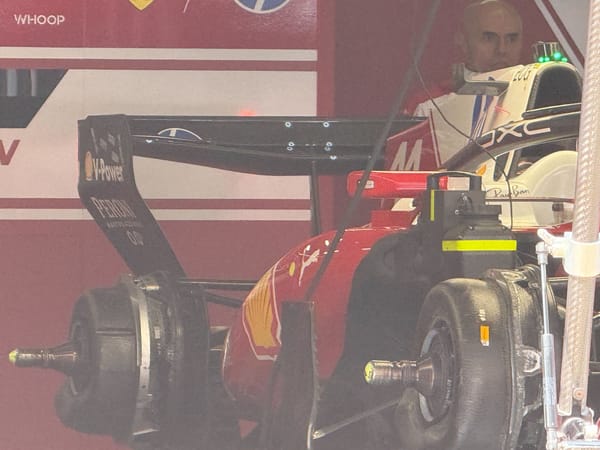
The real thing has stayed under wraps. But we may already have some important clues, because of that Racing Bulls shakedown at Imola, which showed off what it’s done with the same engine to package - and parts it buys from Red Bull.
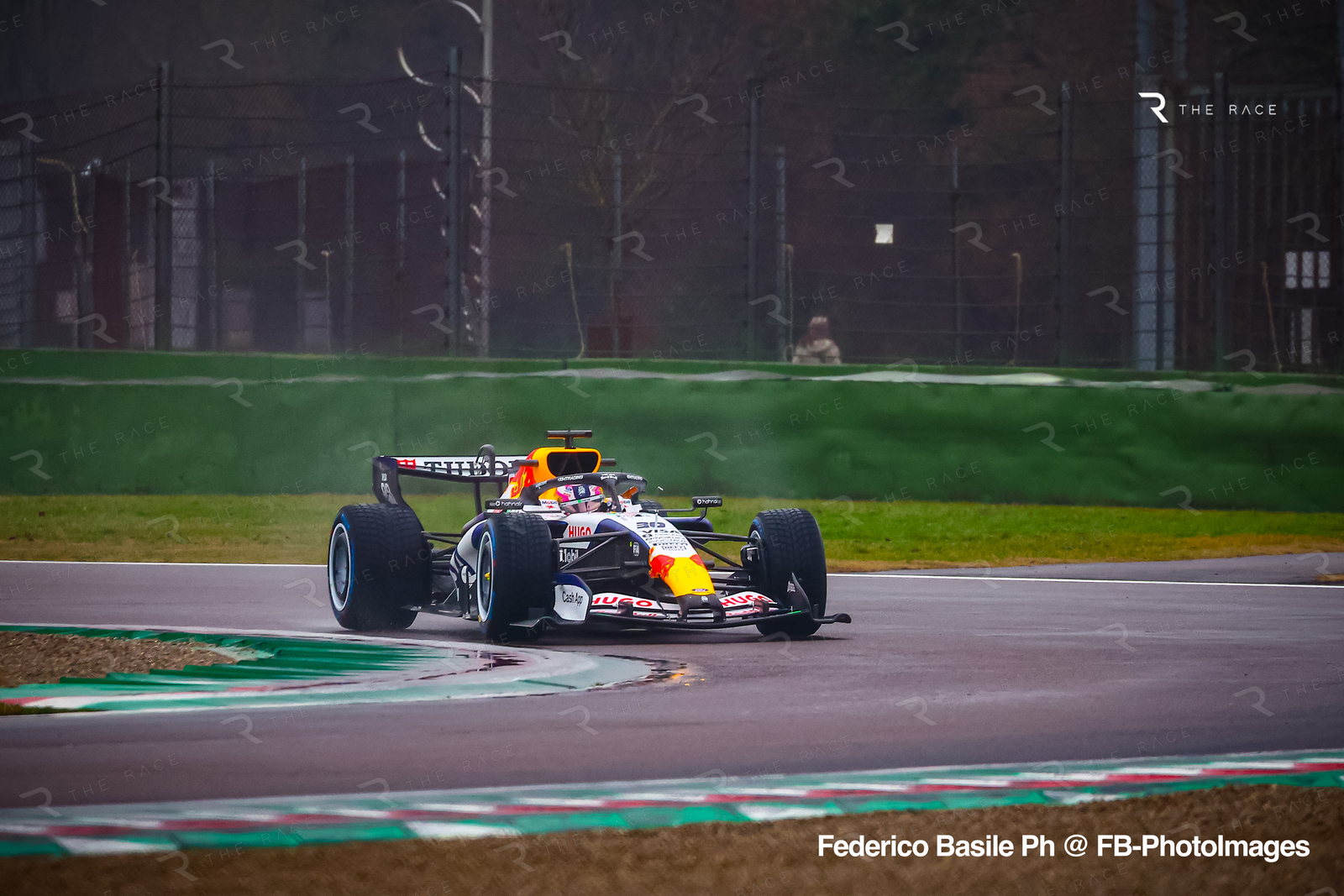
Beyond pushrod front and rear suspension, the most interesting styling cue is the huge airbox inlet at the top of the car, plus a sidepod design that looks very sculpted and tightly packaged toward the rear.
That could be a very telling sign about cooling demands and packaging requirements linked to the Red Bull-Ford power unit architecture.
So we’ll be watching for how closely the Red Bull Racing car mirrors Racing Bulls, although that depends on us getting something approaching a useful image of the real car!
New engine problems
A big reason this test exists, and teams are happy for it to be private, is teams want as much track time as possible because there are so many unknowns that cannot be fully answered by dyno testing and simulation.
The new engines are a massive undertaking: close to a 50/50 split between the V6 internal combustion engine and electrical power, no MGU-H, plus new sustainable fuels.
So over the course of the week, mileage should tell a story. We will not get a perfect public explanation of every failure, but we will start hearing which teams are encountering trouble and which are running well.
The fuel side is particularly interesting because teams have been given dispensation to use non-homologated fuel for this test alone.
It means teams have a fallback option if they are worried about their fuel’s current status heading into Barcelona, and some must be otherwise, why would anyone have asked or permission been given?
Whether we will get any clarity on who’s doing that and who isn’t is hard to know. But even the fact this option exists hints at an intriguing technical point to try to monitor.
Curveballs
Something we would love to be trackside for to see up close is the behaviour of the cars on track and any curveballs that emerge.
It was the first test at Barcelona in 2022 that exposed the porpoising problem that would be a defining topic that year, for example.
Nobody is expecting something as extreme again because the 2026 cars move back toward flatter floors and a more ‘known’ mechanical platform.
But that doesn’t mean there will not be headaches.
The drivers are going to be discovering so many things like how the car behaves over track bumps, what the 30kg weight reduction and slightly smaller car dimensions have done for low-speed nimbleness, the impact of the massive electric power deployment and recovery on throttle and under braking.
And teams will learn whether their concepts behave the way they thought they would, or whether something fundamental doesn’t correlate.
There are other design and set-up elements that will emerge too, like more visible use of rake, so we should be able to spot which cars appear to be exploring certain concepts more aggressively.
Fan reaction
This test being private is a missed opportunity for fans, and selfishly from a media perspective, but also for F1 as a whole.
Testing consistently draws some of the biggest attention of the entire season, we know that from years of data. That curiosity is only amplified with such a big overhaul in 2026.
But this interest simply isn’t being properly serviced and fans will only have a controlled drip-feed of official content.
We don’t think that’s good enough and when we polled The Race Members’ Club, 88% of responses said that either it should be completely open and televised or that media should be allowed even if it was not broadcast live.
As the week plays out, it will be interesting to see how a much bigger sample set reacts, and judge whether any frustration or disappointment builds, or if fans, on the whole, genuinely don’t mind. Some people will be fine waiting for Bahrain, like 12% of our own members.
But given the negative sentiment over the prospect of the second test in Bahrain being mostly untelevised as well, except for the final hour of each day, the strongest reactions only come once people realise just how reality is going to compare to what they expected.