What Ferrari's key technical failures mean for F1 2026
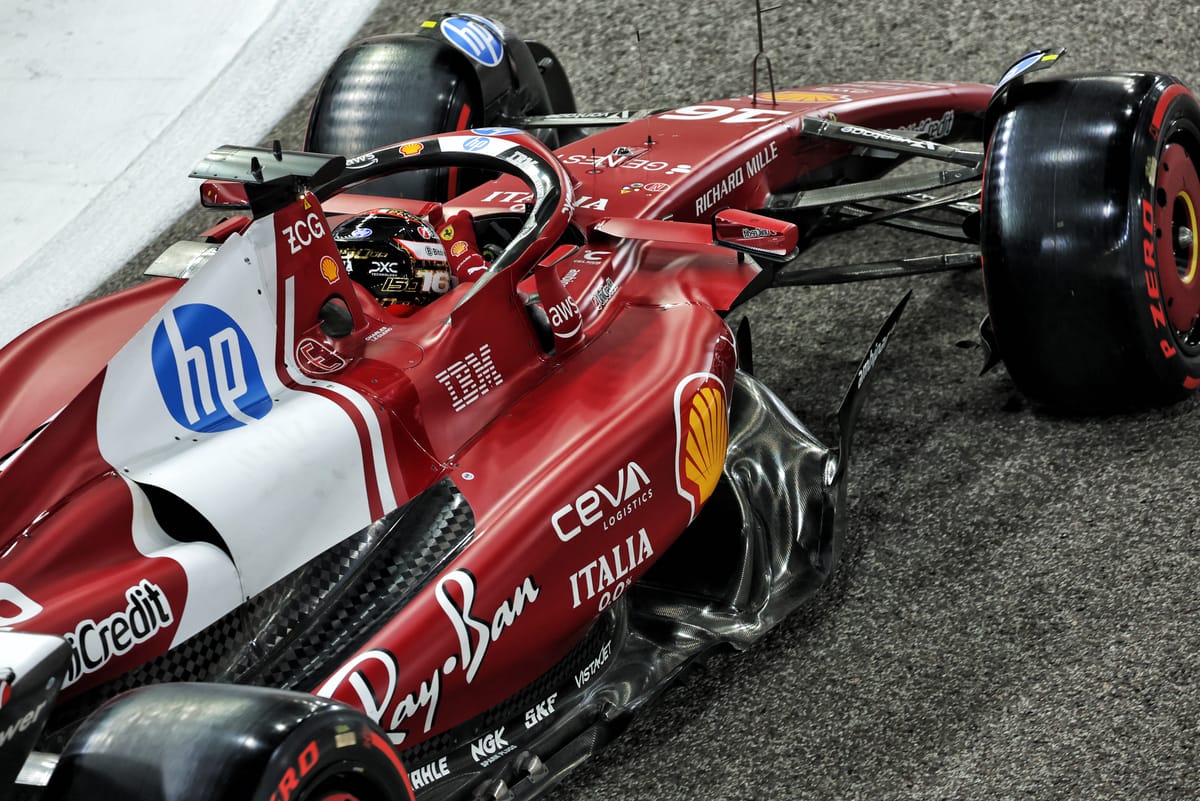
The 2025 Formula 1 season delivered Ferrari fourth place in the constructors’ standings, which statistically marked the failure of all the goals set at the beginning of the year.
The SF-25 project was prematurely abandoned in development to immediately give wind tunnel space to the 2026 car. The goal of reaching second place in the constructors’ standings, trying to optimize the package available until the end of the championship, in itself proved too difficult.
This was especially true with Red Bull and Mercedes continuing to bring developments even in the second part of the season.
Ferrari raced with a car that had been frozen for six months in wind tunnel development, with the last major package introduced - the rear suspension brought to Belgium - never proving to be a turning point.
Difficulties at the rear end remained, the result of a car deliberately designed to be very front‑end loaded, an aspect that suits Leclerc’s driving style.
Lewis Hamilton suffered greatly from the rear instability of the SF‑25. With the rear suspension changed mid-season the car's behaviour improved (slightly) in straight‑line braking stability, but no real performance steps were forthcoming from this change.
This was not in itself a wrong update conceptually, but the sentiment within the Maranello technical office was that, in hindsight, it would have been better not to cancel some aerodynamic developments that were shelved in favour of the suspension.
The reference to the new floor that was supposed to arrive in the second half of the year, around September's Azerbaijan GP, but was then canceled, is not accidental.
The rear suspension helped more in braking feel, but from a downforce standpoint it provided no contribution, except indirectly through certain setup and ride‑height adjustments.
Hamilton would have preferred the team to continue developing the car, but Loic Serra’s technical department decided to close R&D funding for the SF‑25 because there would be no way to get the ship afloat again. It was more important to head entirely toward the 678 project for 2026.
In the season finale in Abu Dhabi the race pace was good, more similar to Austin levels, but the car in qualifying was really difficult to push to the limit on corner entry because the rear takes too long to stabilise as the weight and aero centre of pressure shifts.
The upgrade package that was supposed to arrive in September but never saw the light of day would have given more downforce, but wouldn't have alleviated the car's suffering when Pirelli raises tyre pressures, a further dimension to Ferrari's struggles that team principal Fred Vasseur revealed late in the season.
Publicly, Vasseur did not want to give much weight to the lack of development as the cause of the poor results in the last races. We saw how Williams managed to have its best season since 2017 thanks to an excellent baseline, despite the project having been openly abandoned at the beginning of the year.
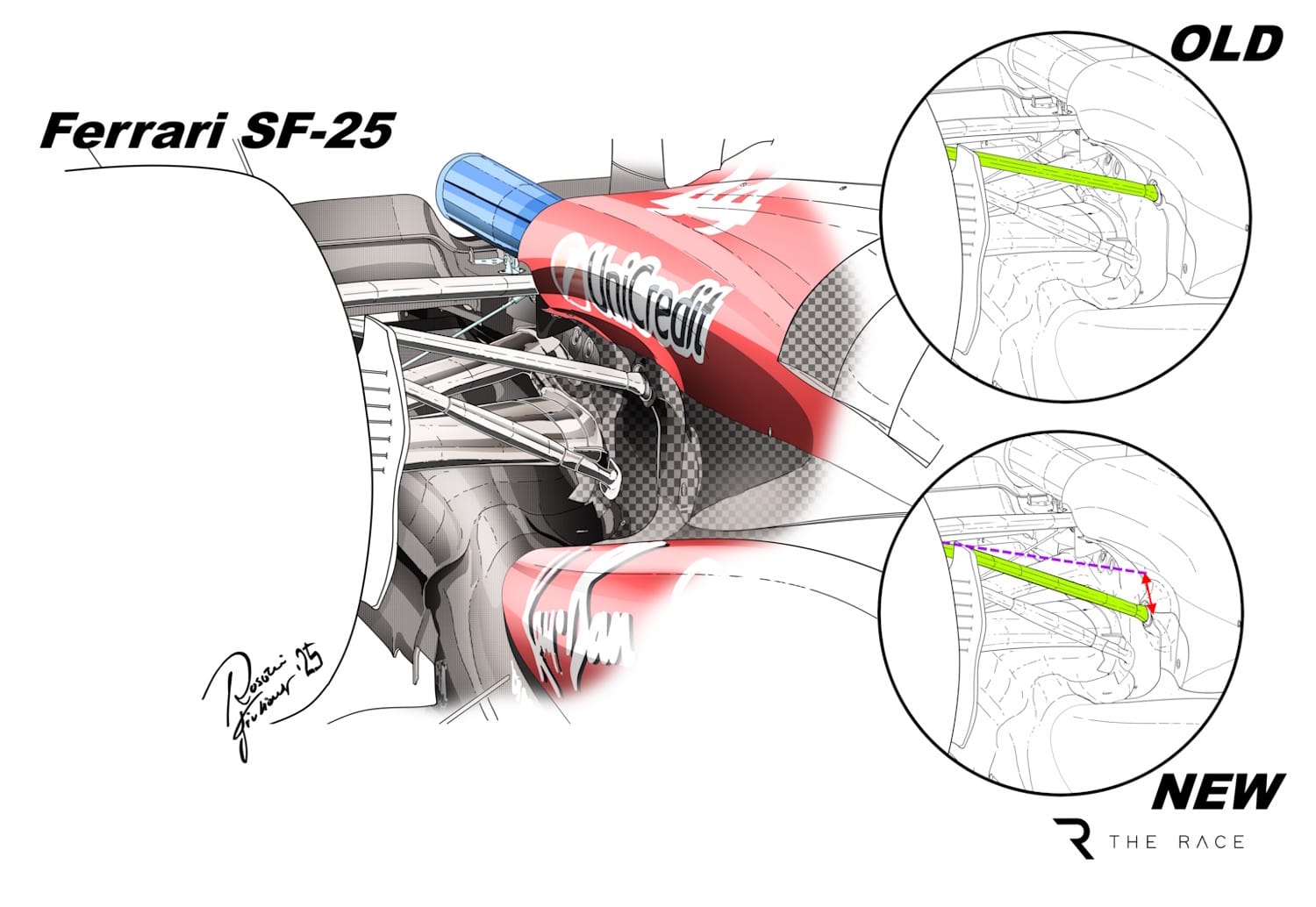
The choice by Serra and Vasseur to focus on the rear suspension (above) is probably another failure. Since late June, Ferrari stopped looking at the present and began looking only at 2026, when the first major decisions loomed, including the suspension architecture.
Meanwhile, Mercedes and Red Bull adopted a less limiting approach for 2025. While they also already had their minds on 2026, they made intensive use of CFD until August, working as well on new front‑wing flex after the Spanish Grand Prix clampdown, keeping the 2025 car development more “alive” without affecting wind‑tunnel capacity dedicated to prototypes under the new regulations.
How Ferrari is approaching 2026
By virtue of fourth place in the standings, Ferrari will start with 15% more wind‑tunnel hours and CFD sessions than McLaren for the first half of 2026.
This is thanks to the Aerodynamic Testing Restrictions, with the FIA determining an index that establishes how many wind‑tunnel hours and CFD simulations each team may use compared to a “baseline value” for the seventh‑place team, equal to 320 wind‑tunnel tests and 2000 CFD runs.
This was discussed at the F1 Commission meeting in November but did not result in changes to the percentage coefficients, which have remained unchanged since 2022.
A major advantage - if we can call it that - will certainly go to Aston Martin and Adrian Newey, who announced the AMR26 will officially launch after the first private tests in Barcelona in late January, but also to Audi.
Ferrari will of course also take part in the closed‑door Barcelona tests, but mainly to gather initial data on the new power unit.
The car should be presented, as far as we know, around mid‑January, before going to Spain. The car will then run with some minor aerodynamic updates at the February tests in Bahrain.
The 2026 cars will have, at least initially, a very large aerodynamic development curve, although according to many engineers the curve will flatten much earlier than that of the 2022–2025 generation.
This view likely influenced the Maranello technical department to abandon the SF‑25 earlier than expected to gain time on the 2026 project.
For performance balancing, the FIA has adjusted only the section relating to the new power units, introducing ADUO (Additional Development and Upgrade Opportunities). On the engine front, there is great uncertainty for everyone; the key will be achieving high efficiency in electric support from the battery immediately, and above all reliability.
Abu Dhabi was the last race for Renault’s engine department, and it was precisely on the French side of Viry‑Châtillon that Fred Vasseur wanted to absorb some engineers after long-time Ferrari engine architect Wolf Zimmermann’s move to Audi, since no “gardening leave” is required.
After Zimmermann left, Vasseur called some internal meetings with the engine department for a recomposition of the technical staff.
The 2026 car will grow in a more modest “silence” after a 2025 season that began with great enthusiasm. The bodywork has been approved in its entirety, after cooling volume and the gearbox were defined.
The 2026 car will have little or nothing in common with the 2025 car, and the simulator drivers have already worked on a change in driving style, which will not only concern the management of the electric part, but also a hybrid driving style between the 2021 (non-ground-effect) and 2022 (ground-effect) cars.
Now there is just over a month to be ready for the first shakedown.