What F1 rules reset means for McLaren's major tech revival
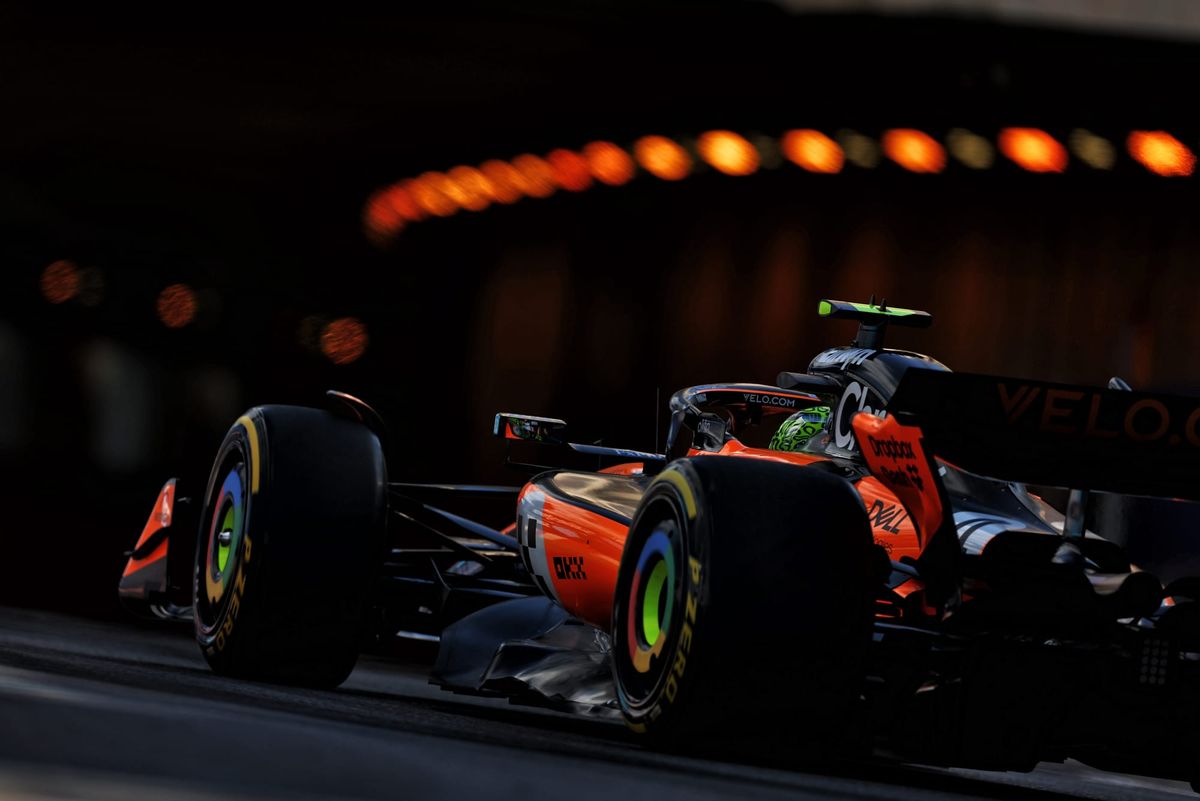
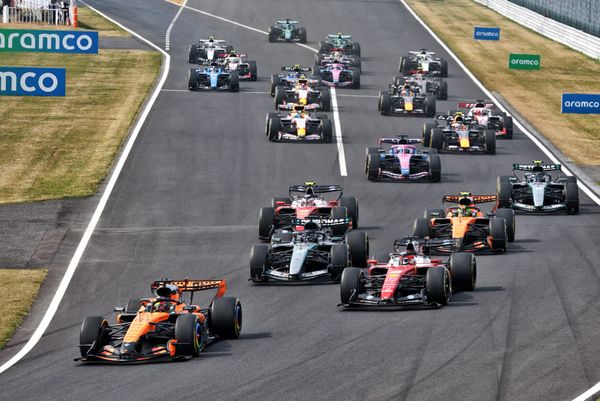
McLaren's Formula 1 championship double in 2025, and back-to-back constructors' titles, showed that as a customer team it had truly mastered the ground effect ruleset.
As its engine supplier Mercedes endured four years of false dawns and fresh problems in its attempts to try to unlock the secrets of domination in that rules era, McLaren clearly - eventually, after a slow start - got to grips with what made a successful ground effect car in a way that only Red Bull had properly managed before.
But the complete rules revolution coming for 2026 poses an element of intrigue about whether McLaren's success will be isolated to a single era or can stretch on over the next few years.
On the one hand, there was a definite sense with the 2022-25 cars that those that delivered the most on track had fully understood the specific performance drivers of the tricky, ground effect machinery.
With a number of teams caught out by porpoising problems early on in 2022, the teams that were able to get on top of delivering the best ride control to maximise downforce gains and performance through the speed range of varying ride heights came out on top.
Red Bull's former technical chief Adrian Newey was well known to have a proper grasp of ground effect car behaviour that helped his former squad initially, and it is probably no coincidence that McLaren's step forward came after the arrival of former Red Bull chief designer and chief engineering officer Rob Marshall.
The concept evolution seen at McLaren since, especially in terms of suspension kinematics and design, certainly had some similarities to what had become the norm at Red Bull.
But while McLaren produced a car that was dominant at times with the old regulations, in theory that will count for nothing because there is virtually zero carry over from the 2025 cars into what is being unleashed next year.
All the ride-height understandings and suspension theories will not be applicable with the 2026 cars, because the Venturi effect is much less and the ride-height sensitivities will be much reduced - meaning the cars will run higher anyway.
Furthermore, it is anticipated, at least early on in the new ruleset, that the performance of the power unit - and especially the level of energy recovery and deployment - could be the key performance driver.
But this does not mean at all that McLaren's strengths that gave it an edge with the MCL39 of 2025 are not transferable.
That is because a team's strength is not just based on its interpretation of a single ruleset. Instead, there are many core qualities that an organisation needs to put into play that are critical to success and will deliver whatever rules are put in front of them.
This first involves the individual staff members involved, because an engineer or designer who is good at interpreting and exploiting one ruleset well is equally good at doing that same quality job with different regulations.
In Abu Dhabi, reflecting on the championship success, team principal Andrea Stella paid tribute to the quality of the individuals he had at McLaren, which he reckoned was one of the best groups he had ever worked with in F1.
"The technical team at McLaren is particularly strong," said Stella. "We can benefit from the contributions of Peter Prodromou, Rob Marshall, Neil Houldey, Mark Ingham, Giuseppe Pesce, and Mark Temple.
"From this point of view, this is one of the strongest technical departments that I could have been part of in my career, 26 years in Formula 1.
"And this means that while the specifics of the current regulations will not necessarily apply onto the future, the working way, the standards, the approach to the development of the car, to the objectives from a technical point of view, they do carry into the future, and this makes us optimistic for the 2026 season."
Stella's viewpoint on team strengths not being about individual rulesets was echoed by technical director Houldey, who played a central role in driving the ideas and development that made the MCL39 such a success.
Houldey is convinced that the same processes, cooperation and joined up thinking that helped McLaren nail its 2025 car are the same qualities that will pay off when it comes to getting the most out of the 2026 challengers.
Asked about how the team could set targets for 2026 when nobody knows what the peak potential will be, Houldey said: "It's not the targets. The most important thing is about the way you work, and the way you develop the car.
"We know where we'd like to be, but more importantly, we continue to work in the same manner that we've been working over these last three years.
"Therefore you just keep going, keep pushing each other, keep working together in the tunnel, CFD, and push, push.
"And, at the end, you generate the performance that way, rather than looking at a target and trying to understand if you're going to hit it or not."
But perhaps the biggest confirmation of the viewpoint that McLaren's strengths will carry over came from Mercedes boss Toto Wolff, who oversaw years of championship success at his team.
While Wolff accepted Mercedes never truly got to grips with the ground effect ruleset, he said an organisation's strengths ultimately shines through whatever regulations are thrown at them.
"People tend to try to pin it down to a single factor that was the basis for more success or more failure - whether it's someone new in the management, the team principal or the technical director, or head of aero, or lots of geniuses or not-geniuses that have come and changed the destiny of the team," he said.
"But fundamentally it's a group of people working together, taking the right decisions, collectively, based on the right set of data, with the right infrastructure, with the most correlation between the virtual world and the real world.
"That is today, with all the limitations we have, where you find out about your car. If that doesn't represent the reality once you put it on the road, that's the biggest risk for any team."
And with all these elements having helped McLaren achieve what it has done over the past two seasons, there is little reason to think it won't be able to carry that momentum forward.