Verstappen faces massive Red Bull reset beyond Marko and Horner
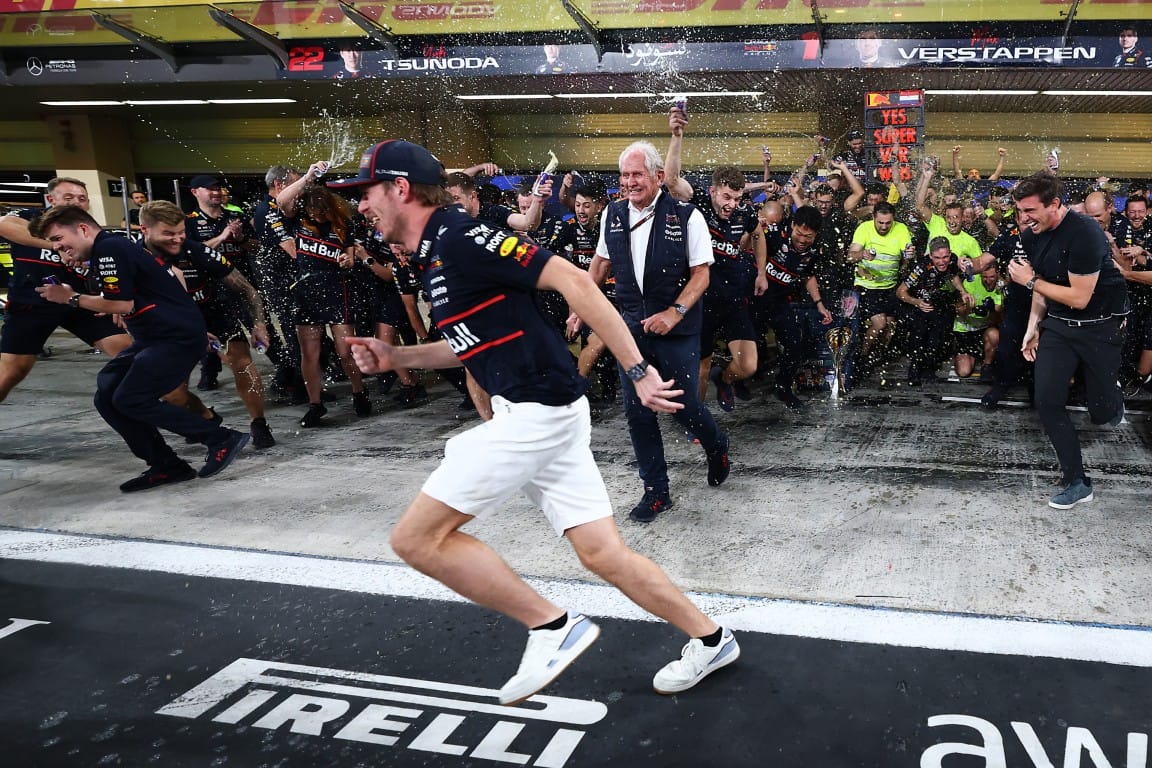
As Formula 1 resets go, they do not get much more seismic than what Max Verstappen will face when he starts the 2026 season.
Compared to where things lined up just 12 months ago, Verstappen will have a new car, new engine, new team bosses, new team-mate, new garage crew and added influence from Red Bull’s Austria-led management above him.
It has been well documented already that out of the frame are long-time figureheads Christian Horner and Helmut Marko, as an all-new era marches on at Red Bull under team boss Laurent Mekies and company CEO Oliver Mintzlaff.
But changes stretch further down the Red Bull hierarchy - and those also impact Verstappen directly. Gone is his chief mechanic Matt Caller, who is heading to join Red Bull’s former sporting director Jonathan Wheatley at Audi.
Leaving too are performance engineer Tom Hart, who has been linked to Williams, control engineer Michael Manning and engine engineer David Mart.
Beyond that, there is an increased likelihood that his long-time ally Gianpiero Lambiase may step back from direct race engineer duties so he can fully concentrate on his job as head of racing.
Not much is going to stay the same at all for Verstappen.
Vultures circling
While they say in life that a change can often be as good as a rest, rival teams will be circling like vultures, aware that if any of these fresh elements prove troublesome for Verstappen, then there could well be an opportunity to snatch the four-time world champion from Red Bull’s grasp.
This prospect is increased by the fact that Verstappen’s performance-related exit clause in his contract – believed to be activated if he is outside of the top two of the championship by the summer break – is going to be a tough one for Red Bull to easily meet.
But despite all these factors, it would be wrong to think that the upheaval and a challenging campaign make it a foregone conclusion that he'd leave.
For it must not be forgotten that change had already begun sweeping through Red Bull over the second half of last season – and the reset that Verstappen experienced under Mekies was something he seemed to enjoy.
As Verstappen said during the season finale in Abu Dhabi: “We have a great atmosphere at the moment. We’re really on a roll — positive energy, belief, confidence — and that’s exactly what you want heading into next year.”
But memories are very short in F1, where you are only as good as your last race.
That feel-good factor of Abu Dhabi, where Red Bull cemented its place as arguably the fastest team in the closing stages of the campaign and Verstappen took a commanding win that meant he missed out on the title by just two points, will only last into the first 2026 test - when the reality of an all-new Red Bull powered by its own engine will become paramount instead.
If things start well, then the mission continues as before. But if it does not, then it is hard to know how things will develop from there.
Some pain ahead
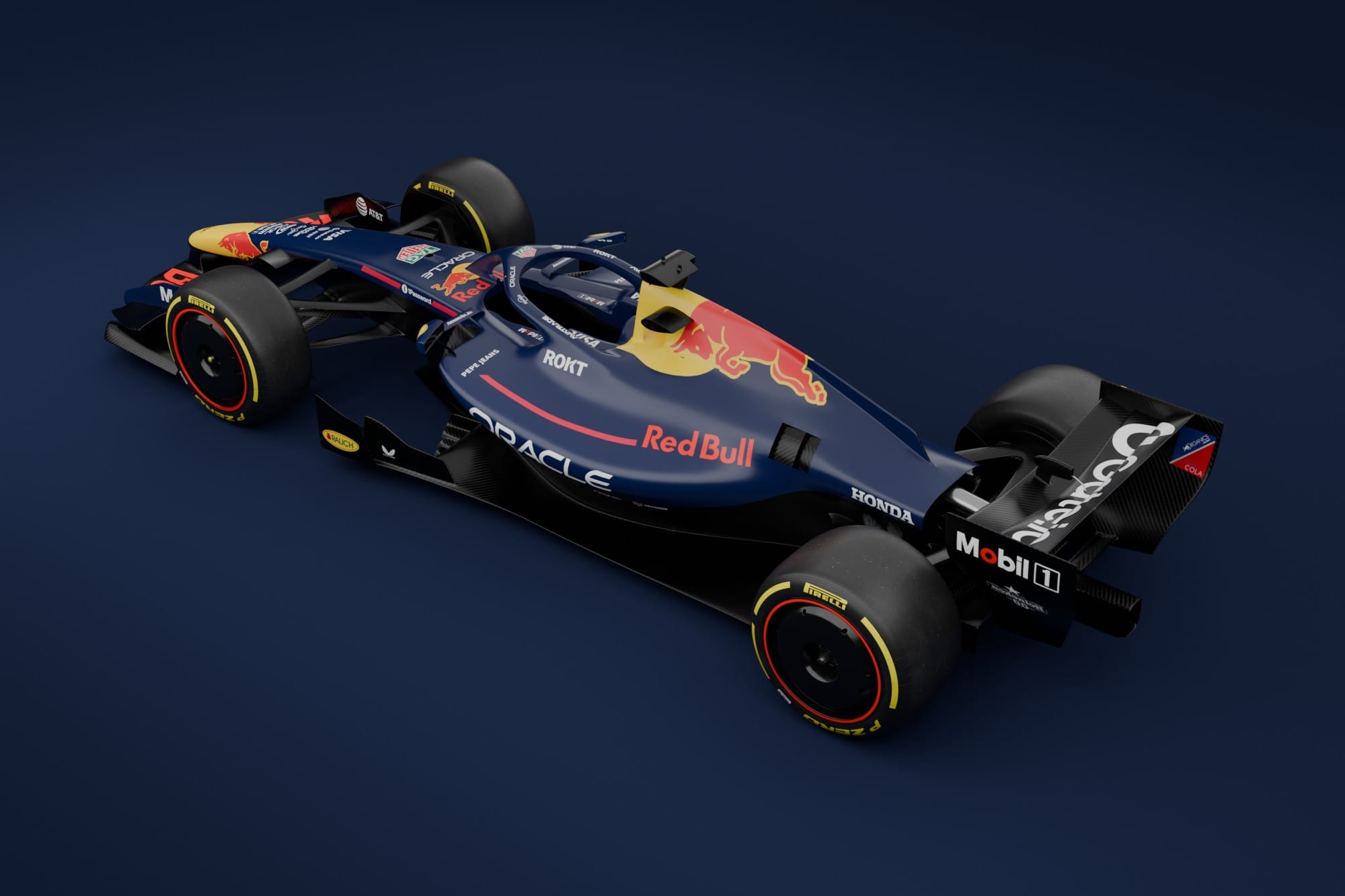
The competitive picture for 2026 is unclear for everybody right now. Yes, there seems to be an accepted belief that Mercedes will start the year as the manufacturer to beat – but behind things are too close to call.
Red Bull’s own engine project, which was bolstered by the recruitment of a sizeable number of ex-Mercedes staff, is said by sources to not be in too bad a shape – even if things may be a bit rough early on in terms of eking out the best performance and nailing reliability.
Verstappen will certainly not be anticipating the squad starting the year on the front foot and dominating from the off – so there will not be a mismatch of expectations there.
But what he will want to see is both a belief that the engine project can make the steps forward needed to get him to the front in an appropriate timeframe; and confirmation that he is not going to be pegged to the back of the grid for a while.
What cannot be known yet, and which could well define Verstappen’s future, is how Red Bull operates in a more challenged environment if things do not start in a good way.
There is certainly no complacency within Red Bull that things are going to be straightforward at the start of 2026, as all teams face a huge challenge in getting on top of the new regulations.
Mekies said recently: “It would be naive to think that we are going to land it on the top spot straight away there. We know we are going to have a few very, very tough months, many sleepless nights, a few headaches.”
This prospect of what Mekies says will be some ‘pain’ in 2026 comes with him admitting that the timing of his arrival at Red Bull mid-2025, allied to what was already in place, meant that all that was necessary over the second half of last season was a light touch.
It must not be forgotten that Horner’s last race in charge was the British Grand Prix in July where Verstappen put it on pole with the low downforce Monza-spec upgrade package that would lay foundations for that important Italian GP win in September.
Repeatedly pushed on what had been done at Red Bull to turn its campaign around in the second half, Mekies said there was no miracle change of direction.
“It's down to 2000 people that you never see back in Milton Keynes, who simply didn’t want to give up,” he said.
What neither Mekies nor Mintzlaff have faced yet is a true stress test – where either the car or engine is below par and a change of direction or some political manoeuvring is needed to turn the ship around.
It would be interesting to see then is if there is any finger pointing if things do not go right, and whether the team can maintain cohesion if one part of the package is the weakness.
Will the engine department get blamed if the power unit is the team’s Achilles' heel? Will tech director Pierre Wache find himself under the spotlight if the chassis is not a benchmark? Will Mekies or Mintzlaff find themselves under pressure to do something from Verstappen or his management, or themselves feel the urge to make bold changes?
The desire for stability

The recent departure of Marko – who acted as a good sounding board for Verstappen and those in his inner circle over the years – will have an impact too in changing dynamics within the squad.
On one hand, his exit points to Mintzlaff wanting to turn a fresh leaf at the squad and do things his way.
The reasons for Marko’s exit are well-known. A combination of his unilateral actions on the young driver front ruffling feathers elsewhere, allied to annoyance at senior Red Bull level about his overexposure in the media and the fallout over the comments he made about Kimi Antonelli after Qatar, left him vulnerable.
And with Red Bull’s shareholders having made the call to consign Marko to retirement in the days after the Abu Dhabi GP, he is also understood to have done himself no favours with outspoken remarks he made about Horner last weekend to a Dutch newspaper.
While Mintzlaff told ServusTV this week that Marko’s strengths included him being “very straightforward” and “very stubborn”, in the end he had loose cannon potential that did not fit in with a clear desire from Red Bull Austria to bring greater stability and accountability to Red Bull’s F1 team.
And while 'stability' is not the exact word that could be used to best describe what Verstappen will experience when the action gets underway at the start of next year, it will be the desire for calm waters that could perhaps be crucial for Red Bull convincing Verstappen he should stay longer-term.
For all of Verstappen’s desire to get his hands on race-winning machinery, he is also someone who has no interest in getting involved in off-track politics and needing to fight battles to get things done. Contentment with the least amount of unnecessary hassle around him is all he really wants.
Verstappen is someone who loves racing above all else; and if he can do that in the manner that makes him happy, then the final result is not the be-all and end-all.
As he reflected after Abu Dhabi: “It’s always nicer to win it. But, honestly, I’m sitting here now with probably a better feeling than what I had last year at this time because the second half of last year was pretty tricky at times as well.
“You take your pride in different ways. I’m happy with myself and going into next year I’m not in a state of having to worry about my skills or whatever. So, yeah, I feel good.”
The fun factor
That desire to do things in a way that makes himself happy also means there is another aspect to F1 2026 could well be critical to what happens next – and that is the state of the racing.
Nobody can be sure yet just how F1 cars are going to perform next year, and especially if the fights on track are going to be the kind of pure battles that F1 is known for, or they become economy runs that are decided by energy harvesting and battery deployment.
If we end up in the latter, and Verstappen is not only struggling for results but not enjoying what F1 has become, then both a good atmosphere at Red Bull and/or interest from other teams could be insufficient to entice him to want to continue in grand prix racing.
Could then the other passion he has for his GT team – don’t forget he has been out testing again this week – be something that grabs his focus instead and it's an F1 sabbatical and sportscar switch that marks the real biggest change we’ve seen for Verstappen in years?