The real reason Russell and Piastri are struggling in F1 2026
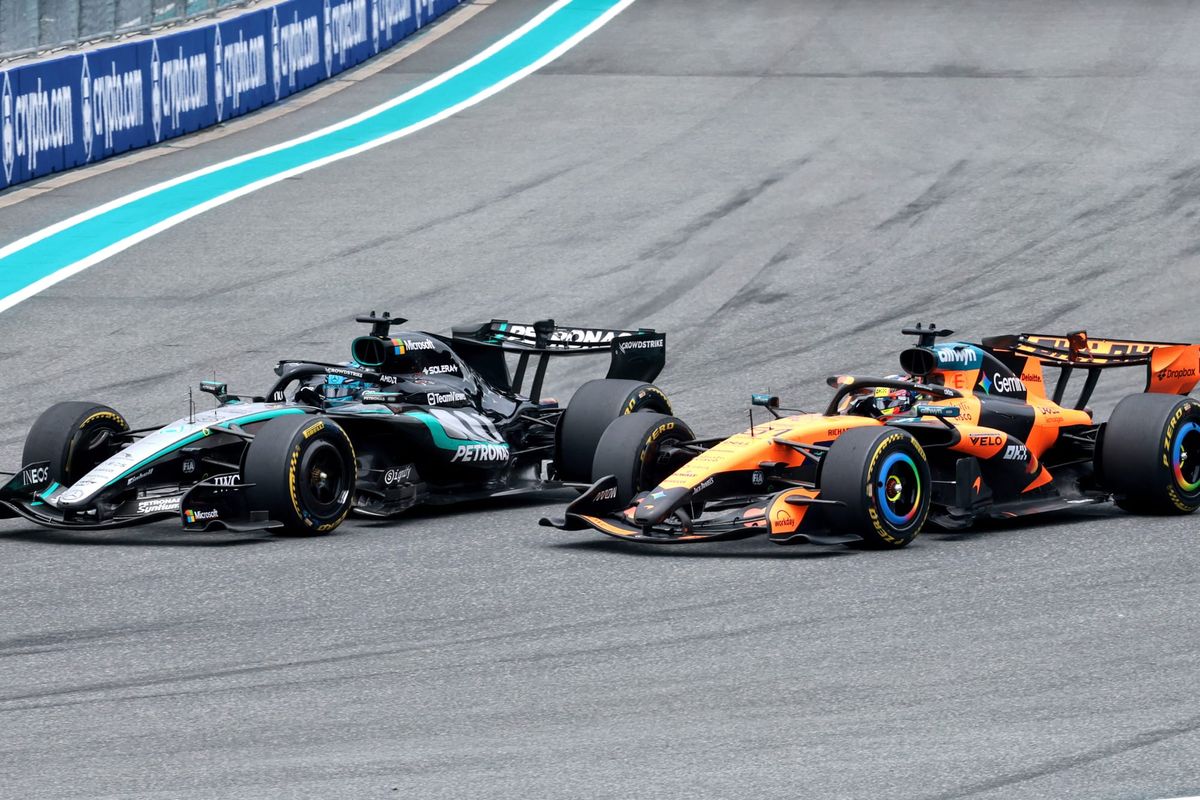
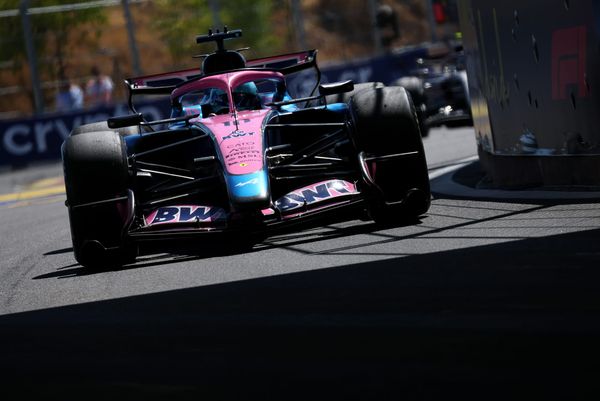
After two sectors in the final Q3 runs of Madring George Russell was within 0.1 seconds of Mercedes team-mate Kimi Antonelli. By the end of the lap, he’d dropped a further two tenths. An average of half-a-tenth loss in the first two sectors but four times that in the last one.
His rear tyres were simply too hot for the repeated 90-degree turns of sector 3 and that, obviously, was a function of how he had used them up to that point.
It defined his weekend as one in which he finished fifth, half-a-minute adrift of the race-winning Antonelli, albeit on a different strategy.
It was somehow emblematic of Russell's 2026 season, probably the weakest of his eight-year F1 career at just the time he finally gets a title-calibre car.
Afterwards he was pondering where his struggles this year lay and he puts it firmly in the category of a mismatch between his natural driving style and the demands of the ’26 generation of car and tyre.
“It’s been a strange season when you look at the competitiveness of [Oscar] Piastri against Lando [Norris] last year, Charles [Leclerc] versus Lewis [Hamilton] and even the dominance of Max [Verstappen] against all of his team-mates in the previous era," Russell said.
“This year myself, Charles, Oscar are struggling much more compared to our team-mates. And Max, his team-mates have been substantially closer to him than anybody has in the last six years, and I think we’ve all got pretty similar driving styles.
"The drivers performing very well this year – Kimi, Lewis, Lando – have got quite similar driving styles. So to me it’s pretty clear with this car, with these tyres, the trends are there.”
There is almost certainly a causal relationship between these cars/tyres and the struggles of Russell and Piastri. They each tend to drive to a geometric ideal, late turn-in with a positively abrupt initial turn of the wheel, relying more on that steering than weight manipulation for rotation into the turn and using very little overlap between braking and cornering.
It can work brilliantly well on a high-grip track in a car with a lot of downforce. But not as well as the grip reduces.
Get more in-depth F1 driving style analysis from Mark Hughes and Edd Straw in their Driving Style Secrets series in The Race Members' Club
The reduced downforce and tyre grip of the ’26 cars has raised the crossover point of circuit grip at which that technique begins to be problematic – i.e. with these cars there are more circuits than before which don’t really sync very well with that technique.
Furthermore, the penalty of that is compounded in these cars by the demands of energy management. The less momentum you can maintain on entry, the more in-fills the battery makes, meaning the deployment doesn’t last as long on the straights. Russell and Piastri have both struggled in places with this.
But the equivalence Russell makes breaks down when comparing Verstappen and Leclerc, who each have their own styles unrelated to each other’s or those of Russell and Piastri.
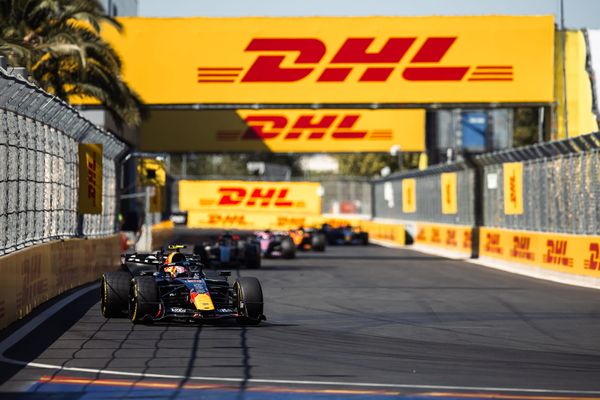
Verstappen has perhaps the most versatile range of skills of anyone on the grid, but his preference is a car with an extreme front end which allows him to derive corner rotation from relatively little steering. He has the amazing sensitivity to rotation and yaw, which allows him to adjust steering/brakes/throttle to dampen out the latent exit oversteer which would normally come with an ‘on the nose’ car.
Any car – such as the current Red Bull RB22 – which understeers at low and medium speed entries will limit how much laptime that skill buys him over others. The performance profile of other cars suggests that it’s perfectly feasible to have an ‘on-the-nose’ car under these regulations. It’s just that Red Bull has not been able to provide one.
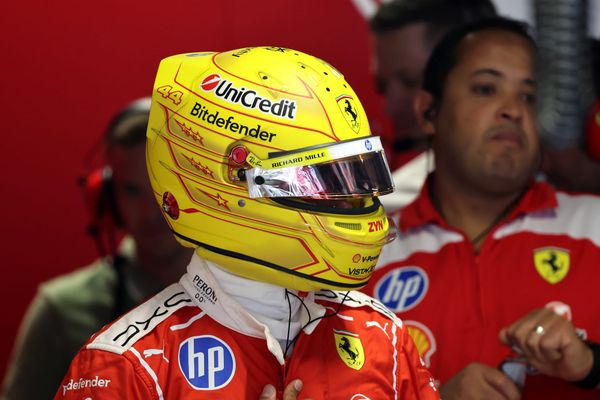
Leclerc has traditionally got his rotation from an energetic balancing act between brakes/throttle/steering, with lots of overlap. It makes him absolutely dynamite around short corners where the reward for the quick rotation isn’t overwhelmed by the penalty later in the corner.
He’s probably the fastest driver there is around Monaco, Baku and the Red Bull Ring. But long-corner tracks – Shanghai, Hungaroring – can present difficulties for him, as a price is extracted later in the corner for the way he tricked the car into turning more than it wanted initially. The 2026 regulation's demand for energy management mean that some of those tricks have become almost redundant. But he remains a fantastically fast driver.
Antonelli, Norris and Hamilton are also quite distinctive in their styles – and adaptable.
In fact, Hamilton’s adaptation to the demands of this generation of car after his struggles with the ground-effect era has been one of the most noteworthy driver performance stories of the season.
As a generalisation, he keeps the car flatter and calmer than Leclerc on entry and this means there is a variance in corner type at which one betters the other. He’s still able to be super-late on the brakes when required, but he’s combining it with a suppleness that is not overworking the front axle – and the Ferrari’s downforce balance is allowing that to work very well for him.
Antonelli and Norris have clearly worked very hard with their engineering teams to understand the quirks of these cars as they’ve introduced features in their driving specifically tuned to the energy management. Antonelli’s throttle usage is highly distinctive, for example, and seems to be tailored around maximising harvest under braking rather than wasting it on part-throttle.
His inputs are beautifully smooth as he judges the grip upon entry with such precision and confidence that there is very little corrective input required through the corner – this is probably the most visible contrast between him and Russell.
It suggests he’s just got a better feel for the front axle grip, but when the grip is high he’s perfectly comfortable taking the Russell late entry/big steering approach. He just seems to have a better awareness of when that’s not the optimum tactic.
Get exclusive Mark Hughes insight direct to your inbox every week with his The Long Run newsletter - sign up here
Norris has always had a beautiful way of progressively loading the front of the car up and can take whatever line is needed according to the available grip. As with Verstappen, it’s a style which tends to fall apart if the car is an understeerer, but using that progression, sometimes turning in shallow from further back (seen to great effect in the final turn at Budapest in FP1 when the grip was super-low), means he suffers far less from snaps on the exit, because he doesn’t have as much lock on when the fronts finally grip.
Norris himself doesn’t see his style as the distinctive differentiator.
“I wouldn’t really say my driving style suits this car,” he says. “I think my driving style is good because I’m able to adapt better. I don’t think it’s one style that works and I don’t drive the same way as Kimi… My adaptability is what allows me to drive the car I’ve got. My strength is my adaptability to different driving styles.
“Last year at the beginning [the car] suited Oscar a little bit more. My strength was being able to adapt better to then finally understand how to drive it in a better way. Hence I had a better second half of the season.
“This year? You don’t drive this car anywhere close to last year, not even 1% I feel is remotely the same. So it’s about adaptation.”
The bottom line is Russell (and Piastri) have to adapt. Because the cars aren’t coming to them.