Nine things we learned from sprint qualifying at F1's Chinese GP
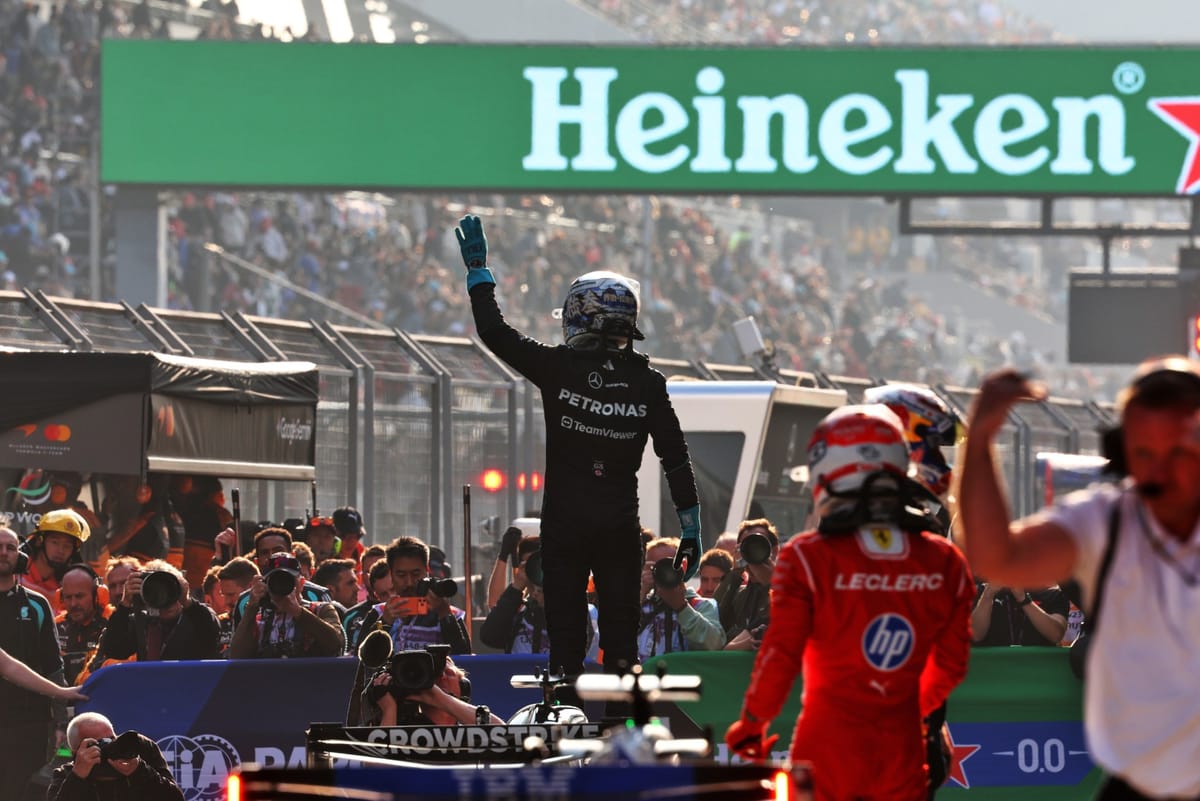

The first sprint qualifying of Formula 1’s new 2026 era has given us a new picture of the pecking order.
Here’s everything we learned from Friday at the Chinese Grand Prix…
Unwieldy Red Bull's 'disaster' day
So limited has the Red Bull looked at Shanghai that it was honestly flattered by a dual SQ3 appearance and Max Verstappen's place on the fourth row - had both he and Hadjar gone a tenth worse on their best SQ2 laps, it would've been a Red Bull-less final segment.
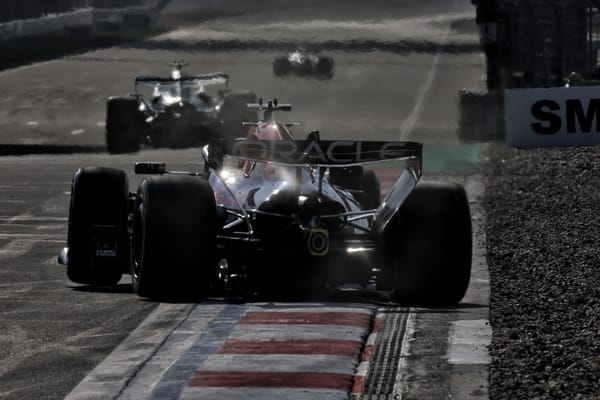
And there is no mismatch between the stopwatch and the visuals. Watching Verstappen in SQ3, a hint of understeer turns into something much worse the longer the lap goes on.
Trying to get the change of direction right for the Turn 11-12 combination leading into Turn 13 and the back straight looks downright ugly - the Red Bull simply had no response as Verstappen charged into 12.
It was weak into the Turn 14 hairpin, too, and then, as a perfect summary of all that preceded it, Verstappen bailed out of the final corner almost as soon as he chucked the front in – because he was never making it, after missing the apex.
Perhaps there was a hint of Verstappen frustration creeping in, like earlier in the session with the error after some unjustified Alpine angst, as Max has a tendency not to rein himself in if the car just won’t play ball. The key part is, the car is really not "playing ball" here.
"The big problem for us is just the cornering is completely out," Verstappen lamented afterwards.
"The whole day has been a disaster, pace-wise."
"Our set-up didn’t play out as we would have wanted it to," said technical director Pierre Wache - and Red Bull will at least get the chance to play around with that when parc ferme lifts after the sprint. - Valentin Khorounzhiy
Mercedes' advantage
Problems with F1’s data service limited the amount of reliable interrogation possible with the telemetry we usually have access to - but it still paints a clear picture.
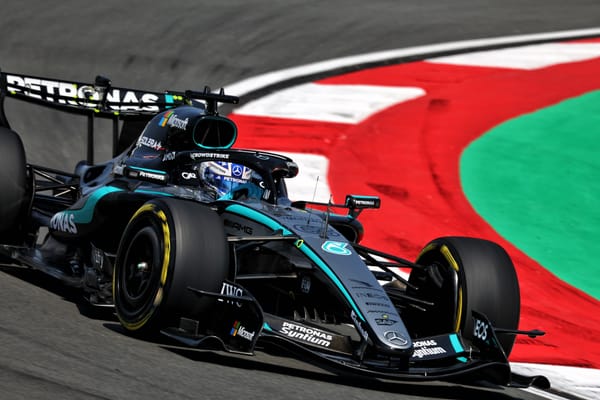
Mercedes seems to have a clear advantage over its immediate rivals in the second half of the long back straight, where it needs to reduce its speed less with super clipping.
Teams are taking different strategies around the lap, with the main charging opportunities being the first corner, the Turn 6 hairpin, the Turn 7-8 sweeps, the slow Turn 11 left-hander that starts the complex leading onto the back straight and, of course, that straight into the Turn 14 hairpin.
In sprint qualifying Russell sacrificed more speed into Turn 6, dropping around 20km/h before the corner, whereas others did less than that or did not slow down at all. The two Mercedes are the only lead cars super clipping into Turn 11, too.
This seems to pay them back on the back straight, where Russell only reduced his speed by 10km/h and Antonelli 12km/h – less than any other frontrunning car and three or four times less than Ferrari and Red Bull.
A specific issue seemed to hurt Charles Leclerc in particular on the back straight but as Lewis Hamilton said, the deficit in engine performance is real - and substantial. - Scott Mitchell-Malm
McLaren's in better shape
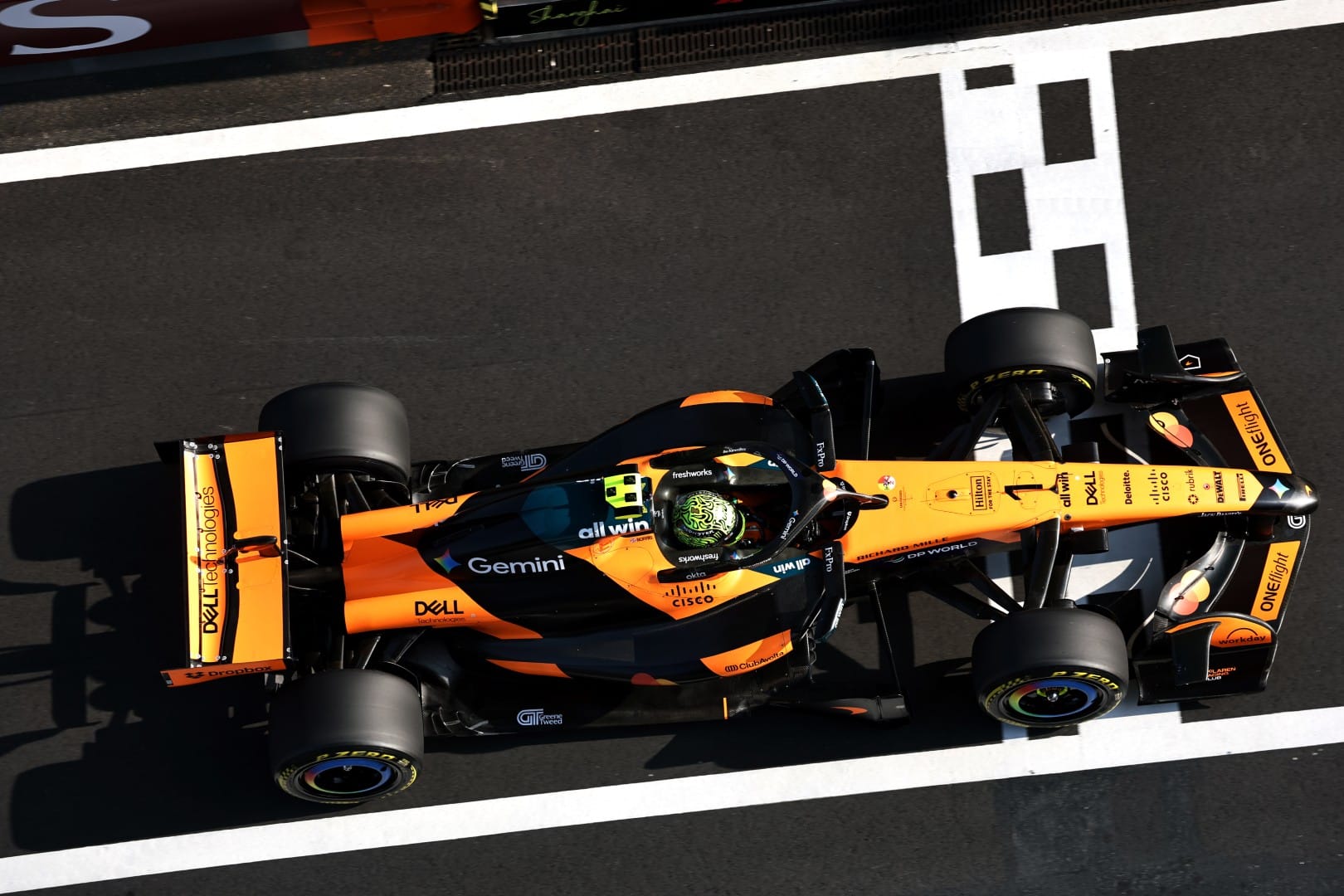
A qualifying outcome like this one 12 months ago would've been an unmitigated disaster for McLaren, but today it is collectively "pleased" - and understandably so.
It was third-to-fourth-best on the balance of things in Bahrain, but looks second-to-third-best here.
"P3 is as good as we can do for the time being," said Lando Norris of his qualifying result as he celebrated beating both Ferraris.
"Certainly things have been better this weekend just because the track's a lot more simple from a power unit side of things - so everyone kind of falls in line [on strategy] a bit more."
Whichever way you slice it, though, it's reasonably positive for McLaren. If it's made a real step, it's made a real step. If Shanghai is simply mitigating the knowledge gap it has to the works teams in operating the power unit - well, that knowledge gap will naturally fade away with time, anyway.
Race stints at this graining-limited track could still end up a painful reality check. But for now, it's a bit of an uplift. - VK
Where the cars are worst
The hope was that we would see a more representative version of F1 2026 here, after the extreme end of the spectrum that was Melbourne's energy management debacle.
It is a bit more normal overall, and without a big cornering challenge sacrificed like with Turn 9 last week, but there are trade-offs happening all the time. Once again in qualifying, which is such a shame.
The aforementioned recharging strategies across the teams mean cars are basically swapping where they look the worst - and in some parts of the track it is negligible. Yes, there's some super clipping into Turn 1, and Turn 6, and Turn 11 for some cars, but if you weren't listening for it (or seeing it on the data), it could pass you by.
What's unignorable is the back straight, naturally, as you hear the engine revs gradually dwindle and the underwhelming sensation of the car slowing down sets in.
What's even worse is the Turn 7-8 sweeping section in the middle of the lap where the only way to describe the drop-off of around 40km/h is that Verstappen's Red Bull - which is super clipping so much here compared to others - looks like it's breaking down! - SMM
Alpine isn’t looking ‘weak’ here
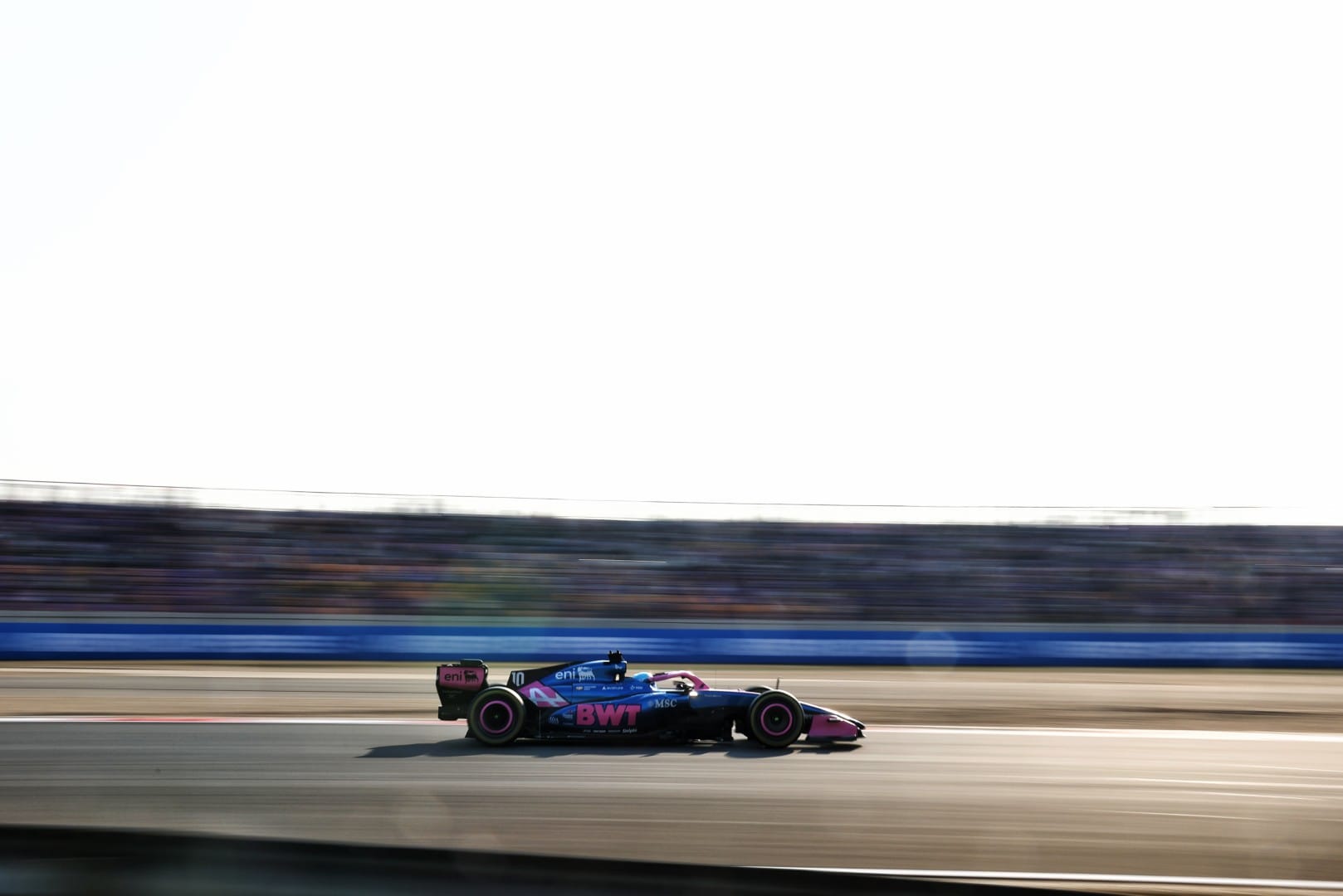
Never one to mince his words, Flavio Briatore quite accurately described Alpine’s Melbourne performance as “very weak” just before China sprint qualifying.
But there was nothing weak with the way in which Pierre Gasly led the midfield, even beating both Red Bulls to qualify seventh.
Gasly believes Alpine has “found a lot more performance” versus Melbourne, confirming the suspicion that Alpine had a lot more potential than its first race with Mercedes customer power showed.
It’s still carrying an aero “injury” with its front wing, but that doesn’t seem as painful here - plus it looks boosted by the Mercedes engine being even more competitive, too.
Unfortunately, Franco Colapinto couldn’t capitalise in the second car and had few answers for why that was.
“It was tricky today. I didn't know the track, and that made it a bit more difficult,” Colapinto said.
“The car was not in a bad place in FP1, but just couldn't do a step into the sprint qualy that I wanted.
“We lacked a bit of pace compared to Pierre - the car was quick, Pierre showed that, he went through to Q3, so that's positive for the team. But I need to understand a bit more on my side.” - Josh Suttill
Ferrari’s parked wing after ‘premature’ debut
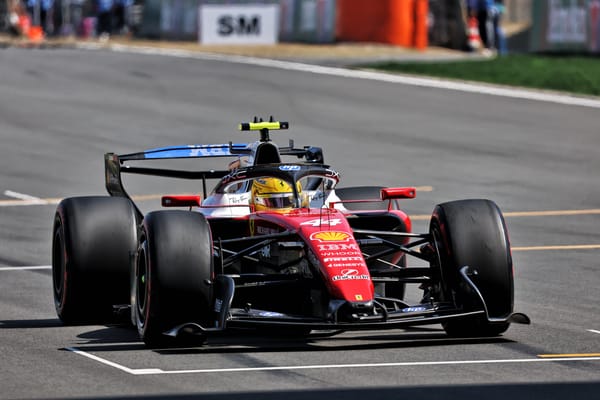
Ferrari’s eye-catching upside-down rear wing has been parked for the rest of the Chinese GP weekend after a runout in FP1.
The team fast-tracked its development so it could make its race weekend debut a month early, but its debut was “maybe a little bit premature”, in the words of fourth-place qualifier Hamilton.
Ferrari remains confident in the wing but wants some more on-track data from it before committing to keeping it on its car for a competitive session.
And it’s fairly confident it can turn the tables on McLaren when it comes to race pace, too, even if Mercedes might be beyond its reach without another killer race start. - JS
These cars are closing on 2025 pace
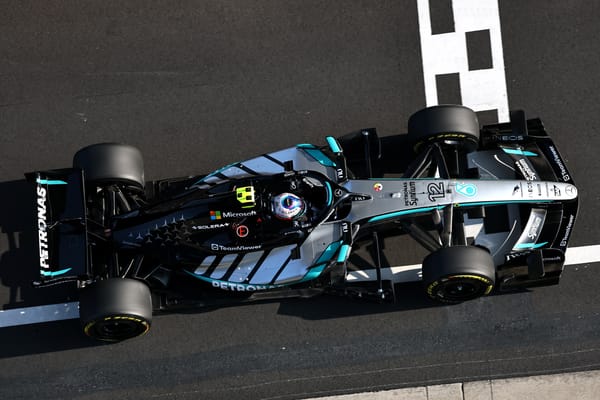
As George Russell was quick to remark after taking sprint pole, these 2026 cars are getting faster - with Russell only 0.671s slower than the 2025 sprint pole time.
Of course, there are multiple reasons behind that. This circuit was always going to be a better home for these energy-starved 2026 cars than Australia.
Plus, teams and drivers have made big strides in their understanding of energy harvesting and deployment since last weekend.
And of course, there are movable front and rear wings on the cars, too. So there’s decent year-on-year gains there.
But even so, given it wasn’t that long ago that the FIA was having to rubbish fears of ‘F2 pace’, the laptimes are impressive.
And given 2025 was the fourth year of that generation of cars, then that 0.671s gap to last year probably isn’t going to take long to close, even if it might widen first when F1 returns to Melbourne-type circuits. - JS
Cadillac has a big issue to solve
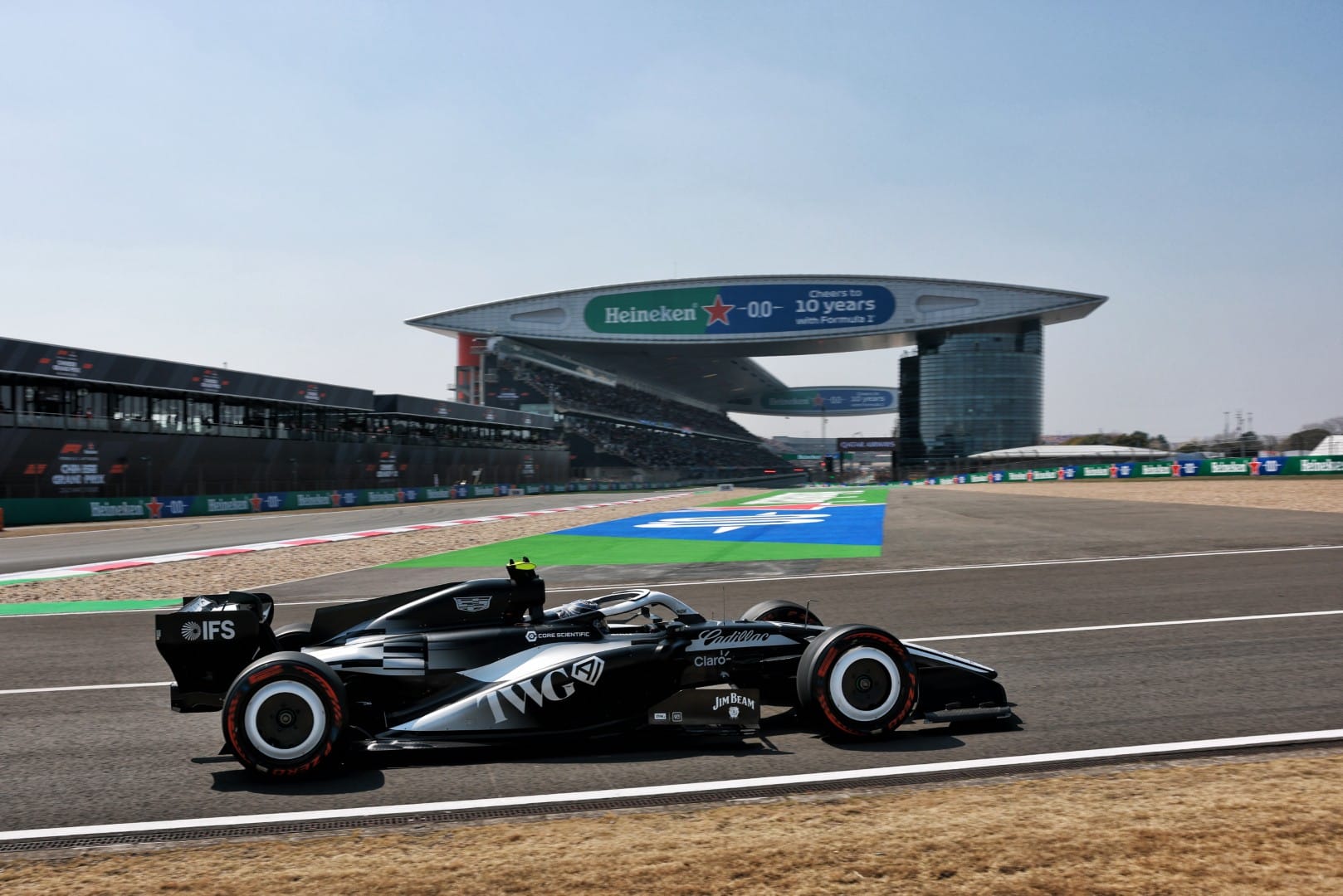
If Cadillac was buoyed by its maiden weekend in Melbourne, it's sinking in China after a woeful start to its weekend, which is also consequently bailing out Aston Martin.
Sergio Perez couldn't qualify after a fuel pump issue, and it's serious.
"Unfortunately, we've been struggling in that area already for a long time, far too long, it's very frustrating," said Perez, confirming it is an unresolved issue dating back to testing.
He isn't even sure if the car will be ready to race in the sprint.
Valtteri Bottas's car ran more reliably, but not by much, as a different issue plagued it, affecting him badly on the straights.
Bottas at least expects the "programming" issue to be sorted for the sprint, but called qualifying a "wasted session" after finishing last and a whopping 1.2 seconds slower than the next car, the Aston Martin of Lance Stroll.
It will need to resolve those issues, or it risks anchoring the grid when a deeply troubled Aston Martin team hadn't looked massively out of its reach. - Jack Benyon
Williams is cast adrift
The overweight Williams already looked slightly adrift of the midfield in Melbourne, but sprint qualifying in China properly laid it bare.
“Tough day, which isn’t a surprise after Melbourne, but doesn’t hurt any less as a result,” was team boss James Vowles’s summary of Williams’s double SQ1 exit.
Shanghai “exposes the weaknesses in our car”, according to Carlos Sainz, who lost half of FP1 to a technical issue.
He’s resigned to using this weekend to “test different set-ups and try to make up for the track time I’ve lost so far”.
Team-mate Alex Albon says Williams is “already treating the weekend a bit like a practice session”, and he was worringly over a half-second adrift of Sainz.
He believes Williams understands the issues that are grounding it to only being better than the Cadillac and Aston Martin, but knowing how to fix them is a different matter. - JS