Red Bull 'bleeding laptime' as Suzuka brutally exposes car issues
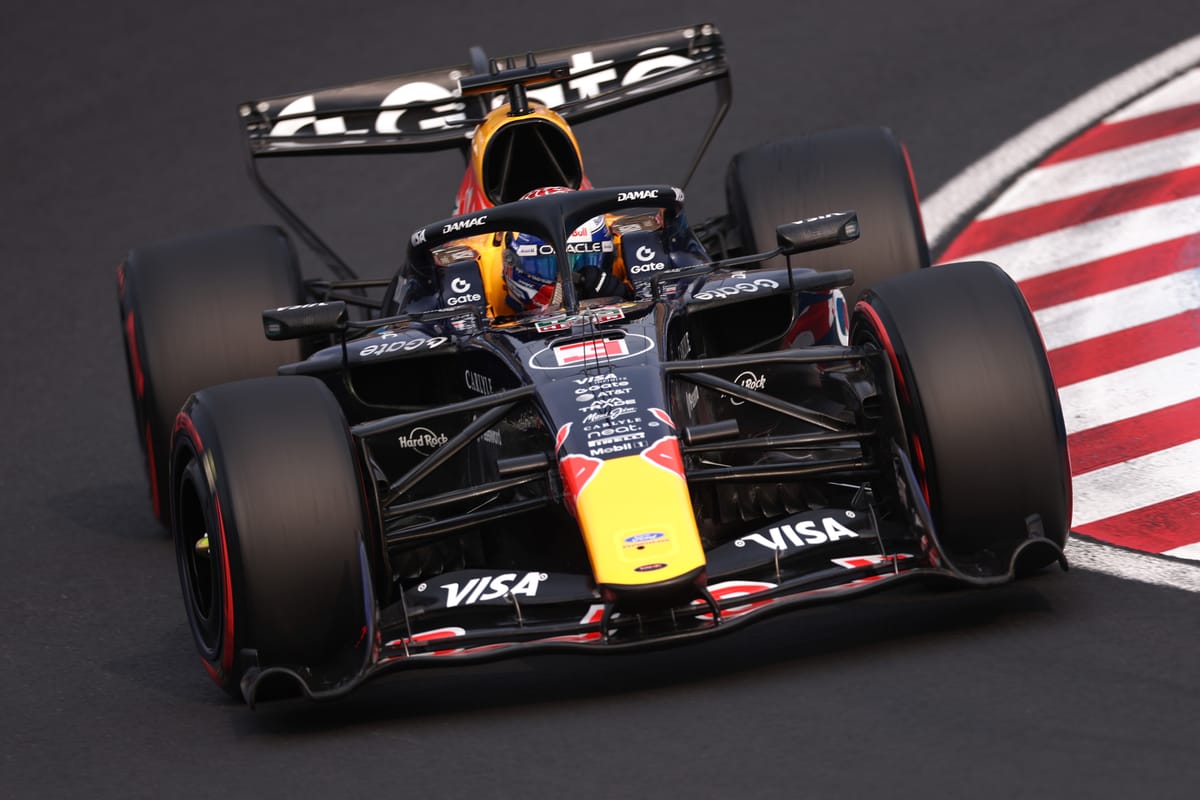

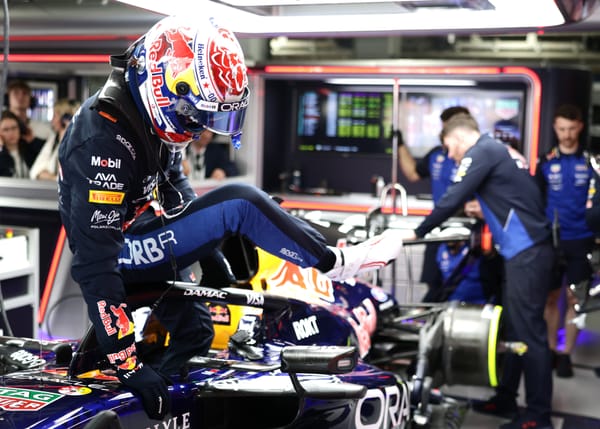
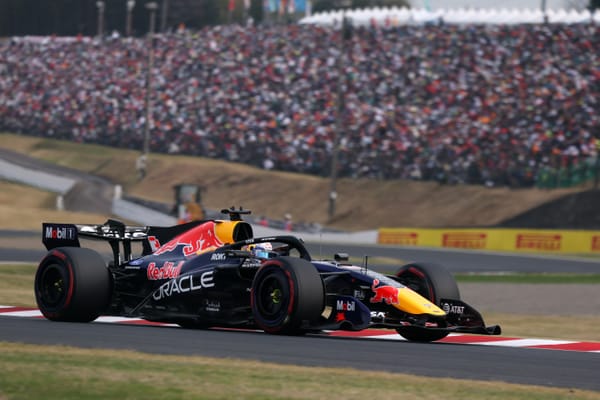
Red Bull's 2026 Formula 1 car is forcing its drivers to "reset your expectations" every lap and does not give them "any confidence to attack any corner" as a result.
Those were the opinions of Max Verstappen and Isack Hadjar as the Red Bull RB22 was again mired in the midfield in qualifying for the Japanese Grand Prix.
Verstappen was eliminated in Q2 - knocked out by a late improvement from Racing Bulls driver Arvid Lindblad - and while Hadjar made Q3 for the third time in three races at the start of 2026, he "messed up" his final attempt and will start eighth.
One complaint consistent between the two drivers was of the car's change of behaviour from one session to another, or even from one lap to the next.
Verstappen spoke on Friday of going from "one extreme to another" on Friday in reference to understeer and oversteer, and that the result was he was "just bleeding a lot of laptime".
"I was just stuck; I couldn’t push more," he said of his experience in qualifying.
Hadjar said the behaviour had "changed massively compared to FP3" - so much so that on his first lap in Q1 "I thought I was going to crash straight away; it was just sliding everywhere, [even when] I was barely turning the steering wheel".
"Lap by lap, session by session, you always have to guess what you're going to get, so it's not nice to build up," he said.
Verstappen said the way the car responded had changed "again in a different way" between final practice and qualifying, and that although the changes that Red Bull made between those two sessions were "not that big", its behaviour in qualifying "actually became worse again".
"There's a few parts in the car that are not working how they should be working, and that's limiting us to even when you make set-up changes, like you used to do in the past, it just doesn't respond basically," he added when asked about Red Bull's previous ability to adapt the car from Friday to Saturday proving difficult to replicate in this new rules era.
Responding to a similar line of questioning, Hadjar said: "It's a big stretch to compare last year's car to this one, it's completely new.
"Last year's cars was fast. It was hard to drive but fast. Our car [this year] is hard to drive and slow. We need more efficiency."
Setting aside Verstappen's comments about his F1 future - which centre around the satisfaction he gets from driving this generation of car - he said the chassis was a bigger factor in Red Bull's difficulties than its engine optimisation and energy deployment.
"Driveability stuff can always be improved, I think everyone would say the same thing: shifting, everything," he said.
"I don’t think that’s our biggest problem actually, because from the car side, we are really struggling at the moment and also to keep it consistent. There are problems that we know are in the car and like I said, we are trying to fix, but it makes everything off because in every session it can be a different problem."
Asked by The Race if those swings between extremities made it hard to work out where the car could be improved, Hadjar said: "We've got no load and that's it.
"It goes into one direction or the other very, very quickly. Just like I said, FP3 was the opposite balance; we go into quali, it's the other way around."
Asked if Red Bull understood what it needed to work on over the impending five-week break before the Miami GP, Hadjar added: "No, not right now. No. What we are seeing this weekend makes no sense."
And there was an acceptance from both drivers that the season-opening Australian Grand Prix, where Hadjar qualified third and Verstappen drove from 20th to sixth in the race, was the outlier and that this is Red Bull's performance level right now.
"You can see that Melbourne was better and then somehow some things happened with the car while not even having touched the car. So, that is always a big problem," said Verstappen.