Storytelling vs authenticity: We debate Netflix's Drive to Survive
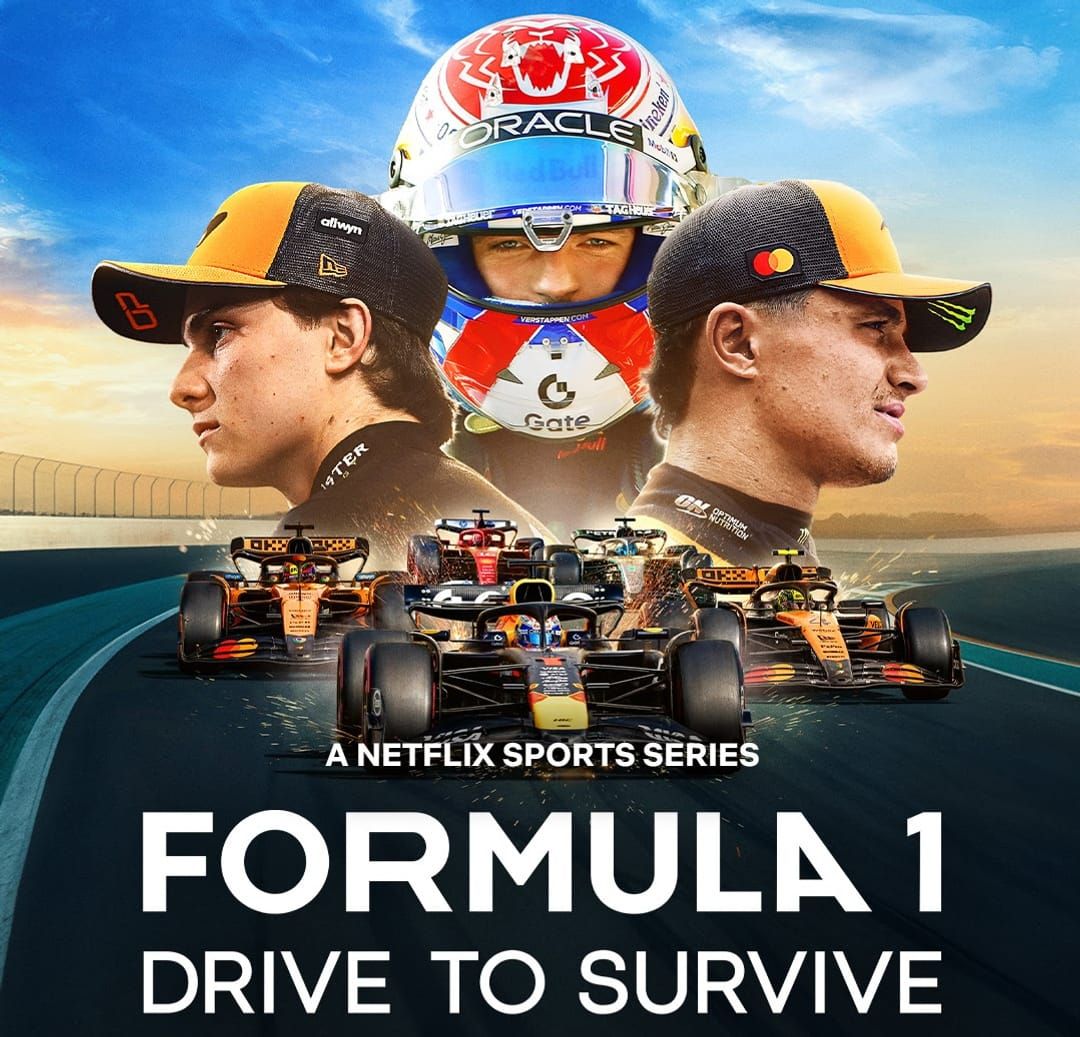
Netflix's Formula 1: Drive to Survive is now into its eighth season and, for some, has become a staple part of the F1 pre-season experience considering its release is timed for just before the start of each new racing campaign.
So how has it evolved in those eight years, and what role does it play in telling the story of F1 authentically?
We put Drive to Survive under the microscope in a recent episode of our Film Club series on The Race Members' Club, as we asked Edd Straw, Val Khorounzhiy and Charley Williams to debate the show's merits by answering members' questions.
Take a look at one of the exchanges below and, if you're intrigued by what you see, why not sign up to the Members' Club for your chance to ask questions on our bonus podcasts and to get access to the full Film Club back catalogue - including our review of Driven; possibly the worst racing film ever made.
Scripted show or documentary?
There's a big split in perspectives on Drive to Survive among our panel, and nowhere was this better-evidenced than when they debated the series' dramatisation, its presentation as a 'documentary', and the line between storytelling and journalistic integrity.
Val Khorounzhiy: "It's a very fair question and I think the show jumps that line and loses it in the rearview mirror very, very quickly, much to my disappointment - even though this is not serious business, this is Formula 1 ultimately; this isn't serious documentarian work, you don't have the repercussions that you would have if you get something badly wrong or badly out of fact in documentaries about serious topics, which most documentaries are about. But it's quite rough in that regard and even though it is not an important topic, I think when you purport to show something that is real you do have a debt to your audience.
...
"The problem is, it's not just very scripted, it's also scripted in a way that is horribly transparent. If you've watched people in the sport interact, you know how people in the sport interact, how they talk, if you know a lot of the characters involved but also you know what dramatic dialogue sounds like, etc. And there's countless occasions in this eight-episode, shortened season, where you can tell that the producer of the show sat down to people and [would have said], 'Hey, can you talk about this? Can you naturally ask this question in the middle of your natural conversation?'
"And it always comes out like the flattest thing imaginable, it always comes out like you've asked an AI language learning machine to generate a dialogue that might've occurred between these two people.
...
"The contrast between the scenes that are actually legit, that you can tell nobody teed up, and the scenes that have been asked to be recorded, is night and day. Cards on the table, it's one of the things that made this frankly unwatchable for me."
Edd Straw: "Firstly, F1 sees it as an advert. Liam Parker, their communications supremo, even said in Bahrain [in pre-season testing] when they were talking about it, that it's not a documentary. Well, it's presented as a documentary; I've got Netflix up here, and if you go to Drive to Survive it says genres: British; documentary series; sport.
"I actually don't think that there is any tension fundamentally between journalistic integrity and storytelling, I think the journalist's job is storytelling. But it has to be rooted in truth. And that's always been my objection and concern with Drive to Survive when I felt they were not being accurate. I think what we can all agree with is Drive to Survive is at its best when it's capturing those candid, accidental moments.
"This isn't Drive to Survive doing it, the producers, this is F1 doing it and the teams wanting control - because there's nothing in the world people like more than saying this authenticity thing, this genuineness, is really playing well with people; we must harness this, manufacture the best authenticity we possibly can that is most aligned with our brand values and give the world the best possible authenticity. Which of course is nonsense."
VK: "I love the thing you said about tension between journalism and storytelling. Because frankly, there is a natural tension between...the audiences that you play to, and we know that they play to a different audience [F1 compared to independent media outlets]. And when you criticise Drive to Survive in some way, at the back of your mind there's going to be a person arguing against you saying, 'It's just not for you, it's for people who fundamentally watch this sport'.
"I account for that. I know that. I understand that. But I do believe that if we - you and I, and everyone here [at The Race] - fundamentally agreed with the thesis that there is such a tension between F1's storytelling and F1 journalism telling the truth of F1 like it is, right? If we believed that was the case, none of us would work here. None of us would be here. This is fundamentally a sport that we cannot cover objectively and make it interesting. This would amount to us saying actually, we're putting lipstick on a pig and this sucks.
"Drive to Survive is telling me that F1 as it is in reality sucks; [so] here's an F1 that doesn't suck. We've had to change it quite a bit, but here's an F1 that's cool. Really, that upsets me on a fundamental level that is maybe needlessly personal."
ES: "Charley, does it feel more scripted to you? You have a slightly different and perhaps reality-based perspective in terms of what most people watching this will have. Are we being hyper-critical here?"
Charley Williams: "I don't want to offend anybody..."
ES: "If we're wrong, definitely tell us because that means something."
CW: "I'm sure there's a lot of people that think the same as you two, but my instant reaction is always: it's just not that deep. One thing I do disagree with is the fact it's marketed as a docuseries, or a documentary, because I don't think it is. For me, it's more bordering on reality TV. And for reality TV, it does it well. Because all those little things - like giving friends, family members stuff to say and trying to bring up certain topics - that happens in reality TV.
"I know the formula of every programme, and Drive to Survive I feel follows that. So if you're marketing it as reality TV, but as a documentary...yes, maybe not. I don't look at it in that way; I sit down, and maybe my brain is a bit numb to it, but I just sit down and watch it for what it is, rather than actually looking at it any deeper than that. It's all very surface-level for me."
ES: "That's really interesting. I really don't get on with reality TV, personally, but actually what you've articulated there - that it's not that deep - is something that I wish I did [acknowledge too]. But anything I'm watching, it's in me to dig into it to ludicrous degrees, probably excessive degrees. So I think what you've highlighted there is a really important perspective difference."
CW: "I would say I'm pretty good at separating the two and that's always been my thing with Drive to Survive. I've watched the F1 season; I don't need some season recap or I don't need an exact replica of what I've already watched, because I would just go back and watch the season if that's the case.
"I already know what's happened, I can watch the Drive to Survive season and be like, 'that's not real' and then just laugh about it, rather than it angering me. I just find it quite funny instead."