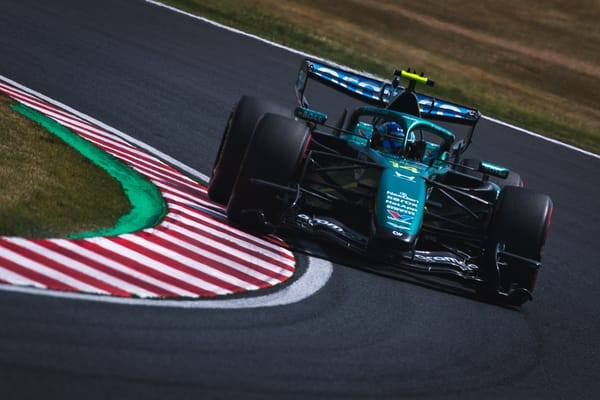
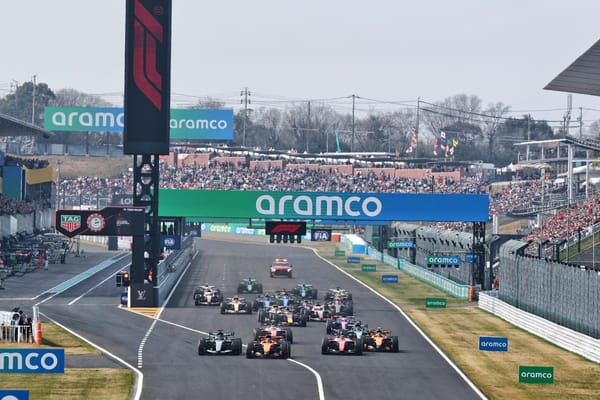
Messy 2026 F1 cars leave a deeply disturbing impression
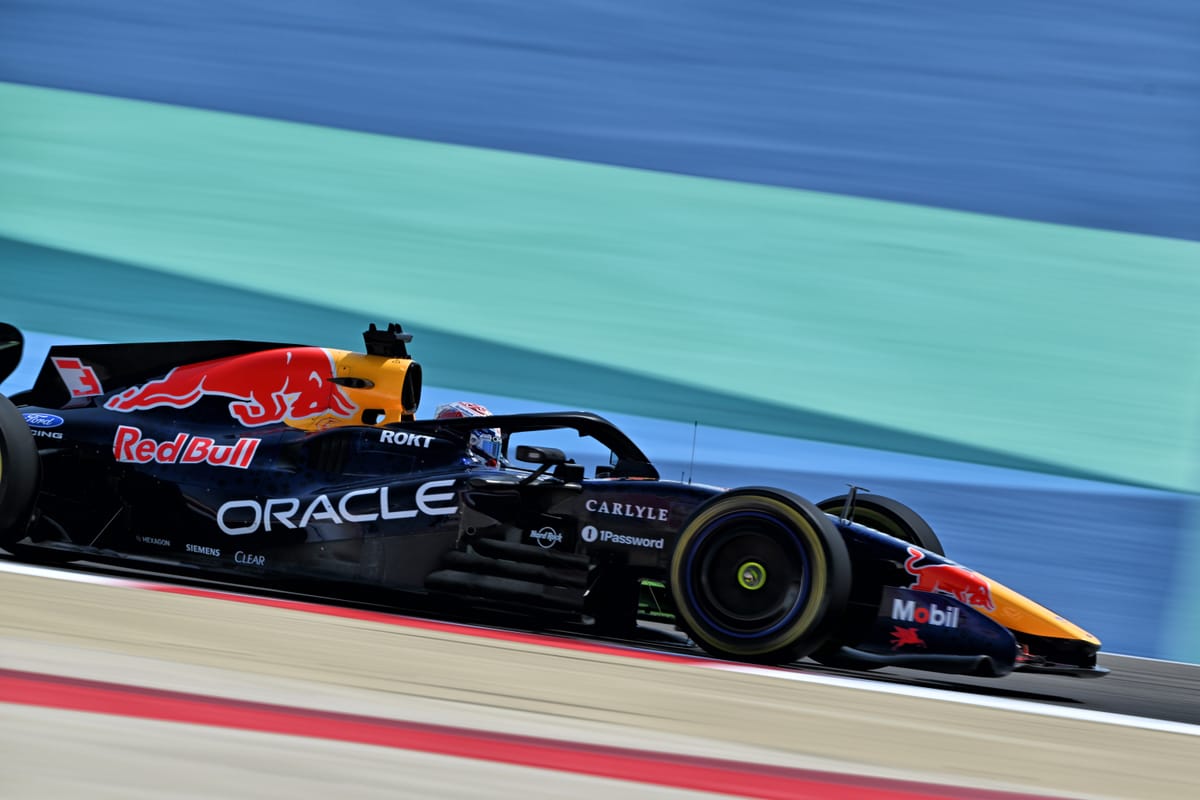
Bahrain testing was Formula 1 2026 finally beginning to showcase itself to the world at large (tentatively) after the attempted secrecy of 'shakedown week', and like everyone else I was curious to see how these all-new cars would perform under the glare of TV cameras and the Bahrain lights.
I'm not on the ground in Sakhir like my colleagues Jon Noble, Edd Straw, Scott Mitchell-Malm and Samarth Kanal, so in actual fact the onboard video of the fastest lap of day one, by Lando Norris's McLaren, put out on YouTube by Formula One Management, was my first properly considered interaction with F1's new cars.
And I'm sorry to say the impression it left me with was deeply, deeply underwhelming.
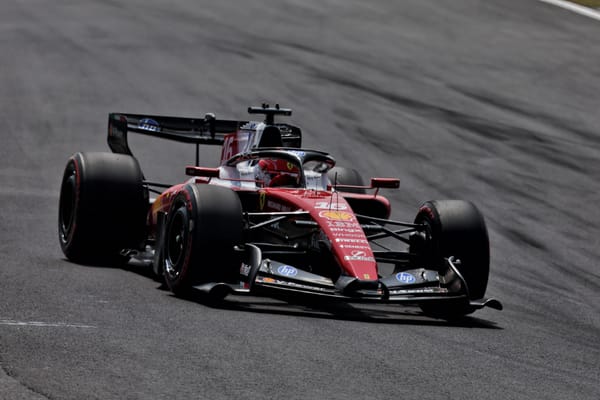
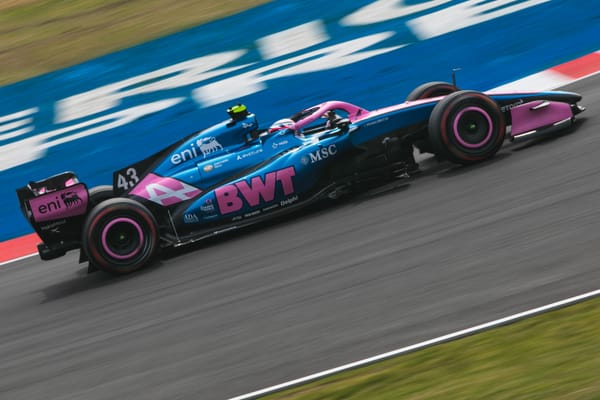
You can visibly see how starved of power the car is through the higher-speed corners in particular. Turns 12 and 13 are what really did it for me - the car just looks and sounds broken, like the throttle has suddenly been limited to 50% or has failed in some way.
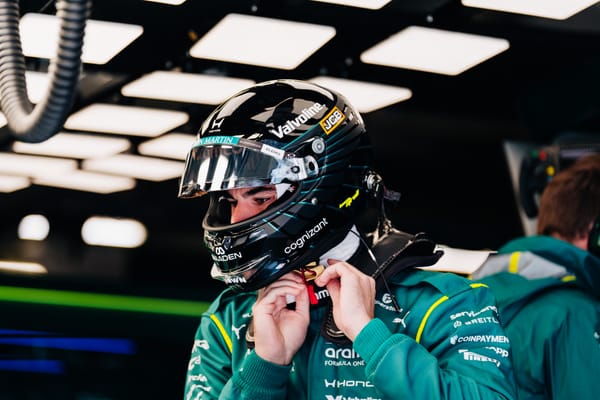
The driving challenge through what used to be one of the most demanding parts of this circuit is now so neutered that Fernando Alonso reckons Aston Martin's team chef could drive the car at the speeds F1 drivers are carrying through there.
"Historically, Turn 12, a very challenging corner, so you used to choose your downforce level to go [through] Turn 12 just flat," Alonso explained. "So you removed downforce until you are in Turn 12 just flat with new tyres. It was a driver-skill decisive factor to go fast.
"Now in Turn 12 we are like 50km/h slower, because we don't want to waste energy there and we want to have it all on the straights. So to do Turn 12, instead of 260km/h [we do it] at 200km/h, [and] you [the media] can drive the car; the chef can drive the car in Turn 12 at that speed."
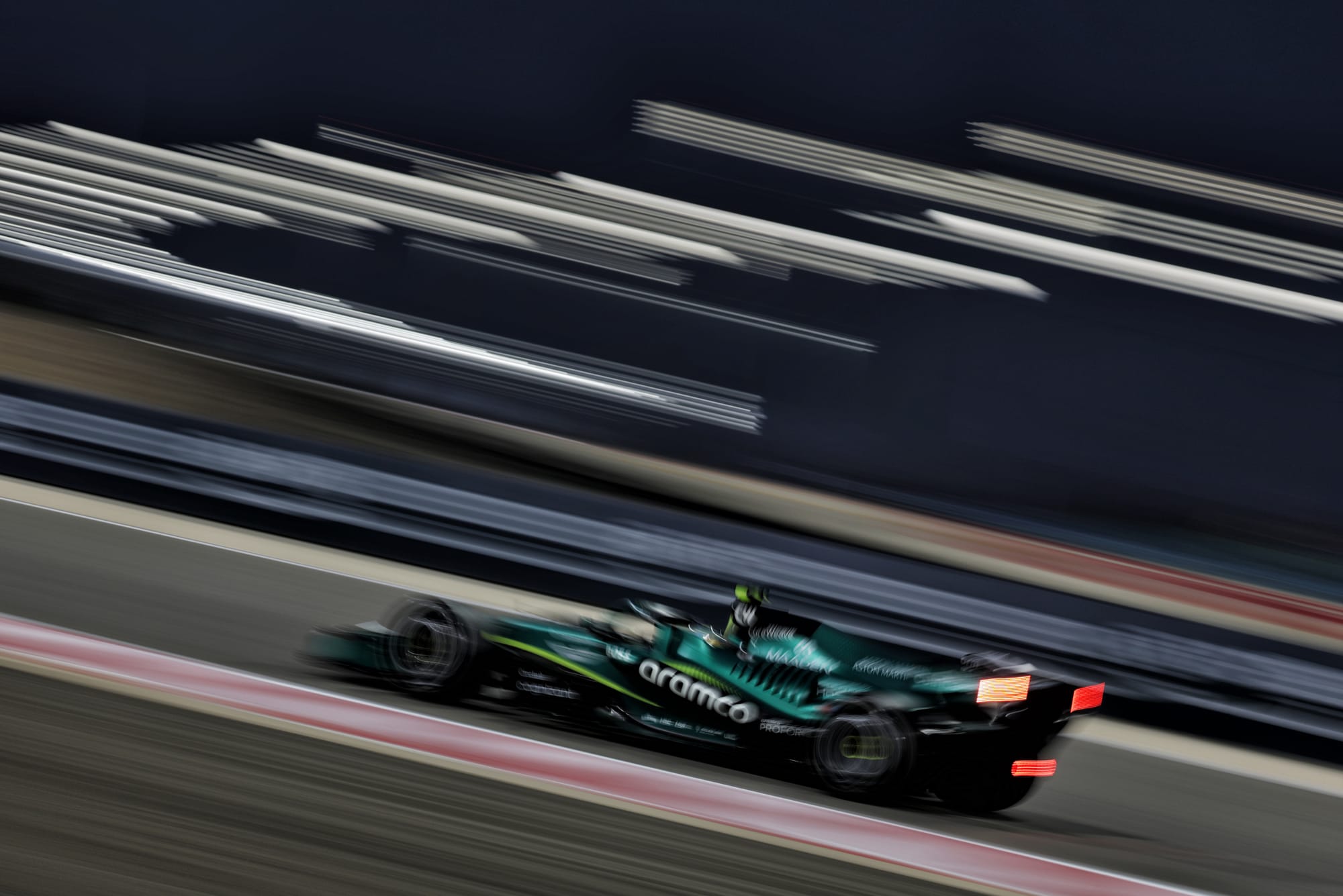
'The chef can drive the car in Turn 12 at that speed'. To my mind, that is an incredibly damning statement, from someone we can all agree absolutely knows what he's talking about.
I wanted to be sure my eyes hadn't deceived me, so I watched Kimi Antonelli's onboard from the final day. He set the fastest lap of testing so far, a 1m33.669s, a full second quicker than Norris managed on day one.
But honestly it looked the same, an energy-starved mess of a lap. Too much lifting and coasting, too much coasting in general.
Obviously there is a degree of circuit dependency at play here (and maybe a bit of Mercedes engine sandbagging), but it seems the cars are basically so energy-starved on the straights now that pretty much all the corners have to be sacrificed at the altar of harvesting - whether it's literally coasting through what should be the fastest and most challenging corners, or having to do that weird 'Verstappen technique' of mashing the downshifts as low as possible through the slower turns to recycle energy through the battery.
Read more: Mark Hughes on why 2026 cars could've been even more flawed
It's horrible to watch, and so I'm not surprised Verstappen has gone on the attack and described this all-new F1 as basically not what F1 should be.
I agree with him. Lighter cars that move around are no fun if basically the threshold of power and grip is so low that it is easily achievable for every driver on the grid - and probably many others who aren't. Are the drivers now really driving the cars, or are they just operating them?
That story about Lando Norris and Oscar Piastri wondering how on earth Charles Leclerc could carry the speed he did through Tabac at Monaco last year - that game of who might dare to tread where few others can - I just don't see it happening with these cars as they are now.
We might get there some day. Norris is right to point out that it's very early days, and that grip and performance is nearly always initially sacrificed when new rules arrive. But I'm not sure I trust him when he says it's still "fun". It doesn't look fun.
Sure, he's right to say it's more fun than many other humdrum things these guys could be doing for a living. But coasting through fast corners 50-60km/h slower than you know you could go if the engine worked better, to a racing driver, is surely the very definition of frustration.
And don't take my word for it, just reference Liam Lawson's answer when he was asked directly whether these F1 cars are actually fun to drive. One long, drawn-out "Ummmmmm"...
I remember when the hybrid engines first arrived in 2014, and ex-F1 drivers long retired, such as the late Niki Lauda, complained that F1 cars had become too easy to drive. I remember the likes of Alonso bemoaning that early generation of hybrid F1 because the laptimes were too close to GP2 (in the days when GP2 cars were five seconds quicker than Formula 2 cars are now) and everything was so tyre-limited, especially in the races.
I think F1 made a smart move by chasing more outright performance from 2017 onwards: bigger (and heavier) cars, yes, unwieldy and difficult to engineer, especially once ground effect came back in from 2022, but they were bloody fast! The tyres were still a problem, but even that element started to improve, particularly over the past couple of seasons.
Now the cars are travelling so slowly through the turns I don't see how they heat the tyres up, never mind overheat them. The cars have suddenly become too slow for the circuits, unable to achieve sufficient power, when traditionally F1's problem has been the opposite. I can see Monaco being just about all right, but everywhere else these cars are potentially going to look ridiculous.
That people are talking about even what should be flat-out qualifying laps being a challenge of energy management is deeply disturbing. From what we can see of these 'push' laps so far in testing, it's going to be Sunday driving for these guys even on a Saturday...
Get the inside line from pre-season testing in The Race Members' Club! Join today to start a seven-day free trial
The fact we've begun 2026 with so much political in-fighting, before the first race has even happened, really doesn't bode well either.
Ferrari versus everyone else on F1's start procedure, because Ferrari has designed an engine to cope with spooling up the turbo from scratch in a way others haven't; Mercedes versus everyone else over compression ratios designed to claw back as much lost power as possible; McLaren arguing the rules need to change already because the sheer lack of battery power available means the cars aren't going to be able to race each other properly and the closing speeds are going to be chaotic.
It's potentially a bit of short-term fun in a narrative sense, but it's a right mess. And so is what we're seeing on track with this extreme lifting and coasting and weird low-speed recharging and drivers looking like they're steering broken cars through high-speed corners.
And how is there going to be any proper 'last of the late brakers' racing and overtaking in this formula if everyone is having to lift and coast everywhere to recharge their batteries?
Never mind Verstappen's unflattering comparisons with Formula E, this is Formula 1 as Frankenstein's monster - rules designed to get Audi through the door (and entice Honda to return), but at a real cost: cars that must have movable aerodynamics, low-drag tyres and wheels, and a much lower minimum weight because otherwise they would be even more dog slow and unsatisfying to drive than they are now.
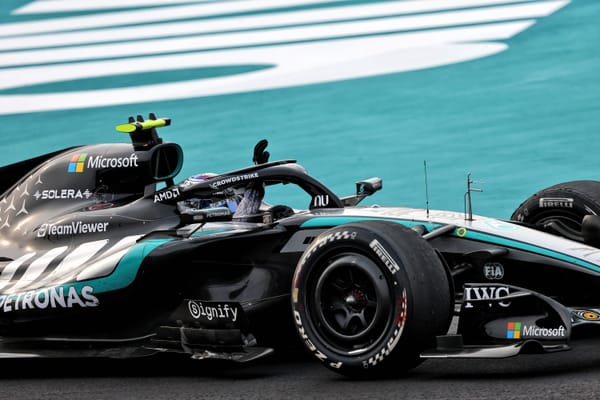
I know it's very early days, and Norris is right to say performance will likely improve, but it just looks like such a low bar to begin with, and I worry how many people will switch off before we get there, despite F1's best efforts to encourage everyone to toe the 'this is great' PR line (and that's already not working when it comes to Verstappen and Lewis Hamilton).
We can now visibly see those forecasted problems with this new ruleset. Instead of something holistic, we've ended up with completely neutered hybrid engines and then the FIA trying to build a wacky chassis formula around them to somehow claw back the lost performance. So far, the gap between one and the other looks like a yawning chasm.
You can see why, in the early part of last year, such serious and panicked considerations were given to adopting V8s/V10s with sustainable fuels, rather than this halfway house ditching of some parts of the hybrid. I never ever thought I'd say this, but Bring Back MGU-Hs!
Audi and Honda wouldn't be here, sure, but at least the cars would work properly. I worry the new, faster version of Albert Park that hosts the season opener could end up being an embarrassment for F1 in terms of spectacle, with cars desperately trying to avoid running out of energy through that long, high-speed stretch from Turn 6 to Turn 11.
Will the high-speed left/right of Turns 9 and 10 remain the fearsome challenge it once was, or will everyone have to coast through there now to make sure they have enough battery power to make it to Turn 11 without looking like a total shambles?
I really, honestly, don't care for what I've seen of F1 2026 so far. So now I'm just hoping Norris's crystal ball is correct and this mess somehow sorts itself out, through ingenious engineering yet to be determined and the good old fashioned passage of time. In the meantime, I'm a bit worried about what 2026 will bring.