Encouraging signs? Gary Anderson's verdict on the 2026 Mercedes
The 2026 Formula 1 season represents a big opportunity for Mercedes to recover from its relatively disastrous ground effect era, one in which it never really got on top of the situation and where inconsistency was its dominant trait. Being untouchable at one event then fighting to get into Q3 at the next one is not a good place to be; it just ebbs away your confidence.
When you have that problem it's not necessarily down to poor car design, but more about the tools you have available for design concept and development direction. Whatever tools you have are there to help make these big decisions and if they don't give the correct answers then it is very easy to head off in the wrong direction. It takes big balls for someone to use gut feel to overrule any data-driven decisions.
So, will the problem continue in 2026? If Mercedes hasn't recognised where it was coming from - which is either the windtunnel and/or the simulation tools, or the way the team combines the data from those two - and rectified it, then yes it will.
However, as this set of regulations is less critically dependent on what is happening between the ground and the undersurface of the car, the problem shouldn't be quite as bad.
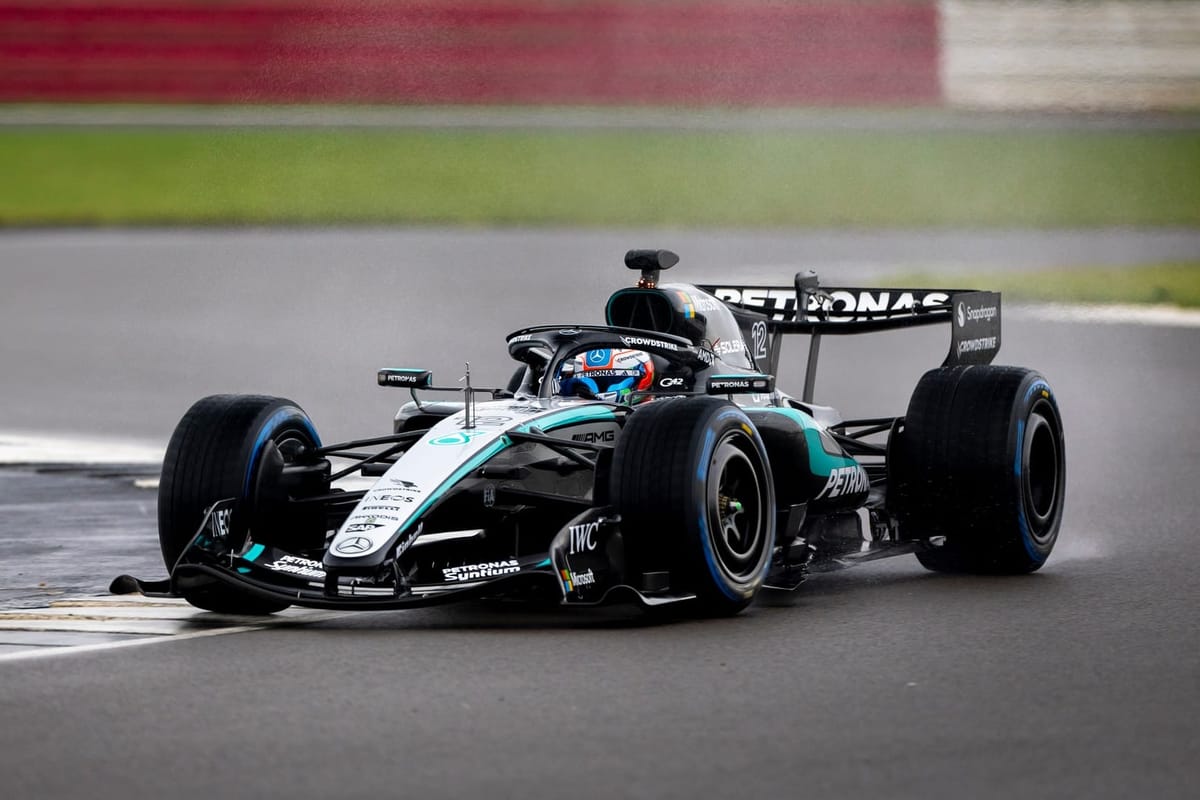
Turning to the new car for 2026, again I'll say at the beginning we can only comment on what we are given. The initial renders released in the morning did look fairly detailed to me but then a few real pictures from the shakedown run showed how renders can differ from the real car. Not necessarily intentionally, but the renders aren't released the instant they're created, and development goes on endlessly until the actual car hits the track.
As an overall package it looks good; nothing startling anywhere but good, clean lines with everything looking like it is working as one.
As I have said before, sometimes it is better to optimise what you have experience of and Mercedes has stuck with the pushrod operated front suspension. That's no bad thing as I don't believe there is much to choose between a pullrod or pushrod, so packaging is the prime consideration in that area.
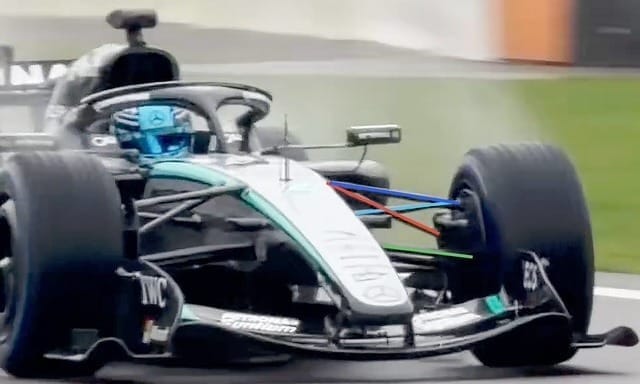
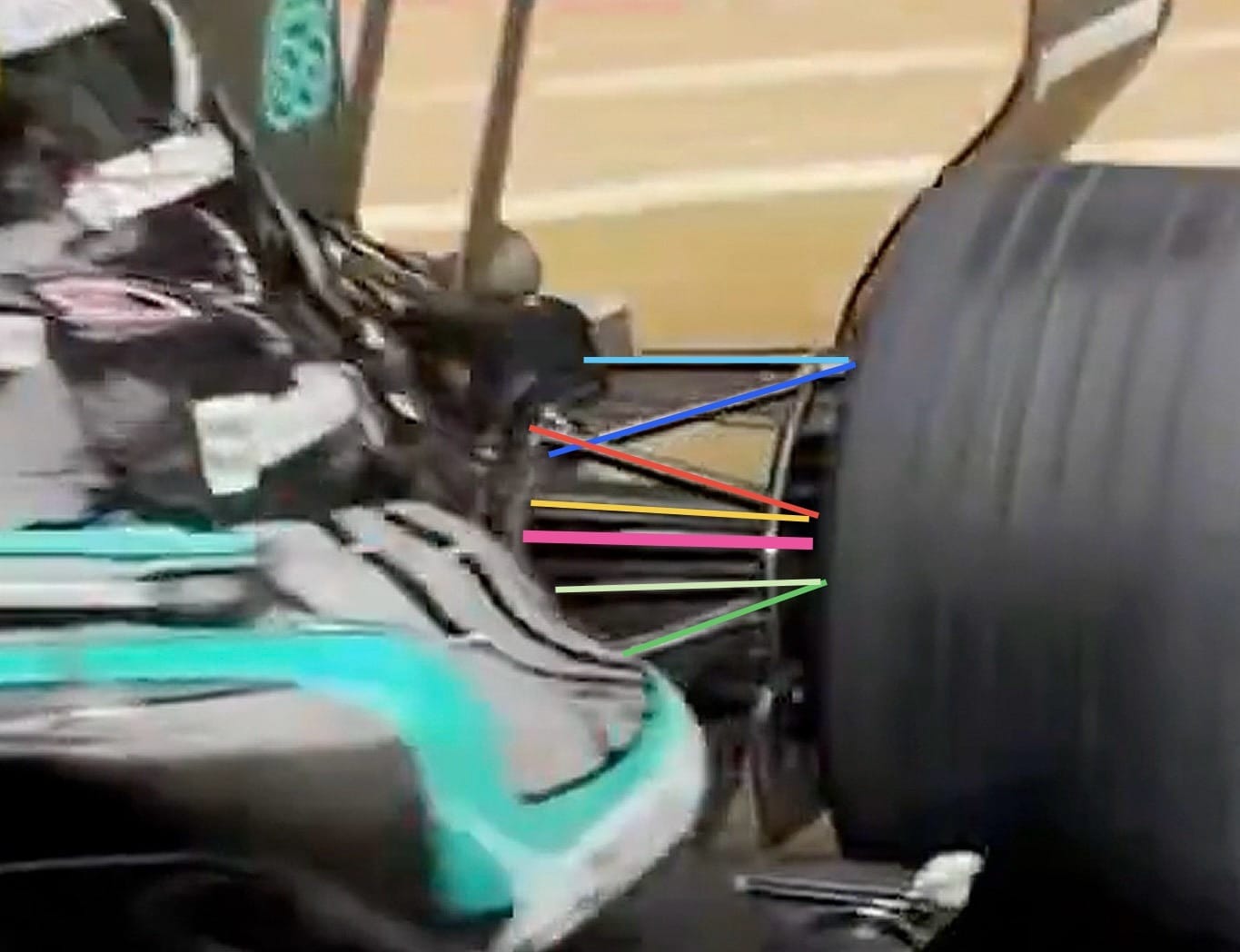
In the renders you couldn't see much of the suspension wishbone geometry. But from this on-track shot we can see Mercedes has retained the anti-dive on the top wishbone (forward leg dark blue highlight, rearward leg light blue highlights) the pushrod (red highlight) and what I think is the front track rod (green highlight).
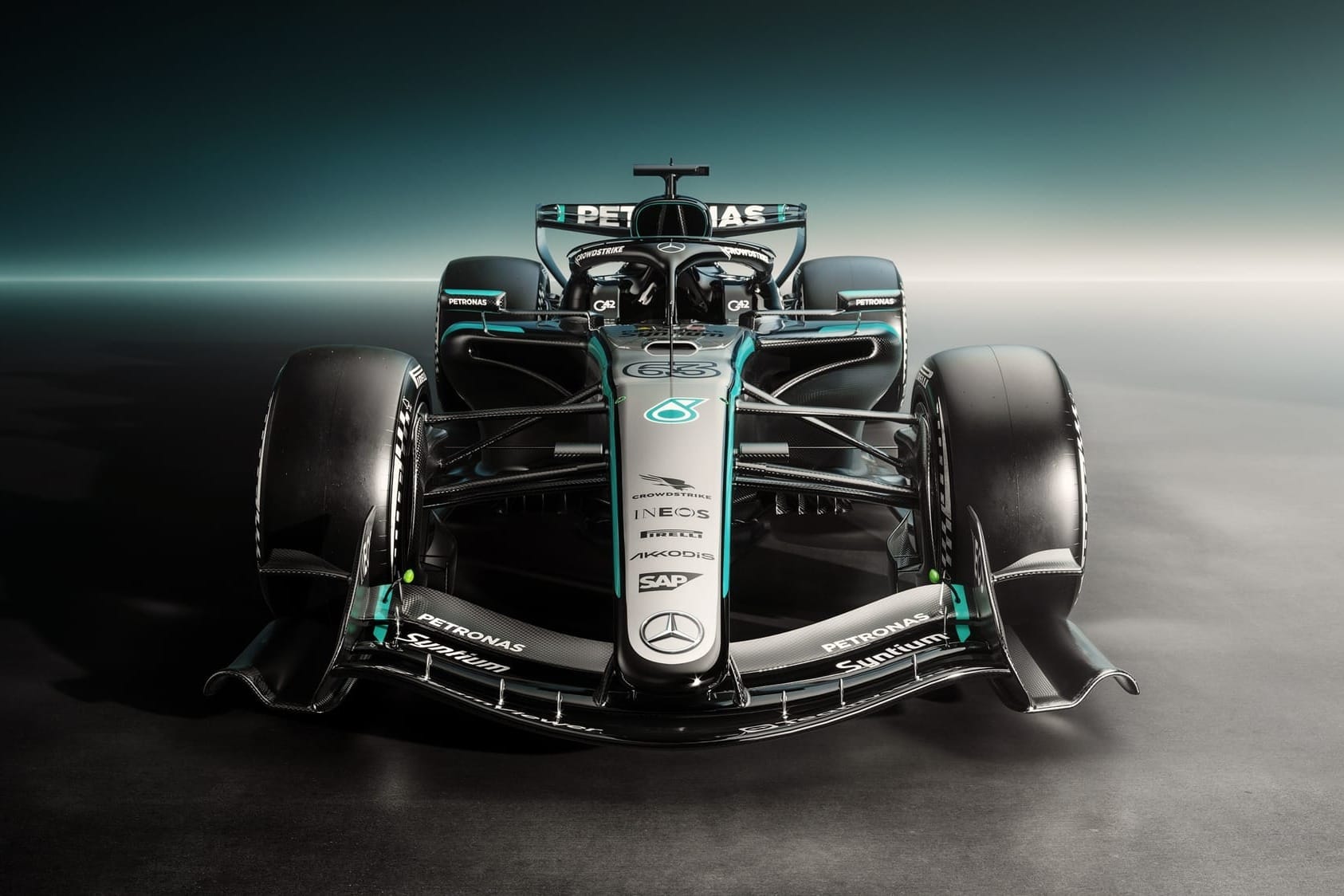
Aerodynamically, the Mercedes begins with a three-element front wing, which is now detached from the nose structure. Over the last few years this was an area which teams including Mercedes played around with. I have always liked it being detached as it allows some airflow through that gap to help keep the airflow attached to the underside of the nose.
The shakedown pictures reveal a little more of the aero here. We can see the high radiator inlet (yellow highlight below) making way for the sidepod undercut, giving the airflow wake coming off the front wing and front suspension somewhere to go. Even though it's a long way away, this undercut improves the performance of the front wing.
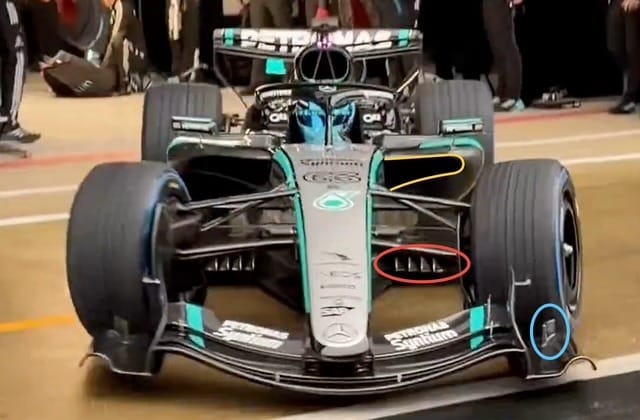
The underfloor leading edge splitters (red ellipse above) are much smaller than last year. That is because of the reduced underfloor ground effect, meaning that the leading edge of the floor is lower. They will still be more or less working in the same way by turning some of that airflow outwards, but just less effective.
And now I wonder what Mercedes would say that little vertical fin (blue ellipse above) on the outer foot of the front wing endplates is there for? The major objective of these new regulations was to reduce outwash, which plays havoc with a following or potentially overtaking car. I would hate to think this component was there to generate outwash and, more importantly, that at this early stage of running the FIA doesn't have the courage to outlaw this style of airflow management devices.
The front wing endplates are fairly brutal. This is a regulation requirement and that is questionable to me: why do they need such a dramatic footplate and why so wide?
Simply chop them at the inside of the outer tunnel and they will cause a lot less potential yellow flags from car damage.
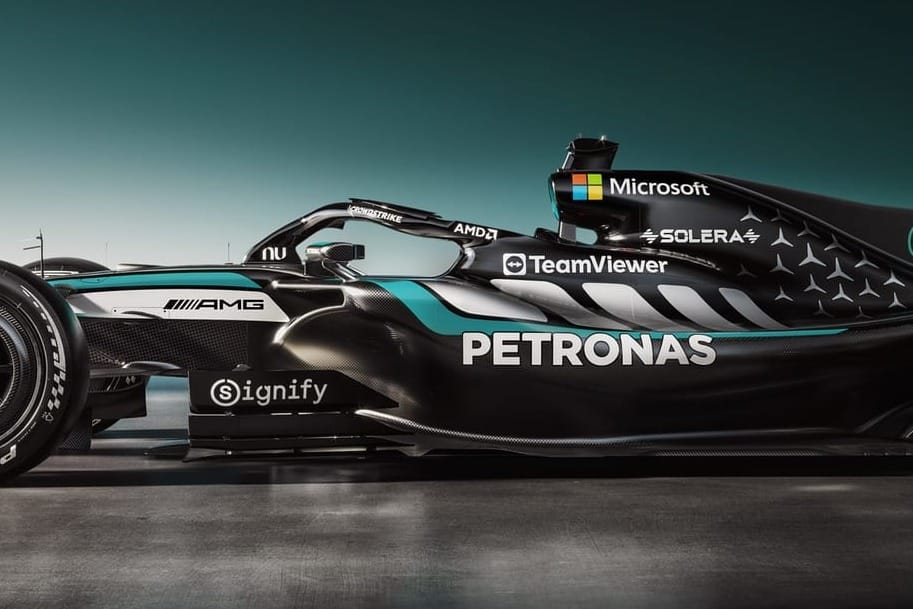
The radiator intakes are in line with the current trends, being high and allowing a decent sidepod leading edge undercut, and again we have the now reduced-in-size splitters on the leading edge of the underfloor.
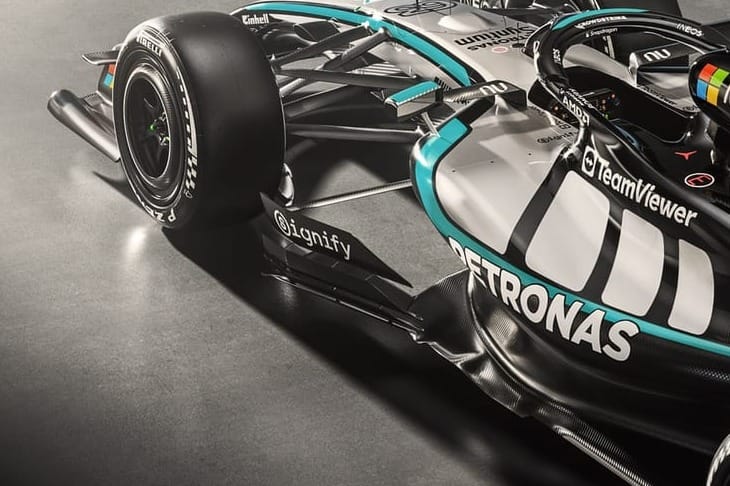
We are now seeing the return of the bargeboards of the pre-ground-effect era. Hopefully they will never get to the multi-element components we saw in 2021, but it all starts here.
This area is all about picking up the disturbed airflow coming off the back of the front tyre and also using that redirected airflow to help seal the sides of the underfloor. They even require their own support stay.
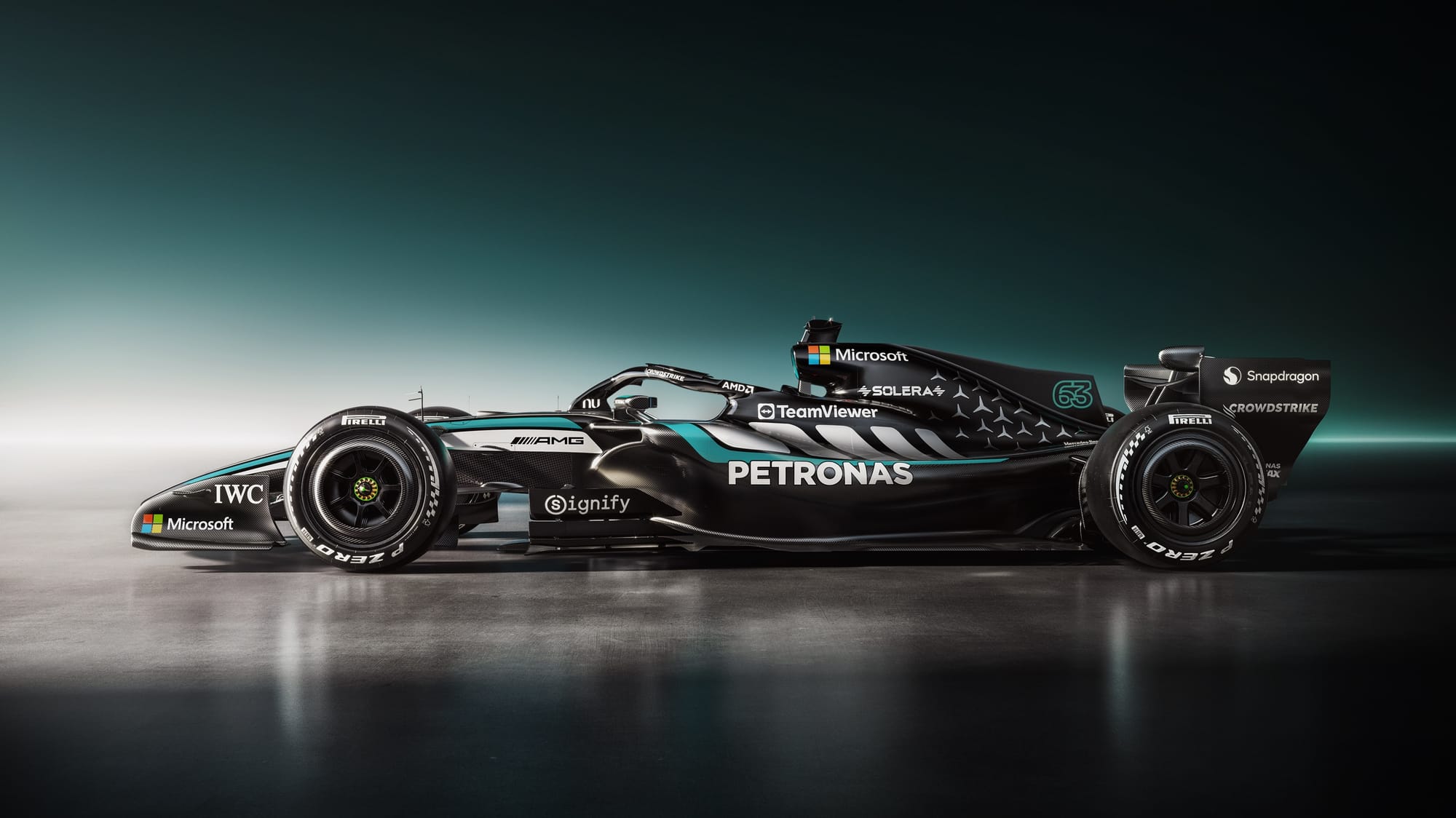
Going further rearward it's all quite compact - by no means the 'size zero' sidepods we saw at the beginning of 2022, but all nicely packaged without the need for lumps and bumps all over the place.
The headrest area and the undercut to the lower surface of the airbox intake is the important part of this section of the car. If you can get consistent airflow through this area it reduces driver buffeting and improves the performance of the rear wing.
Mercedes also has the 'sponsorship fin' (which I’m not a fan of) on the trailing edge of the engine cover. It has the car number on it, which is great, and it would be good to see this as a regulation requirement.
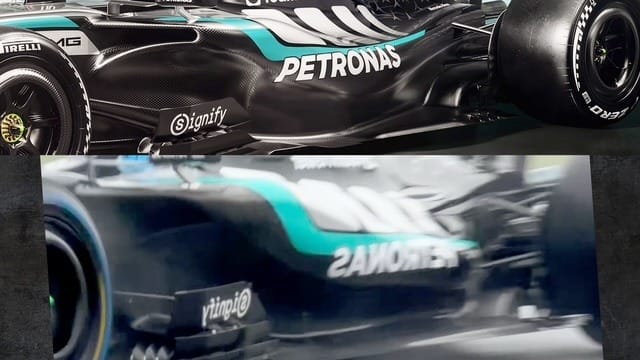
In the renders, the sidepod upper surface appeared to sweep downwards and then back up again. The track shot comparison above shows that doesn't really happen.
I have added some flow lines to this sidepod detail below to show what Mercedes is trying to achieve.
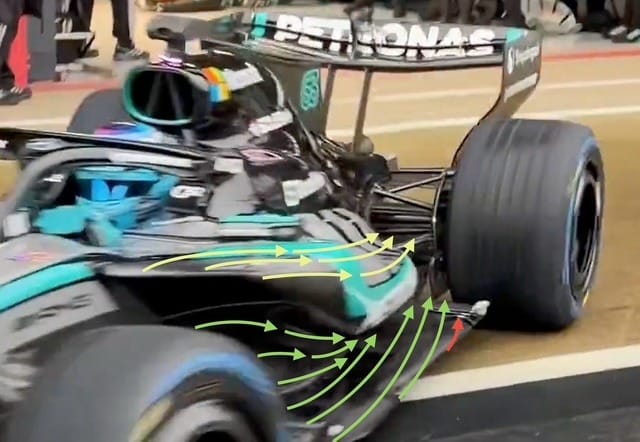
All that flow will meet up in what is called the coke bottle area - basically the gap between the inner body surface and the inside of the rear tyre.
The outer flow (red highlight) will be pulled through these louvres by what is called the inner tyre squirt. This is the airflow that is displaced when the tyre rotates onto the track surface; it either goes inwards or outwards. Pulling it inwards can then fill up the void where the tyre rotates away from the the track surface, so effectively managing the tyre airflow displacement as efficiently as possible.
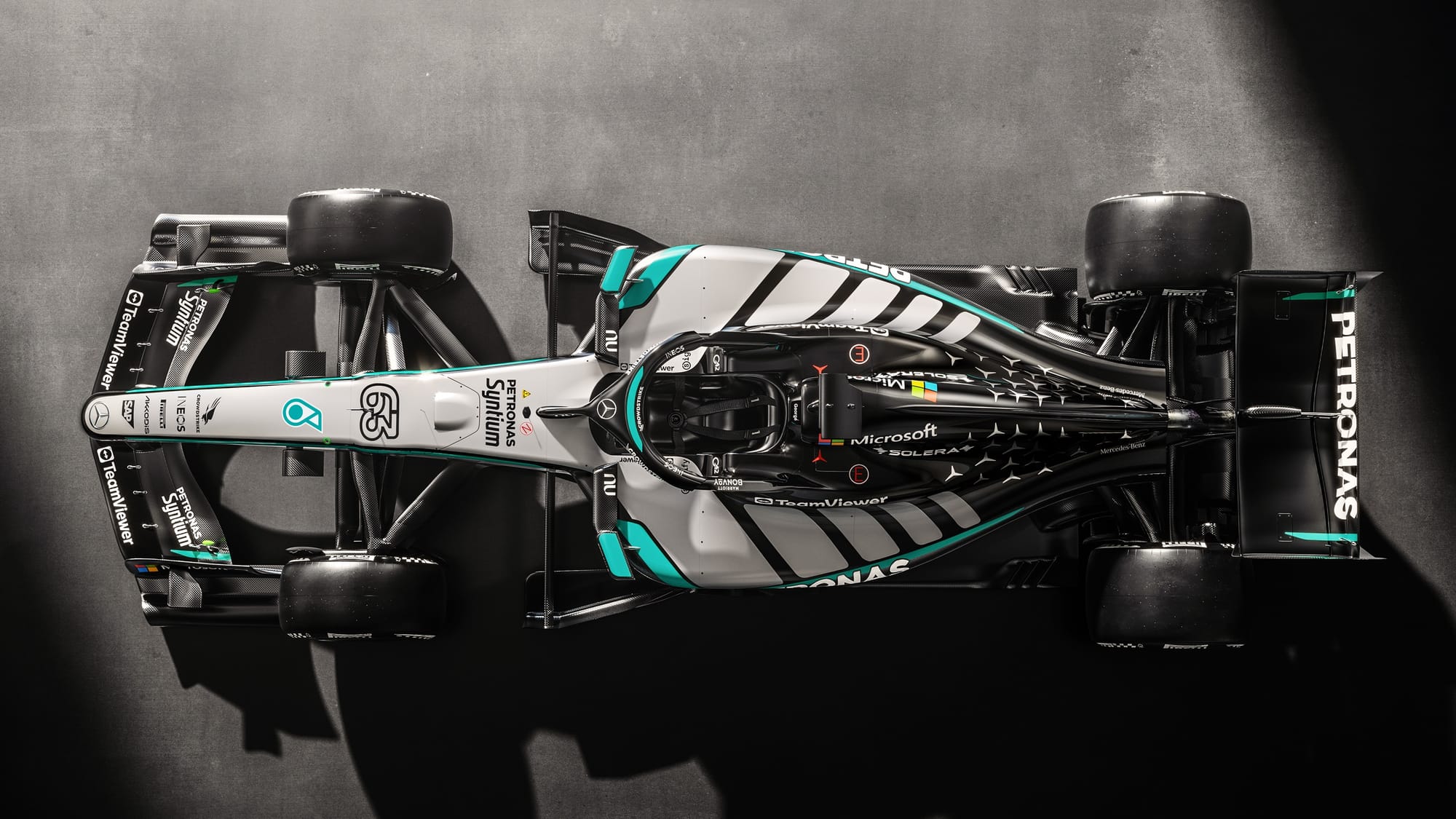
This plan view shows a neat and tidy coke bottle concept exposing the upper surface of the underfloor and creating space for the airflow displaced by the rear tyres that I'd demonstrated above. That airflow then helps improve the performance of the rear wing and diffuser but also improves the efficiency of the overall car by in effect reducing the car's width. If the airflow had to go around the outside it would increase drag.
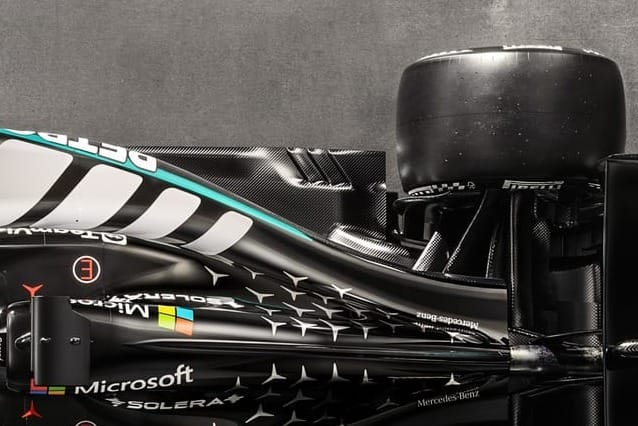
The area in front of the rear tyre has again gone back to the thinking of pre-ground-effect days. It's important to manage the airflow that is being displaced by the rear tyre rotating onto the track surface and where that displacement goes. If it's inboard it will affect the performance of the diffuser, so the intention is to feed what is called the outer tyre squirt with the airflow coming over the top of the floor through these small louvres.
There's lots more developments to come in that area I'm pretty sure.
I'm a little surprised by the rear suspension. Last year, Mercedes increased the anti-lift on the rear suspension for Imola in May but it caused some problems with driver feedback. Basically, it made the car feel numb.
If what I am seeing is correct, Mercedes seems to have retained it and/or even increased it. The top wishbone (forward leg dark blue, rearward leg light blue highlights) shows a fairly dramatic difference in height where it mounts to the inner structure. The lower wishbone (forward leg dark green, rearward leg light green highlights) shows again a marked difference in the height of the inboard mountings.
Both of these add together to give the anti-lift characteristics to the rear suspension. If what I am seeing is correct, the pushrod (red highlight), the driveshaft shroud (magenta highlight), and probably the trackrod (yellow highlight) make up the rest of the suspension system.
Having said all that, the characteristics from braking on the rear suspension for this season will be quite different to last year. As we now have more electrical energy recovery to achieve solely through the rear axle, under deceleration and especially braking there will be more horizontal load going through the axle into the wishbone system and less torsional load transmitted through the wishbones.
That difference will have quite an effect on how the rear ride height changes under deceleration and braking.
The rear suspension is also (as last year) pushrod operated. With the reduced maximum wheelbase from 3600mm to 3400mm, the area that you can use for the inboard mechanism of a pullrod suspension has been reduced so packaging would be very difficult - not impossible, but at the rear there is a reasonable amount of space on top of the gearbox and it's instantly accessible for set-up changes.
If this is the car we see in testing and Mercedes has recognised and rectified what held it back in the ground effect era then I'm pretty sure we will see Mercedes taking a step forward this year.
Will it be back to the domination seen before 2022? Rumour has it that the new Mercedes power unit is a rocketship and with McLaren, Williams and Alpine using it too, that's eight drivers who are all very competent that could take big points.
The Mercedes works drivers, George Russell and Kimi Antonelli, will certainly hope that the chassis is the step they need to be ahead of the rest of that bunch. As for the rest, that's really out of their control.