How scary is Mercedes' unmatchable first F1 test showing?
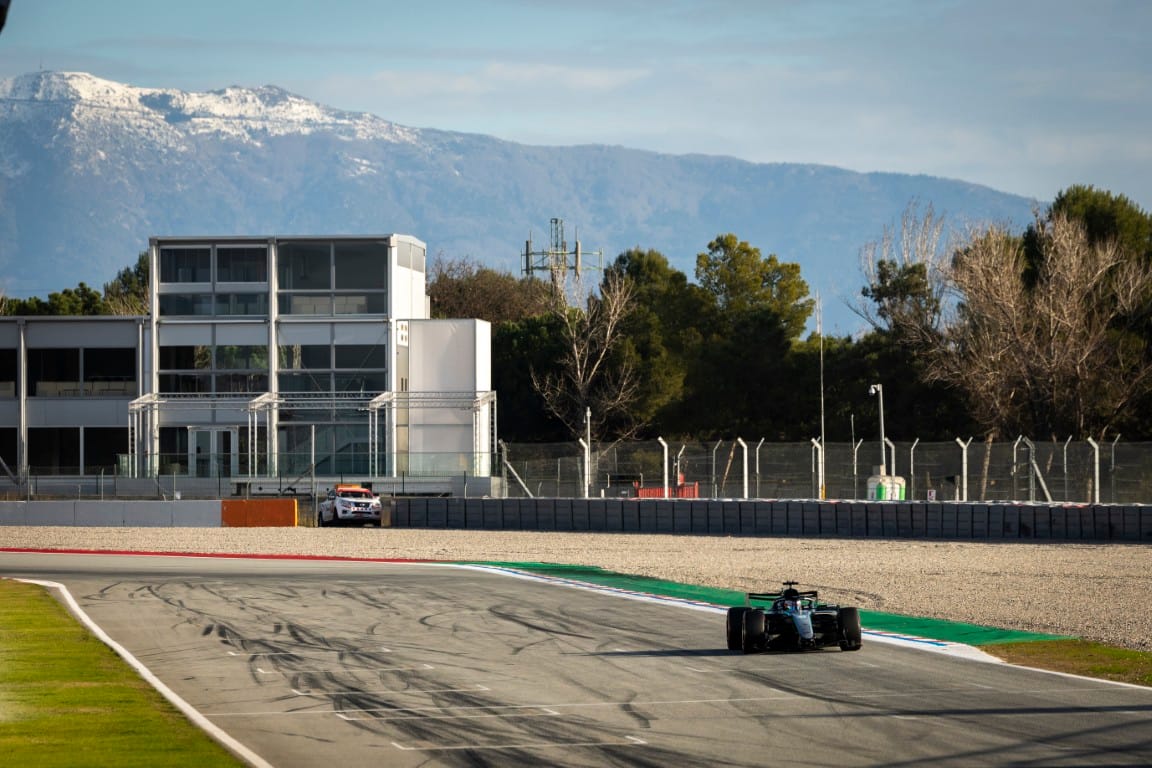
By its own admission, Mercedes could not have hoped for a better first week of testing with its new Formula 1 car and engine.
Its early ‘pre-season favourite’ status was prematurely awarded before its car had even touched the ground, but Mercedes justified it by setting an unmatchable early standard when it did.
The W17 ran better than any other car, for longer than any other car, while its engine has had a wonderful start to life. Feedback on the traits of both in the real world versus simulation has been tentatively positive. And there has been no attempt from Mercedes to hide its satisfaction with how the week has gone.
Mercedes “more or less ticked all our objectives” from the first two days, trackside engineering director Andrew Shovlin said, and opted to crack on with its third permitted day on Thursday.
It was one of only two teams to do so - the other, impressively, being the Racing Bulls with Red Bull’s new engine, although with a near-1,000km mileage difference between them.
“We finished a day early but part of that is that the car's just allowed us to run the programme day by day as we planned it,” said Shovlin.
He even pointed out in the middle of the week that Mercedes was losing more time at this test because other cars were stopping on track and pausing the session than through its own issues. This was simply stating a fact, that the only things that held Mercedes up were external factors which underlines just how on top of things the team is, but it was an amusing accidental brag at the same time.
Shovlin was not the only one. Drivers George Russell and Kimi Antonelli have been nicely restrained through the week – talking about how productive it's been, focusing on acclimatisation to the new cars and engine energy demands, and how you cannot read into times at all. The emphasis across the three days has been about learning, not achievement – but they’ve obviously not denied it has been, as Russell said, “a very positive test”.
“The car so far has been working well, but it's not about how well it works, it's about how quick it goes around the track, and we don't really have an indication of that at the moment,” Russell stressed.
“We're sort of in a reasonably good place. But I'm sure things are going to change a lot between now and the next Bahrain test, and then I'm sure people will be bringing upgrades to the car. So still, very, very much early days.”
Mercedes was fastest by far with one day left for rival teams to improve.
It got quicker by about a second a day across the test, aided by its programme switching from being predominantly on the hardest C1 compound to the softer C3, despite Mercedes not chasing performance or exploring the car set-up beyond what Barcelona track and ambient conditions would have demanded on the day.
“We were focused on just understanding the new systems,” Shovlin said.
“There's always going to be a lot of challenges with new power units, new electronics. Obviously, the regulations are all-new on the chassis side.
“But all of the areas that weren't great on day one we've made good progress, so that's very encouraging, and that progress is actually making us quicker day by day.”
This is still not the time to be convinced by the W17’s potential. The start of testing weeds out the teams in trouble or with more work to do more than it gives a strong steer on pace potential. All the usual caveats of testing are amplified exponentially this week by the closed test being so hard to discern detailed information from.
Teams had different tyre allocations, but who used what and for how long? What did stint lengths reveal about fuel loads? Was everyone, or anyone, running their actual advanced sustainable fuel or a safer initial alternative to bank mileage for the cars and engines?
That’s why Shovlin cautioned on driver feedback: “They're happy with the car, it's a nicer thing to drive than the previous regulations, it's a bit lighter, it turns quite nicely for them, we've got a decent balance low and high speed.
“But ultimately whether they're happy or not will all come down to whether they're quick or not.
“And I think we'll start to see what people can do maybe on that final day, but realistically that work is going to push to Bahrain.”
Go back four years and Mercedes completed another productive, pace-setting test in the first week of running with the 2022 cars. That was no indication of what Mercedes would actually be able to achieve that season or in that entire rules era. Hence the laptimes being a potential red herring.
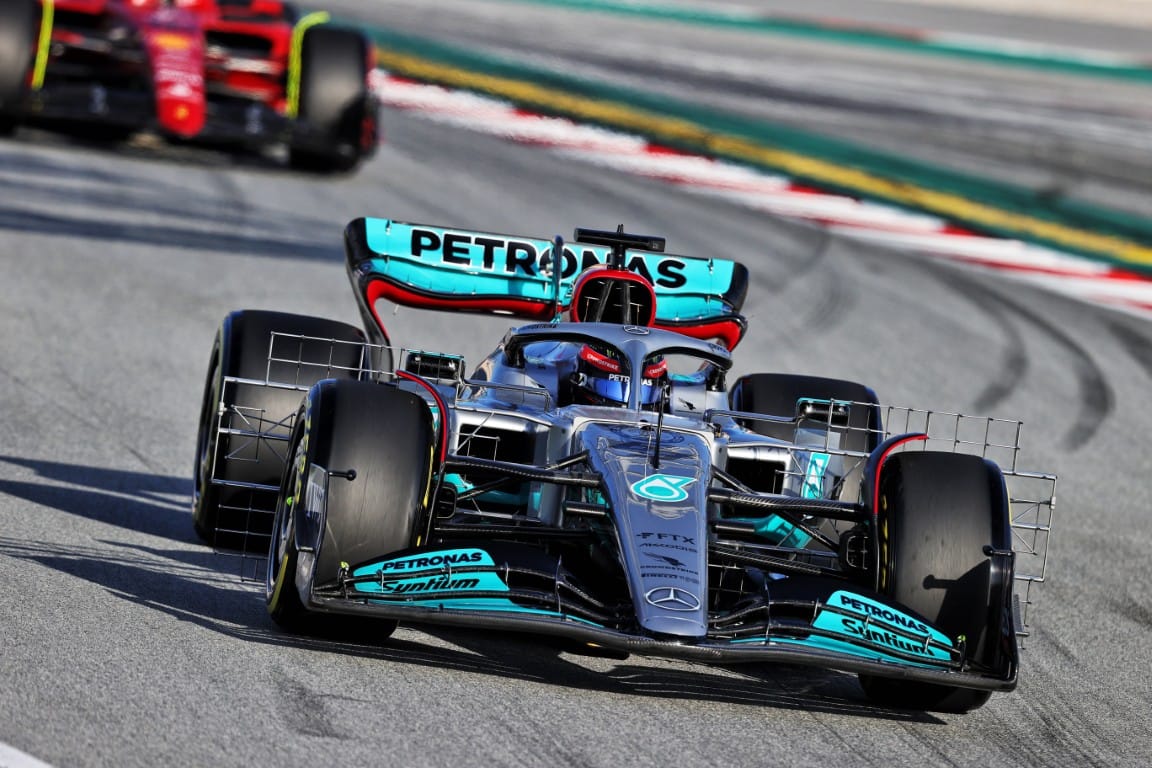
However, a key difference to 2022 worth noting is that there is an added degree of Mercedes’ preparation being superior this time.
Back then, it was obvious that Ferrari, for example, was in a very encouraging position but had not explored as much performance potential on the final day of the test. It had focused on diligent running so in terms of preparedness Mercedes looked good but nothing special in 2022 – it actually had fewer laps as a team than Ferrari, and not a great deal more than McLaren, Red Bull or even Williams.
This time Mercedes stands alone at the top, the only team to have racked up more than 2,000km this week. Although the jobs others have done, especially Red Bull, has not gone unnoticed - with Russell namechecking them on the opening day and then indirectly referring to the Red Bull-Ford engine again on Thursday.
“On the power unit side there's some impressive things from some of our competitors, and that's quite surprising, to be honest,” said Russell.
“So, well done to them. Three days into a 24 race season, you don't want to judge too much into that, but I think a lot of people anticipated the new power unit suppliers to be sort of struggling and whatnot, and they've sort of had a good test as well.
“That's good for them, but for us, time will tell.”
One final point on mileage worth recording is Mercedes’ total of 2,328km is barely any less than the most completed by a team at either of the last three pre-season tests – when the car rules didn’t change and the engine specifications had been frozen for years.
In other words, Mercedes has had a test that defies the extent of the car and engine rules overhaul. And to reiterate what that really means: it has done an excellent job getting ready for these regulations. But it guarantees nothing in terms of performance potential, only that Mercedes is in a superb place to go to Bahrain and start to explore that – assuming the car and engine run as well in much hotter temperatures than a chilly Barcelona.
“For every event, whether it was the shakedown in Silverstone or this first test, or Bahrain, we have an idea of what objectives we want to achieve,” said Shovlin.
“We've pretty much ticked all of those boxes for these two. Bahrain, we're going to move more to set-up exploration, trying to work out how you get the car in the right window.
“Whilst you can do set-up here, it's so cold, it's not really relevant to any race track. So Bahrain is going to be a much better place to check that the car runs well at temperature, both in terms of the chassis performance side, but also just, are the systems running effectively?
“And then that final Bahrain test hopefully will be more just about the race prep. So preparing for qualifying, preparing for the race and all the situations that that throws up.”