McLaren's 2026 upgrade strategy is very different to rivals'
McLaren will not pursue major upgrades between Formula 1 pre-season testing and the 2026 season opener in Australia, bucking a trend others have vowed to pursue.
The first months of the new rules era are likely to be a rapid learning process for all teams and several of them have outlined plans to launch with a basic 2026 concept before bringing swift developments in for the start of the campaign.
Ferrari, for example, has openly talked about having a "spec A" car running in the first test before it is overhauled for the opening race.
But McLaren has revealed that it will take a different path before the start of the campaign.
It wants to delay introducing big changes to its MCL40 until it fully understands how the 2026 cars perform and what specific areas need to be focused on for the best gains.
This will give it more time to see what ideas other teams have come up with and mean it does not commit valuable resources in the cost-cap era to bringing parts that may need to be replaced quickly.
Speaking at the McLaren Technology Centre, chief designer Rob Marshall outlined that any changes to the car between the first test at Barcelona next week and the opening race in March would be minimal.
"Between Barcelona and Melbourne, I think what you see is probably pretty much what we'll bring to the first race," he explained.
"A lot of our effort will be into understanding this. Also, we need to take into account what the opposition are up to: we need to be inspired by what they may or may not achieve and may or may not show us."
Marshall suggested that until teams had a proper comprehension of how the 2026 cars work it would be unwise to commit to a rapid overhaul of designs.
"We really are going to have to be very focused on getting our heads around this car," he added. "It's very complicated. It's all new.
"There's a lot of stuff that we need to dial in and tune in.
"So I think bringing a lot of new stuff to it, early doors, would complicate stuff.
"And I think we're better off understanding our platform before we get too keen on redesigning it before it's turned a wheel."
Marshall suggested that McLaren would go into the first test open-minded in terms of what it needed to learn as there is so much uncertainty about how the 2026 cars will perform.
One element, for example, was finding the perfect ride height for the new designs, with less ground effect meaning they no longer needed to run as close to the ground as they could.
Asked by The Race about the 2026 aero development battle and the role of rake - the difference in ride height between the rear and the front of the car - in it Marshall said: "I guess the intention of these regulations was to try and force the rear ride heights up, and I think our feeling is that that will be the case.
"How high they go, we don't really know yet. How low you can go, we don't really know yet.
"There's a big, big journey to go on next week in Barcelona to try and find out where best to operate the car."
The suspension trend
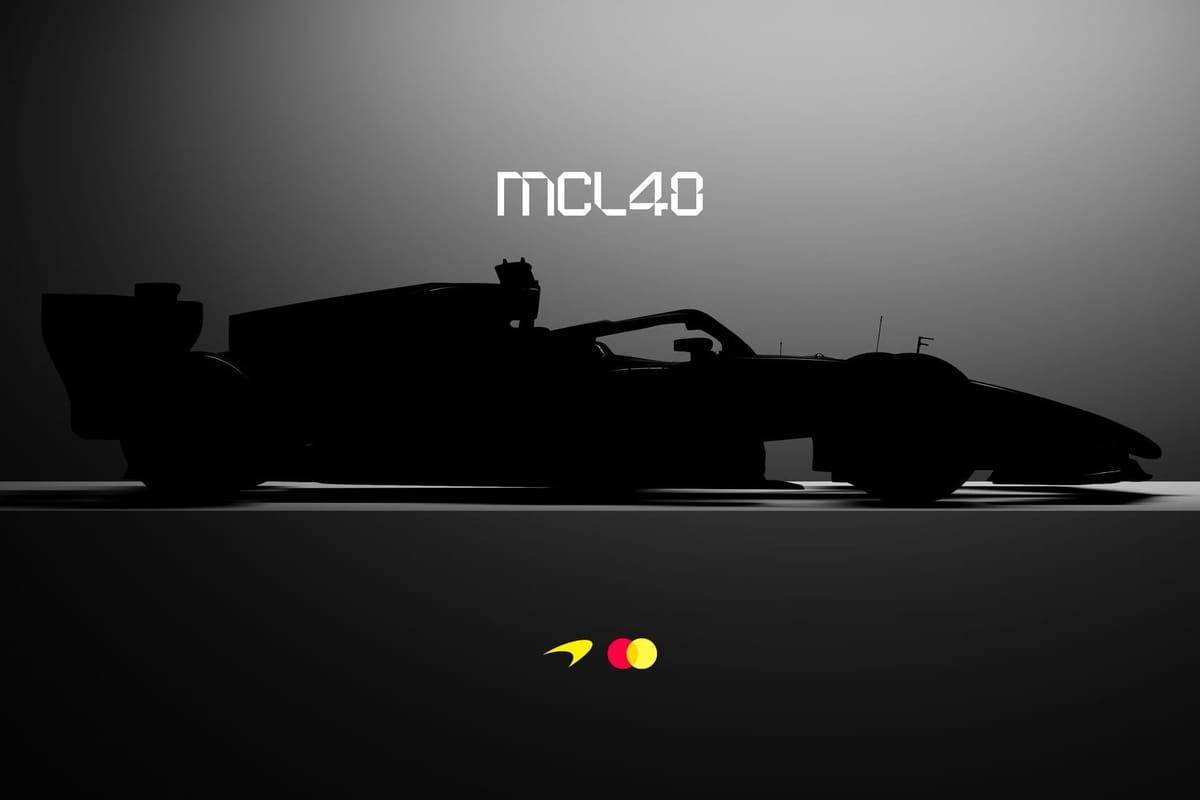
McLaren will not release images of its 2026 car until the eve of it running at the first Barcelona test - it is only showing a silhouette of the MCL40 (see lead image) before then.
It is expected to join that closed test on only the second or third day.
However, The Race has seen preview renders of the MCL40 in its black testing livery which has offered some early indications of its design. This includes downwash sidepods and an interesting change of front suspension concept from pullrod to pushrod for this season.
Regarding the suspension choice, Marshall said the call was driven entirely by what best-suited airflow off the front wing.
"Various cars had push or pullrod last year and for the previous years," he said.
"It really comes down to an aerodynamic choice on what front suspension set suits your new front wing. And obviously, the new front wings are all new.
"So I guess the way that the teams that you've seen so far have organised their suspension is to suit their front wing package and their front end package.
"It's really aerodynamically driven. Both are quite easy to do mechanically; they're not a particularly difficult mechanical challenge."